
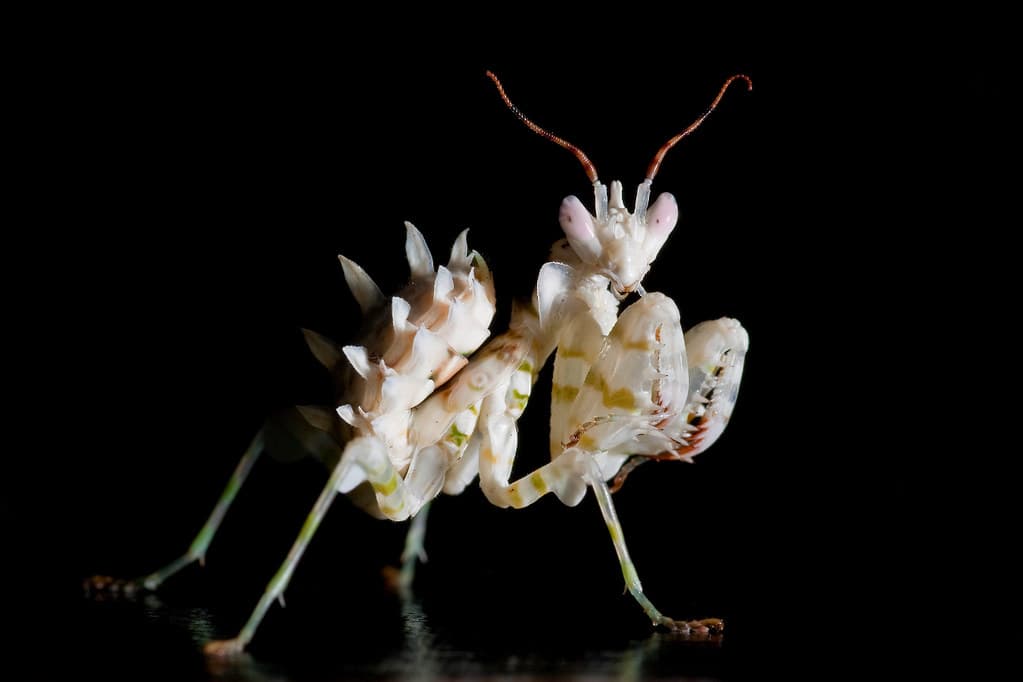
When it comes to elegant bugs, the praying mantis is one of them. There are so many beautiful mantis species out there, but we are just going to talk about 7 today. You will not see the basic mantis that you know on the list below, so get ready to be charmed. Let me know which beautiful mantis species is your favorite.
1Banded Flower Mantis
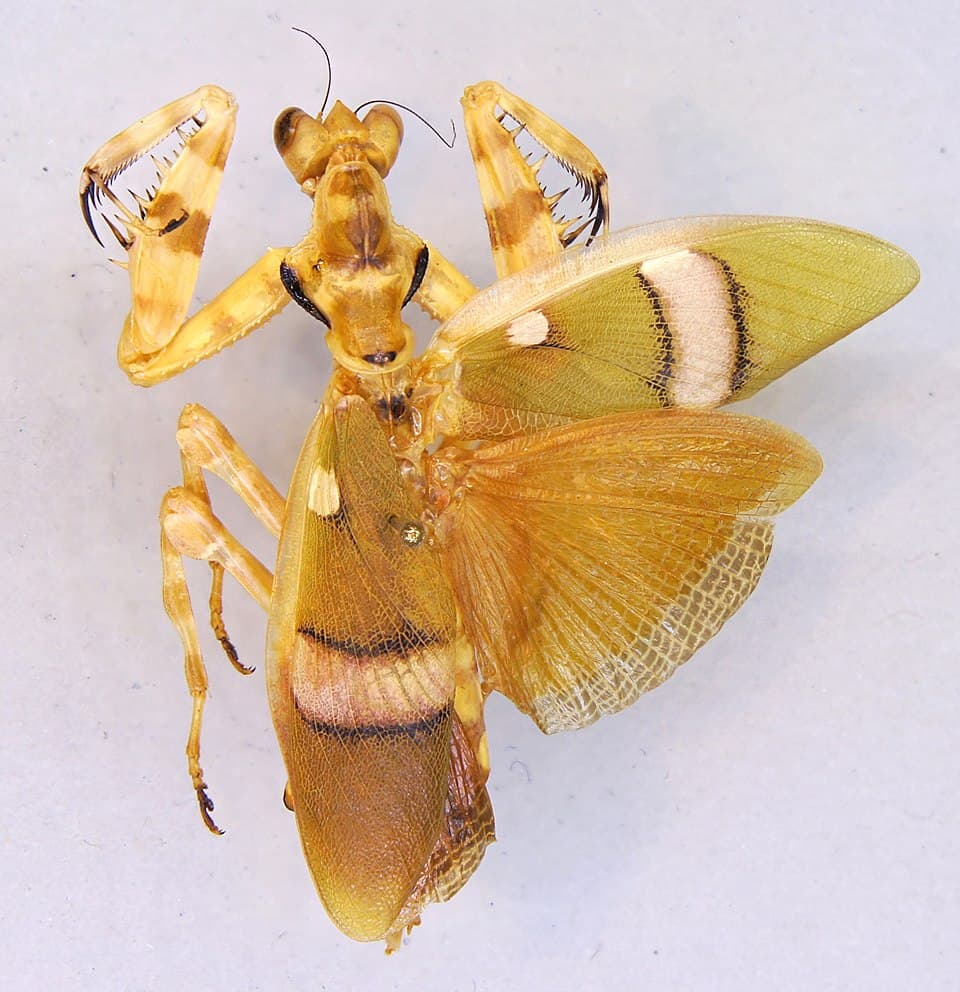
Scientific Name: Theopropus Elegans
Looking absolutely graceful, a banded flower mantis is one of the most beautiful mantis species out there. This mantis gets its name from its resemblance to flower petals from afar, blending perfectly amongst flowers. Normally, a female mantis is larger, and it can reach up to 5 centimeters, while a male is only 3 centimeters. Both sexes have striking black and brown stripes with spots of green or red on their wings and legs. The hind wings are bright orange, and there is a large white transverse stripe on the forewings. Depending on the region, the colorations can vary between red, green, and yellow.
This beautiful mantis species is native to tropical parts of Southeast Asia, inhabiting subtropical and tropical forests. They prefer areas that are humid with ample shelter, like plants, shrubs, and trees, where they can hide during the day. When hiding and hunting, they camouflage by perching still on leaves, twigs, and other foliage, waiting for prey to come. As insectivores, they prey on insects like moths, small flies, smaller mantises, small spiders, and other soft-bodied insects. Along with that, they also supplement their diet with other sources of protein and sugar from nectar, pollen, and sap. When threatened, a banded flower mantis raises its forelegs and displays its colorful wings as a defensive gesture.
2Devil’s Flower Mantis
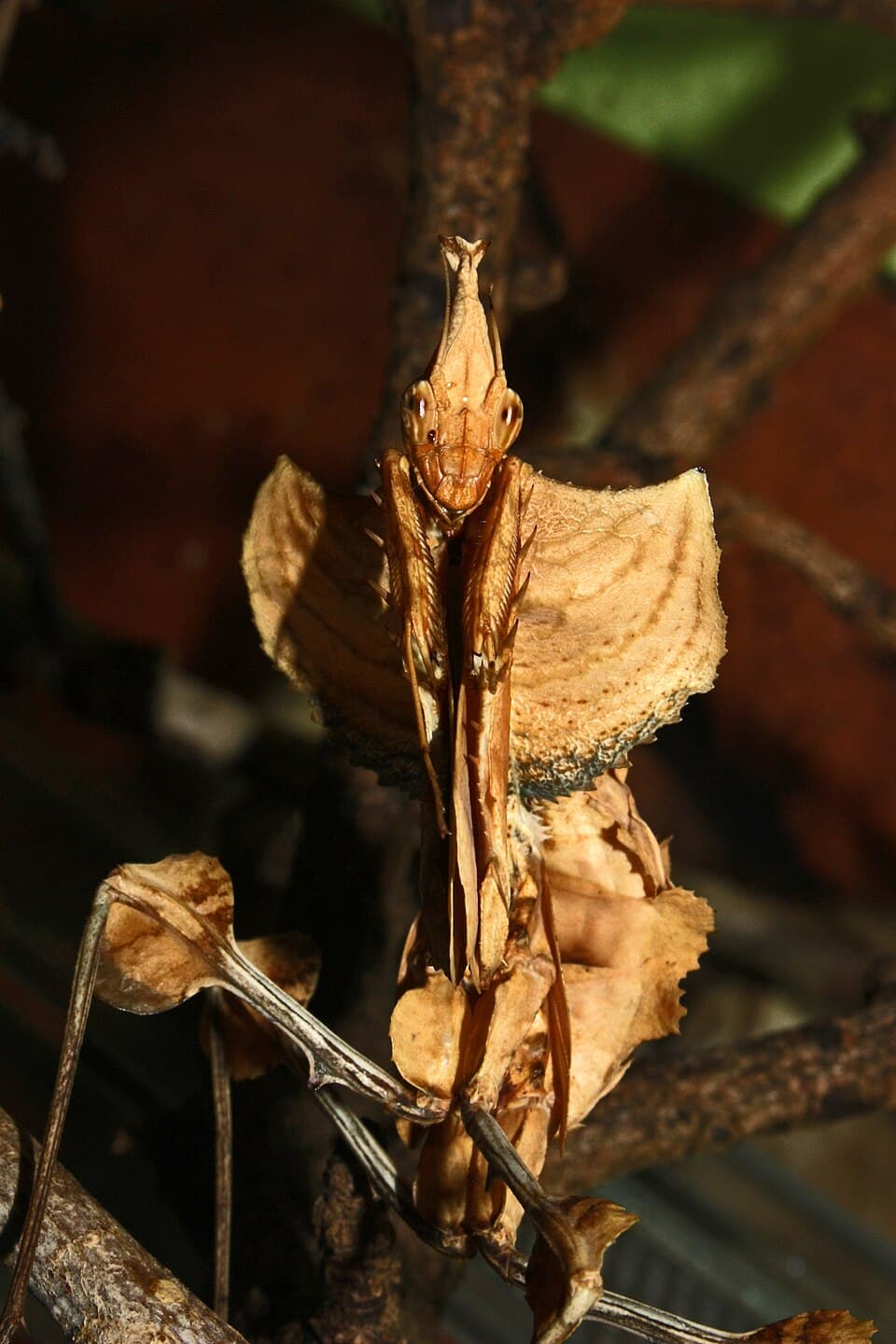
Scientific Name: Idolomantis Diabolica
My personal favorite, a devil’s flower mantis looks like it comes straight out of a sci-fi movie. Well, look at that face. But most important of all, it is also one of the largest mantis species in the family. Females measure about 13 centimeters, and males are around 10 centimeters in length. Adults are brown or green in color with white markings, but the best part lies on their back. There is a big wing case on a devil’s flower mantis’ back that shows black, blue, red, and white markings. So when threatened, the mantis will flash these colors to scare the intruders away. Males of this species have feathery antennae that are powerful sense organs they use to locate a mate. Since females are too heavy to fly, they release pheromones so that the males can find them.
The devil’s flower mantis is found in Southwest Africa, from Malawi to Kenya and Somalia. As flower mantises, they live in areas that contain flowers and wildflowers where they can imitate and blend in. This mantis remains motionless before using its legs to grasp and grip the prey that come close enough. Most of their prey include airborne insects, especially bugs that frequent flowers like beetles, butterflies, flies, and moths.
3Jeweled Flower Mantis
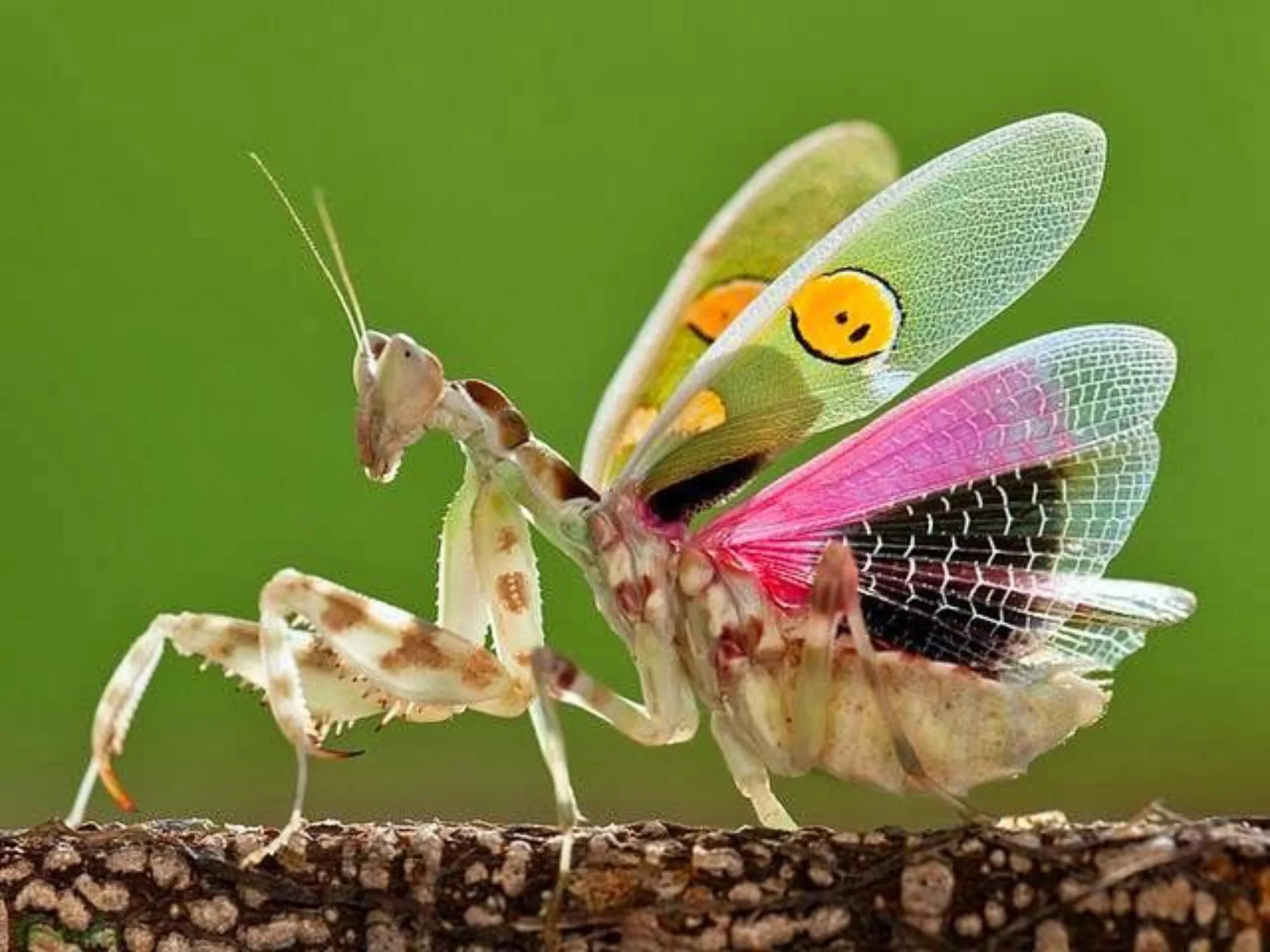
Scientific Name: Creobroter Gemmatus
Small but striking, a jeweled flower mantis does look unique when it comes to markings. Their coloration varies from green and white to shades of pink and yellow, depending on their environment. On each wing, there are two yellow eye spots with black borders. The inner wings also have additional eye spots; one is magenta, and another is deep blue. The wings of these mantises are bright, and they flash those wings to startle predators. As for their bodies and legs, there are brownish bands that help enhance camouflage. Males grow to about 4 centimeters, and females can reach up to 5 centimeters in size. Males are thinner and have longer wings, while females are more bulky with shorter wings. Either way, both sexes are very fast and strong when it comes to hunting.
Native to Southeast Asia, they have a wide distribution in Malaysia, Indonesia, Thailand, and Vietnam, as well as China and India. This unique mantis thrives in areas with high humidity, mostly in evergreen forests and subtropical or tropical forests. These areas are abundant in flowers and shrubs for them to camouflage in and hunt. Just like other mantis species on the list, this one also feeds on insects like bees, butterflies, flies, and moths. They have remarkable speed and precision, so snatching prey is always effective and successful.
4Orchid Mantis
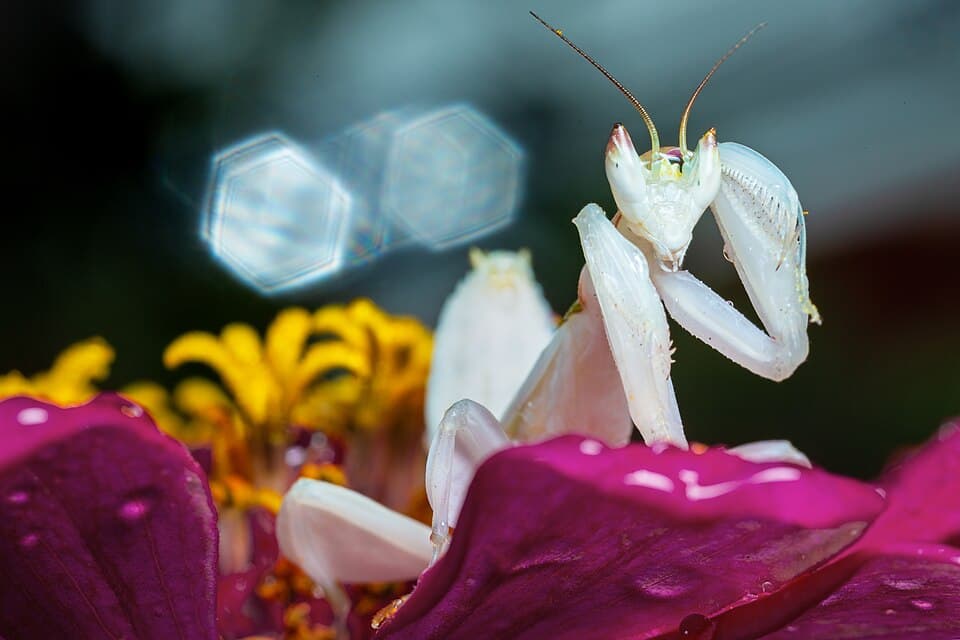
Scientific Name: Hymenopus Coronatus
If a mantis were a beautiful princess, this is what it looks like. Born with the colors and features of orchid flowers, the appearance of an orchid mantis is exactly that. An orchid mantis is usually pink or white, or a mix of both colors, giving soft girl era. More than that, they can also change colors, depending on environmental conditions like humidity or light conditions. Even their four walking legs have large lobes that resemble flower petals; camouflage is a piece of cake. What’s interesting is the huge difference in appearance and size between males and females. Adult females are around 7 centimeters, while males reach only 2.5 centimeters maximum.
As a native of the tropical forests of Southeast Asia, you can find them in Cambodia, Indonesia, Laos, Malaysia, Myanmar, Singapore, Thailand, and Vietnam. They feed on various small flies and insects that land on and around the orchids that they perch on. What’s great is that they also love eating small winged insects that are pests to orchids. Occasionally, these mantises also prey on caterpillars and insect larvae. Since they are solitary and territorial, they will even eat their own kind if they are too close to each other. Because of their gorgeous colors, it is very common for hobbyists and insect enthusiasts to collect them as decorations.
5Shield Mantis
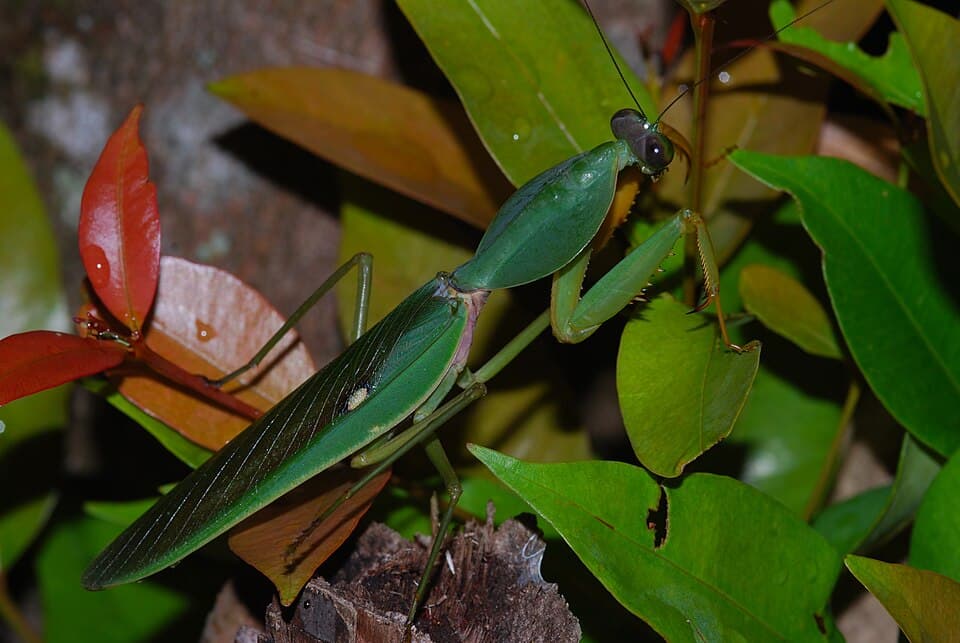
Scientific Name: Rhombodera Basalis
A shield mantis is a large mantis that can reach up to 10 centimeters, and it is easy to recognize one. If your definition of a beautiful mantis species is one solid color, this is your mantis. Most of them are green in color, and this single color helps them camouflage amongst leaves. The shield mantis got its name from the thorax that resembles the shape of an elliptical shield. When needing to call for mates, females develop light shades of pink or red on the hind wings and abdomen. This species is found in Borneo, Indonesia, Malaysia, Singapore, and Thailand. It lives in bushes and trees, and it thrives in humid and warm environments. Being both large and powerful, shield mantises hunt arthropods like cicadas, grasshoppers, locusts, scorpions, and spiders. But that’s not all; they can also hunt small birds, mice, and snakes, this mantis is one fierce predator.
6Spiny Flower Mantis
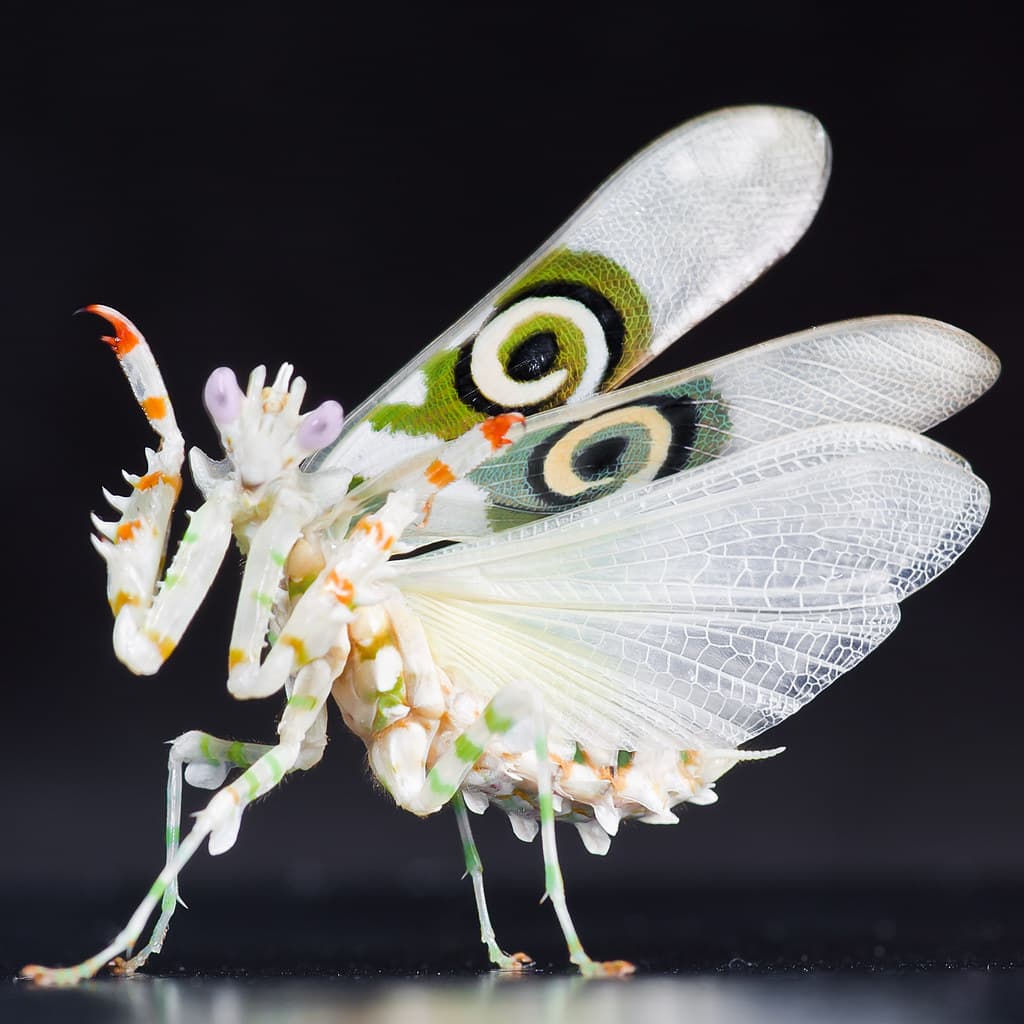
Scientific Name: Pseudocreobotra Wahlbergii
A list of beautiful mantis species is incomplete without the stunning spiny flower mantis, because look at that. This is a small mantis that can grow up to 4 centimeters maximum, and it is packed with beauty. Adults have spiny structures on the underside of their abdomen; hence the name. This one comes in a variety of colors, but light green is the most common one. The unique feature is a large eyespot on its forewings, with a combination of black, cream, and green.
This small mantis is native to eastern and southern Africa, ranging from Kenya and Tanzania to South Africa. Inhabiting gardens, savannas, and shrublands, these mantises prefer areas with flowering plants where they can camouflage and hunt. They feed on small insects like bees, butterflies, flies, and any pollinators that wander too close to them. Their appearance and colorations make them extremely popular amongst hobbyists. So having them as pets is quite common.
7Yellow Orchid Mantis
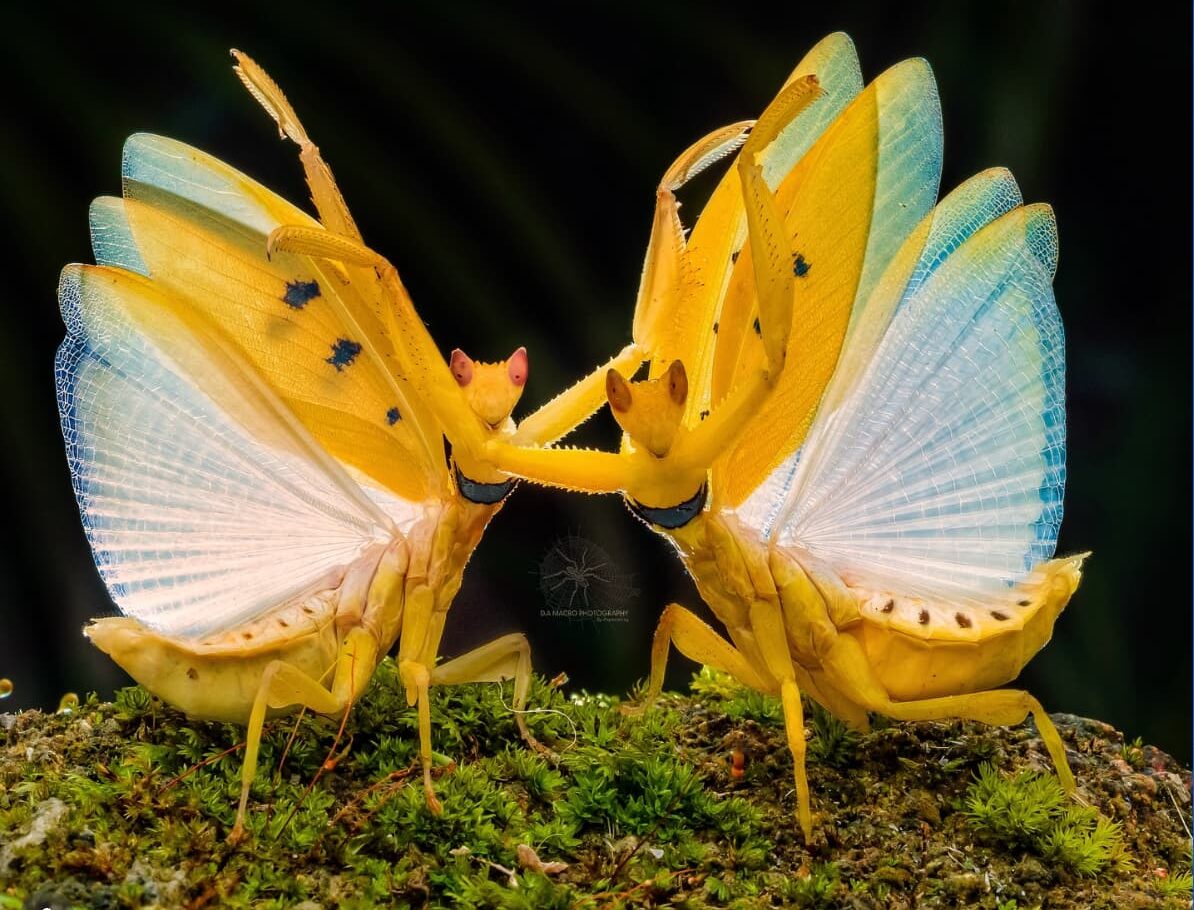
Scientific Name: Helvia Cardinalis
A yellow orchid mantis is golden yellow to greenish yellow in color, with pink hues on the legs and abdomen sometimes. Females are larger and have 6 wing spots, and they reach a length of around 4 centimeters. The yellow orchid mantis is unlike others in both appearance and traits. Having 5 eyes is one thing; being able to turn its head nearly 180 is another thing. This rare yellow mantis is native to Southeast Asia, living in tropical areas where flowers are plentiful. The yellow orchid mantis lives higher up in shrubs or trees, waiting patiently to ambush prey. They feed on beetles, flies, large insects, moths, and other small arthropods.
Related Post: Conehead Mantis Facts