When I was younger, I thought there was just one hermit crab species, and how wrong that was. There are actually over 1,000 species out there, roaming the land and ocean of the Earth. And when it comes to beautiful hermit crab species, there could be so many definitions. But most things that these decapods share is that they occupy discarded shells of gastropods, and they have 10 legs. They use their claws for defense and feeding, and the other two pairs are for walking. As for the last two pairs inside the shells are for cleaning and holding onto the shell. In this article, we are going to explore some colorful hermit crabs; their bodies not the shells.
1Blueberry Hermit Crab
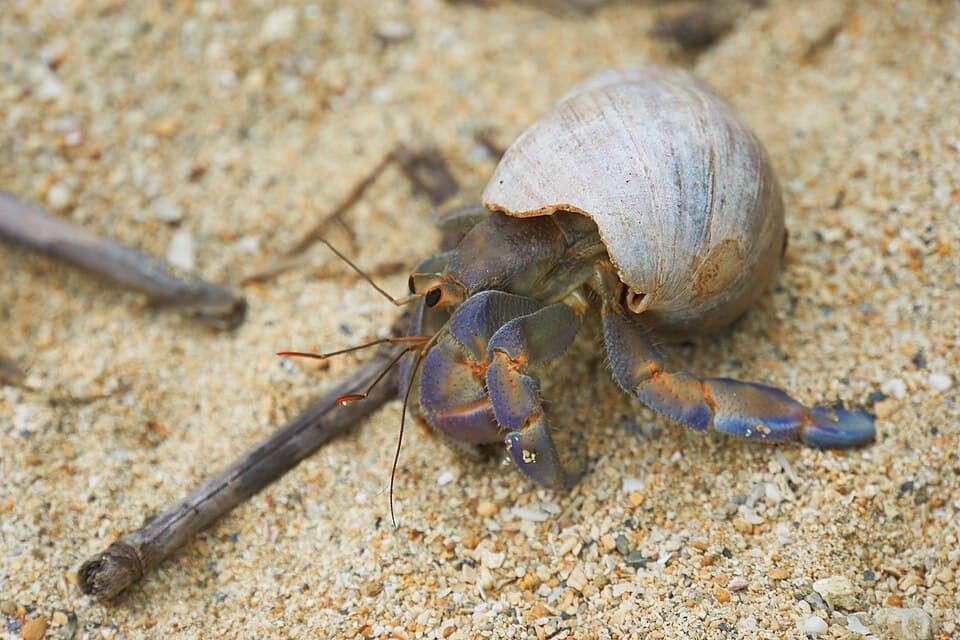
Scientific Name: Coenobita Purpureus
A blueberry hermit crab is around 3 to 4 centimeters big, and around 7 to 10 centimeters long. The body and legs are usually metallic blue and purple in color, with cream or white eyestalks. Juveniles are cream or pale gray, and their colors become bolder as they mature. They have two sets of antennae; the first pair is red and white, and the second pair is brown and white. If you look closely, you can see that its left claw is larger than its right claw. The left claw has a robust shape, which is helpful for feeding and protection. This trait is very common among hermit crabs. As a hermit crab, it does not have a complete exoskeleton, so it uses gastropod shells to protect its soft abdomen.
The blueberry hermit crab is endemic to many subtropical and tropical islands in the North Pacific Ocean of Japan. However, their range also extends all the way to Taiwan and Southeast Asia. They prefer beaches with areas of shrubbery or rocky crevices where they can hide during the day. In some areas, this hermit crab species also hides under trash when proper shelter is not available. Being omnivorous scavengers, blueberry hermit crabs feed on detritus, various forms of vegetation, and washed-up fish that they can find. These decapods are actually very social, and they don’t mind the company of their own kind at all. Their beauty dooms them due to the illegal pet trade, and we don’t know what’s going to happen to their population if this continues.
2Blue Leg Hermit Crab
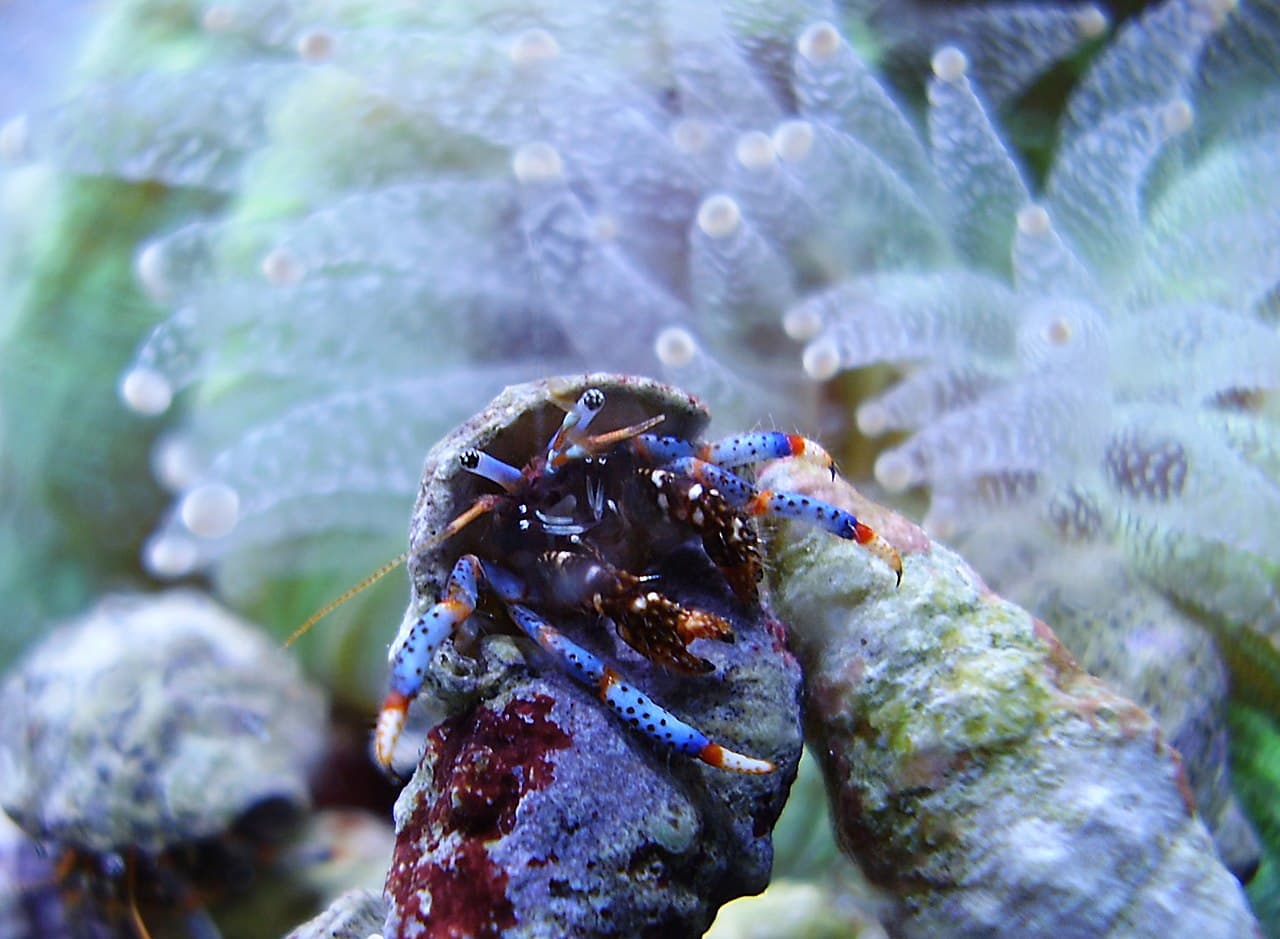
Scientific Name: Clibanarius Tricolor
You are looking at a small hermit crab that reaches 2 centimeters big maximum. The legs have blue, orange, and yellow banding between each segment, which contrast with each other very nicely. More than that, they also have bright orange antennae that make them look even more striking. This beautiful hermit crab species lives in the shallow water of the Caribbean Sea, where food is abundant. These hermits congregate in rocky areas, and they hide and come out to feed together as a group. As detritivores, they feed on various types of algae and detritus, mainly cyanobacteria, green hair algae, and seaweed. Being pretty is not always a good thing; this species has been heavily exploited by the ornamental pet industry. Since they are also low-maintenance, they are very popular amongst aquarium hobbyists.
3Blueline Hermit Crab
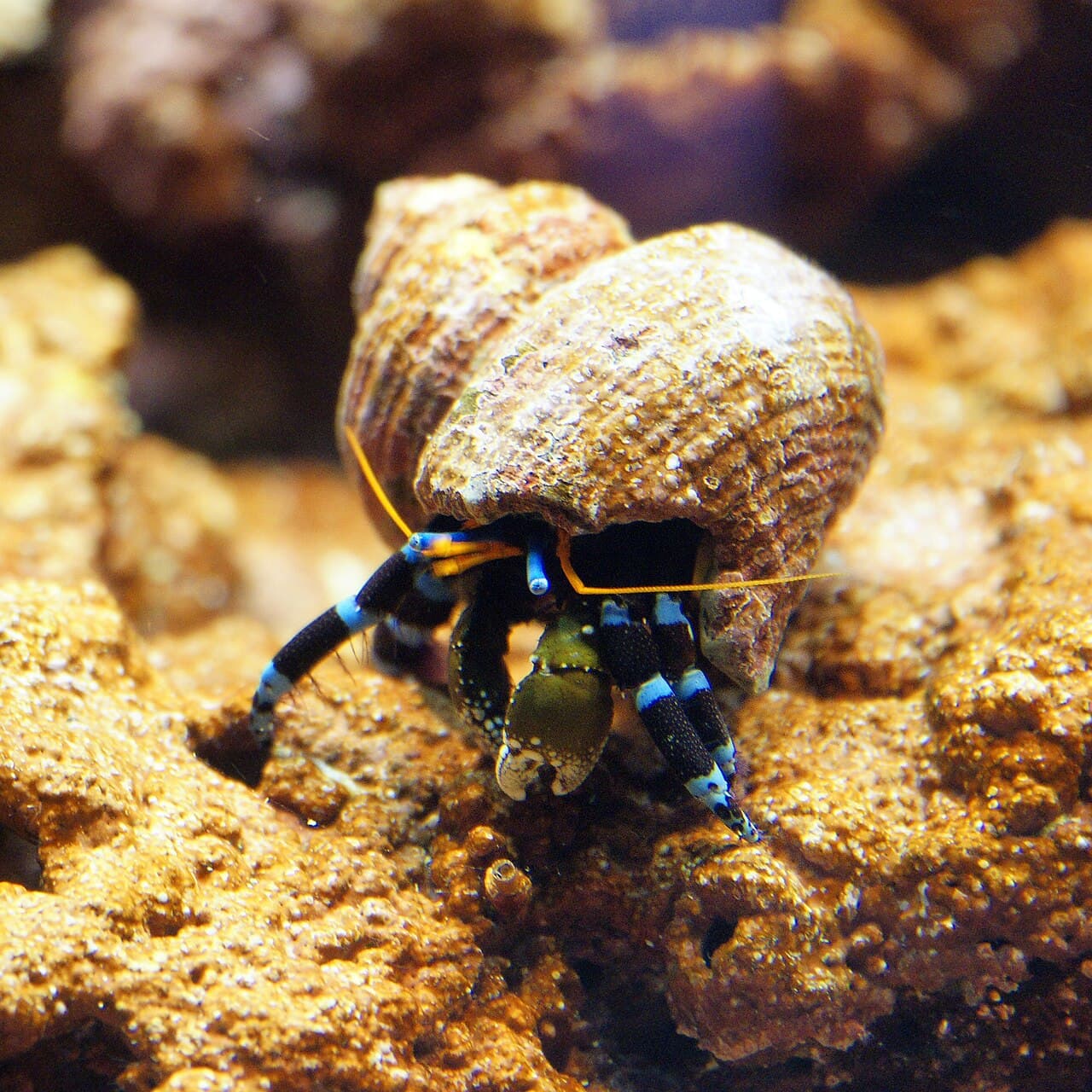
Scientific Name: Calcinus Elegans
A blueline hermit crab has bright blue or black color; hence the name. Their colorations vary depending on their geologic habitat, so not all of them have electric blue legs. For example, the ones in Hawaii have orange bands on their ambulatory legs, while the ones in the Indo-Pacific have pure blue bands instead. Regardless, all blueline hermit crabs have two bright blue eyes with two orange antennae and antennules. Their claws are mostly blackish green, and some individuals have white dots on their claws. The blueline hermit crab lives in the Indo-West Pacific, from Eastern Africa all the way to Hawaii. They inhabit coral reef intertidal environments where they feed on algae, animal matter, decaying plants, and detritus. These gastropods are actually very active, and they are constantly on the lookout for food.
4Candy Striped Hermit Crab
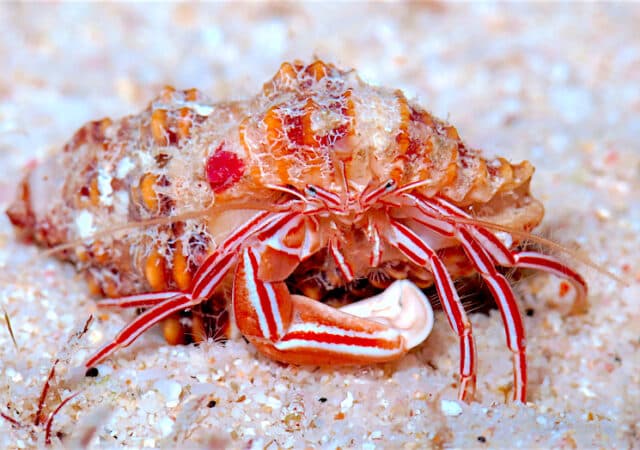
Scientific Name: Pylopaguropsis Mollymullerae
This is a newly discovered hermit crab species in the Caribbean, back in early 2017. A candy striped hermit crab has red and white stripes on its legs and eyestalks, and that’s how it got its name. It is very common for a hermit crab to have a larger right claw than the left claw. The unique thing about this beautiful hermit crab species is that the shape and size of its claws are remarkably unique. The underside of its right claw is deeply excavated and scoop-like, helping with both feeding and moving. That is not all, some of them hang around moray eels, which is a strange behavior for a hermit crab. They are not cleaners, so this unusual friendship is still in the dark.
5Coral Hermit Crab
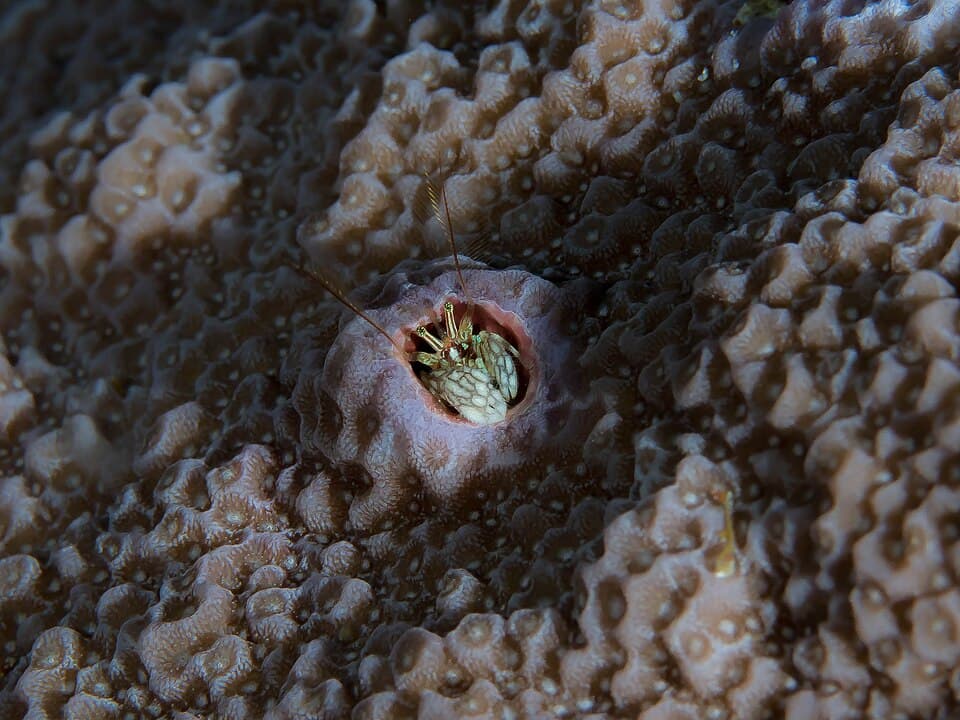
Scientific Name: Paguritta Harmsi
Here we have another tiny hermit crab species that is only around 1 centimeter big. The special feature of this hermit crab species is the highly adapted antennae that they use to maximize filter-feeding efficiency. Coral hermit crabs have a distribution across the Indo-Pacific, including Australia, Indonesia, and Papua New Guinea. While most hermit crabs roam around in gastropod shells, coral hermit crabs prefer a different way of life. They live inside holes or tubes bored into living hard corals, permanently. Because of their lifestyle, coral hermit crabs are passive filter feeders. When feeding, they extend their antennae into the water column to catch passing zooplankton.
6Red Claw Blue Eyed Hermit Crab
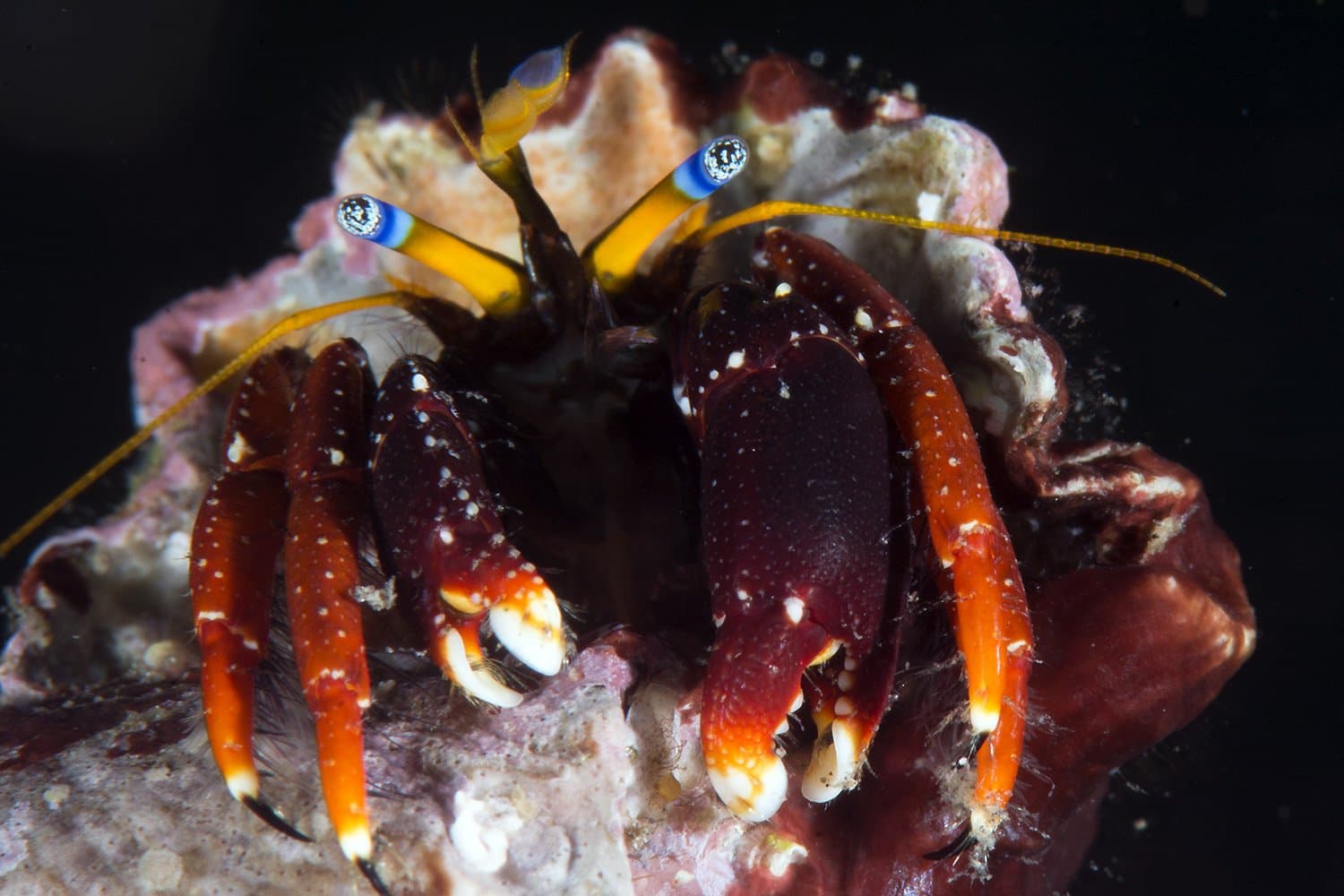
Scientific Name: Calcinus Gaimardii
That long name, or Gaimard’s hermit crab, is one of the most beautiful hermit crab species out there. Its coloration ranges from dull brown to orange, with red, orange, or brown claws and legs. The eyestalks of this hermit is pretty, being brown or orange with a light blue and dark blue ring. As for this one, its range is from the Indo-Pacific region all the way to Australia and Hawaii. The Gaimard’s hermit crabs live in coral or rocky areas where they can find zoobenthos to feed on. Their habitats also have numerous gastropod shells for them to have as homes because they grow fast. Despite being so common, their information is very little, and this is all I could find.
7Strawberry Hermit Crab
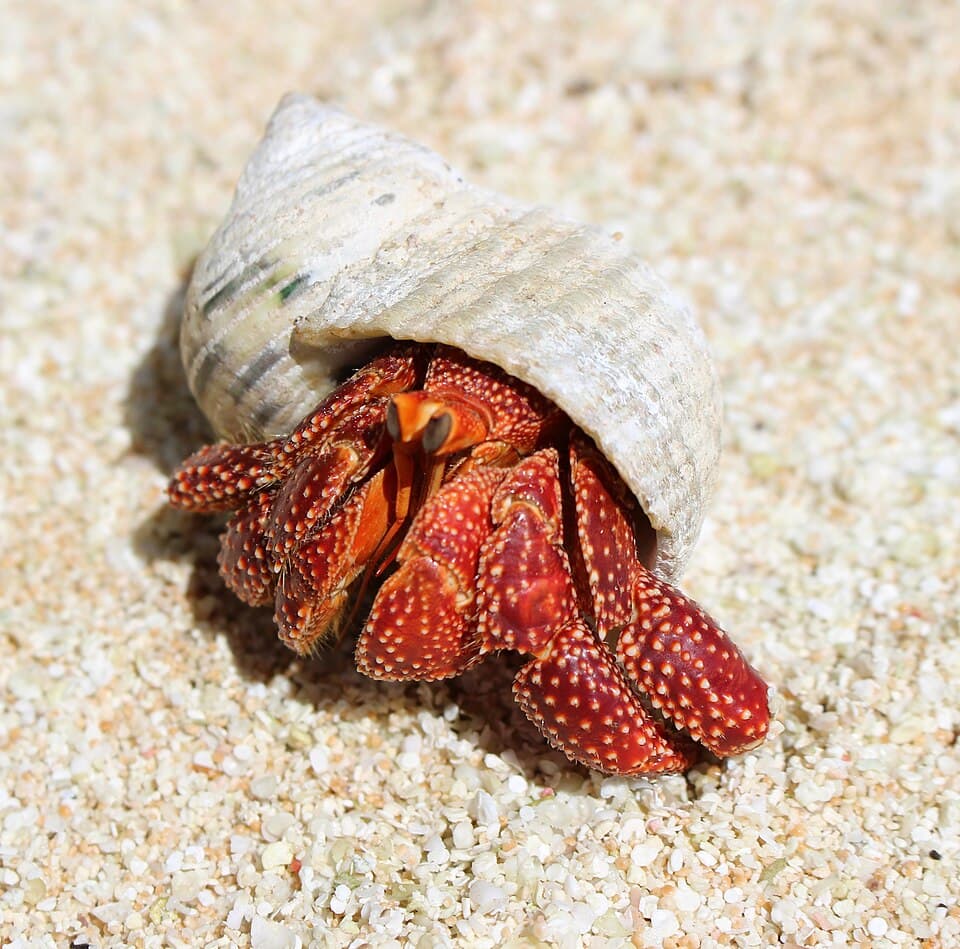
Scientific Name: Coenobita Perlatus
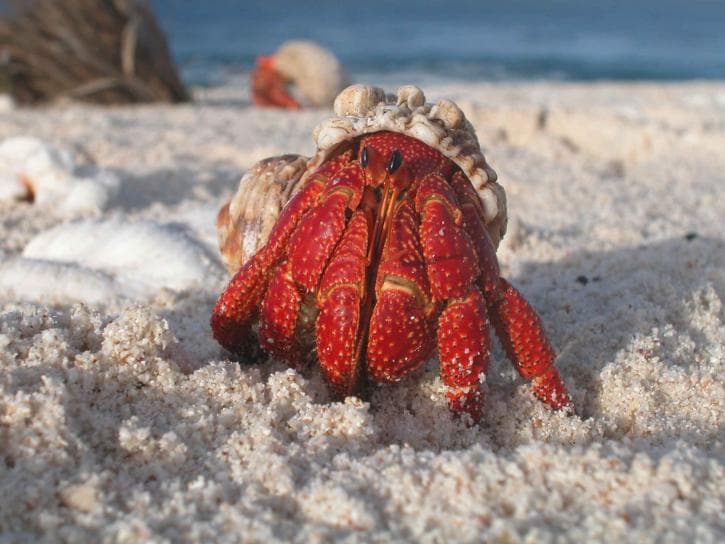
Just like the name suggests, a strawberry hermit crab has a vibrant reddish-orange exoskeleton. It can grow to a length of 8 centimeters, and its legs are pretty long, reaching 12 to 15 centimeters. Those legs have yellow spots that contrast beautifully with the bright background color, looking like the seeds on strawberry fruits. Being a social animal, the strawberry hermit crab lives in a group of up to 25 to 100 individuals. However, they seem to be aggressive towards each other when it comes to competition for shells. One crab may climb onto the back of the shell of another crab and gauge it out of its shell.
The distribution of this beautiful hermit crab species spreads across the Indo-Pacific, living near coastal shorelines. They like to be close to dunes, humid areas with dune vegetation, and shores. The interesting characteristic of the strawberry hermit crabs is that they keep a supply of water in their shells. During the day, they bury themselves in the damp sand to keep cool and prevent water loss. They return to the sea at night to refresh their water, taking both fresh water and sea water. Apart from being scavengers, these hermit crabs also feed on land snails, using their claw to pinch the flesh out.
Related Post: Hermit Crab Facts