Electrogenic are animals that can generate their own electricity for hunting and survival in the wild. I am sure that we all know about electric eels, but there are more animals that can produce electricity out there. Mostly fish, we are going to look at 6 electrogenic animals below. Let’s see what they are, and which one that you will like the most.
1Black Ghost Knifefish
Scientific Name: Apteronotus Albifrons
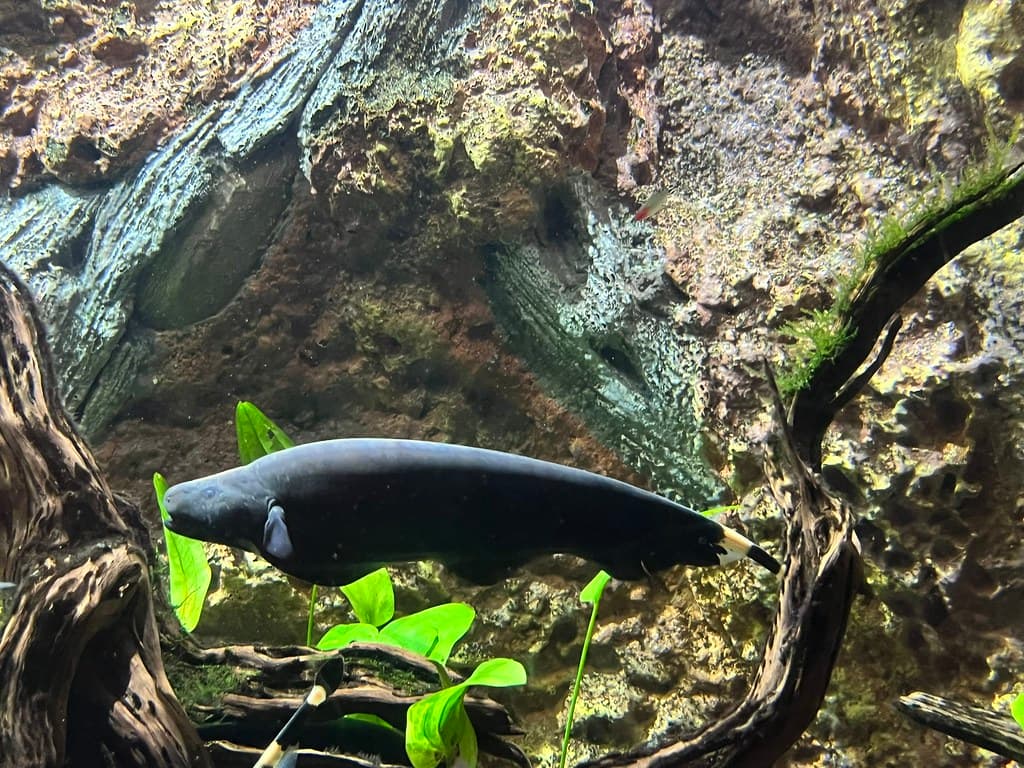
The black ghost knifefish is a popular ornamental fish that is very common in aquaria. This fish is between 45 and 50 centimeters long, and it doesn’t have caudal or dorsal fin. It only has a ribbon-like anal fin that it uses for gliding backward and forward. The lack of fin gives it a blade-like appearance; hence the name. It is jet black in color, except for two white rings on its tail and a white blaze on its nose. The body of this fish is scaleless and smooth, and it can instantly move sideways, reverse direction, or swim upside down.
This fish has poor eyesight, so this special ability can help them navigate food. It is a lightweight yet the fastest electrogenic that can discharge electricity at frequencies approaching 2000 times per second. This fish has a specialized organ in its tail that contains a small group of cells to generate electricity. It uses its special ability to communicate with intruders or potential mates, locate prey, and sense the environment. The electricity from this fish is not strong enough to shock a human or stun a fish. Plus their docile nature, it is also why it is good to have in home aquarium.
This tropical fish comes from freshwater habitats in South America, living in the water column and the bottom of bodies of water. They like slow-moving or stagnant creeks, rivers, and streams, but some populations live faster jungle currents. The black ghost knifefish are nocturnal carnivores that feed on insect larvae, small crustaceans, small shrimps, and worms. In the wild, this fish falls prey to all sorts of larger predators, mainly aquatic birds, larger fish, and river mammals.
2Elephantnose Fish
Scientific Name: Gnathonemus Petersii
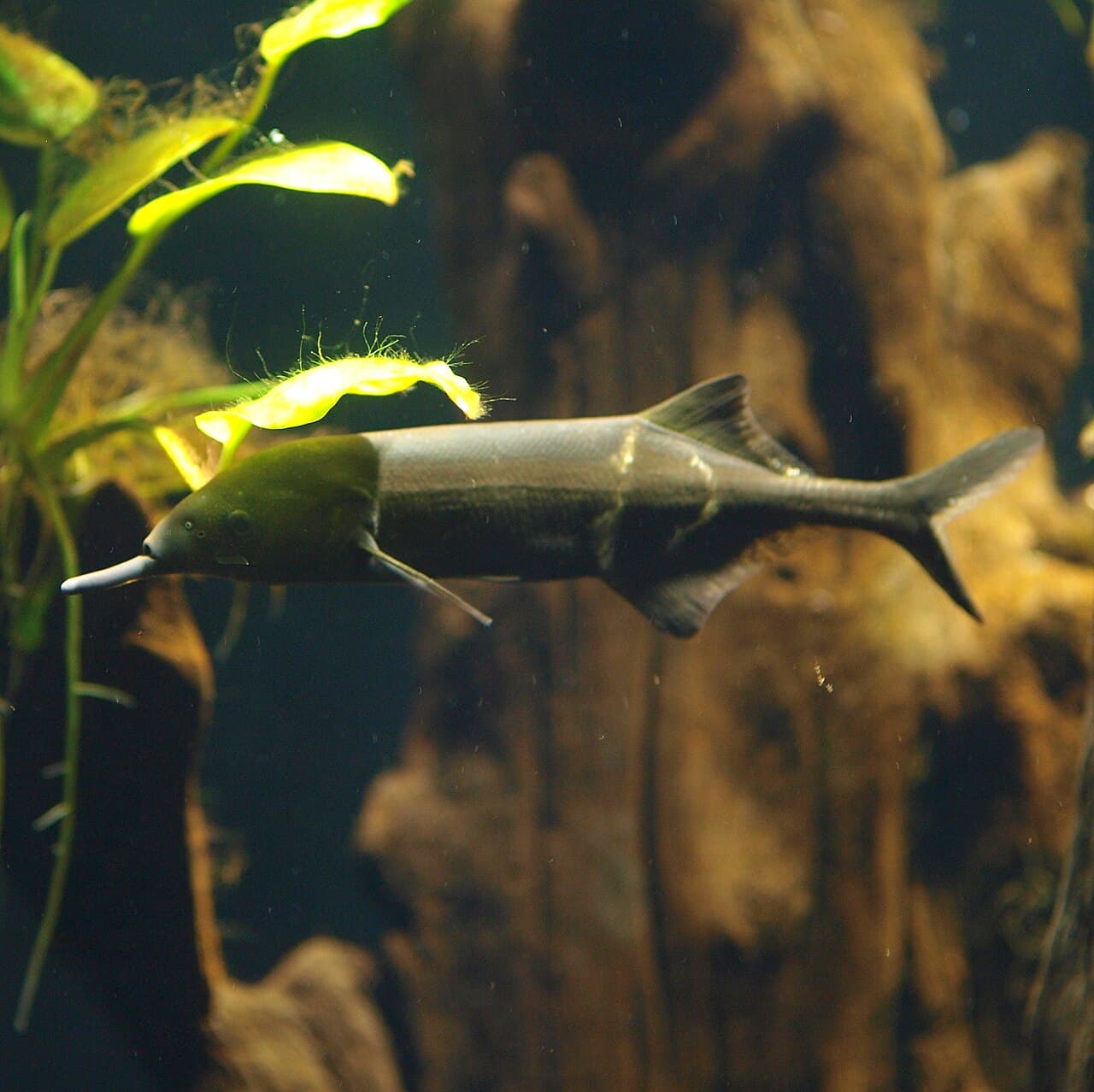
Being an electrogenic is one thing, but having this appearance is another thing that makes this fish so unique. An elephantnose fish is dark brown to black in color, and it is 23 to 25 centimeters long on average. The most distinctive feature on its appearance is the trunk-like protrusion on its head, but it does not function as a nose. This special trunk is a sensitive extension of the mouth that it uses for communication, locating prey, navigation, and self-defense. So, yes, the electricity is generated from this trunk, the unique organ called Schnauzenorgan.
This fish is native to the rivers of Central and West Africa, inhabiting muddy and slow-moving pools and rivers. They prefer dark, heavily vegetated, and slow-moving waters in large rivers. The elephantnose fish lives in schools, with a hierarchy existing among individuals of the same school. The diet of this nocturnal electrogenic consists of aquatic invertebrates, insects, plant material, small worms, and zooplankton. It also moves along the bottom while digging the substrate with its trunk searching for aquatic microorganisms. Just like the knifefish, this one also has very poor eyesight, so they rely heavily on their electrolocation capabilities.
Fun Fact: There are more than 200 different species in the elephantnose fish family, the Mormyridaw family. Every single member of the family can emit electric signals.
3Electric Catfish
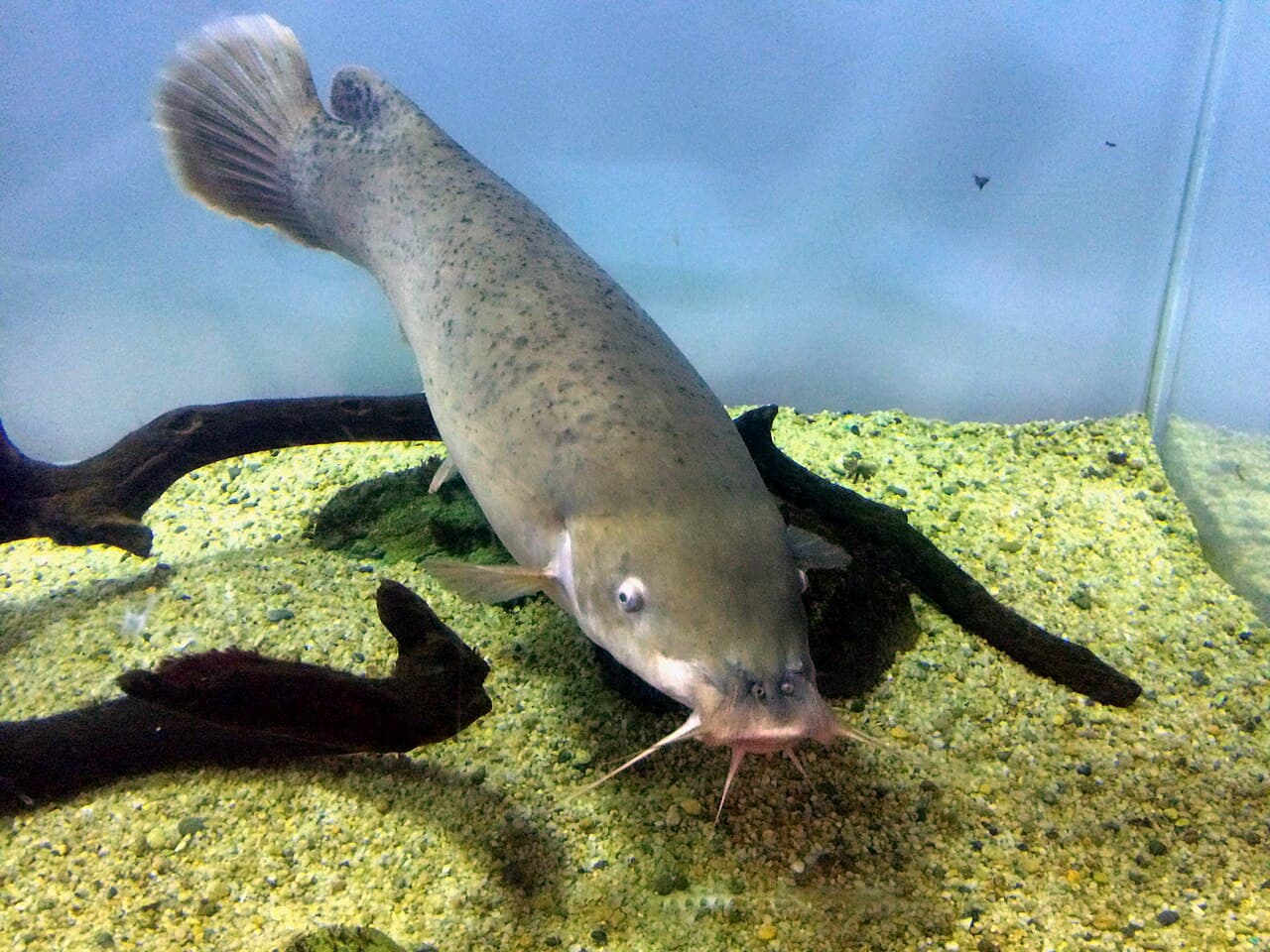
Scientific Name: Malapteruridae
This is a family of many fish species with the ability to generate electricity, the only catfish with well-developed electrogenic organs. An electric catfish can grow up to 1.2 meters long, and a fish this large can produce electricity up to 450 volts strong. A small one generates very little current, only larger individuals can stun an adult person. This fish has an elongated and rounded body that is brownish or grayish in color, and they have small eyes. It has modified muscle cells called electrocytes that form a layer beneath the skin across much of the body. This is an electric organ that can generate electricity anywhere from 300 to 450 volts maximum.
The electric catfish live in freshwater, and they prefer slow-moving or still water such as muddy riverbeds, shallow lakes, and swamps. During the day, they like to hide in dark spots near rocks and tree roots. Electric catfish are found in the Nile River and tropical Africa, and they had a reputation amongst the ancient Egyptians. Back then, the Egyptians used the electric shock from small electric catfish when treating arthritis pain. As for the catfish themselves, they use their power to defend themselves and stun prey. These catfish are nocturnal carnivores, and they come out at night to feed on other fish. Apart from stunning their prey with electricity, they also eat detritus, fish eggs, and invertebrates.
4Electric Ray
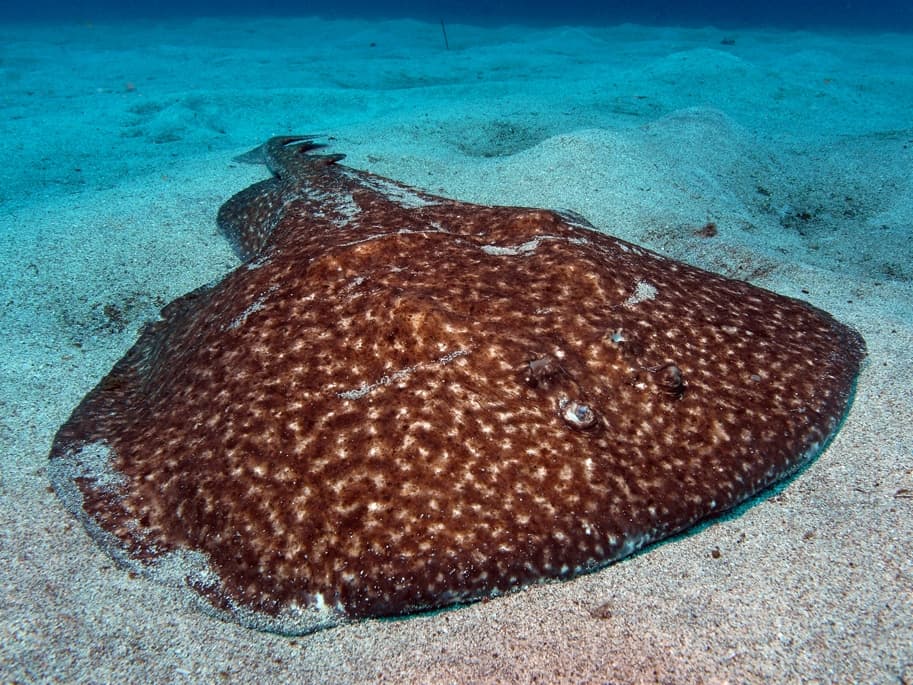
Scientific Name: Torpediniformes
Electric rays have thick and flabby bodies with soft loose skin, and a stout muscular tail. They are sluggish and slow-moving, and they propel themselves with their short, stout, and muscular tails. Unlike stingrays, electric rays do not have venomous barbs or tail spines. The tail of these rays ends in a prominent triangular or fan-like tail fin. Their electricity is more than enough for their everyday life, no venom is needed.
Did you know that electric rays exist? There are 69 species in 4 families, and many of them can shock you, literally. Depending on the species, electric rays can produce electricity anywhere from 8 to 220 volts. They have a pair of kidney-shaped electric organs at the base of their pectoral fins. These rays use this ability to defend themselves and to stun prey. Along with that, shocks from larger species like the Atlantic torpedo ray can knock a human unconscious.
Electric rays live in shallow coastal and tropical waters where they feed on crustaceans, invertebrates, and small fish. These ones are ambush predators, and they lie below the sand or other substrate to wait for prey. When something delicious swims by, an electric ray will use its electricity to stun and capture the prey. During hunting, they wrap their fleshy fins around prey to concentrate the electrical field. This will knock out or stun the prey, making it easy for the ray to swallow it whole.
5Oriental Hornet
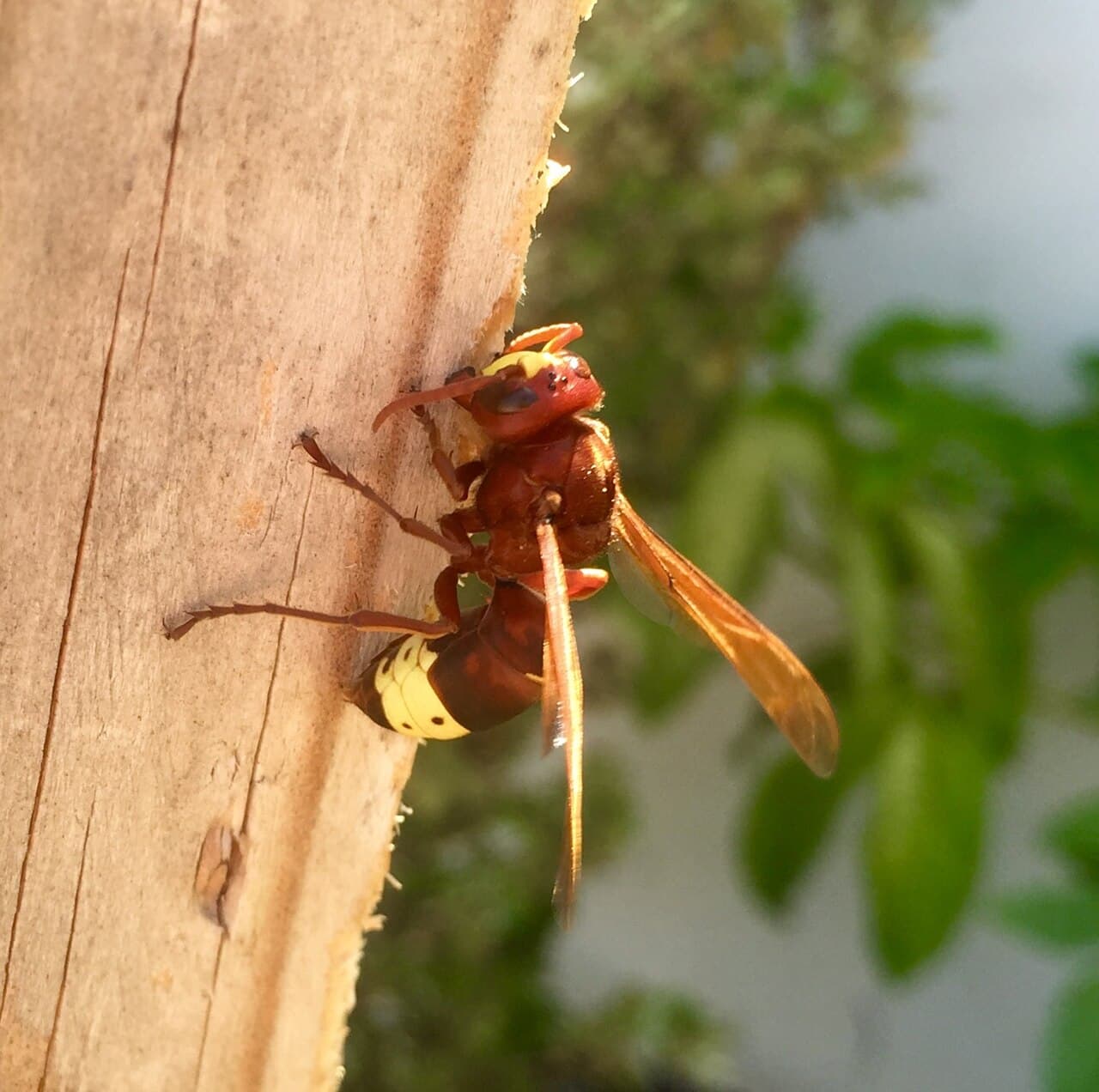
Scientific Name: Vespa Orientalis
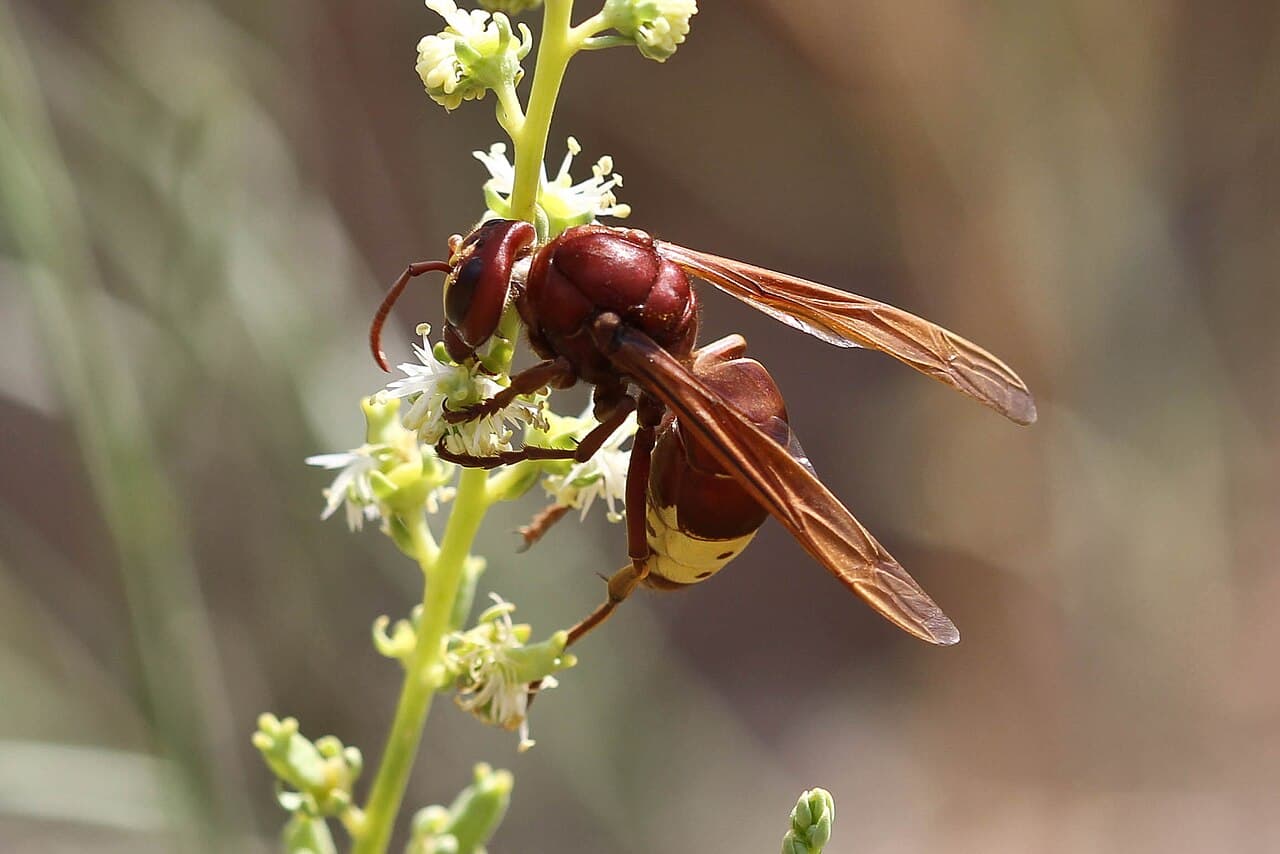
Fish is not the only electrogenic animals that can produce electricity, and oriental hornet is a living proof of that. Adult oriental hornets have two pairs of wings, and their bodies measure between 2.5 and 3.5 centimeters long. Drones and workers are smaller than the queen, but they are all reddish-brown with thick yellow bands on the abdomen. As you already know, hornet can sting, multiple times, and the stings can be quite painful to humans. These hornets also have very strong jaws, so they can bite on top of stinging.
What’s special about this electrogenic is that it is solar-powered, using its cuticle to absorb sunlight and generate electrical energy. The yellow xanthopterin pigment in its abdominal stripe acts as a natural solar cell, converting sunlight into electrical potential. This helps power its daytime digging and activities, and the sunny it gets also means the more active they are. Oriental hornets peak in activities during the brightest and hottest hours of midday. The electricity that it generates is only for working, it is not strong enough (0.2 to 0.3 volts) to shock anything.
Oriental hornets has a wide distribution across Central Asia, Northeast Africa, Southern Europe, Southwest Asia, and the Middle East. They live in seasonal colonies consisting of caste system dominated by a queen. These hornets build their nests underground, and they communicate using sound vibrations. Adults feed on fruits and nectar, and they scavenge for animal proteins and insects to feed their young. They also attack bee colonies to obtain honey and animal proteins.
6Stargazer
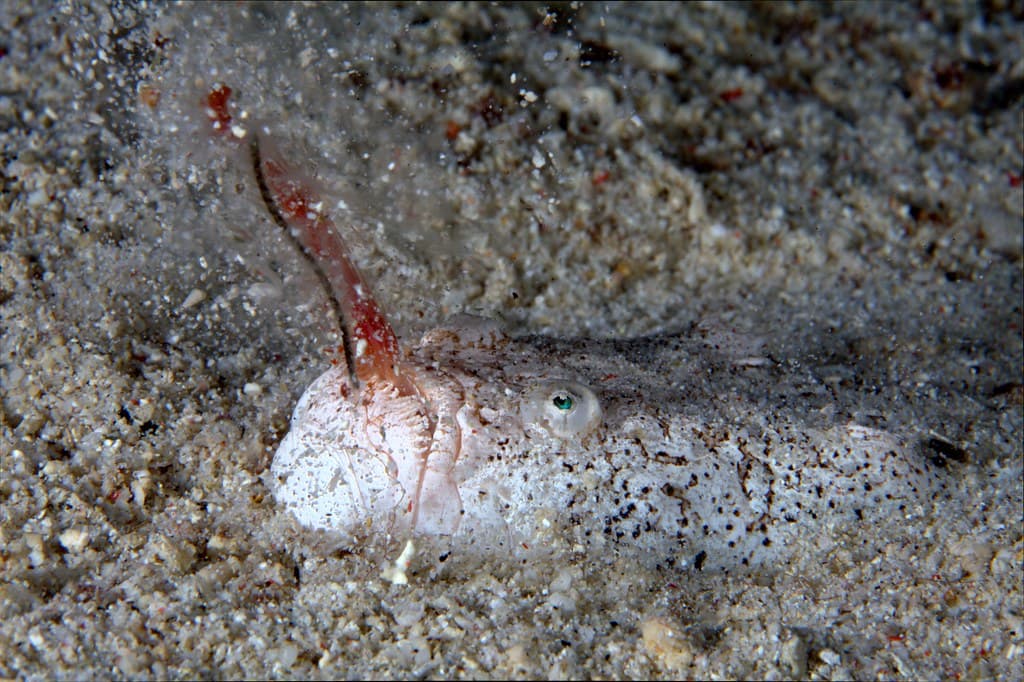
Scientific Name: Uranoscopidae
Uranoscopidae is a family with 51 species of strange-looking fish called stargazer. This fish species has eyes on top of its head and a large upward-facing mouth. Stargazers range from 18 to 90 centimeters in length, depending on the species. They have tapered bodies and large flat heads, and some species have a large venomous spine on each shoulder.
The species within the genera Astroscopus and Uranoscopus possesses the ability to generate electricity. In the Astroscopus species, they have a single electric organ consisting of modified eye muscles. As for the Uranoscopus, they generate electricity from their sonic muscles. These two do not have electroreceptors, meaning they don’t use their power to locate prey, but to shock them. When activated, this electrogenic being can deliver up to 50 volts of electricity, causing a current to run through its body. The current is strong enough to deliver a painful shock to humans, but we will survive that.
Stargazers live in temperate and tropical waters across the Atlantic and Pacific Oceans. They bury themselves in sand, wait patiently, then leap upwards to ambush prey that swims past it. Some species come with a worm-shaped lure in their mouths which they can wiggle to attract prey’s attention. And some of these ambush predators can deliver both electric shocks and venom simultaneously; they are as mean as they look. So when it comes to monsters of the ocean floor, this is one of those.