Besides kiwis, what animals native to New Zealand do you know? This beautiful country is home to some of the prehistoric-looking animals with interesting names that are absolutely fascinating. You will find 10 animals native to New Zealand on the list below; let me know which one is your most favorite.
1Hamilton’s Frog
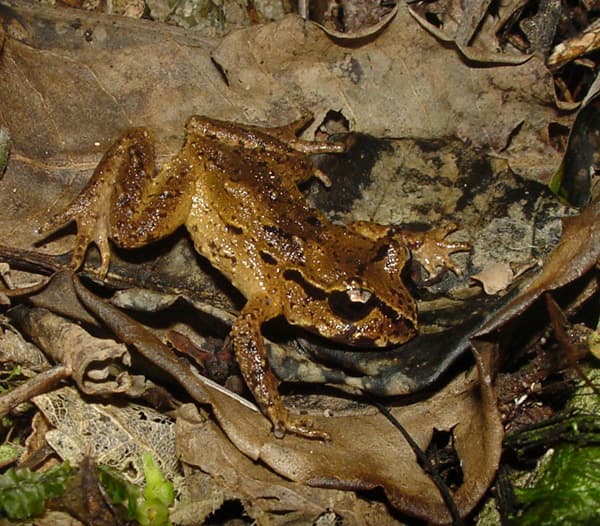
Scientific Name: Leiopelma Hamiltoni
Many people do not really pay attention to frogs, but this primitive frog is definitely something. A Hamilton’s frog is so tiny, being only around 3.7 to 4.7 centimeters in length. It is light brown in color with a single dark stripe that runs along each side of the head and through the eye. Strangely, there is no webbing between the hind toes, and the fingers are also not webbed. Spotting one can be a challenge because they camouflage in their surroundings really well, and they don’t even croak.
Parenting style in this amphibian’s family is quite interesting, with males taking care of the eggs. After mating, males will stay with the eggs and protect them until they hatch. Then, the tadpoles will climb onto the male’s back to stay moist. Once the juveniles complete their development, they will go about their life without the need for their father’s care anymore.
This amphibian is native to New Zealand, residing only on a small rocky area on Stephens Island. There is also a small population of them on Maud Island and Nukuwaiata Island from a recent introduction. They shelter in damp crevices, and they thrive in boulder and rocky spots away from creeks or streams. Being so small, it is safer for them not to travel too far from where they live. These frogs usually stay within a 5-meter radius for multiple years at a time. Also, they don’t mind co-habiting with multiple frogs. As insectivores, they feed on fruit flies, moths, small crickets, springtails, and other small bugs. Their status is Endangered due to chytrid fungus, habitat loss, and increased predators.
2Kākāpo
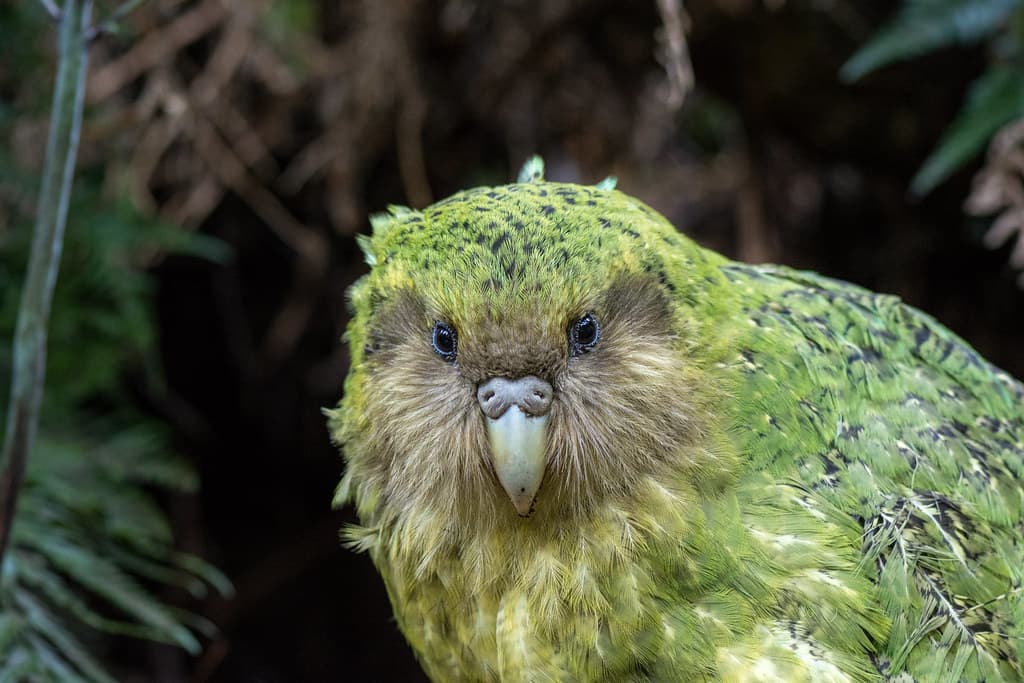
Scientific Name: Strigops Habroptilus
Birds look rather fascinating when it comes to animals native to New Zealand, and this one says it all. It is also known as the owl parrot, and it actually lives up to its name. A kākāpo measures around 64 centimeters long, and it does look half owl and half parrot. This bird has a facial disc and forward-facing eyes that are similar to those of a barn owl. It has finely blotched yellow-green plumage, a large gray beak, short legs, and large blue feet. As a flightless bird, its short wings have a span of 82 centimeters. The kākāpo is not only the world’s only flightless parrot but also the world’s heaviest parrot. Adult males weigh around 1.5 to 3 kilograms, and females are half the males’ weight.
These owl parrots used to live all over New Zealand before they were hunted to almost extinction. Today, they survive only on managed and predator-free offshore islands like Anchor Island and Codfish Island. Naturally, their habitats are coastal areas, dense native forests, and scrublands with mild winters and high rainfall. They cannot fly, but they are excellent climbers. Their short wings are useful in adding balance when they are climbing. Those wings also help the birds parachute when they descend from trees by leaping and spreading their wings. To make up for their inability to fly, they have strong legs that allow them to travel several kilometers a day. The kākāpo is entirely herbivorous, and they feed on fruits, fungi, green shoots, leaf buds, pollen, seeds, and more. Kākāpo is considered Critically Endangered on the IUCN Red List, with a population of 235 living individuals in 2026.
3Kea
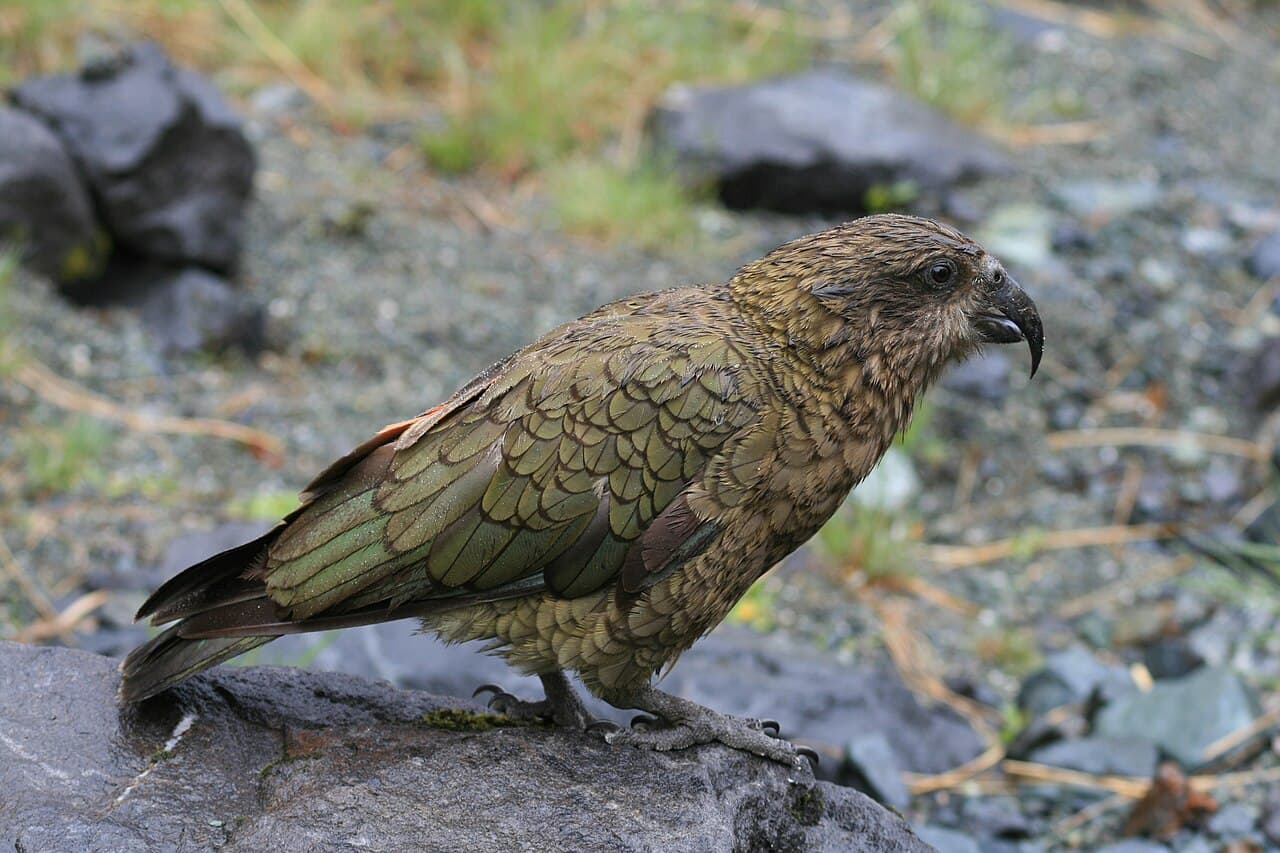
Scientific Name: Nestor Notabilis
Kea makes the list of interesting animals native to New Zealand complete with its so many cool features. This is another parrot, the only alpine parrot species in the world, and the world’s smartest parrot species as well. A kea is around 50 centimeters long, and it is mostly olive-green in color. Once it takes flight, the vibrant orange on its underwings shows, making it look absolutely gorgeous. Females are slightly smaller than males, and they have shorter beaks. Being so mischievous, kea parrots are very bold, and they will approach people, especially in places where they might get food.
This large parrot is endemic to the alpine and forested regions of the South Island of New Zealand. Its range is from lowland river valleys and coastal forests to alpine regions. Kea is renowned for its curiosity, intelligence, and its unique ability to survive in a harsh mountain environment. As omnivores, kea feed on berries, leaves, nectar, and roots, and insects and mammals, as well as carrion sometimes. Back in the 1860s, when sheep farmers began moving into the country, kea found new food sources. They attacked sheep with their powerful beaks and claws to eat the fat, and the wounds caused infections and death. Kea is currently an endangered species with a declining population due to hunting, lead poisoning, and predation.
4Longfin Eel
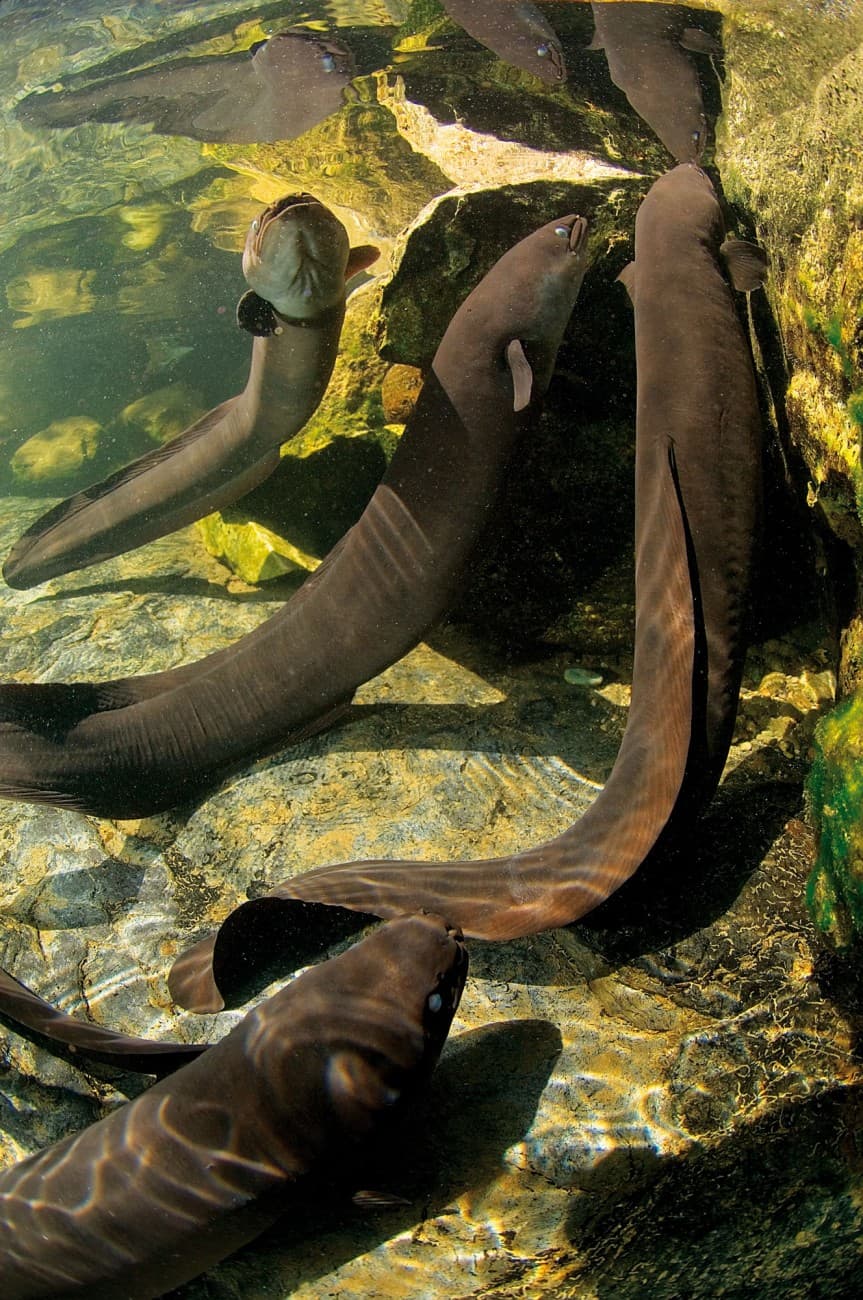
Scientific Name: Anguilla Dieffenbachii
Eels are everywhere, but you can only find the longfin eel in New Zealand. This is the largest freshwater eel in New Zealand, reaching a length of up to 115.5 centimeters. Females are larger than males, and males are only around 73 centimeters long, with a 1 to 5 centimeters of growth per year. The name says it all, this eel has a very long dorsal fin, taking about two-thirds the length of the body. It is black or brown in color, with brown or olive blotches above and on the sides. These eels are great swimmers, and they live a very long life, up to 60 years old before migrating. The oldest longfin eels lived up to 106 years old.
Longfin eels breed only once at the end of their lives, and swim from New Zealand to their spawning grounds near Tonga. Each female longfin eel produces between 1 and 20 million eggs in deep tropical water, and then soon after. The eggs float and hatch, then drift along large oceanic currents back to New Zealand. This drifting process takes up to over a year. It is one of the animals native to New Zealand that inhabits widely through the country’s lakes, rivers, and swamps. This slimy fish is omnivorous, and they feed on various things such as fish, insect larvae, snails, and small birds. Currently, this eel’s status is Endangered due to habitat loss, hydropower, migration barriers, pollution, and commercial and recreational fishing.
5Pekapeka
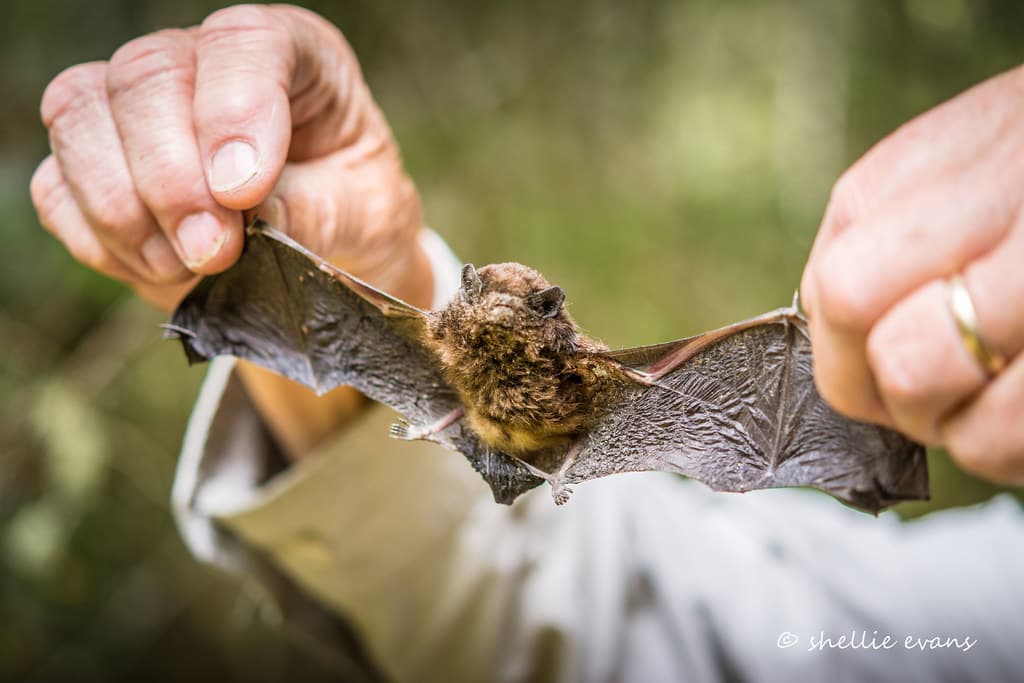
This is the Māori name for New Zealand’s only native land mammal: the long-tailed bat and the lesser short-tailed bat. Both of them are endemic to Aotearoa, and both species are facing a lot of threats to their populations. These bats are nocturnal, and they feed on flying insects such as beetles, mayflies, and moths that they catch mid-flight. As omnivores, they also feed on flower parts, fruits, nectar, and pollen, but they prefer insects more.
The long-tailed bats are black or dark brown in color, with a furry torso and membranous wings. They have a wingspan of 25 centimeters, with a capability of flying up to 60 kilometers per hour. A long-tailed bat has a long tail connected by a patagium to its hind legs. These bats are highly social animals, and breeding females also form maternity roosts as well. This species has a patchy distribution on the main islands, and other islands such as Kapiti Island, Little Barrier, and more. The major threats to this species are bird and human interference with roosts, habitat destruction, and mammalian predators.
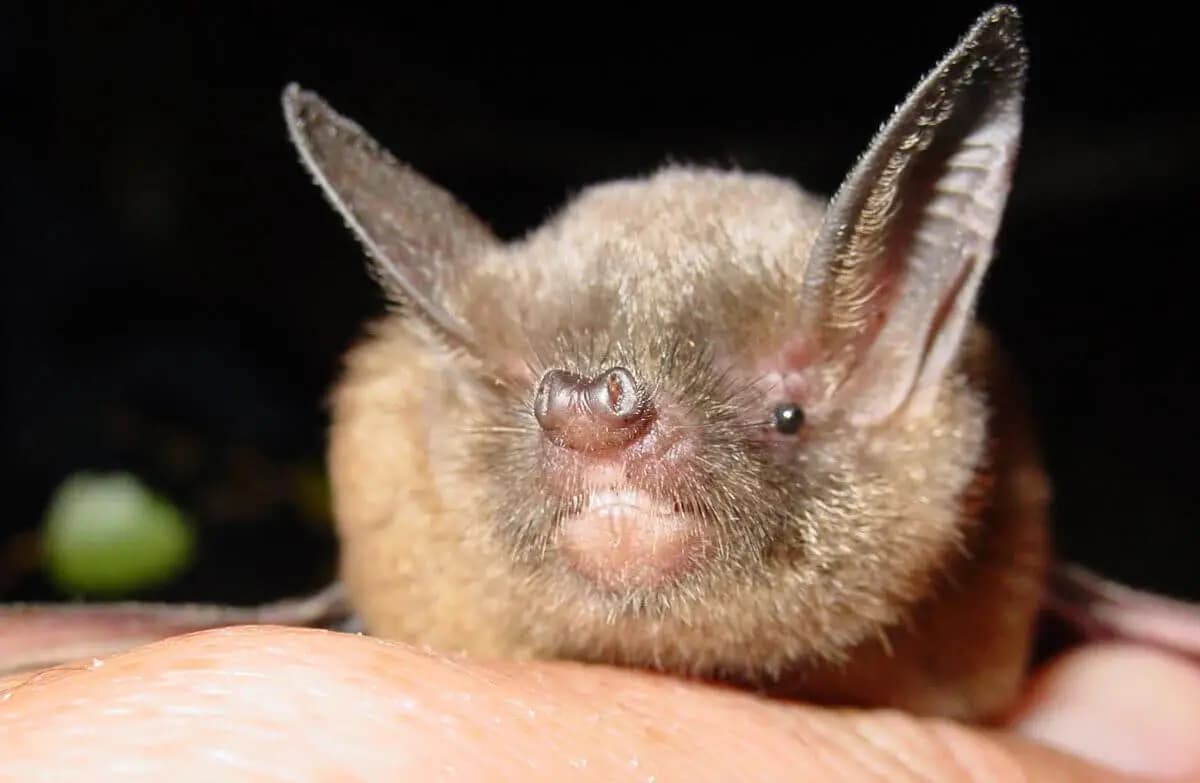
As for the lesser short-tailed bats, they are about the same size as the long-tailed bats. It has a layer of thick fur that ranges from light brown to dark brown. This one has relatively large ears, which assist with echolocation. At the same time, it also has large nostrils that face outwards that allow it to use olfaction to guide its movements. This bat species also has a distribution on both main islands, and various surrounding islands. It is classified as Vulnerable on the IUCN Red List because of a declining population due to habitat loss and predation.
6Powelliphanta Snail
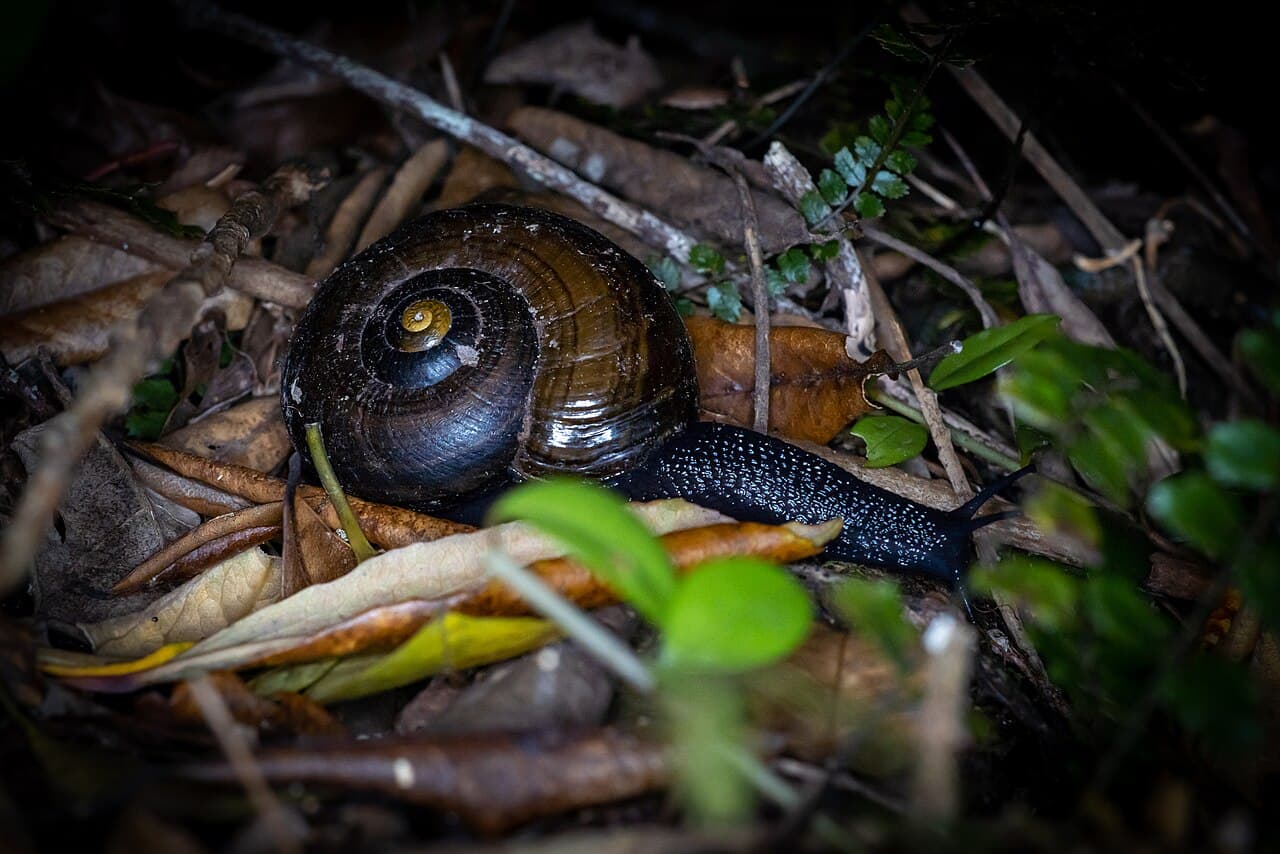
Scientific Name: Powelliphanta
The Powelliphanta is a genus of large air-breathing land snails with so many fascinating traits found only in New Zealand. Every snail in this genus is large, with a shell size of up to 9 centimeters across. Also, every species is very striking, as it comes in a wide range of colors. The shells of these snails vary from brown or red to black, yellow, and more. Those shells are glossy with delicate bands and patterns, covering the muscular bodies with a distinct head and eye stalks.
This snail genus lives in lowland forests, but prefers moist native forests. They need moist surroundings; otherwise, their outer layer will dry, shrink, and crack. These gastropods are carnivorous and nocturnal, and they come out only at night to feed on invertebrates, mainly native earthworms and slugs. They feed on earthworms by sucking them up through their mouths. This genus is slow to mature, and it can live for 20 years or more. There are at least 21 species and 55 subspecies within the genus, all of which are either endangered or threatened. Some of the main threats are live animal collection for their shells, habitat modification, predation, and trampling by mammals.
7Takahē
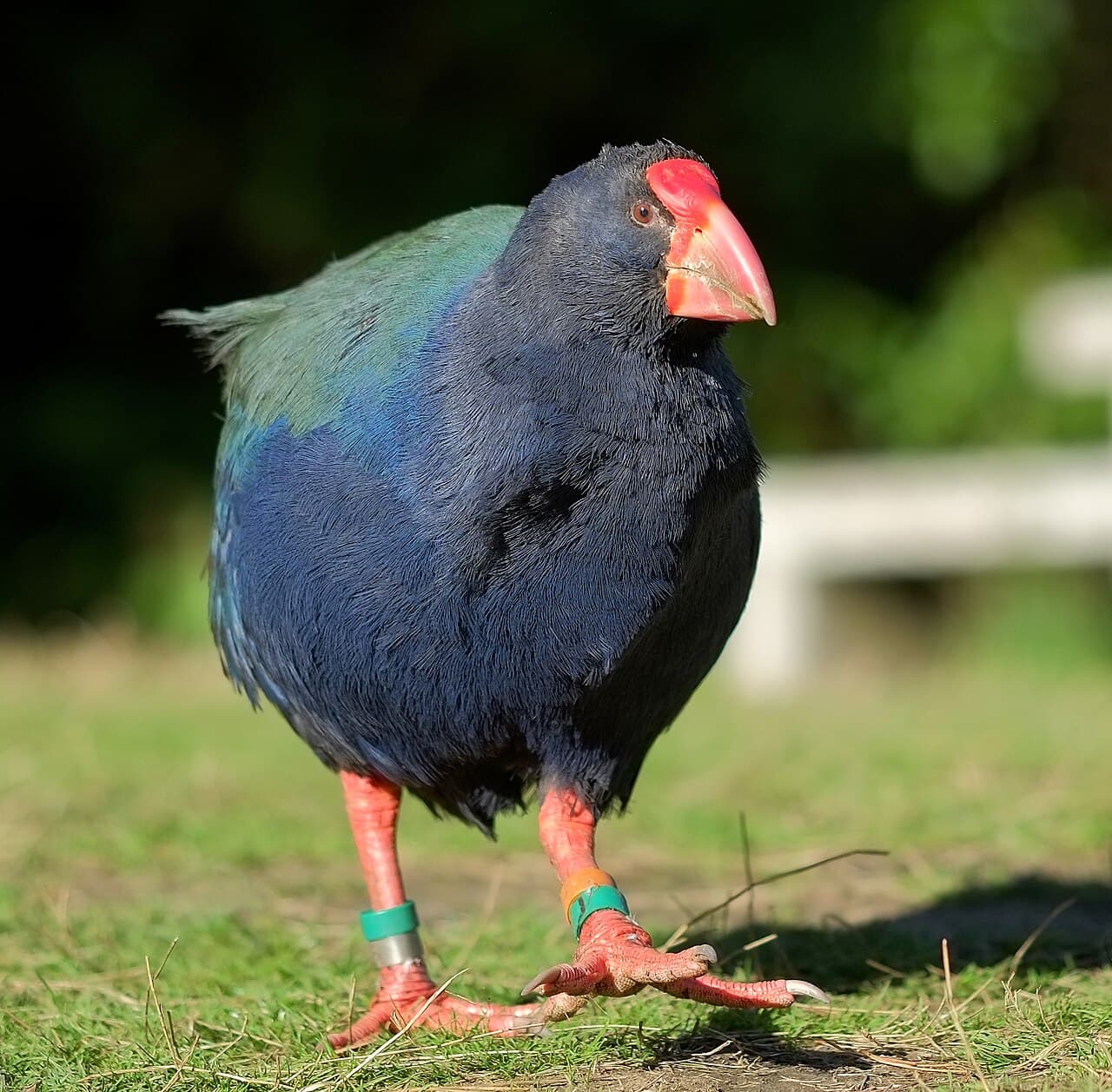
Scientific Name: Porphyrio Hochstetteri
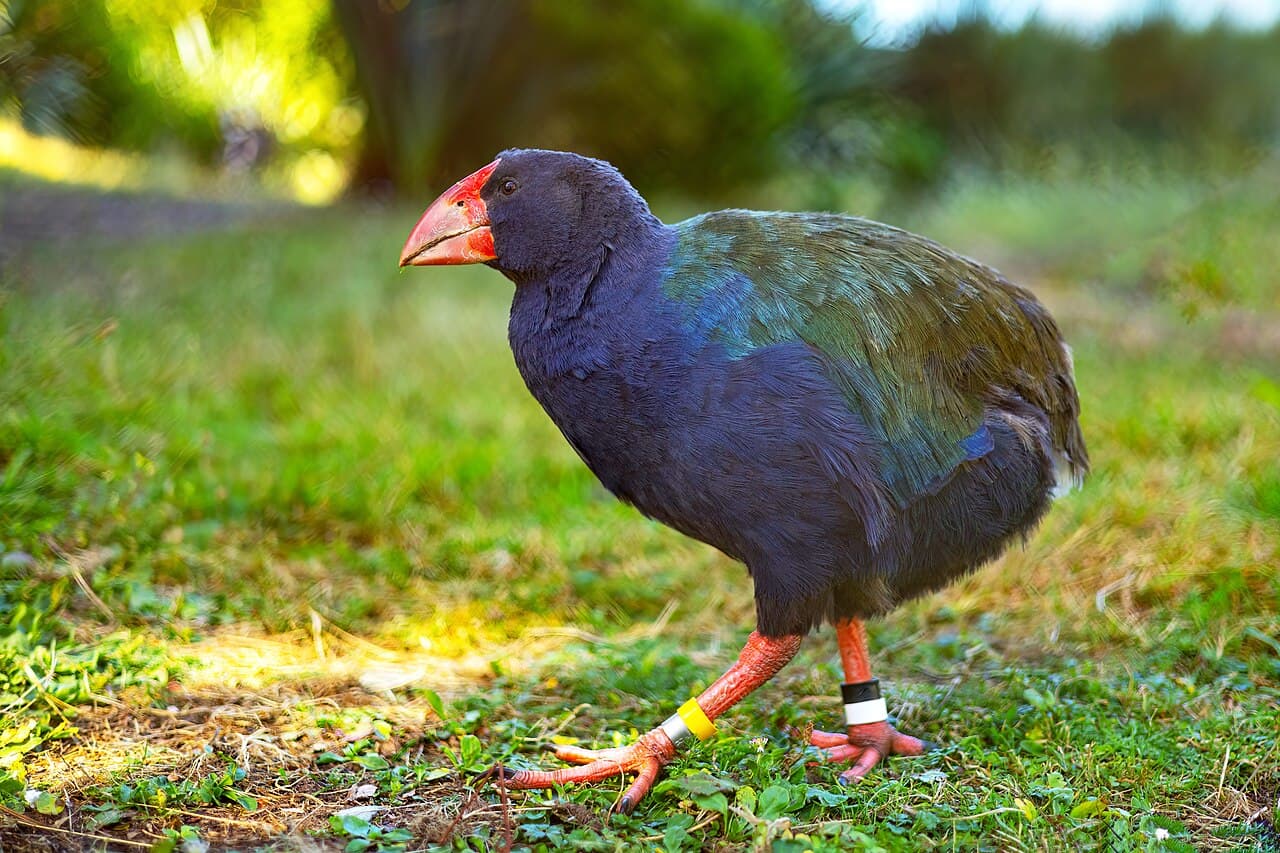
Round and plump, you are looking at a flightless swamphen native to New Zealand. A takahē grows up to 63 centimeters in length, and stands around 50 centimeters tall. It is a stocky and powerful bird with short but strong legs and a massive bill. Adults have silky and iridescent plumage with dark blue or navy blue on the head, neck, and underside. Their back and inner wings are teal and green, and the tail is olive-green with white underneath. The parts that stand out the most are their red beaks and crayfish-red legs.
The takahē lives in alpine grassland habitats, where they feed on insects, grass, and shoots. Its lifespan is between 12 and 20 years, and these monogamous birds breed once a year. A female lays a clutch of one to three eggs that takes around 30 days to hatch. Chicks stay in the nest for about a week, after which they follow their parents for about 1.5 years. We have the North Island takahē and the South Island takahē; unfortunately, the former is already extinct. As for the South Island takahē, there are only around 500 individuals today. Their population is not doing well at all, being endangered due to competition for food, habitat loss, overhunting, and predation.
8Tuatara
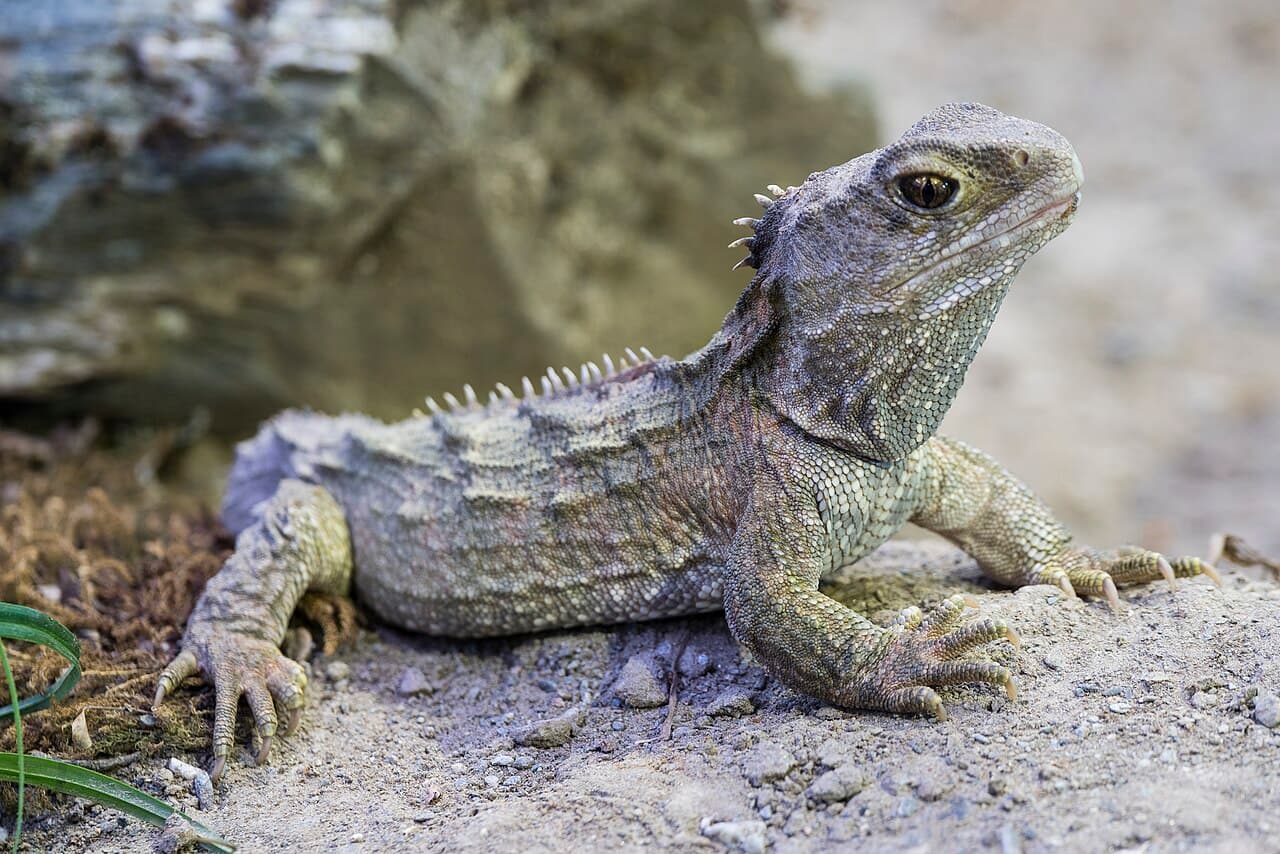
Scientific Name: Sphenodon Punctatus
You cannot forget the amazing tuatara when it comes to animals native to New Zealand. This living fossil is the only surviving member of its order, Rhynchocephalians, from the Mesozoic Era. A tuatara is greenish brown and gray, and it is around 80 centimeters long from head to tail tip. In fact, it is the largest reptile in New Zealand. It has a few distinctive features such as a second row of upper teeth, third eyes, and hearing ability. Well, you gotta be extra special if you survive for millions of years like this one. Tuatara in the Māori language means “peaks on the back” or “spiny back”, due to its distinctive crest. It has a spiny crest on its back that is made of triangular soft folds of skin. This crest is larger in males, and they stiffen it for display.
Tuataras live on 32 offshore islands free of mammals, and they are extinct on the main islands. Their diet consists of bird’s eggs, chicks, frogs, insects, invertebrates, and lizards. Adult tuataras are nocturnal and terrestrial, and they often bask in the sun to warm their bodies. Adults are also cannibalistic, so hatchlings are active during the day to avoid being eaten by adults. Females have a gestation period between 11 and 16 months, and lay a clutch of eggs every 4 years. It takes a tuatara around 13 years to reach full maturity, and climate change affects their reproduction a lot. Just like many animals native to New Zealand, tuataras are also threatened by habitat loss, illegal pet trade, and predation.
9Wētāpunga
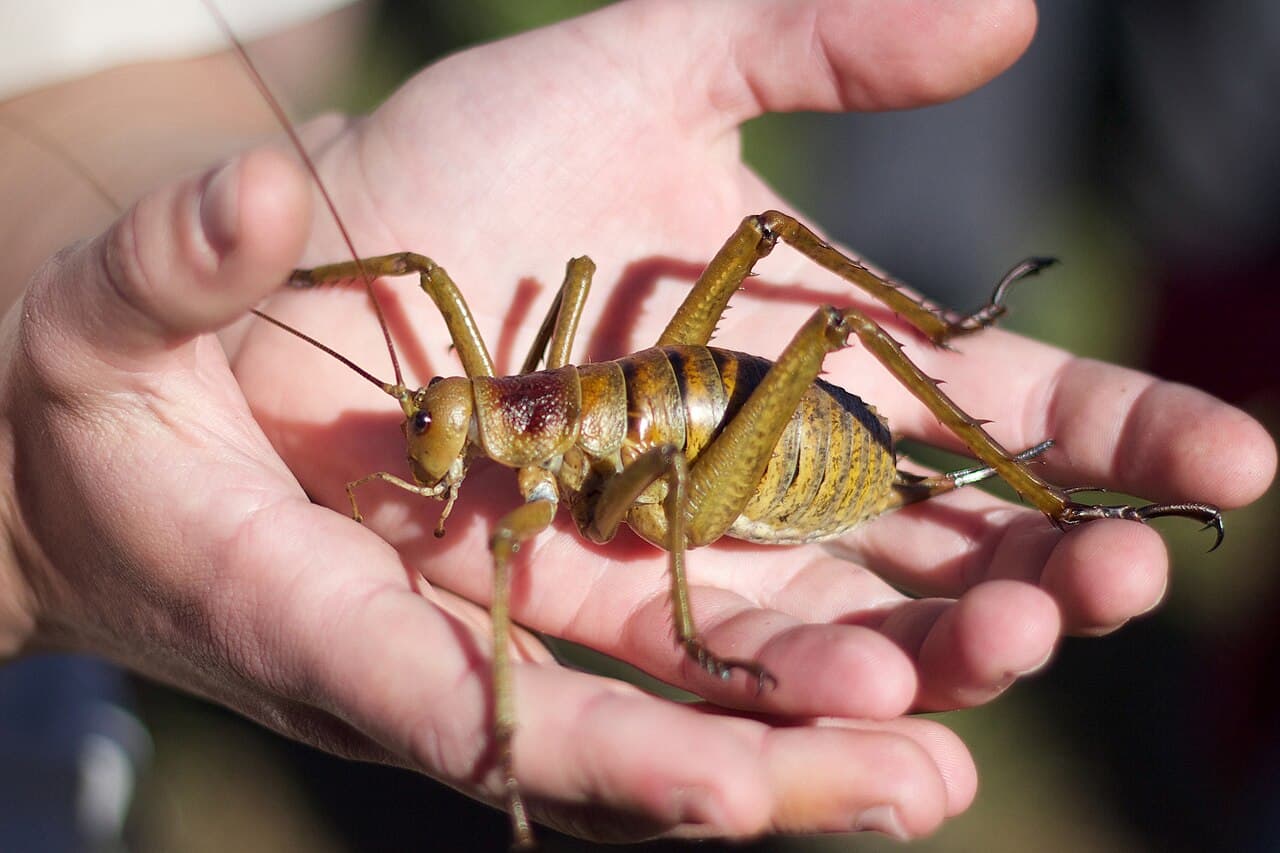
Scientific Name: Deinacida Heteracantha
When it comes to animals native to New Zealand, a large critter like this has to be on the list. You are looking at a flightless wētā, a cricket that reaches 6.5 centimeters or bigger in size. Females are larger and heavier than males, and they can be as heavy as 35 grams. And that is heavier than an average house sparrow. Its hind legs are nearly twice the length of its whole body, and they are packed with strength. A wētāpunga has a broad body and a round head with long antennae but short mandibles. Despite its large size, this insect is very docile and harmless; it does not bite, jump, or kick. When disturbed, it produces a stridulating hiss by rubbing its abdomen and legs together; that’s it.
Wētāpunga is endemic to New Zealand, with its population restricted to Hauturu (Little Barrier Island) only. These solitary insects hide during the day, and they come out to feed when the night approaches. These ground dwellers are mainly herbivores, and they mostly feed on forest foliage and fresh leaves, especially native plants with large leaves. Adults have a short lifespan of 6 to 9 months, and they will mate repeatedly during those times. The males will die soon after the final mating, and the females will also die after laying their final eggs. This giant cricket species is classified as Vulnerable on the IUCN Red List due to ongoing population decline. The threats to their numbers are habitat destruction and predation.
10Yellow-Eyed Penguin
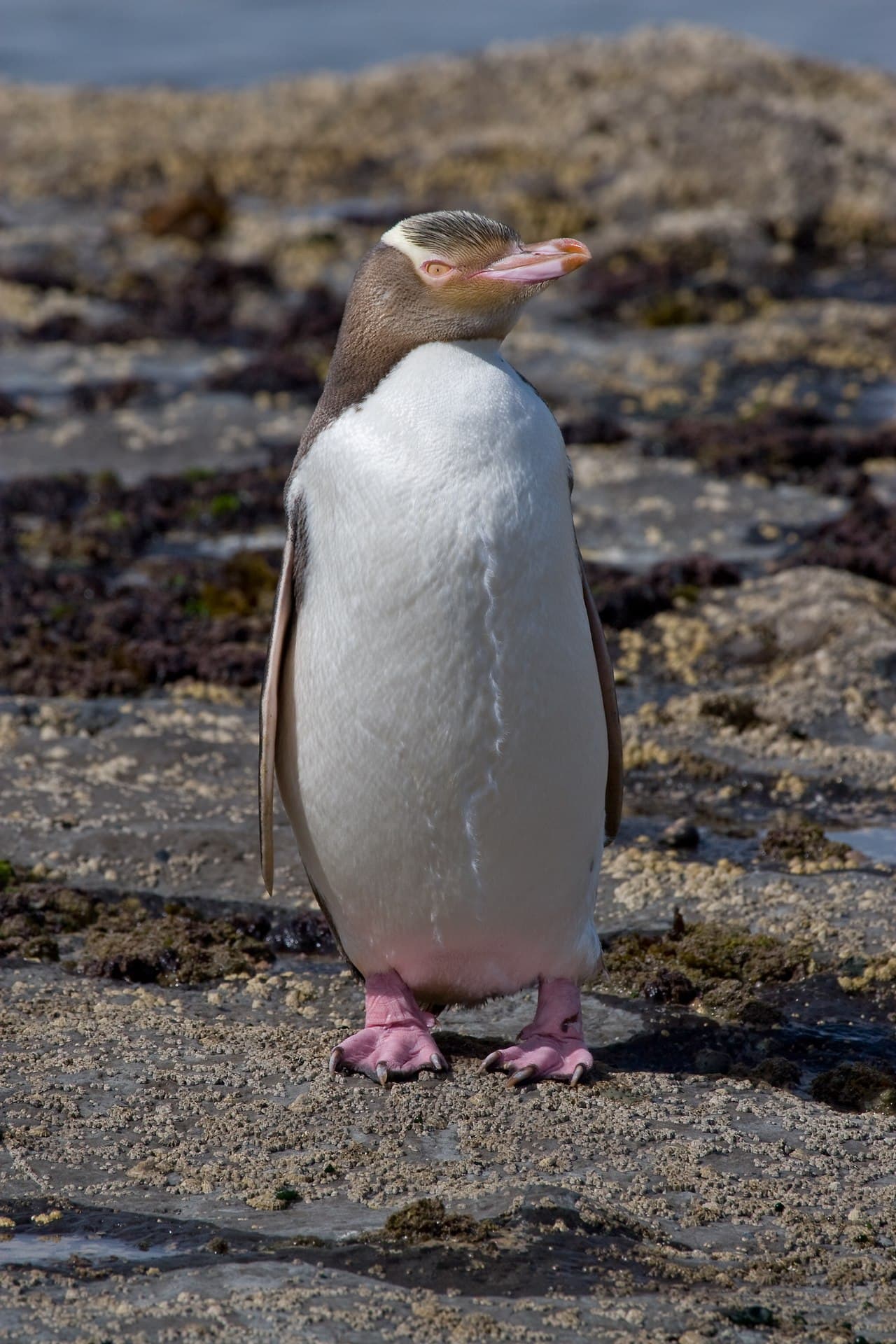
Scientific Name: Megadyptes Antipodes
The yellow-eyed penguin, aka hoiho, is one of the interesting animals native to New Zealand. Being the largest penguin native to New Zealand, this species stands 78 centimeters and weighs up to 8.5 kilograms. A yellow-eyed penguin has a slate gray forehead, crown, and sides of the face with golden yellow flecks. It is very easy to recognize this one with the pale yellow feathers surrounding its eyes and encircling the back of its head. The chest, stomach, thighs, and underside of its flippers are white, while the back and tail are slate blue-black.
It is endemic to New Zealand, having two distinct populations: the northern population and the southern population. These piscivores’ diet is made up of fish such as blue cod, opalfish, red cod, and silversides. Sometimes they also feed on cephalopods like squids and crustaceans like krills as well. Hoiho is the least colonial of all penguin species, as they nest in solitary pairs or loose aggregations. When it comes to nesting sites, they prefer forest or scrub habitats with dense vegetation cover. This is one of the rarest penguin species in the world, and its status is Endangered on the IUCN Red List. There are multiple threats such as climate change, disease, fishing, habitat loss, human disturbance, malnutrition, predation, and more.