
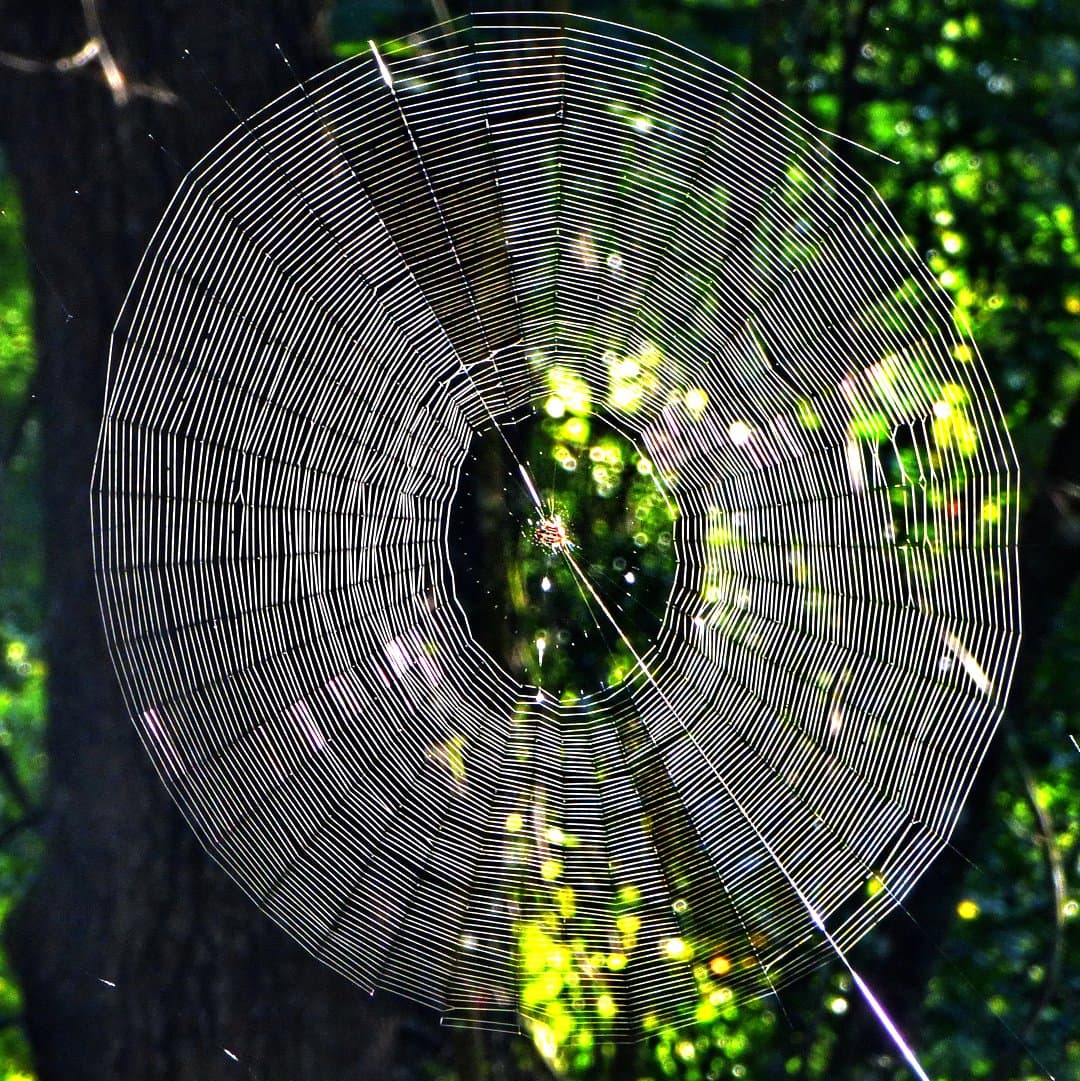
Have you ever wondered which spiders that build big webs? The question randomly came to my mind, and now I found the answer. Arachnids are something, aren’t they? You are going to look at 4 spiders that build big webs today, and all of them are very impressive. Let’s take a look and see if you have heard of them before.
1Darwin’s Bark Spider
Scientific Name: Caerostris Darwini
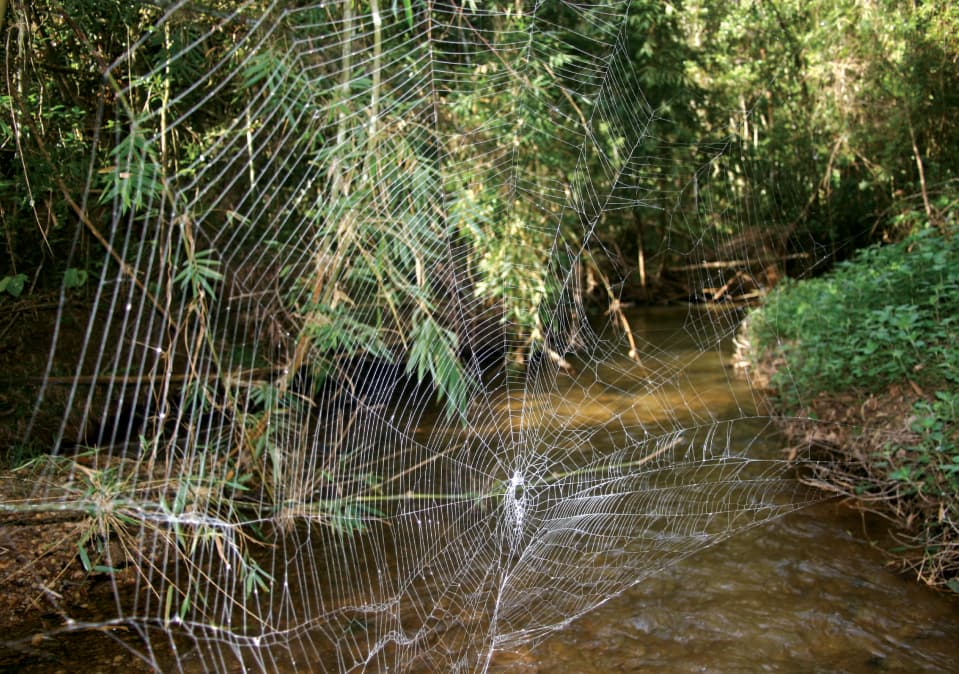
Darwin’s bark spider is the most famous member of the orbweaver spider family for many reasons. Females are bigger, with a body length of 18 to 22 centimeters, while males are only around 6 centimeters. They also have longer fangs that are packed with very potent venom. Their colorations are also different from each other, with females being black in color with white hairs on the abdomen, appendages, and cephalothorax. As for males, they are redder and lighter brown in color, but with the same white hairs on the same parts. The Darwin’s bark spiders that you see on the big webs are only females; males don’t build webs. These creepy crawlies are native to the lowland forests and wetlands of eastern Madagascar, mainly near the water. It casts its net to catch an abundance of delicious meals such as bees, damselflies, dragonflies, mayflies, and other flying insects.
When it comes to spiders that build big webs, the Darwin’s bark spider has to be on the list. Darwin’s bark spider is the orbweaver spider species that builds the largest known orb webs. The size of the web can range anywhere from 0.9 to 2.8 square meters, with bridge lines spanning up to 25 meters. This spider builds its web directly above a river or the water body of a lake, which is unusual for spiders. However, it is a very good location as it can catch prey flying over the water easily. More than that, its silk is the toughest biological material so far, with a tensile strength of 1.6 GPa. In fact, its silk is over 10 times tougher than a piece of Kevlar of the same size.
2Golden Orb-Weaver Spider
Scientific Name: Nephila
The golden orbweaver spiders are in the Nephila genus, and they are colorful spiders with impressive skills. A golden orbweaver is usually 4.8 to 5.1 centimeters in females, and less than 2.5 centimeters in males. These spiders vary from reddish to greenish yellow with distinctive white patterns on the cephalothorax and yellow bands on their legs. There are so many species of golden orbweavers, with a distribution across Africa, Asia, Australia, and the Americas. They inhabit coastal sand dune shrublands, dry open forests, mangrove habitats, and woodlands. The webs are not the only weapon that they have; these spiders also have strong venom. Their venom is more effective on prey, but it is strong enough to cause pain in humans. However, they don’t attack or bite humans unless provoked.
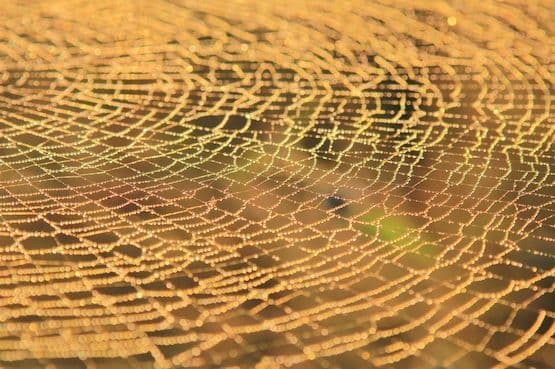
Every member of this genus is a master web builder, one of the spiders that build big webs. This arachnid produces large asymmetric wheel-shaped orb webs as big as 1.5 meters in diameter, where they reside permanently. Their webs are complex, with a fine-meshed orb suspended in a maze of non-sticky barrier webs. It gets its name from the yellow color of the silk that it uses to construct the webs. Just like the name suggests, the yellow threads of these spiders shine like gold in sunlight. They place the openings of their webs between shrubs and trees where insects are likely to fly. The large and sticky webs of the golden orbweavers catch prey like beetles, cicadas, flies, locusts, and many other insects. On top of that, the strong structure of the webs can also trap bats and birds on some occasions.
3Jorō Spider
Scientific Name: Trichonephila Clavata
Not different from other spiders out there, females of this species are also larger than males. A female is 1.7 to 2.5 centimeters big, and males are only 0.7 to 1 centimeter in size. Females have dark blue and yellow striped bodies with red spots on the abdomen, and males are all black in color. Both males and females have large abdomens and long legs, but males don’t build webs. The Jorō spiders have small fangs, so their bites cause pain and redness just like a bee sting. Native to Asia, the Jorō spider has a wide range across China, Japan, Korea, and Taiwan. They live in various outdoor habitats such as around waterways and wooded areas.
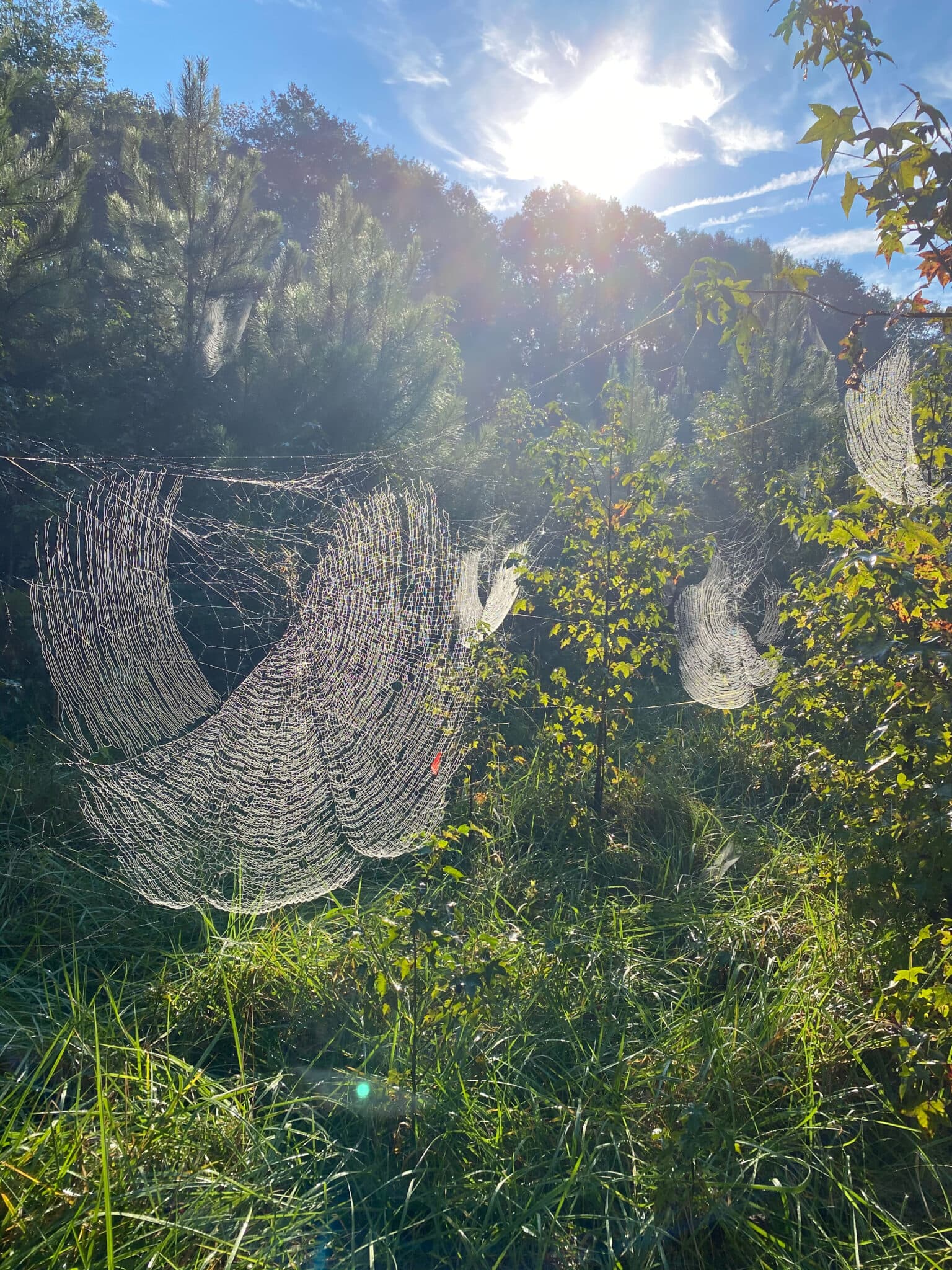
The Jorō spiders are one of the spiders that build big webs, reaching 3 to 6 meters in length. Similar to that of the golden orbweavers, the webs of Jorō spiders are also rich gold in color. The most interesting part is the structure of the web itself. Its cross-section has 3 layers, including the central orb and two irregular layers in front and behind the orb. Their webs trap both native and invasive species, and arthropods such as grasshoppers and moths, and other insects. The use of their webs does not end there; young Jorō spiders use a tactic called “ballooning”. They use the web to harness the winds and electromagnetic currents of the Earth to travel long distances. This is why some people say that these spiders can fly.
4Spiny-Backed Orb Weaver
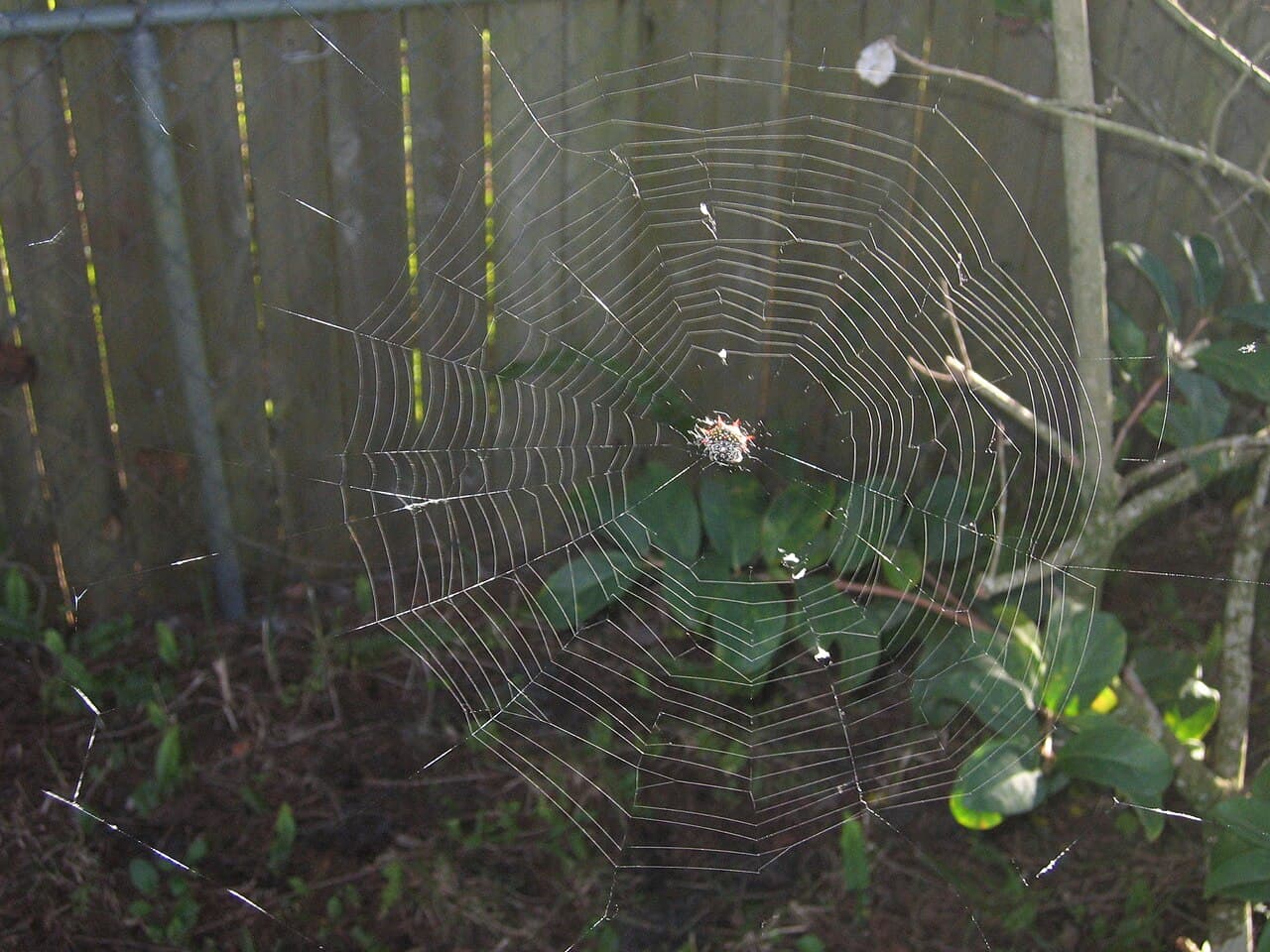
Scientific Name: Gasteracantha Cancriformis
Here we have another orbweaver that is also the master of web building, the spiny-backed orbweaver. Compared to the other spiders that build big webs, this one is rather small in size. Females are 0.5 to 0.9 centimeters in size, while males are so tiny they are only 0.2 to 0.3 centimeters. This arachnid has a very special appearance, with its 6 abdominal spines that stand out the most. Its carapace, legs, and underside are black with white spots under the abdomen. If the upper side is white, it has either red or black spines. And if the upper side is yellow, it can only have black spines. This unique spider is native to Central America, North America, the Caribbean, and South America.
Being so tiny, they also build small webs, yet still larger than most spiders of the same size. A spiny back orbweaver can construct a web with foundation lines that can stretch 3 to 4 meters or more. Despite its small size, it can spin as many as 30 durable radial lines and attach them to sticky concentric circles. It anchors its web between distant shrubs, trees, and even building corners to catch insects. Some of its most common meals are beetles, flies, mosquitoes, moths, and other crawling and flying insects. When prey is trapped, it injects juices that melt the inside of the victim, and then drinks it afterward.
Types of Spider Web
If you think that all spider webs are the same, think again. There are different types of spider webs based on their shape and structure. Also, there are several uses of webs beyond what meets the eye. And do you know that spiders also use their webs for hearing? Meanwhile, some spiders use their webs to trap air underwater to breathe. We are going to learn a bit more about different types of spider webs. Let’s see which one that you come across the most among 8 of them below.
Funnel Web
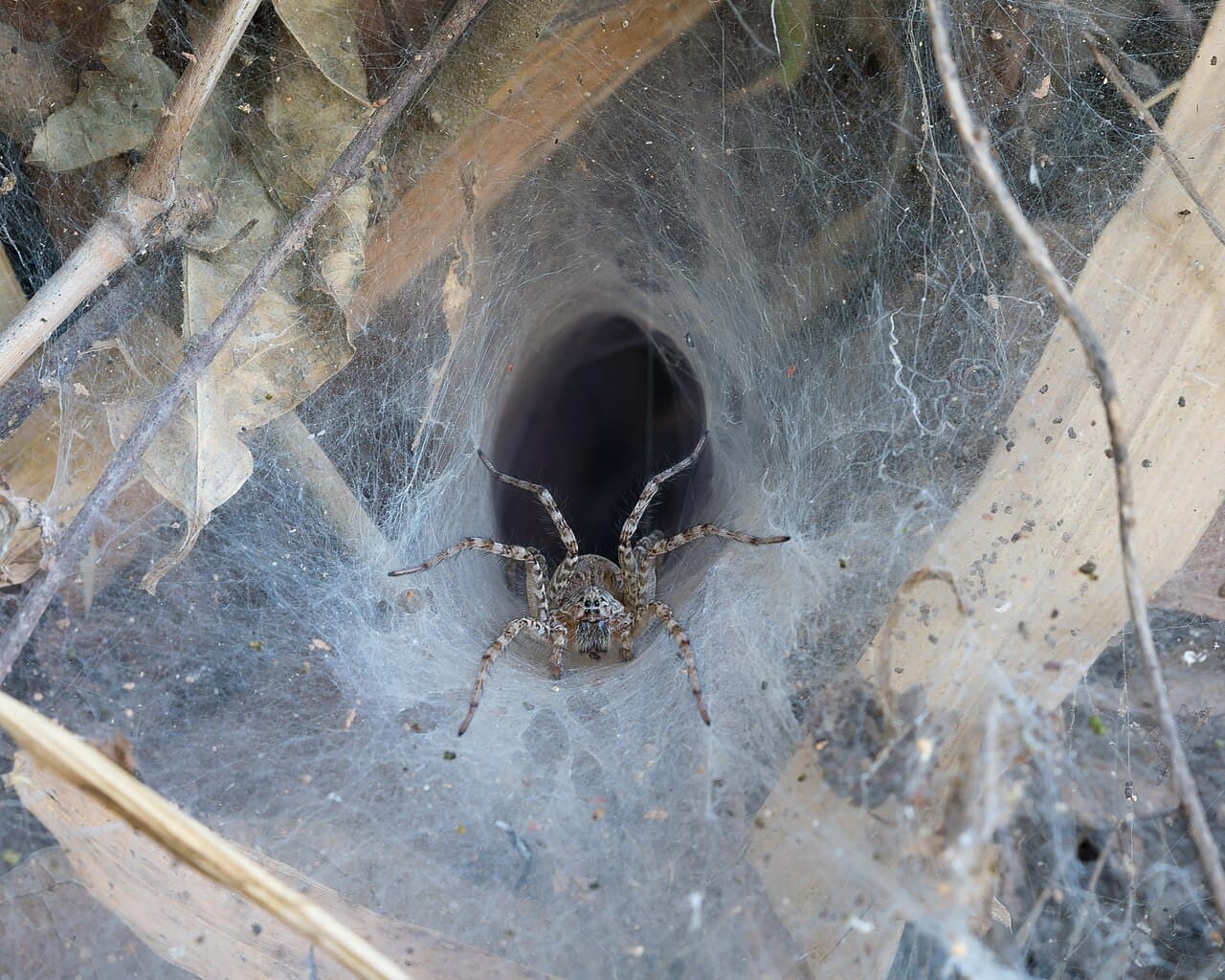
Funnel webs are very dense and flat, resembling a funnel. It has a funnel tube that leads to the spider’s burrow underground. The webs are tucked in between plants and rocks. The hunting strategy is pretty simple. It hides inside and waits for dinner to enter.
Lace Web
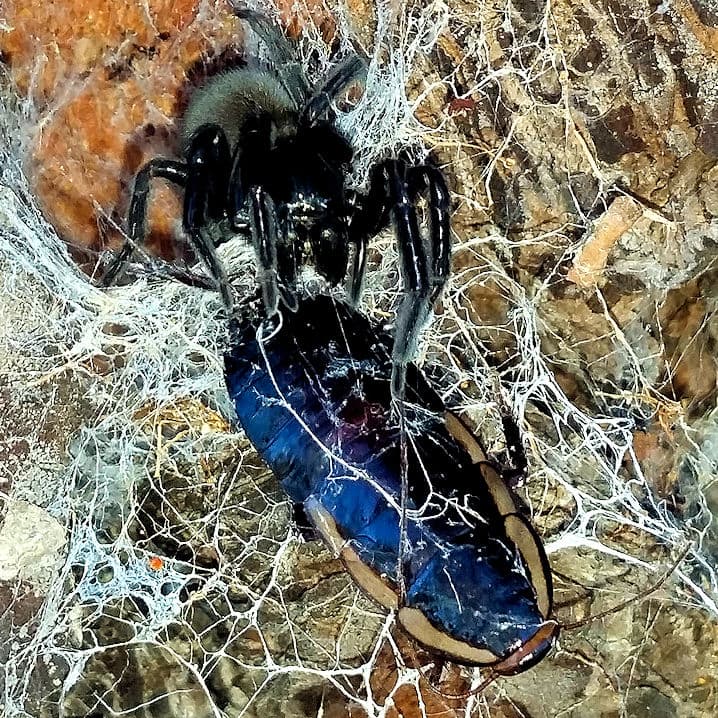
Looking very similar to funnel webs, a lace web is just thinner, so it looks more like a lace. It has a fuzzy and woolly texture that is made of extremely fine combed fibers. Fresh silk often has a faint bluish or silvery tinge. These webs are more common around fences, gaps on walls, and window frames.
Orb Web
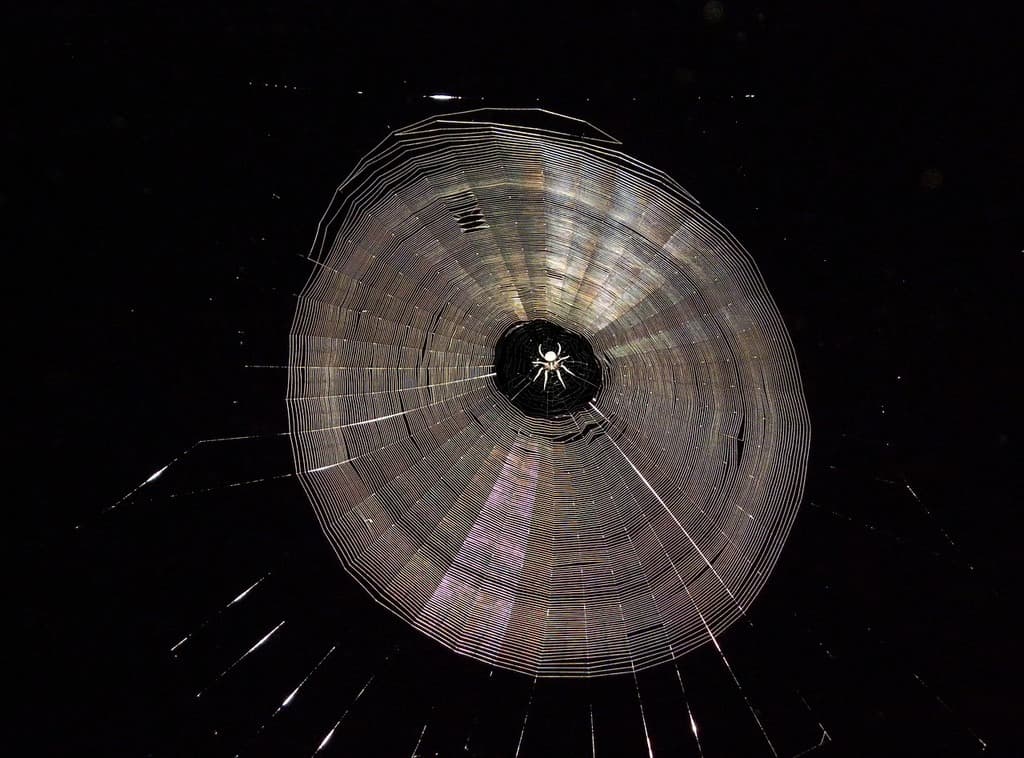
Here we have the most common, and the type of web that we see the most. Orb webs are the classic two-dimensional webs that look like bicycle wheels or dart boards. The orbweavers construct this web with radial threads that function as a scaffold, then lay down sticky threads in a spiral. They will either wait on the web or hide nearby for their prey to land. Also, these spider typically take their webs down and rebuild them every night.
Purse Web
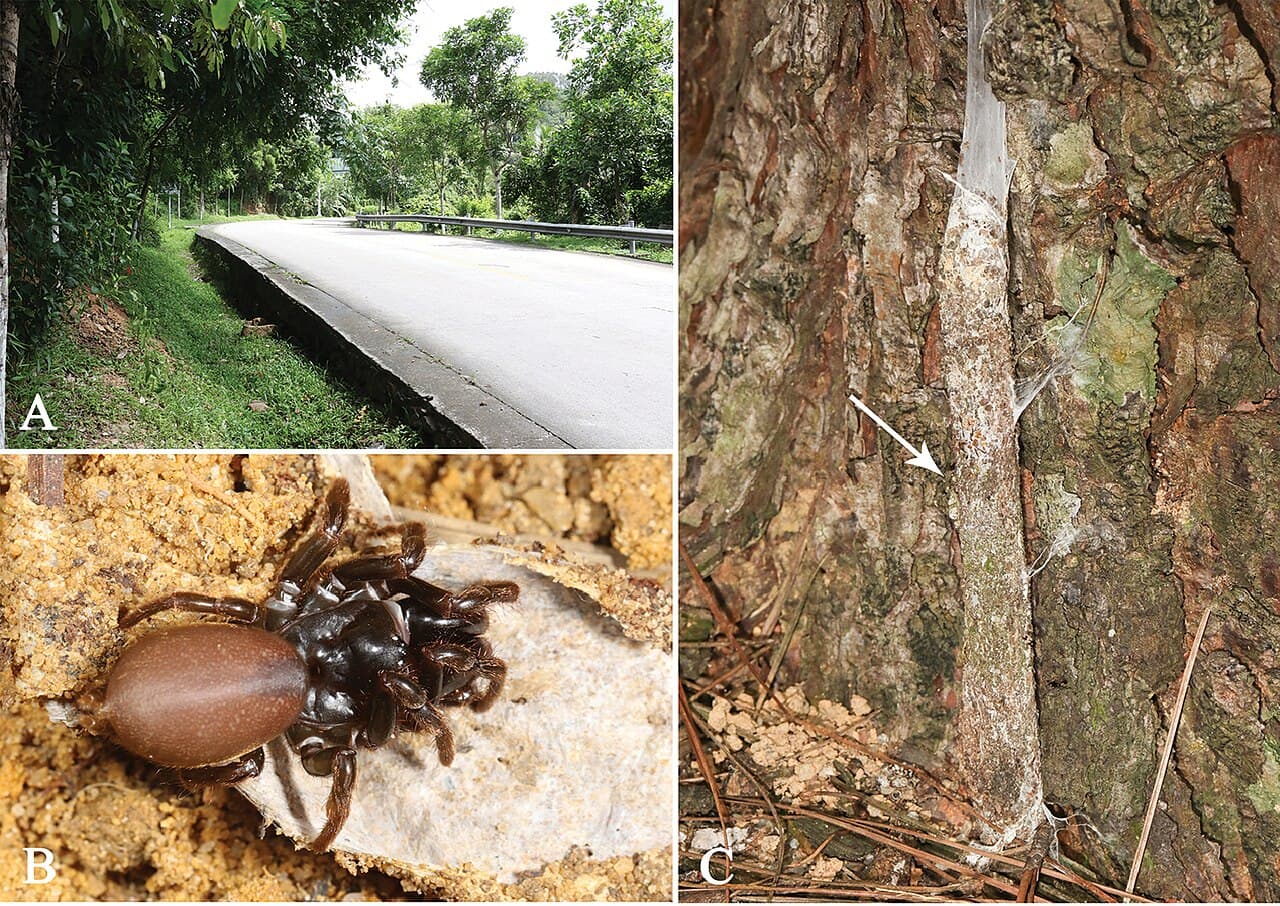
The purseweb spiders build this kind of web right on the ground. This arachnid digs a long underground tunnel and lines it with silk at the end inside the tunnel. The whole thing looks like a tube that extends from an underground burrow up the base of a tree or rock. The web camouflages really well with the debris and soil outer coating, while the spider hides inside the sock shape. If anything crawls across outside, it will not escape the grasp of these spiders.
Radial Web
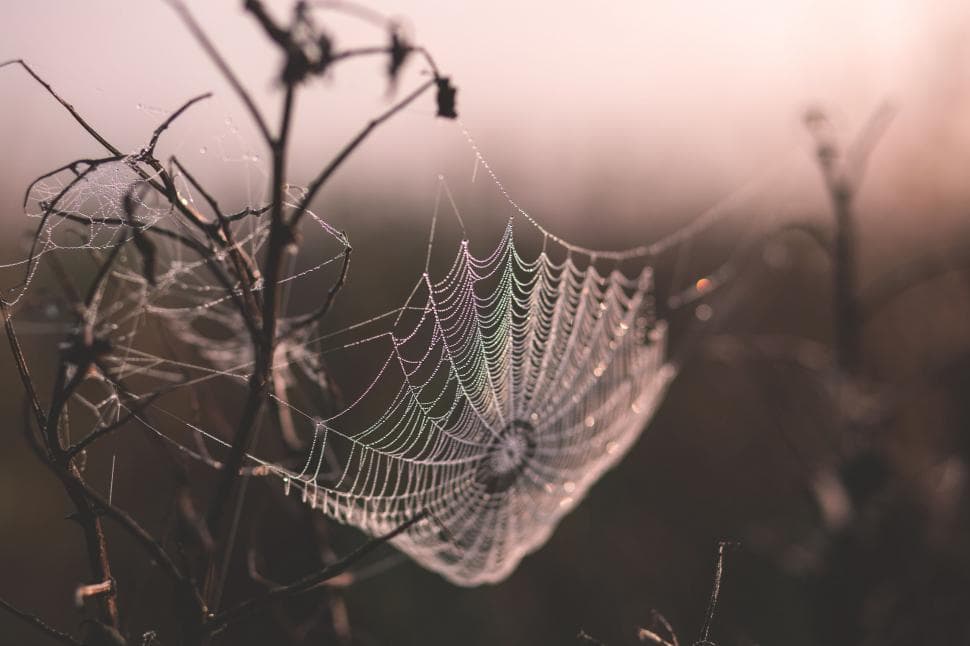
This is an interesting one, this style of web has single lines of silk radiating away from a silken tube. These lines not only support the whole structure, but also alert the spider hiding inside to prey wandering past. Basically, that is the only use of the web. The spiders will actually rush out to catch the prey without the need for the trap.
Sheet Web
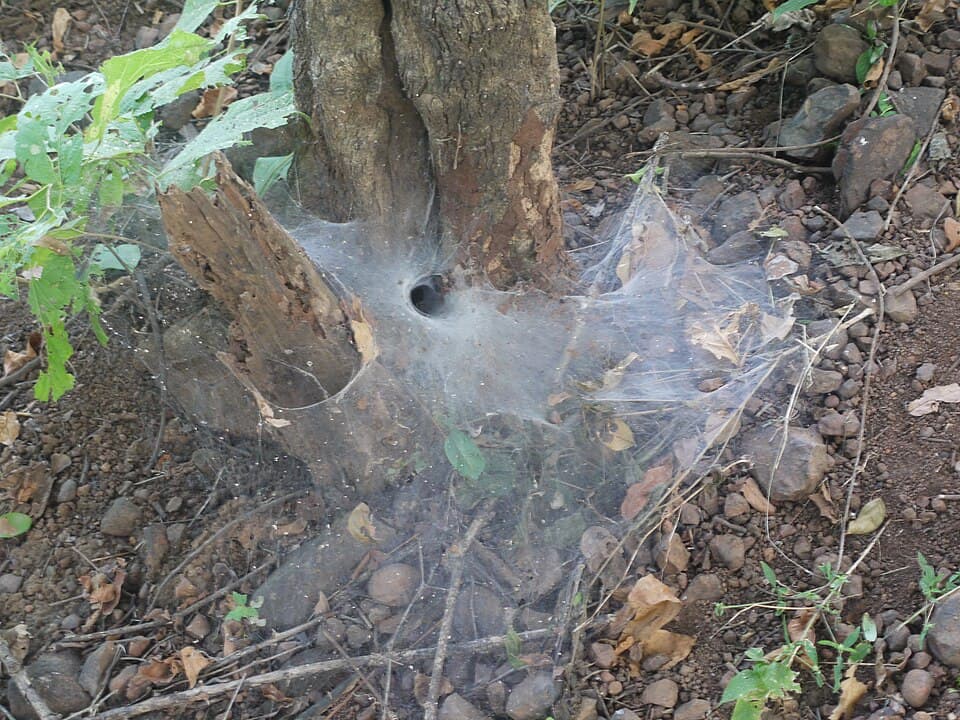
As for this one, it is a densely woven, thin, and horizontal sheet that looks like a mat. The name of the builder of this type of web is sheetweb weavers. You will mostly see this kind of web on grass and low bushes. The sheet weavers also plant a few sneaky strands of silk above the web. When a bug flies into one of the strands, it will be knocked down into the web. After building, they usually hang beneath the web, waiting for dinner to fall from the sky.
Tangle Web
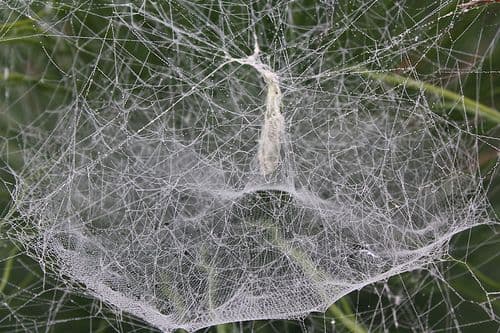
Who needs to be neat all the time, right? Tangle webs are very common in the corners of rooms in houses, especially in places that people leave behind. It is a messy collection of threads, but it is still effective enough to catch prey. Daddy longlegs are usually the builders of this web, but some house spider species are the same. These webs are usually useful because the spiders who build them feed on household pests.
Triangle Web
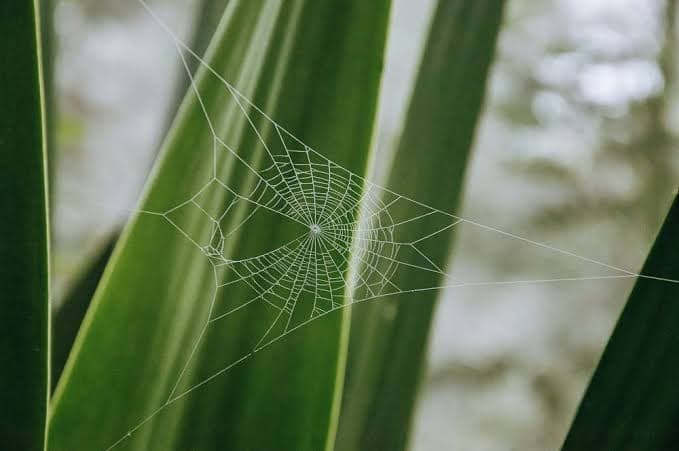
This is the most special and the most unique type of web, built by the triangle spiders. The spokes and spirals connect to the three silky strands which form a triangle, just like a pizza slice. These webs are not sticky, and they are actually covered in tiny fibers that give the web a fuzzy texture. Those tiny fibers help the spiders to smother their prey. The triangle spiders hunt by gripping the main line and pulling the web backward just like a slingshot. When an insect hits the strands, the spider lets go of the line and hit the prey.
Related Post: Spiders That Can Walk On Water