Weird-looking mushrooms? We all have an idea of what mushrooms look like, the ones that we normally see. Today, we are talking about the ones that reside on forest floors, in decaying tree trunks, or behind damp rocks. Many of the weird-looking mushrooms below will make you question how they are even called mushrooms at all. With around 14,000 described mushrooms, we will take a look at 15 of the strangest-looking ones today.
1Basket Fungus
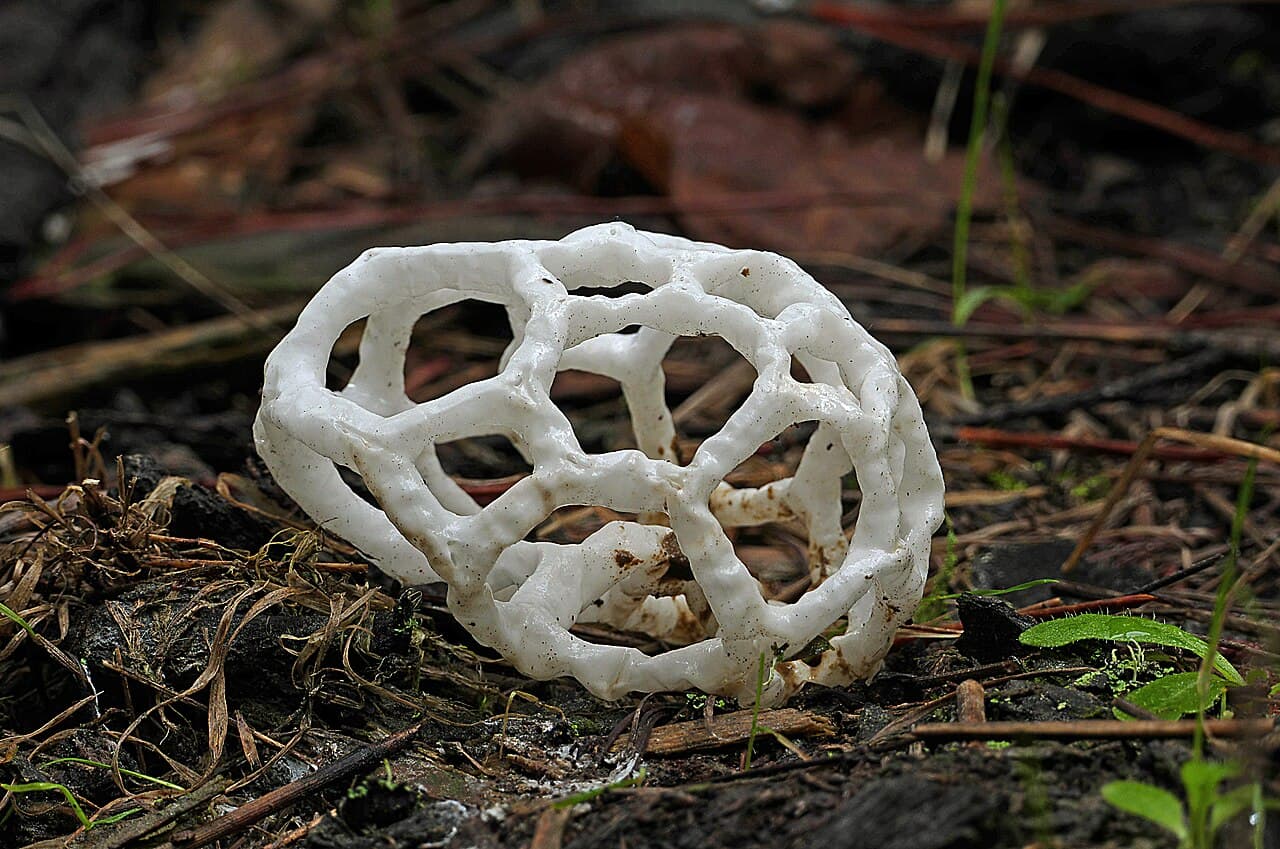
Scientific Name: Ileodictyon Cibarium
Why would a mushroom look like that, right? As you can see, a basket fungus looks like a small woven basket with large holes that cover the ground. It is around 7 centimeters in diameter, and mature ones are globe in shape and white in color. The mushroom starts underground, then emerges from the leaf litter or soil as a creamy grayish egg-shaped form. When it is time to release its spores, the mature fruiting bodies burst from the egg. Then, it forms a lattice with 10 to 30 polygonal meshes that create the basket shape.
Looking so strange for a mushroom is not thing, being to emit strong smell is another thing. The inner branches of the mushroom are coated in an olive-brown and slimy layer called gleba. This gleba emits a strong and foul odor that resembles feces or rotting meat. The smell attracts flies and insects that will come to feed on it and help disperse the spores later. Even without the insects, mature mushrooms can detach and roll around in the wind to spread spores by themselves. Appearance and odor aside, these mushrooms are beneficial to the soil as they break down dead wood, leaf litter, and mulch.
The basket fungus is native to Australia, New Zealand, and parts of South America, including Argentina and Chile. They grow in soil in forests, mulched garden beds, meadows, and sand dunes. Traditionally, the Māori people used these fungi as a food source when they were still in the egg-like state. They cooked the mushrooms by roasting them over a fire or steaming them in an earth oven. The taste? It resembles a potato, crispy on the outside and gooey in the middle.
2Bleeding Tooth
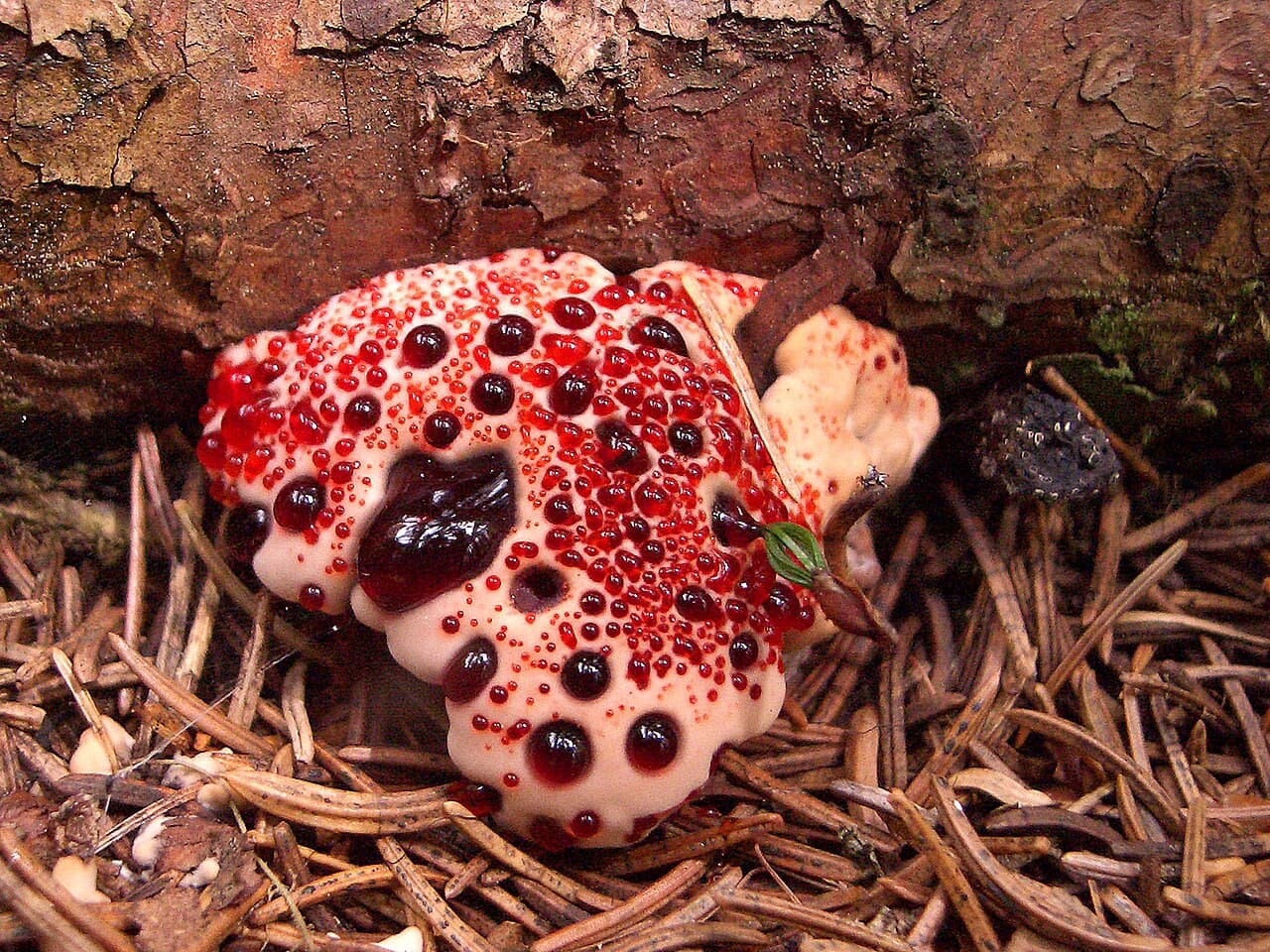
Scientific Name: Hydnellum Peckii
We do have some freaky mushrooms, don’t we? The bleeding tooth, or Devil’s tooth, is a striking mushroom that is very well known for oozing a bright red, blood-like liquid. Young caps are pinkish or whitish and velvety, and they turn dull brown or black as they age. The young and moist bleeding tooth fungus undergoes a process called guttation when there is too much moisture. This is when internal osmotic pressure forces excess water out through the pores in the cap. The water mixes with a red pigment called atromentin; hence the red liquid. Things get more weird with this mushroom because instead of having gills or pores underneath, it has teeth. It features icicle-like spines that look like teeth, which expand its surface area to drop spores.
The Devil’s tooth spreads across Europe, Iran, North America, and South Korea, growing in mountainous coniferous forests. This mushroom is mycorrhizal, and it forms an ectomycorrhizal bond with conifer trees such as fir, pine, and spruce. The symbiotic relationship involves the mushrooms trading soil minerals for carbon dioxide from the trees. They cluster together, grow solitary, or scatter on the ground under conifers, often among mosses and pine needle litter. If you think it looks appetizing, you can definitely give it a try. It is non-toxic, and it is only inedible due to its severe bitter taste and a tough, cork-like texture.
3Collared Earthstar
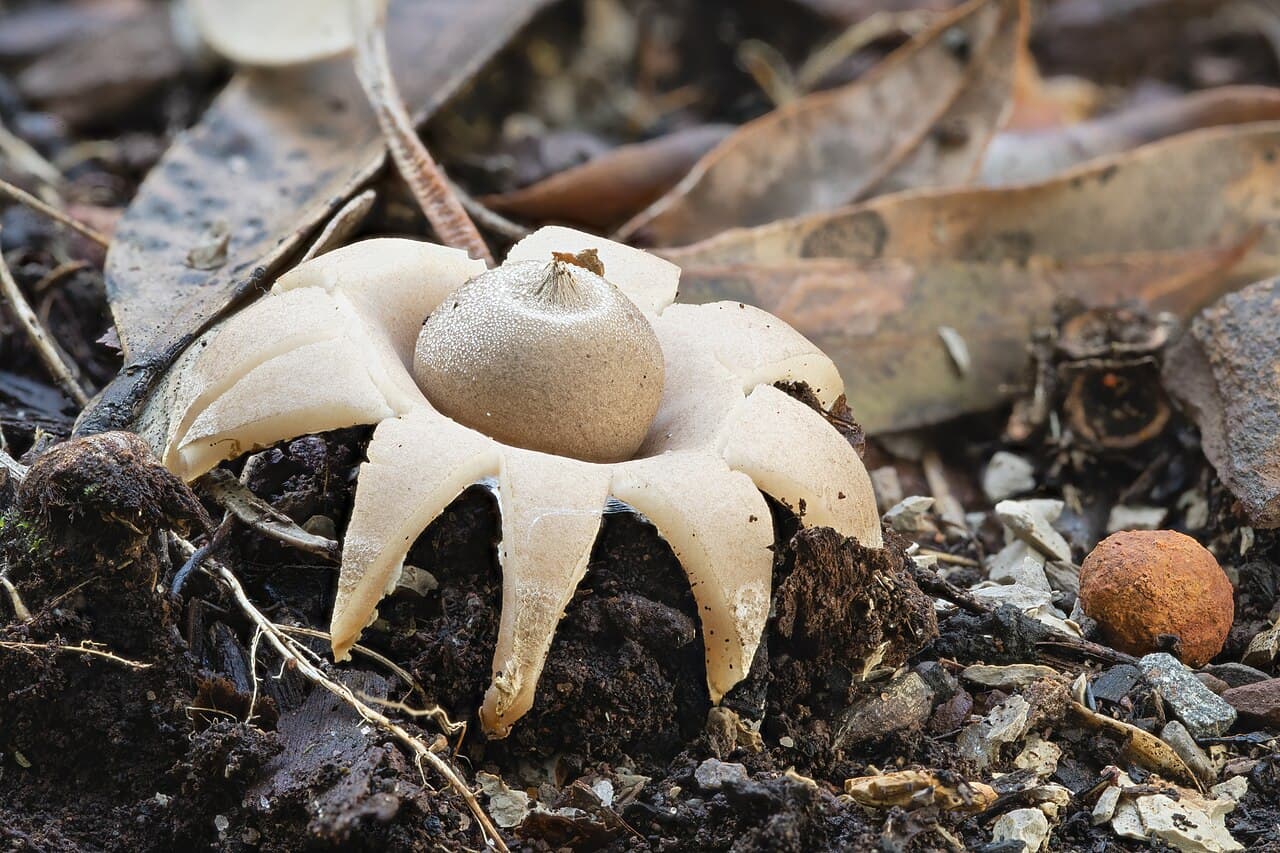
Scientific Name: Geastrum Triplex
Collared earthstar starts as an egg-shaped or spherical brown bulb that is 1 to 5 centimeters wide. As it matures, the thick outer layer splits into 4 to 8 rays that curl backward and downward. There are so many species in the earthstar family, and this is the largest of them all. A collared earthstar can reach up to 11.5 centimeters across tip to tip. The round thing that you see in the middle is the fruit body of the mushroom. On top of the fruit is the opening that points up, and it releases spores as breezes blow across it.
This mushroom has a wide distribution across Africa, Asia, Australasia, Europe, and North America. The collared earthstar grows either alone or in groups among hardwood leaf litter, around rotting stumps, or in rich soil. It is very common to find them under coniferous and deciduous trees. Similar to many weird-looking mushrooms here, this one is also a saprotrophic fungus that decomposes organic material. It is inedible because it has a tough and leathery texture, but it is more useful in traditional medicines.
4Dead Man’s Fingers
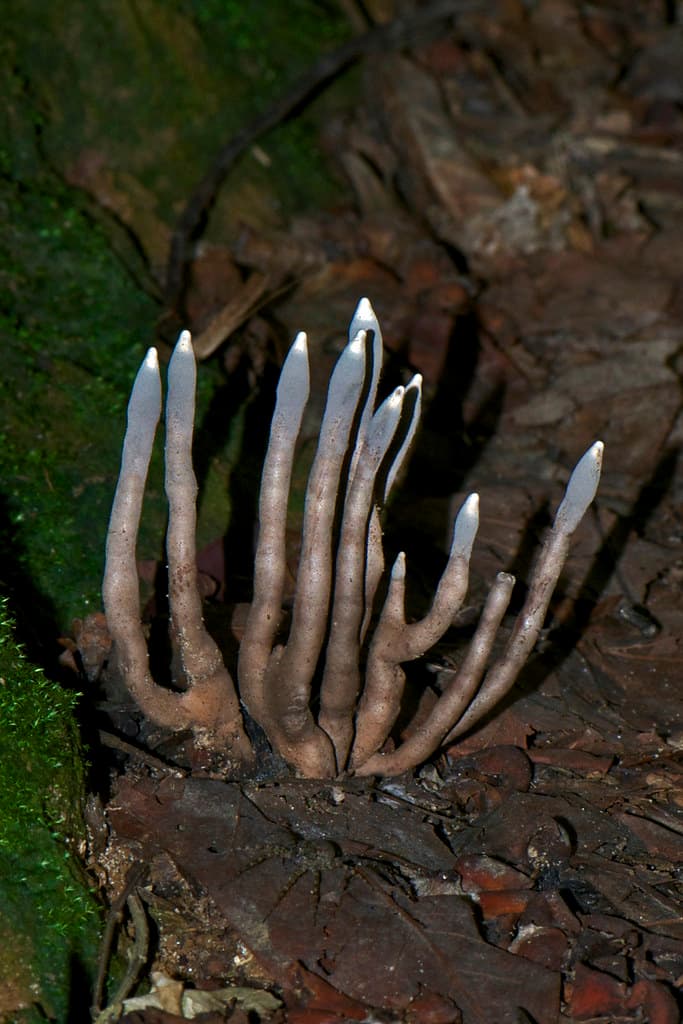
Scientific Name: Xylaria Polymorpha
This is not something I want to randomly glance at when I walk in the forest alone. However, it is definitely something I want to see in real life. Dead man’s fingers live up to their name, looking like decaying fingers poking out of the ground. The fingers measure 3 to 10 centimeters tall and 1 to 3 centimeters wide. They grow in clusters, and some clusters look exactly like a grasping hand. When young in the spring, these weird-looking mushrooms look bluish, pale gray, or whitish in color. As they mature in summer and autumn, they turn dark brown to black and leathery. If you cut the mushrooms open, they are bright white in color, and fibrous and tough in texture. Because of the texture, they are inedible, though they are not toxic.
Dead man’s fingers are found across forests and woodlands on all 6 inhabited continents. They grow on or near buried decaying wood, rotting and injured hardwood stumps, especially trees like apple, beech, elm, and maple. As a saprotrophic decomposer, this mushroom feeds on dead or decaying hardwood. Instead of completely destroying cellulose or lignin like other fungi, it breaks down specific plant glucans and glues. This breaks down the structural integrity of the wood. causing the wood to develop a soft rot. And unlike many mushrooms that pop up and dissolve in a few days, their fruiting bodies are persistent and tough. It can last for months or even years on the same piece of wood.
5Devil’s Cigar
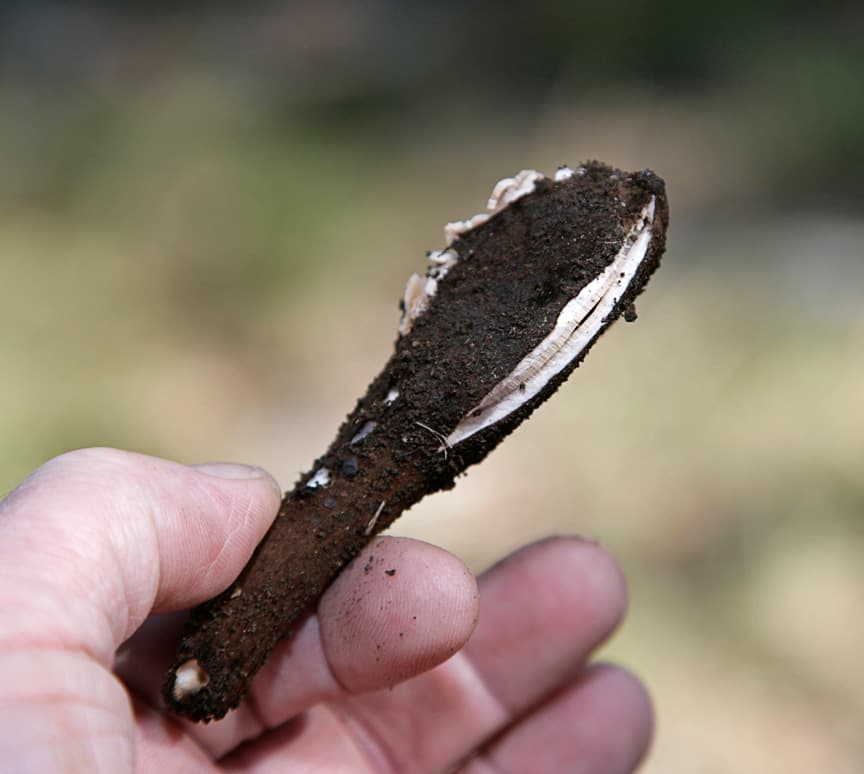
Scientific Name: Chorioactis Geaster
Who would have thought something that looks like this is a mushroom? It got its name from its resemblance to a cigar in its early stage. In this stage, it is black or brown in color, measuring 4 to 12 centimeters and being 1.2 to 3.5 centimeters thick. Then, it splits open radially into a star-like arrangement with 4 to 7 leathery rays. The coolest part is that when it opens, it makes a distinct hissing sound and releases a smoky cloud of spores. You don’t see any other mushrooms do that, and that’s what makes it unique.
The devil’s cigar, or the Texas star, is actually an extremely rare mushroom. It is only found in selected locales in Japan, Oklahoma, Taiwan, and Texas. It grows on the dead roots or stumps of cedar elms (in Texas) or dead oaks (in Japan). The mushroom is inedible due to its hard, leathery, and woody consistency that makes it not appetizing to consume. It is non-toxic, but there is no study regarding its potential side effects upon consumption yet. Also, it is a very rare fungus, so it is better to protect it than to eat it.
6Devil’s Fingers
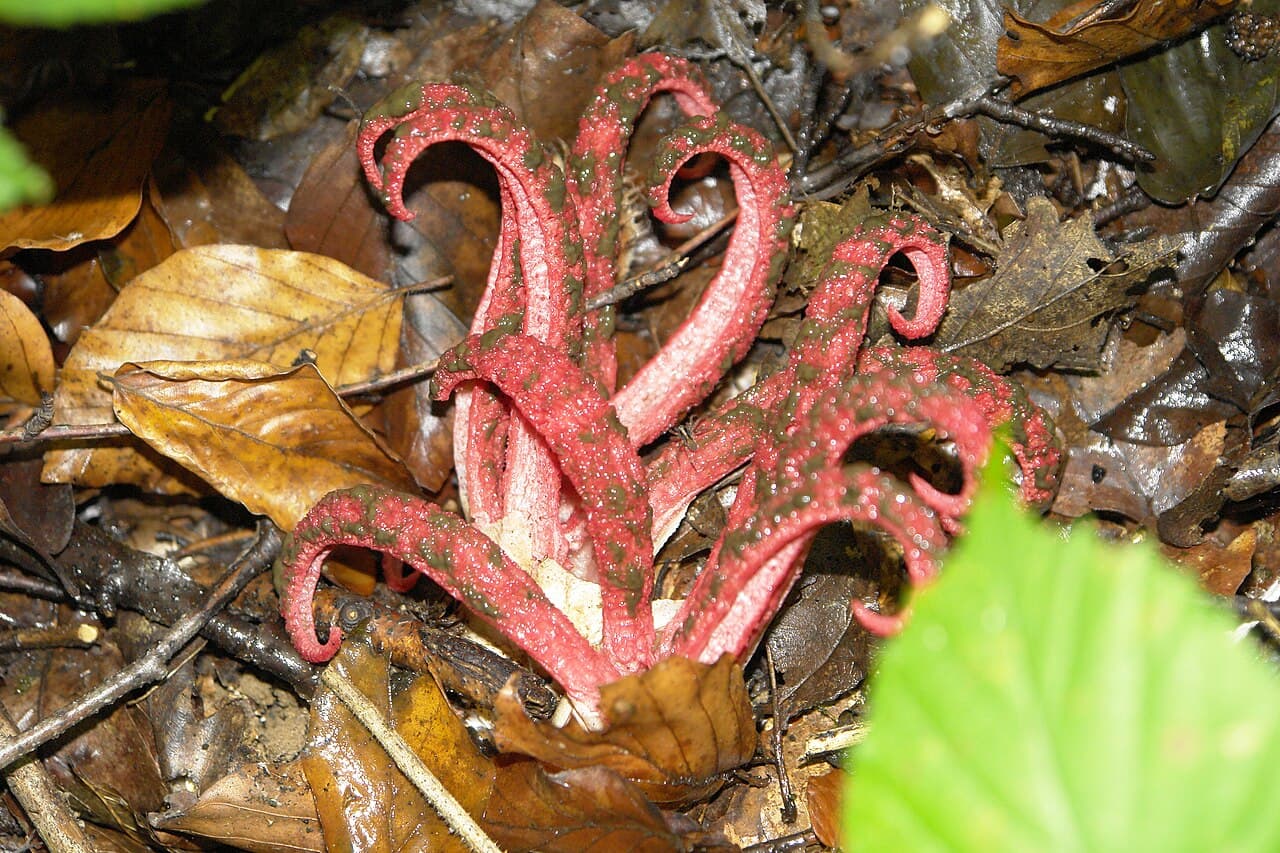
Scientific Name: Clathrus Archeri
We have devil’s cigar, and now we have devil’s fingers, aka octopus stinkhorn. It starts underground as a whitish or translucent, gelatinous egg-like structure. Then, it ruptures and reveals 4 to 8 elongated arms or tentacles that are bright orange or pinkish-red in color. These branches resemble bizarre fingers or tentacles of an octopus, and they are up to 10 centimeters long. As for the smell, it is as unpleasant as it looks. The odor of these weird-looking mushrooms smells like decaying meat or rotting flesh. It has a purpose: to attract flies and carrion-feeding insects, and they will leave spores on their bodies. Because of the unpleasant smell and texture, this mushroom species is also inedible.
Something that looks like is native to nowhere other than Australia, but they are also native to New Zealand and Tasmania. It occurs on a variety of soil types, but it commonly fruits on forest litter and mulch. Despite not being picky about where they grow, they still have a preference for acidic and humid soils. They also grow in urban areas like cultivated soil, gardens, lawns, and parks as well. Devil’s fingers are saprotrophic fungi, and they feed on dead and decaying organic matter. They mostly feed on leaf litter, mulch, wood chips, and woody debris in humid soils.
7Dog Stinkhorn
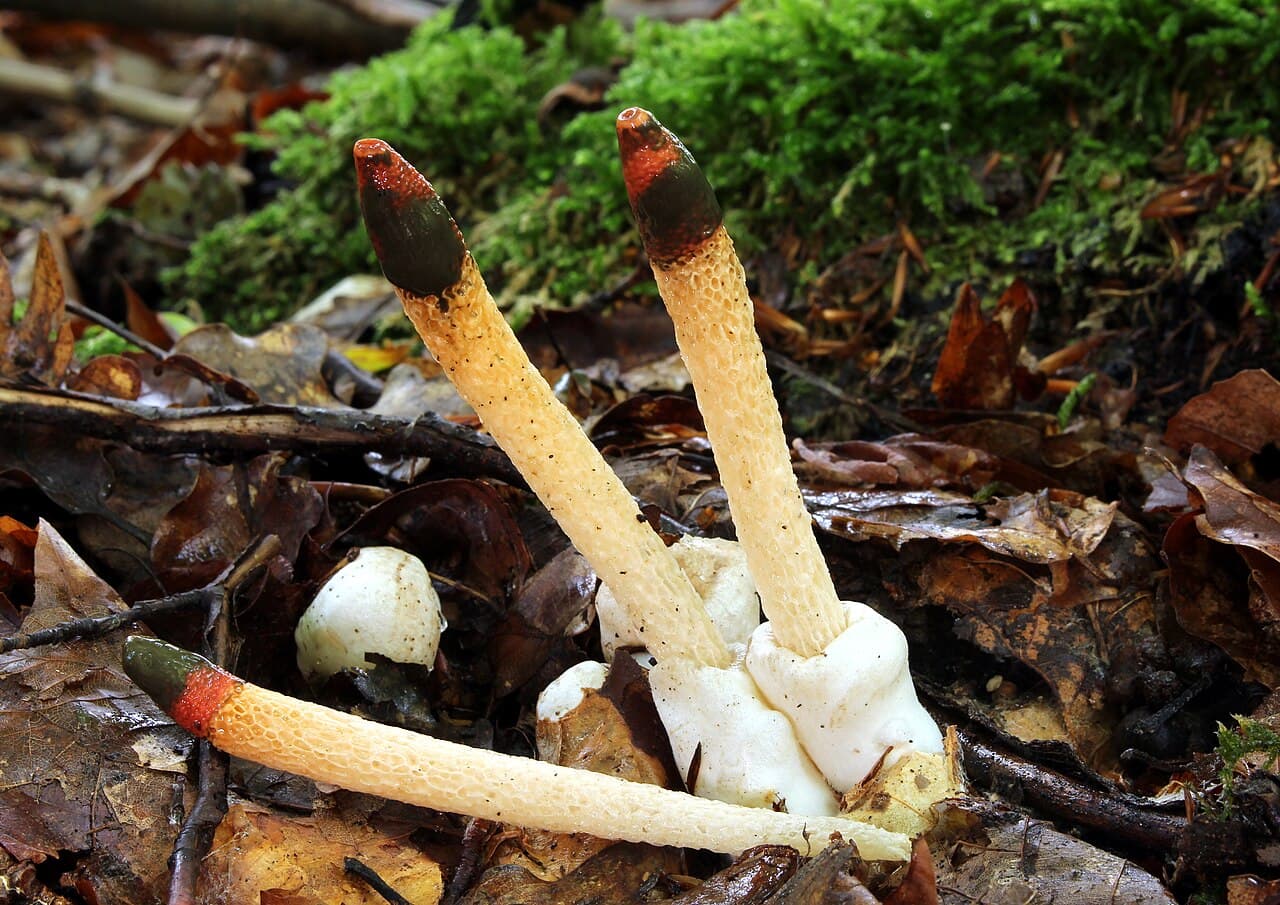
Scientific Name: Mutinus Caninus
The dog stinkhorn got its name because it resembles a dog’s penis. This mushroom is a small and slender fungus that reaches a height of 10 to 12 centimeters. It begins underground as an oval, tough-skinned, and whitish egg attached to the soil by a white cord. When it matures, the egg splits open and expands to a spongy and cylindrical stalk that is orange, pink, or pale yellowish-white. It also has a dark tip that is coated in dark olive-brown or olive-green slime that holds the spores. These mushrooms have a strong and putrid odor that smells like cat feces or rotting meat. This odor attracts carrion flies and other insects that will later carry the mushroom’s spores on their bodies or feet.
The fungus has a wide distribution across Britain, Europe, and North America. They grow on leaf litter, rich organic soils, wood debris, and wood chips in shaded gardens, parks, and woodlands. It is possible for them to grow in coniferous and deciduous woods as well. As saprophytic, they feed on decaying organic matter, and they usually grow in small groups. Dog stinkhorn fungus is inedible due to its unpleasant smell and texture. Some say it is probably edible at the egg stage, but you shouldn’t try it because there is no clear information.
8Indigo Milk Cap
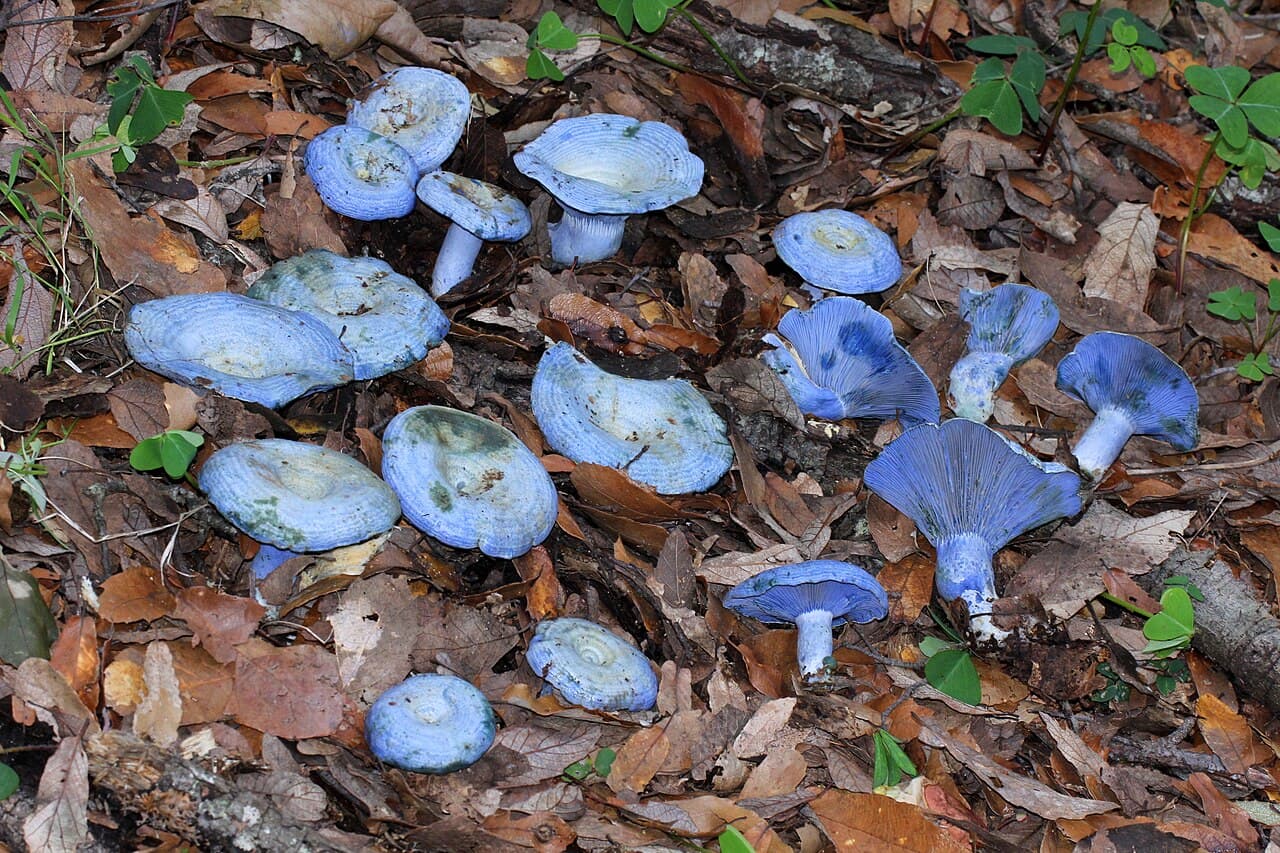
Scientific Name: Lactarius Indigo
Blue is a rare color in nature, and this is one of the reasons that this fungus is special. It has a gorgeous indigo-blue color when fresh, and it fades to pale silvery blue-gray or brownish with age. The cap is 4 to 15 centimeters wide, while the stem is 2 to 8 centimeters tall. The word milk in its name comes from the substance that oozes when the mushroom tissue is broken or cut. This substance is also indigo blue in color, but it slowly turns green upon exposure to air.
Good news is it is one of the few weird-looking mushrooms that are edible. The stain is darker blue when sliced, but it disappears with cooking, and the mushroom will become grayish. It has a mild and slightly peppery taste, and some described its taste as earthy or grainy. Since it is edible, you should definitely try it and be the judge of the taste. These mushrooms are sold in rural markets in China, Guatemala, and Mexico. And no, they are not magic mushrooms.
Indigo milk cap grows widely across Central America, East Asia, and eastern North America, on the ground in coniferous and deciduous forests. They form mycorrhizal relationships with trees like oak and pine from summer to autumn. The mushrooms grow at the roots of the tree hosts, either scattered or in groups. They exchange amino acids and minerals from the soil for fixed carbon from the hosts.
9Lion’s Mane
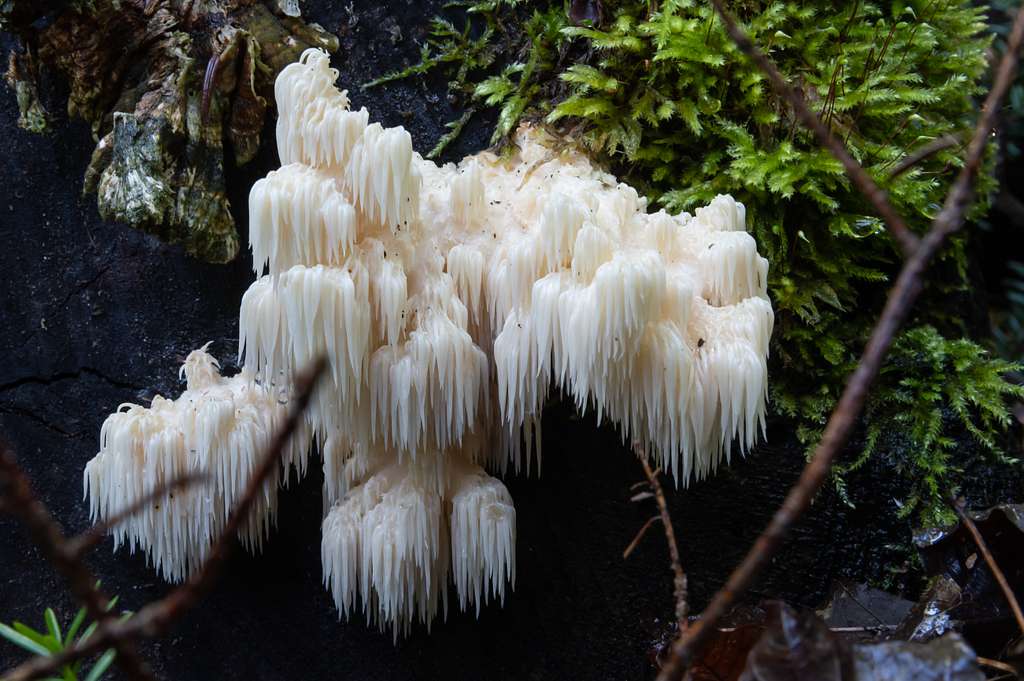
Scientific Name: Hericium Erinaceus
You wouldn’t think it is a mushroom right away if you come across one of these in the forest. Lion’s mane is one of a kind, mainly because of its medical properties and unique appearance. This mushroom grows in single clumps with dangling spines, and the clump looks like a white pom-pom. The spines are soft and long, and they grow up to 1 to 5 centimeters; they somehow resemble a lion’s mane. They are white in color, and the color does not change when cooking.
Having medicinal properties is already a good thing, but even better, these fungi are delicious. Their taste is similar to seafood, and I don’t think any mushroom can top that. You can cook them in various ways, such as roasting, searing, and more. They contain erinacines and hericenones that stimulate nerve growth factor, support brain function, and help reduce anxiety or stress.
The lion’s mane is native to Asia, Europe, and North America, growing on dead or dying hardwood trees. They grow on mature and large deciduous trees in temperate areas like American beech, ash, birch, maple, oak, and walnut. These fungi prefer humid, mild, and shaded environments where there are tree hosts. They are also necrotrophic parasites that feed on weak trees through branch scars or cracks on living trees.
10Turkey Tail
Scientific Name: Trametes Versicolor
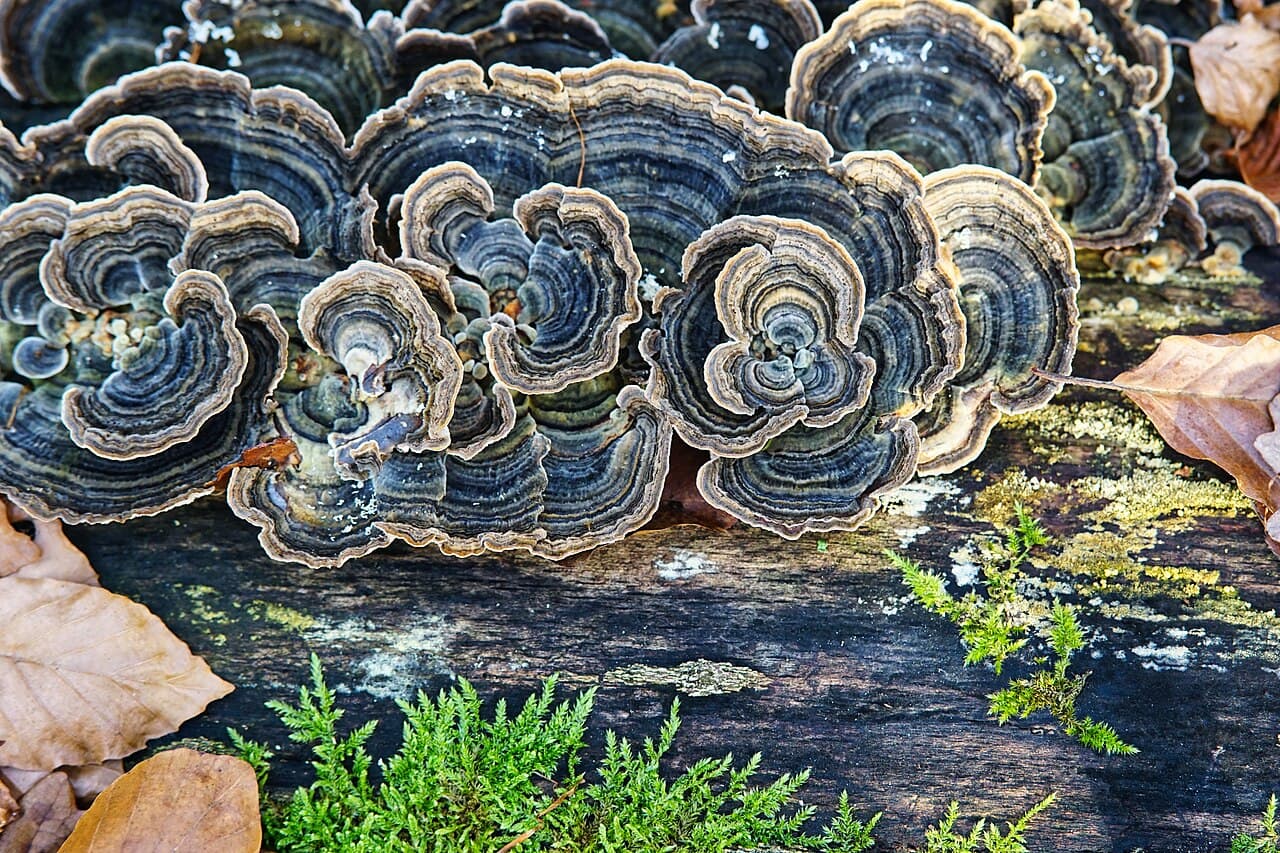
Here we have a very common mushroom that any hiker comes across at least once. Just like the name suggests, this fungus has a fan shape with colorful rings that resemble a turkey’s tail feathers. The flat cap measures up to 10 centimeters across, and it is often round or triangular in shape. Its thin and leathery brackets have a combination of many colors, including black, blue, brown, gray, and rust. The underside of the mushroom is white to yellow cream, with tiny visible pores instead of gills.
Turkey tail mushrooms worldwide, and it is one of the most widely distributed polypore fungi on Earth. They grow in clusters of many tiers, just like shelves on dead or decaying hardwood logs and stumps. These fungi thrive in diverse wooded environments, ranging from deep old-growth forests to backyard woodpiles and urban parks. This fungus is edible, and it has many health benefits for gut health and immune support. Since it is quite tough, the best way to prepare it is by brewing it into teas or grinding it into powders. Turkey tail has been consumed and used in traditional Chinese medicine and food for thousands of years.
11Veiled Lady
Scientific Name: Phallus Indusiatus
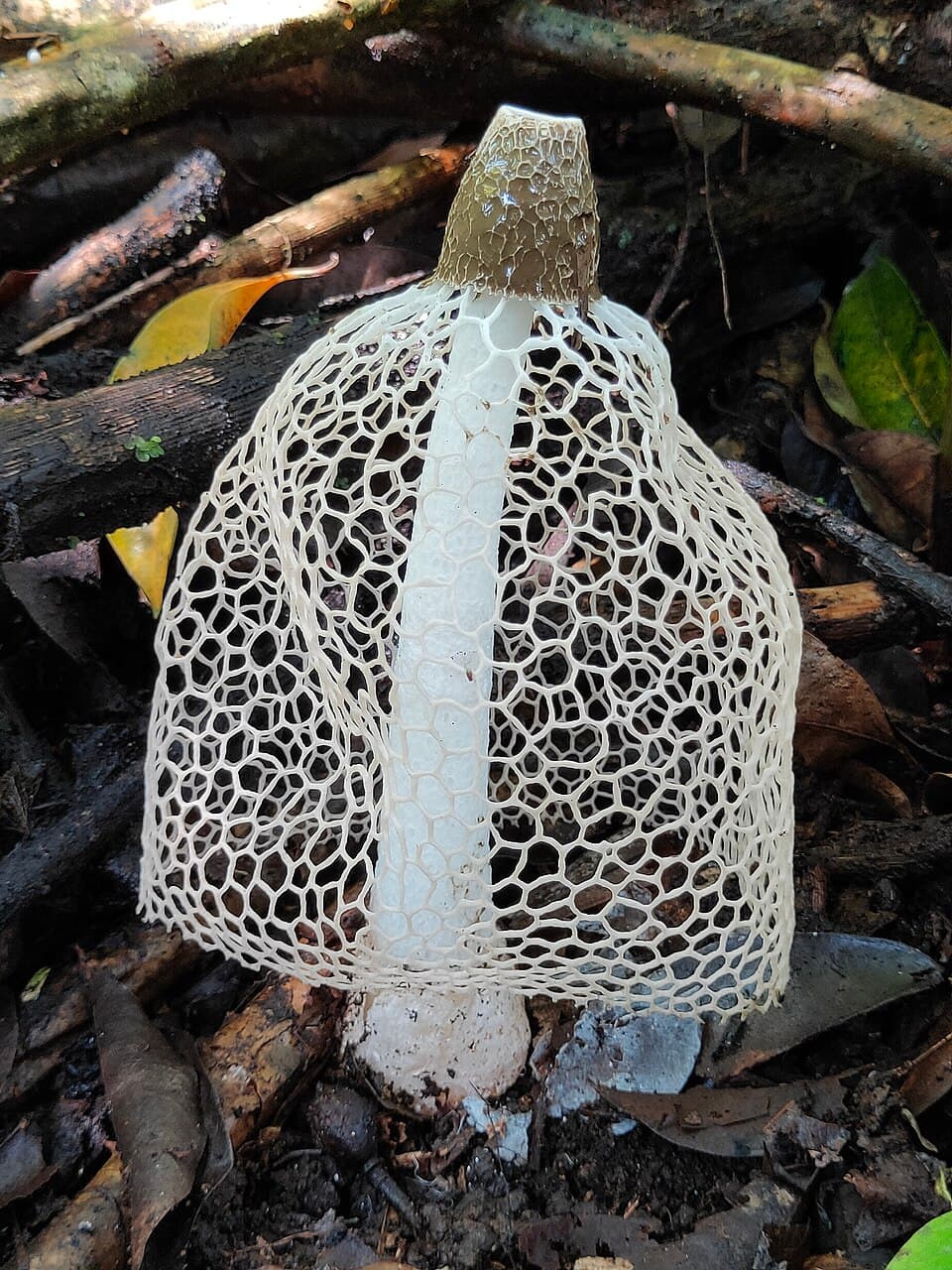
Goes by other names like bamboo mushroom and bridal veil stinkhorn; veiled lady looks so graceful. The name says it all: a bridal veil has a tall and spongy white stalk with a conical cap on top. The part that stands out the most is the delicate and lace-like net that hangs down like a skirt. Its mature fruiting body can be up to 25 centimeters, and the cap is 1.5 to 4 centimeters wide.
It is a bit funny for an elegant-looking fungus to have a very strong foul odor. The cap is covered with a greenish-brown spore-containing slime that emits the unpleasant smell. Just like other mushrooms out there, the purpose is to attract flies and insects for spore dispersal. However, despite having a foul odor, these mushrooms are edible. Along with that, they are also very popular in Chinese cuisine and medicine due to their antioxidant and immune-supporting benefits.
The veiled lady is found in tropical regions across Africa, Asia, the Americas, and Australia. They grow in disturbed forest ground, rich organic soil, and wood mulch of subtropical and tropical regions. These mushrooms also often grow on decaying woody debris or near the roots of plants like withered bamboo. Usually, they emerge solitarily or gregariously during warm and humid periods or rainy seasons.
12Violet Pouch
Scientific Name: Cortinarius Porphyroideus
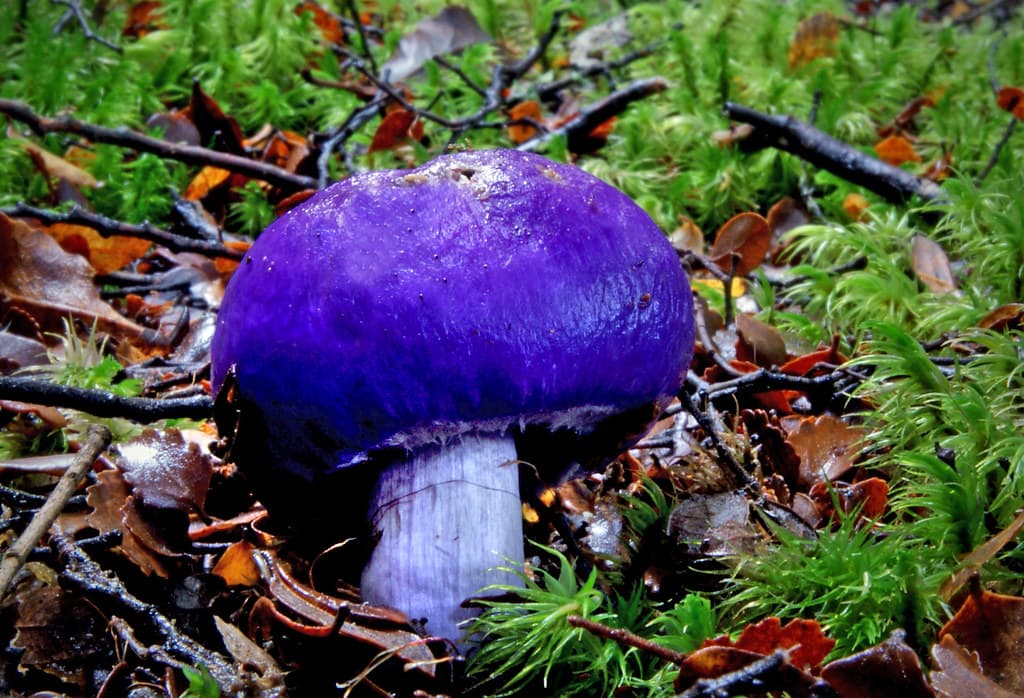
The violet pouch or purple pouch fungus is a gorgeous mushroom that also looks weird to some extent. A purple pouch is reddish-purple or violet in color, and its cap can grow up to 7 centimeters. It actually starts white when underground, and it turns purple when exposed to light. The unique thing about this fungus is that it doesn’t release spores into the air. Its spores stay enclosed until the cap disintegrates or when animals and insects consume the tissue.
New Zealand is full of beautiful things, and the violet pouch is one of them. It grows in beech forests, and it has an ectomycorrhizal relationship with black beech and hard beech trees in leaf litter. The colorfulness of these weird-looking mushrooms is a good thing as it warns you to not eat it. It contains dangerous and potentially deadly toxins that can damage human kidneys, so don’t eat purple mushrooms when you see one.
13Werewere- Kōkako
Scientific Name: Entoloma Hochstetteri
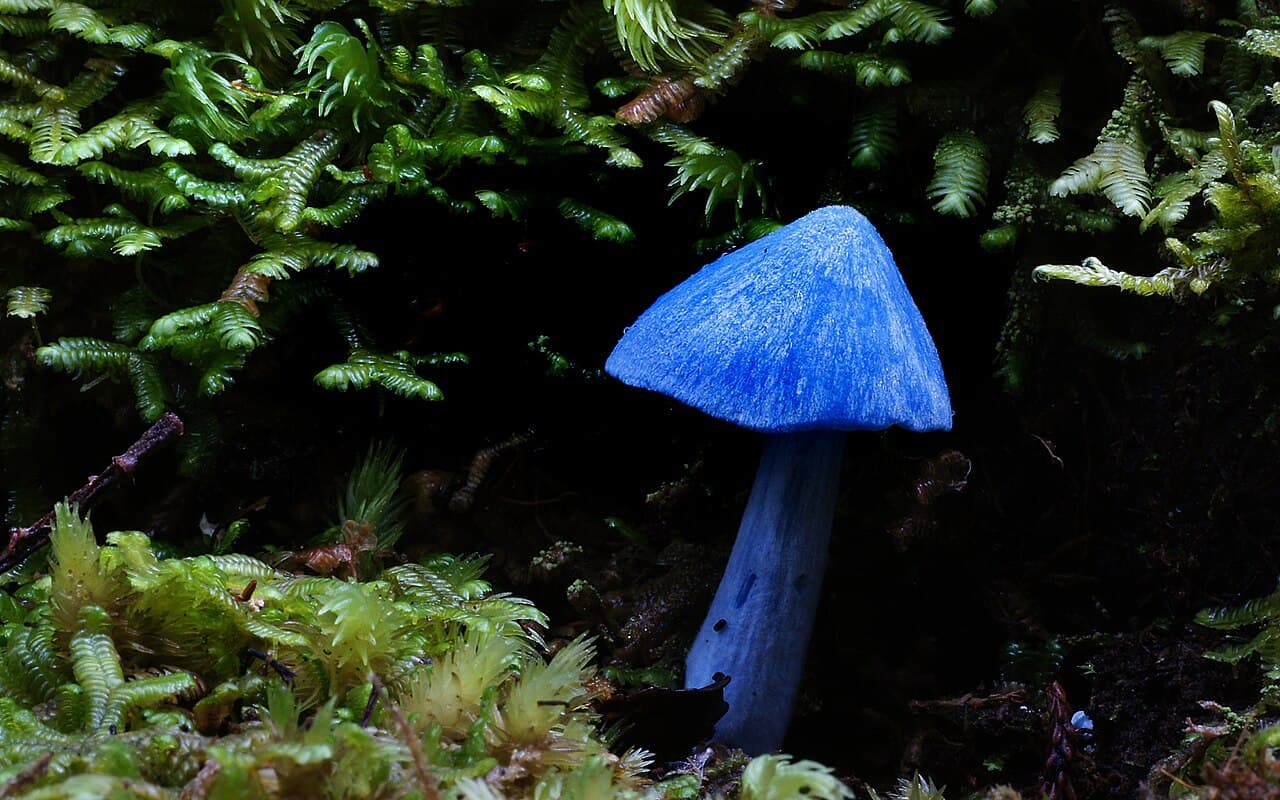
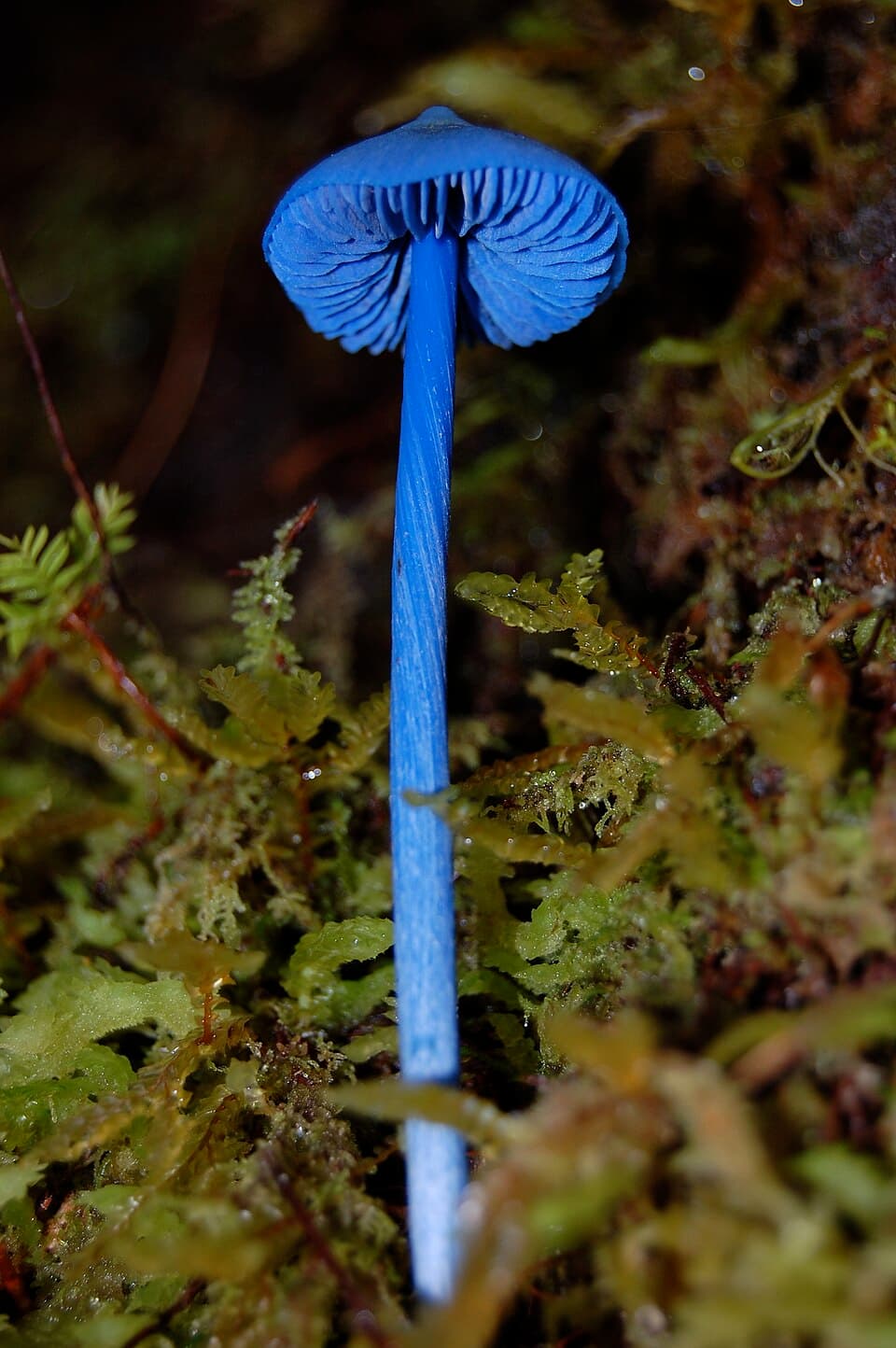
More of beautiful mushrooms than weird-looking mushrooms, but you won’t see this anywhere else. Its name comes from a native language that translates to the “blue wattle of the kōkako. The werewere-kōkako is one of the most vibrant mushrooms with its bright sky-blue color. It has a conical cap that is up to 4 centimeters across that is cobalt blue or sky-blue. Its thin stem is also blue, and its gills are slightly reddish-pink. Such a beautiful coloration makes it stand out in the spotlight surrounded by green moss on the forest floor.
This gorgeous fungus is native to the temperate rainforests throughout New Zealand. It grows saprotrophically in damp moss, leaf litter, and podocarp-broadleaf native forests, under trees like beech and rimu. The werewere-kōkako typically fruits alone or in small scattered groups. Now, the question is, “Is it edible?” There is no answer to that; its edibility and toxicity are still unknown. What we know so far is that they don’t contain psilocybin, so these fungi aren’t magic mushrooms. It is advisable to admire its beauty rather than to consume it, though. The werewere-kōkako is also featured on the reverse side of New Zealand’s $50 banknote as well. This makes it the only mushroom in the world to be featured on national currency.
14Witch’s Butter

Scientific Name: Tremella Mesenterica
Witch’s butter, aka golden jelly fungus or yellow brain, is a gelatinous fungus with striking colors and looks. A witch’s butter can grow up to 7.5 centimeters broad and 2.5 to 5 centimeters high. It is bright orange or bright yellow, and it has this wrinkly brain-like structure. This thing is gelatinous, rubbery, and soft when damp, but it shrinks to a thin and hard film or crust when dry. Its lobe parts create and disperse spores in the wind that float away to begin more witch’s butter.
These weird-looking mushrooms grow worldwide on dead or fallen hardwood branches and decaying deciduous wood, particularly during humid or rainy weather. They are more common in temperate and tropical forests where they feed by parasitizing wood-decaying crust fungi. It gets nourishment by digesting the tissues of an unrelated fungus that parasitizes and kills trees. Simply put, it is a parasite of a parasite, and this parasite saves trees instead of killing them.
You can eat it, but it is almost flavorless. People use these mushrooms in food just to add extra color and look. And in China, vegetarians use these fungi to prepare an immunomodulating cooling soup with jujubes, lily bulbs, and lotus seeds. In European folklore, if this fungus appeared on the door or gate of a house, it meant a witch cast a spell on the family. The only way to remove the spell was by piercing the fungus several times with straight pins until it went away. This is also why its name is “witch’s butter”.
15Wrinkled Peach
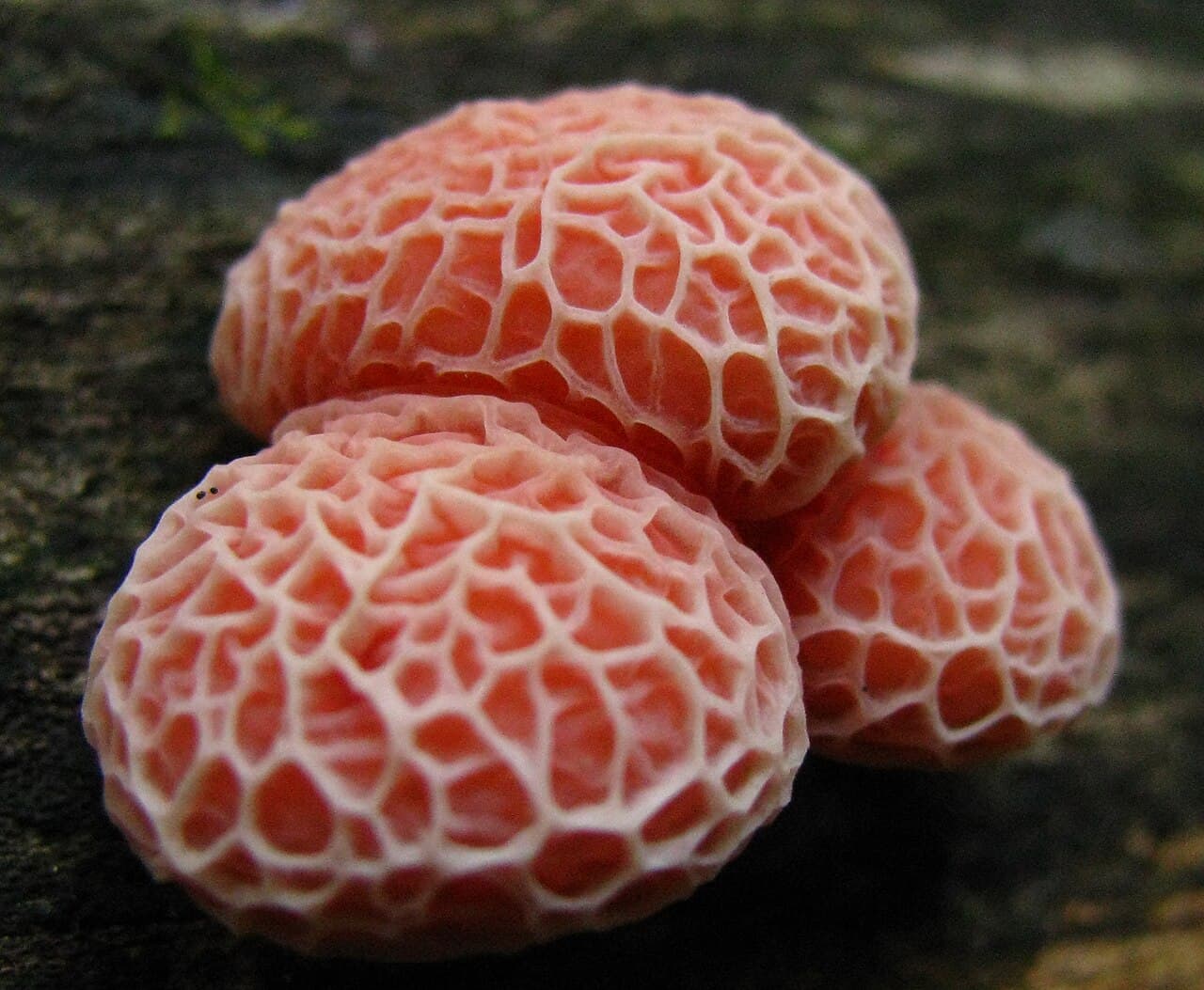
Scientific Name: Rhodotus Palmatus
A pink mushroom? Yes, please. The wrinkled peach is one of the weird-looking mushrooms on the list mainly because of its unique color. It comes with a salmon-pink or peach cap, with a gelatinous, web-like, wrinkled texture that looks like no other. The cap is pink when very young, and it becomes more peach with age. Its cap can grow up to 3 to 10 centimeters wide, and its stem is 3 to 7 centimeters long. While some weird-looking mushrooms on the list today is edible, this one is not. Mainly, because it has a bitter taste and rubbery texture, this mushroom is non-toxic.
The wrinkled peach grows clustered or scattered on decaying and rotting hardwoods like basswood and maple, especially on elm logs. They occur in damp and shady forests during autumn and early winter, and in areas where there is little sunlight. These fungi are saprobic, which means they obtain nutrients from decomposing organic matter. This one is rare globally, and it has a distribution only in parts of Eurasia, northern Africa, and eastern North America. Its status on the IUCN Red List is Vulnerable, with a decreasing population due to the decline of host trees like elms.
Related Post: Poisonous Mushrooms That Can Kill You