
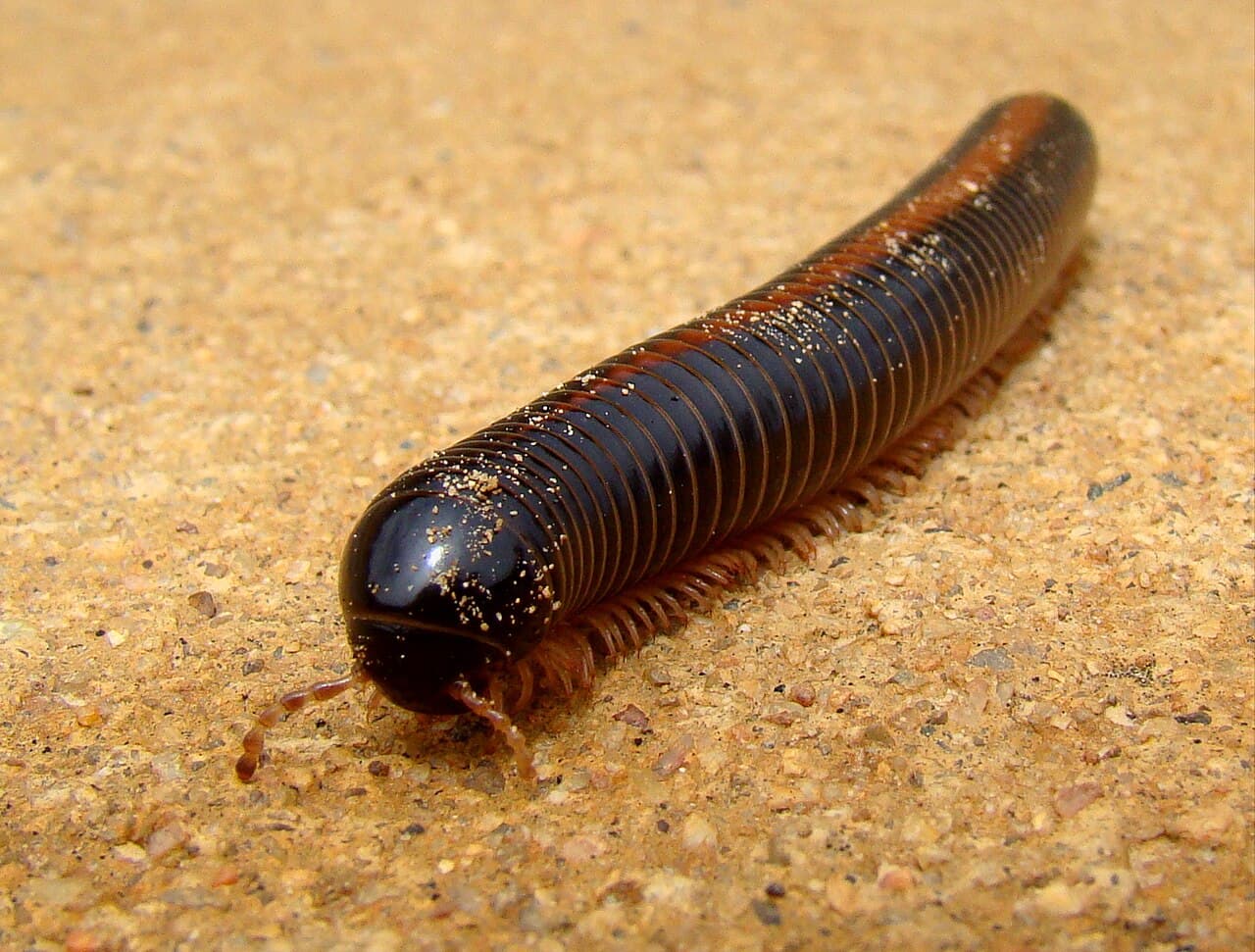
Many people are afraid of millipedes, let alone thinking about the largest millipede species in the world. In fact, they are some of the most fascinating creatures that mind their own business and are harmless to us. There are over 12,000 millipede species in the world, but we will talk about some of the largest ones today. If you want to know more about these multiped creatures, let’s begin with the largest millipede species below.
8American Giant Millipede
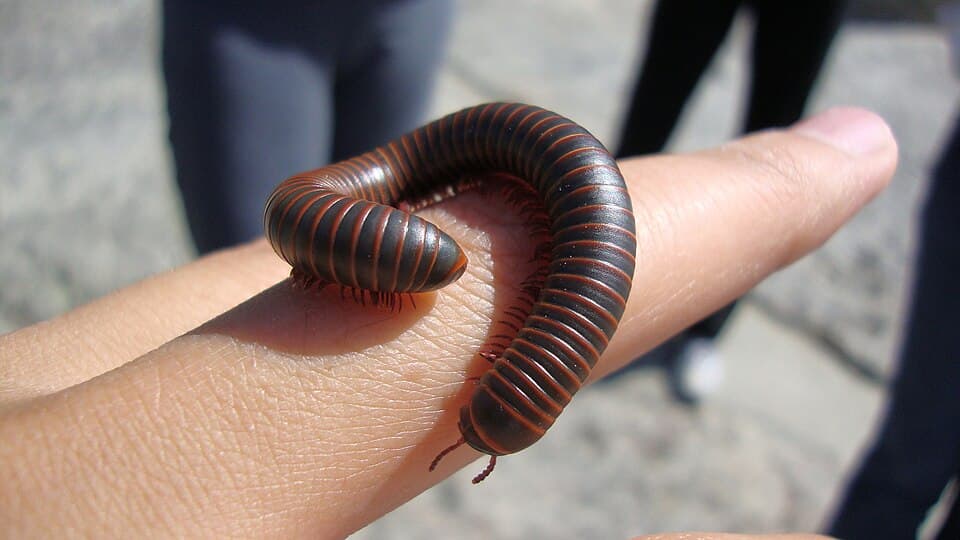
Scientific Name: Narceus Americanus
Length: 10 – 13 centimeters
The American giant millipede is a large millipede with a nearly cylindrical body that can reach up to 10 centimeters. While millipede implies that the animals have one thousand legs, they have fewer than 50 pairs of orange legs. Each pair of legs moves simultaneously, and they are capable of walking forward, backward, and side to side. Individuals are mainly black in color, but their body segments can have a range of colors like orange, red, or yellow. Males of this millipede species have longer legs and antennae than females.
This is one of the largest millipede species in eastern North America, hiding under decaying logs. As terrestrial animals, they are most often found in agricultural areas and forests. They prefer soil-litter layer interface under boards, dead trees, piles of moist dead leaves, and rocks. Occasionally, they also live in moist animal corpses as well. It is important that they inhabit areas where humidity is high; otherwise, they will quickly become dehydrated. Where they live, they feed on decaying wood and leaf litter, as well as deer scat and fresh fruit if available. These millipedes are nocturnal and solitary, and they hibernate during the cold winter months.
When threatened, it sometimes curls up or release a noxious liquid that can cause dermatological burns. When they curl up, they use their hard exoskeleton for protection. If they feel very disturbed, they will secrete the chemical to deter enemies. Speaking of enemies, there are a lot of those around them. Some of the most common ones are ants, beetles, birds, centipedes, dogs, frogs, lizards, raccoons, salamanders, skunks, toads, and turtles.
7Giant Fire Millipede
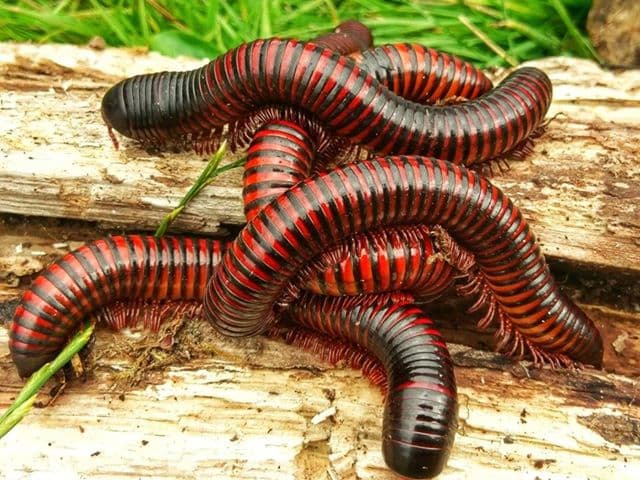
Scientific Name: Pelmatojulus Excisus
Length: 16 – 17 centimeters
This is the type of millipede that you can’t miss, and that striking color is second to none. A giant fire millipede can reach a length of 17 centimeters, and it has a dark or glossy black body. The segments are cherry-red or vibrant red, with a solid black underside and short cherry-red antennae and legs. This contrast gives it a red and black look, and this beauty makes it a very popular pet among terrarium enthusiasts. The giant fire millipede is native to tropical habitats of West Africa, living in lowland rainforests. Where they live, they feed on dead leaves, decaying wood, leaf litter, lichen, and rotting wood on the forest floor.
6Sonoran Giant Millipede
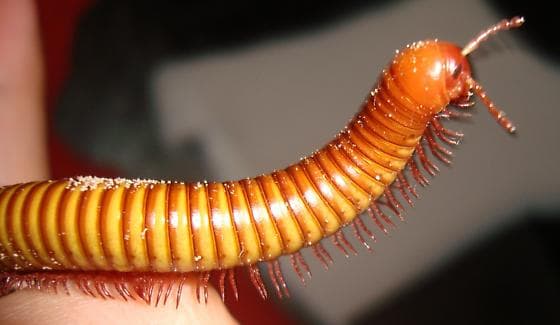
Scientific Name: Orthoporus Ornatus
Length: 10 – 23 centimeters
The Sonoran giant millipede, aka desert millipede, is one of the largest millipede species in the world. Individuals are 10 centimeters on average, but there are specimens that can reach up to 23 centimeters. Desert millipedes are usually large and long, with many body segments and many legs. Each body segment has 2 pairs of legs, and there is a new body segment every time the millipede sheds. These millipedes are dark brownish to yellow, and they have a robust body. They do not bite or sting, but they can secrete toxins when handled or threatened. The toxins can cause burning sensations, mild chemical burns, or skin discoloration if they get onto human skin.
It is a North American millipede species, living in the Sonoran Desert. This one inhabits areas where there is abundant damp soil, rocks, shrubs, and tree trunks. They live in deep and damp soil of the ecosystem because it protects them from any abiotic or biotic events. Desert millipedes are nocturnal, and they come out at night to feed on both living and dead organic material. This millipede was also very popular in the pet trade, and many were exported to Western Europe. It is easy to care for, and it is also very easy to handle as well.
5Philippine Giant Blue Millipede
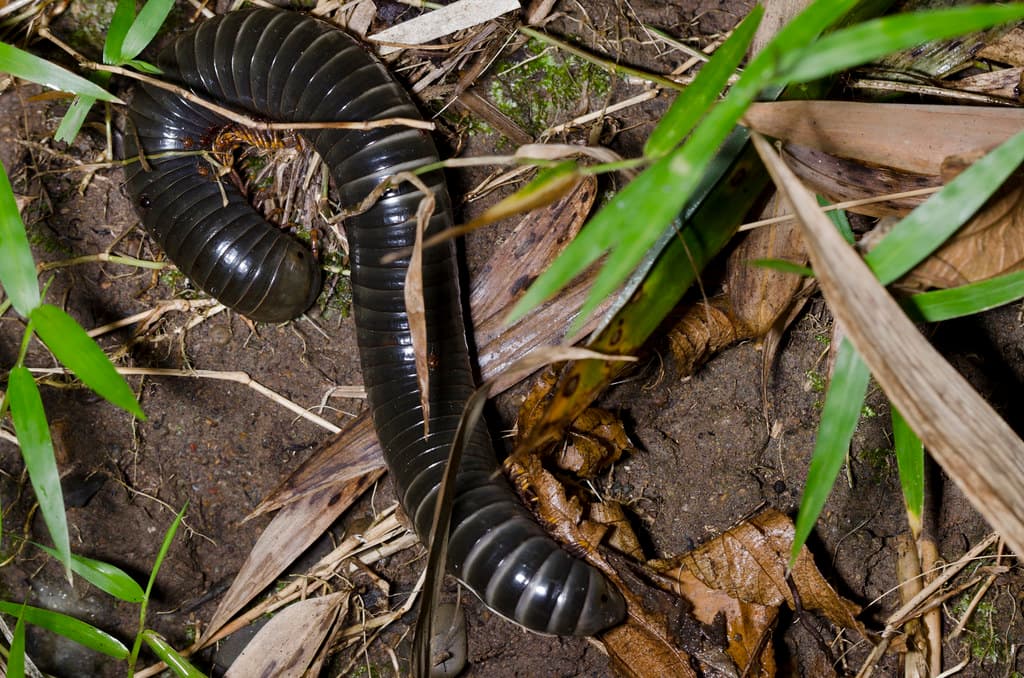
Scientific Name: Acladocricus Sp.
Length: 12.7 – 25 centimeters
A Philippine giant blue millipede has a cylindrical body that can reach up to 25 centimeters. Its body is metallic azure-blue in color, with brown, gray, or green hues and white banding. Native to the Philippines, these leggy creatures live on Bohol Island and Negros Island (Raja Sikutuna protected rainforest. They feed primarily on decaying wood, leaf litter, rotting leaves, supplemental fruits, vegetables, and occasionally bee pollen. This species is also quite popular among hobbyists, and they do well with standard care. When threatened, they can secrete defensive chemical compounds that can cause severe skin irritation and staining. If the substance touches the eyes, it can lead to corneal deformation and permanent vision reduction.
4Giant Chocolate Millipede
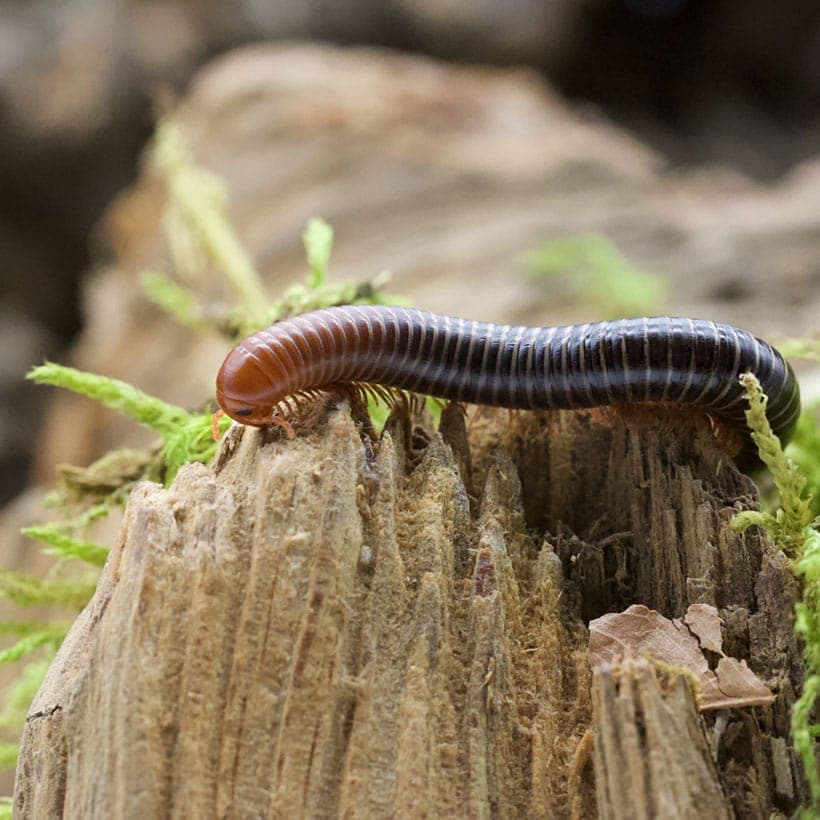
Scientific Name: Ophistreptus Guineensis
Length: 15 – 26 centimeters
What a cute name for a millipede, and it lives up to its name when it comes to its size. A chocolate millipede normally reaches 15 to 26 centimeters, with a large elongated body as well. It is glossy chocolate-brown to reddish-tan in color, with the same colors for the antennae and legs. There have been reports that this millipede produces a faintly chocolate-like scent in their defensive secretion. Chocolate millipedes have a natural range in West Africa, inhabiting the forest floor of Ghana and Nigeria. They spend a large portion of their time burrowing underground or climbing branches. This gentle giant feeds on dead leaves, decaying wood, leaf litter, and other decomposed plant matter.
3Siamese Pointy-Tailed Millipede
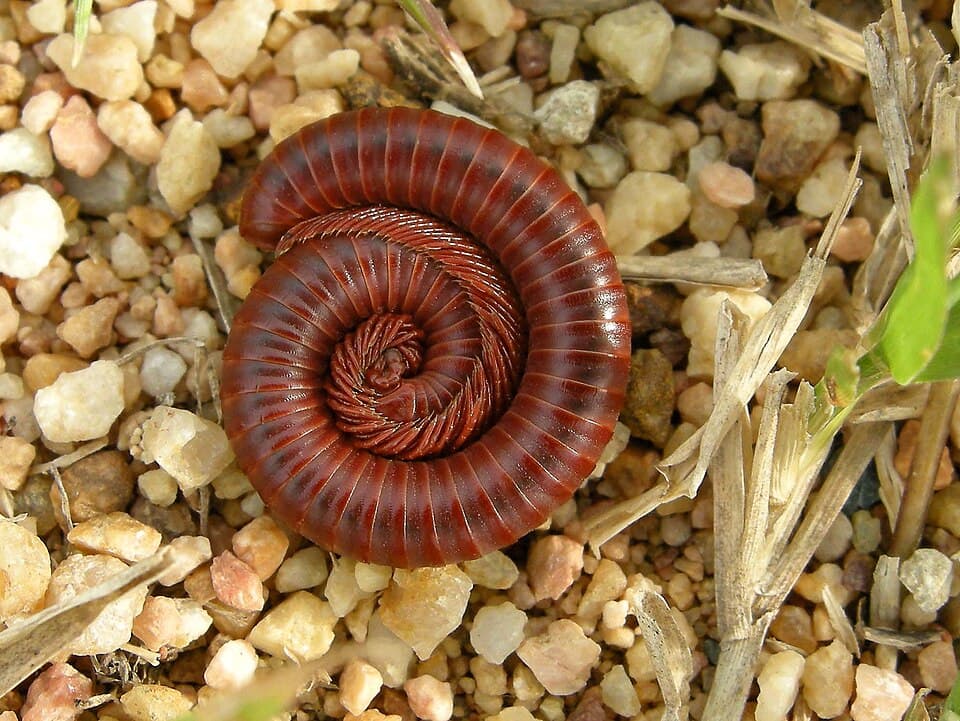
Scientific Name: Thyropygus Allevatus
Length: 26 centimeters
It is not every day that you come across a millipede that is 26 centimeters long like this one right here. There are two pairs of jointed legs per body segment, and adults have roughly around 300 legs. A Siamese pointy-tailed millipede has a distinct pointy tail-like extension at the rear; hence the name. This millipede species is native to parts of Asia, living in rainforests and tropical regions across Malaysia, Sri Lanka, Thailand, and Vietnam. They prefer damp soil, rich leaf litter, rotting logs, and warm and humid rainforest floors. It feeds on decaying plant matter, fallen leaves, organic debris, and wood.
2Giant Madagascar Millipede
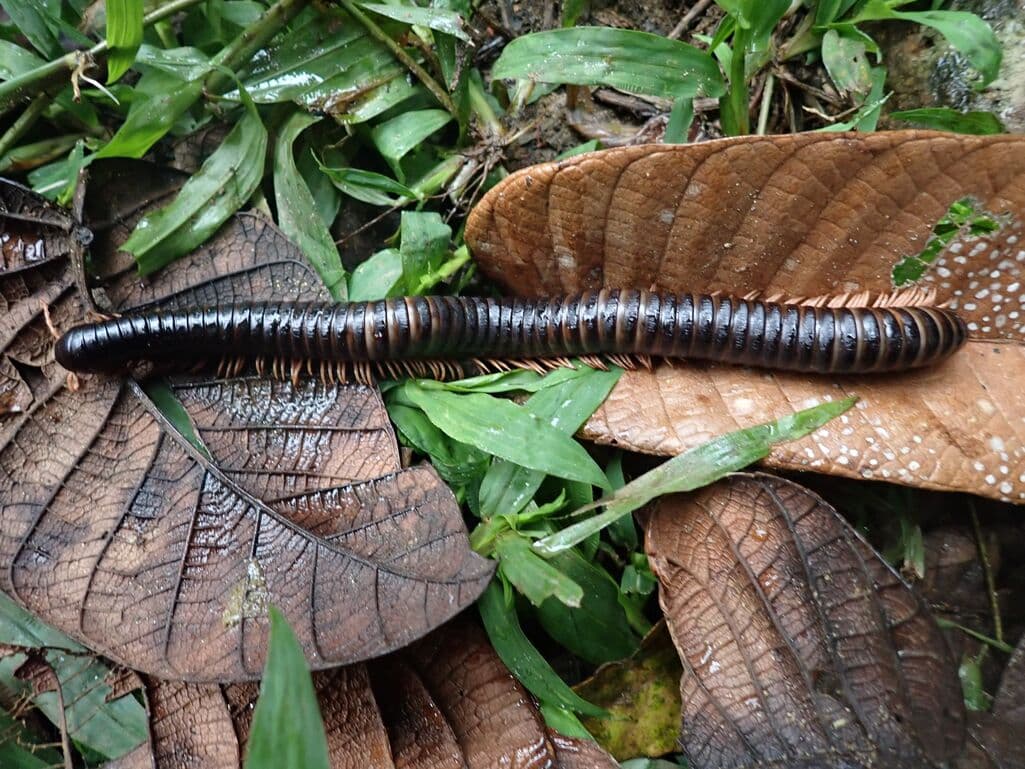
Scientific Name: Spirostreptus Sculptus
Length: 27 – 30 centimeters
The list of the largest millipede species is incomplete without this massive diplopod here. A giant Madagascar millipede can reach a length of up to 30 centimeters, and its body can have up to 60 segments. The long body is dark brown in color, while the antennae and legs are pale. Since they have very poor eyesight, these millipedes rely entirely on scent and tactile touch using their antennae and legs. And this is how these slow-moving creatures communicate, locate food, and navigate their environment.
The giant Madagascar millipede is a very rare millipede species that is native to Madagascar. Not different from other millipedes out there, this one also feeds on decaying vegetation, fungi, and organic matter. This species was last documented in the 1800s, and there was no more sightings since then. In September 2023, a team of explorers made the thrilling rediscovery of this specimen 126 years later. The funny part was that they were not even searching for it; it appeared at their base camp. However, its population is facing threats from habitat loss due to deforestation, and rainforest fragmentation.
1African Giant Millipede
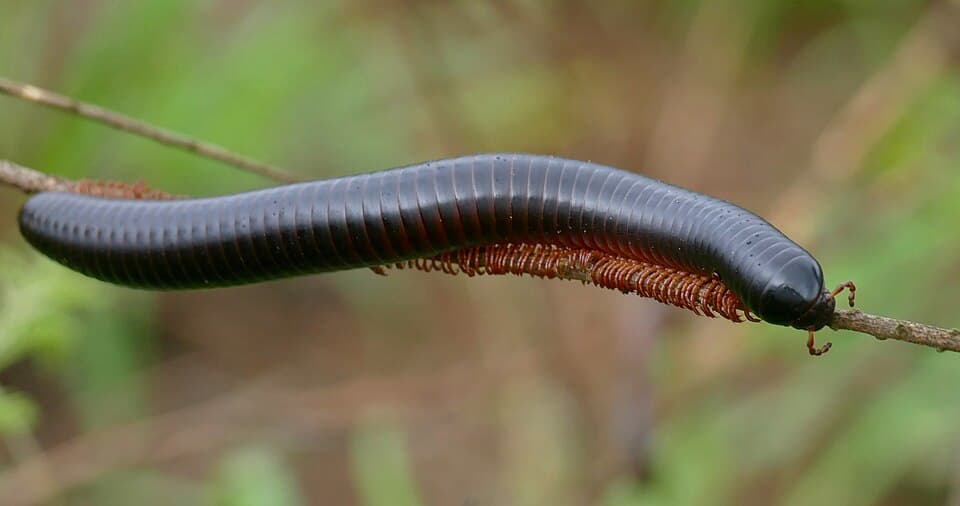
Scientific Name: Archispirostreptus Gigas
Length: 33.5 centimeters
Here you are looking at the largest millipede species in the world, reaching up to 33.5 centimeters in length. An African giant millipede can be as big as 6.7 centimeters in circumference, which is very big. How many legs do you think the largest millipede species have? Unfortunately, only 256 legs approximately, with 4 legs per individual segment. However, the number of legs changes with each molt, adding one body segment each time it molts. Very large ones with more body segments can have as many as 400 legs.
The African giant millipede is native to Southern Arabia, especially Dhofar, inhabiting rainforests and subtropical environments. Being the largest millipede species in Africa as well, these creepy crawlies are widespread in lowland parts of East Africa. They live mostly in forests, but they are also common in coastal habitats that contain at least a few trees. Just like other millipedes out there, this one also feeds on dead and decaying organic matter within its habitats. Those include decaying trees, logs, and plants that are nutrient-rich for them. And since they are decomposers, their waste becomes new soil for the rainforest that they reside in.
Related Post: 10 Most Dangerous Centipedes