The giant mesquite bug is a unique-looking insect with beautiful colors and patterns that not many people know of. So little yet so interesting, not just from the way they look but also their behavior. My favorite part? Each instar in the life of the giant mesquite has something different in its look. Perhaps more information about them below might interest you; check them out.
1Appearance
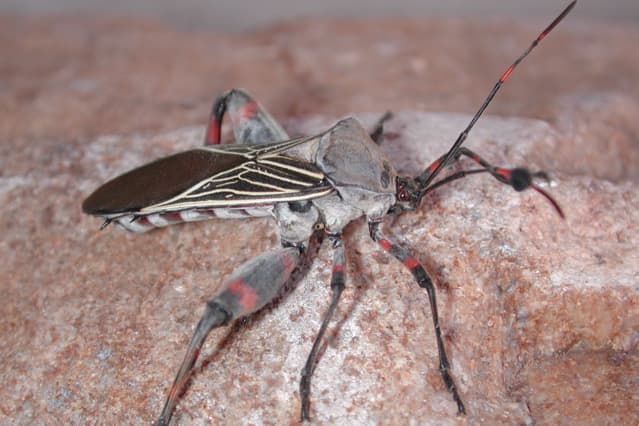
An adult giant mesquite bug can reach 5 centimeters in length, and they are dark brown with crimson in color. It has a small head, a robust body with powerful hind legs, and a piercing mouthpart for extracting sap from plants. The legs are black with dark red bands or patches, and the femora of the hind legs are enlarged with spines. These large femurs is how you tell the sexes apart because only males have them. Males use these large hind legs in aggressive combat against rivals or for mate guarding. Adults have wings with prominent orange or yellow veins on a dark background, but they are clumsy fliers. Another part that stands out is the antennae that have flattened sensory discs near the tips, giving a very distinctive look.
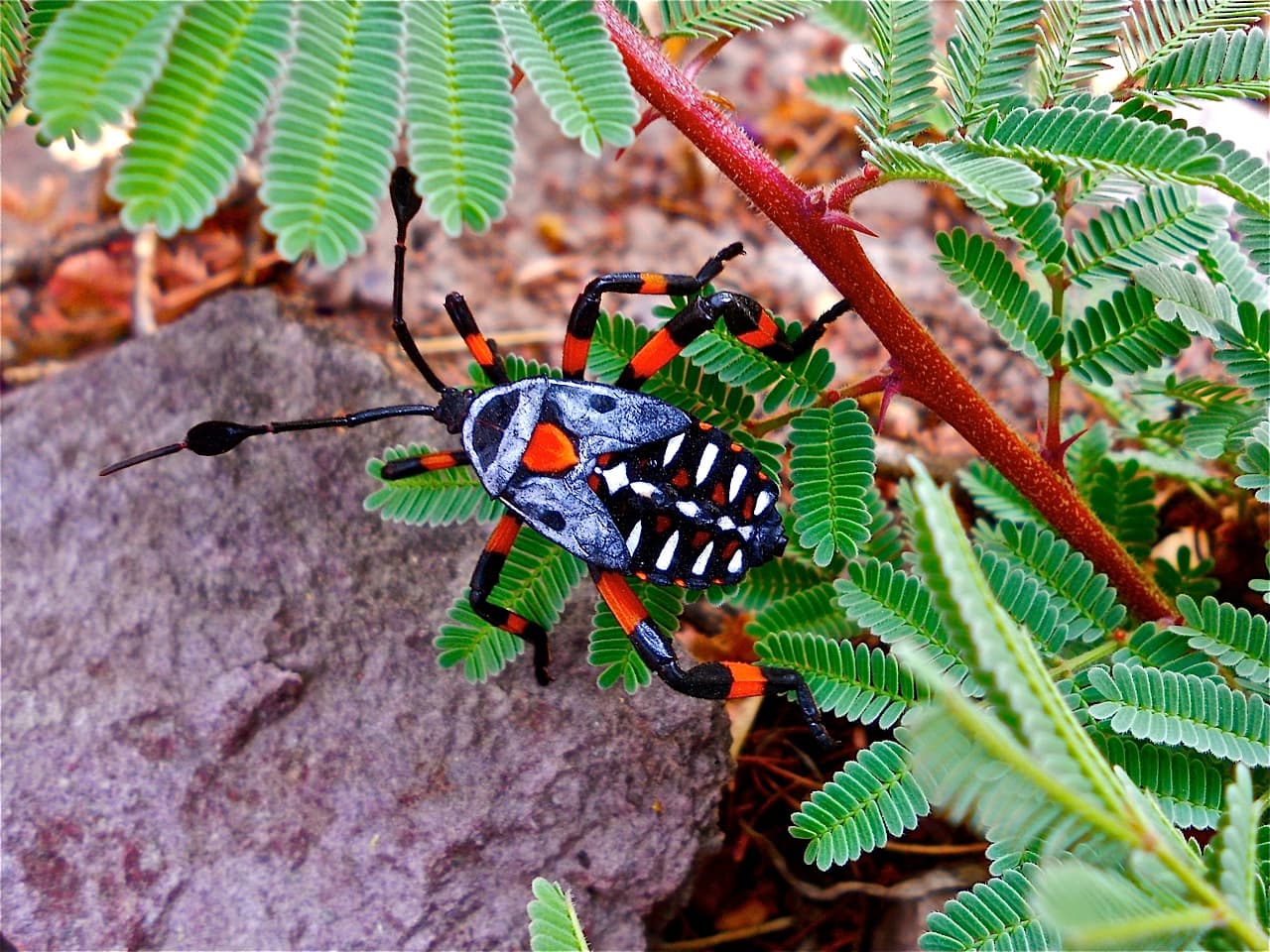
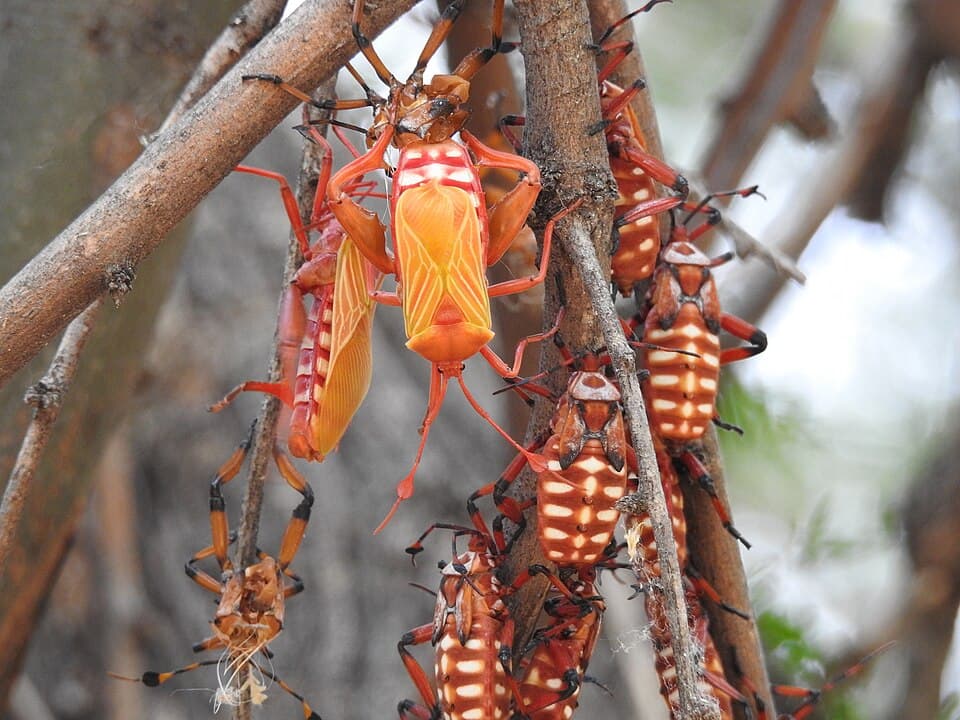
Nymphs are wingless, and they have more vibrant coloration of red and white with complex patterns. As soon as they hatch from eggs, they feed on the leftovers, and almost immediately molt for the first time. The second instar nymph has diamond-shaped antennal discs, and it resembles the appearance of the adults already. In the third instar, the bright red color with black and white patterns is very clear. Their wing buds start to become visible in the fourth instar, and they are larger in size. In its last instar, it emerges with an entirely different look from its nymph stages. The coloration of both adults and nymphs is for camouflage in their surroundings and to warn predators of their awful taste.
2Behavior

Nymphs aggregate both when feeding and not feeding, projecting the appearance of a much bigger animal. Grouping also helps them easily find mates and deter predators. The bright colors of everyone also indicate a warning to predators that they are not very good-tasting. When it comes to self-defense, adults use their heavy armor and nymphs use their noxious chemicals. When distressed, they will release the toxins and kill predators like mantids and tarantulas. They also produce a stinky secretion to repel predators that ignore the warning signs from their bright colors.
3Feeding & Habitats
The name says it all; this bug feeds on mesquite trees, mainly the sugary seedpods and sap of the trees. They also feed on tender leaves and young stems, as well as flowers and petioles. As a desert bug, the giant mesquite bug inhabits the Sonoran Desert. Its range is from southwestern Arizona to the Mexican state of Baja California Sur. Both nymphs and adults spend most of their active season in the upper branches of mesquite trees. There, they pierce tender stems and seed pods to drink sap. When extreme summer heat approaches, they migrate down from the canopy to cluster near the shaded base and lower bark.
Related Post: Picasso Bug Facts