When you thought moths only hang out at night, the 10 day-flying moths below will prove you otherwise. Even better, they are great pollinators whose roles are similar to bees and butterflies. Things are so much different between the day-flying moths and regular ones, so let’s find out what they are.
1Belted Beauty
Scientific Name: Lycia Zonaria
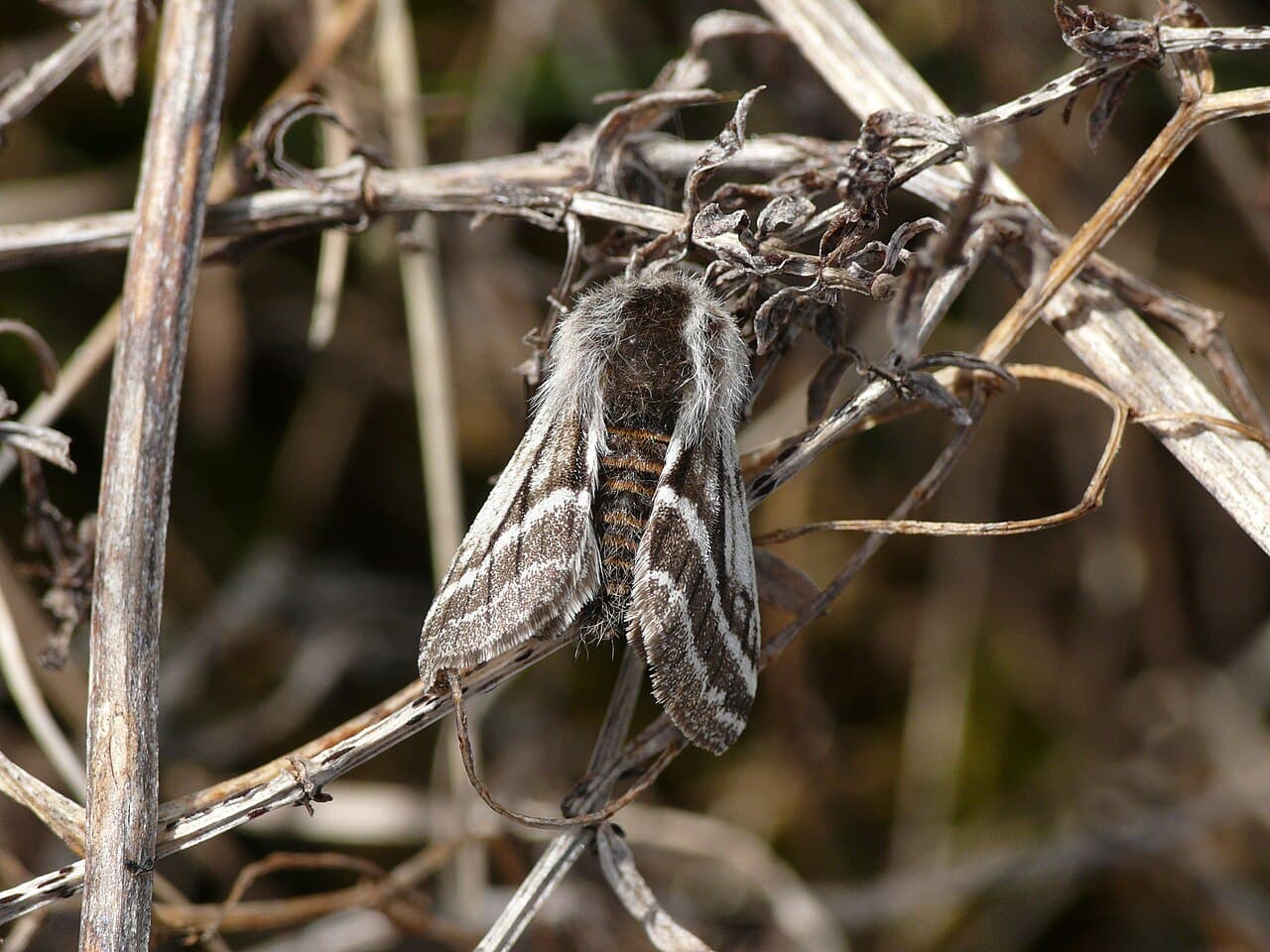
Belted beauty moth is a medium-sized moth that grows to between 2.6 and 3.2 centimeters. Males and females look very different from each other. A male has a furry body and big feather antennae, with pinky-orange hoops on his body and gray-brown stripes on his wings. The female has the same hoops, but she is wingless. Both males and females are highly active during the day, but males are also active at night. Male belted beauty moths are very attracted to lights, so they often visit artificial lights at night. Females can’t fly, and they spend their short lifespan sitting on a plant stem waiting for mates.
This day-flying moth species has a wide distribution in Ireland and the UK, thriving in coastal sand dunes, machair, and salt marshes. At the same time, they are also common in dry grassland, forest edges, heaths, and sandy slopes. They usually rest on dry stems, fence posts, and near common bird’s-foot trefoil plants. This moth species also needs saving because they are currently facing a lot of threats to their population. Some of the main ones are human activities in their habitats, land development, successional change in vegetation, and more.
2Burnet Moth
Scientific Name: Zygaenidae
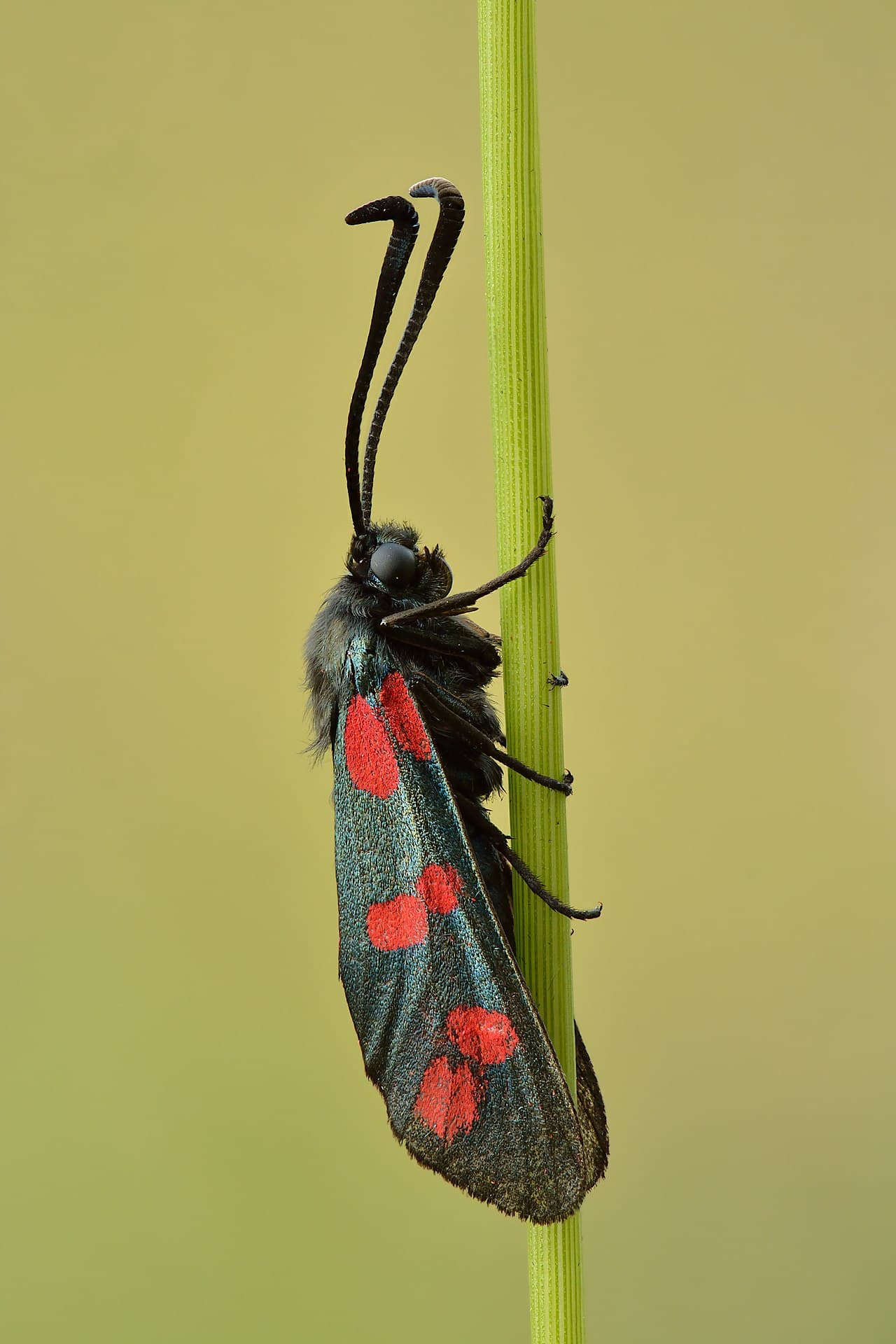
Most moths of this species are day-flying moths, and they also have a striking appearance as well. Adults fly during the day with their slow and fluttering flight, flashing their bright colors. For example, the six-spot burnet has 6 spots on each of its red wings. Both larvae and adults have vibrant colors that are a warning to predators that they are distasteful and poisonous. That way, they can hang out during the day without worrying that any predators will hunt them at all. Burnet moths live across England, Ireland, Scotland, and Wales, inhabiting cliff-edges, flowery grasslands, meadows, roadside verges, sand dunes, and woodland clearings. These moths feed on a wide range of flowers such as knapweeds, scabious, and thistles.
3Chimney Sweeper
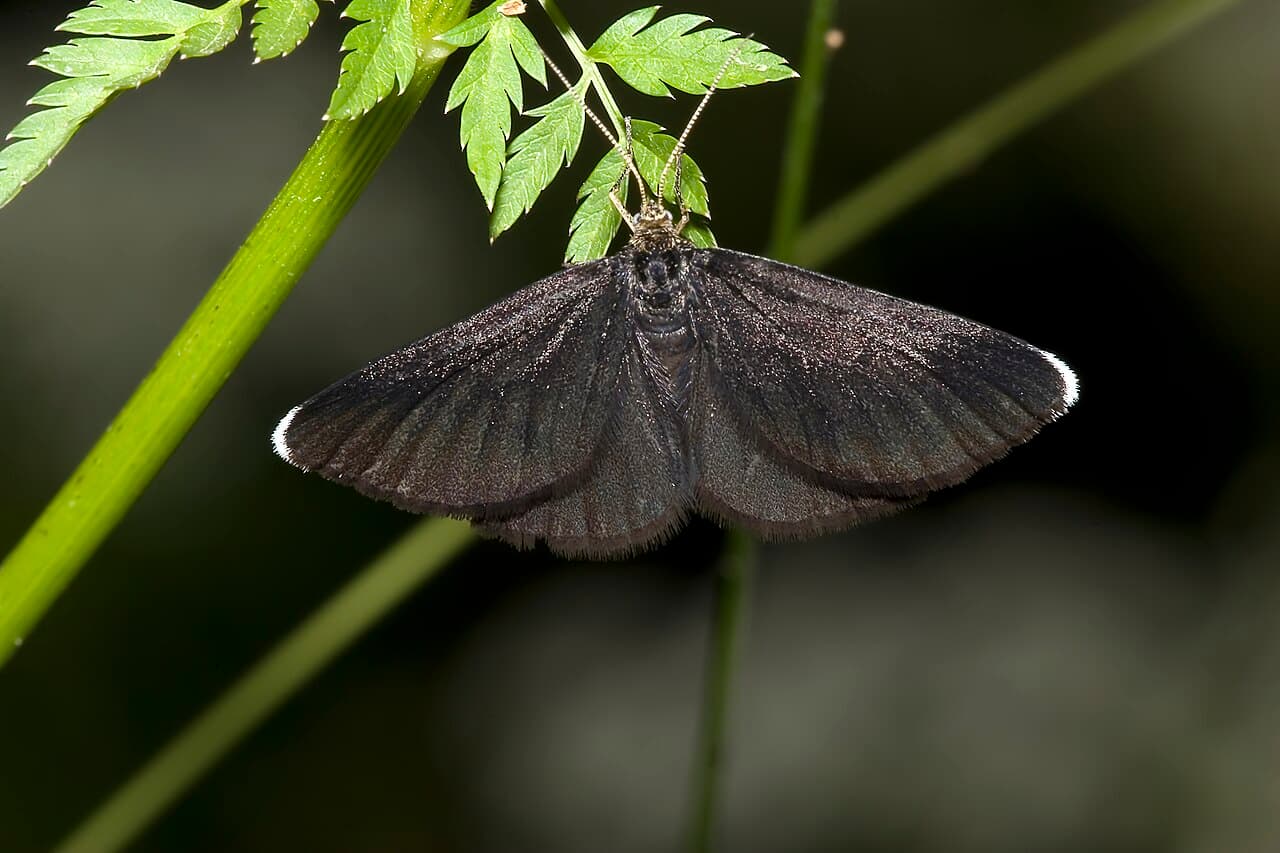
Scientific Name: Odezia Atrata
Not too small, a chimney sweeper has a wingspan of 2.4 to 3 centimeters. It is almost entirely black; only the fringe of its forewing is white. The chimney sweeper moths are distributed across England, Ireland, Scotland, and Wales. Their habitats include bogs, chalk downland, ditch edges, hedgerows, lake sides, limestone grasslands, meadows, moors, and woodland edges. When it comes to day-flying moths, the chimney sweeper has to be on the list, as they love bright sunshine. They are very active on sunny days, and rarely settle in one place for long as they fly around a lot. It is common to see them perch on tall grasses, and sometimes a large group also hangs out together.
4Cinnabar Moth
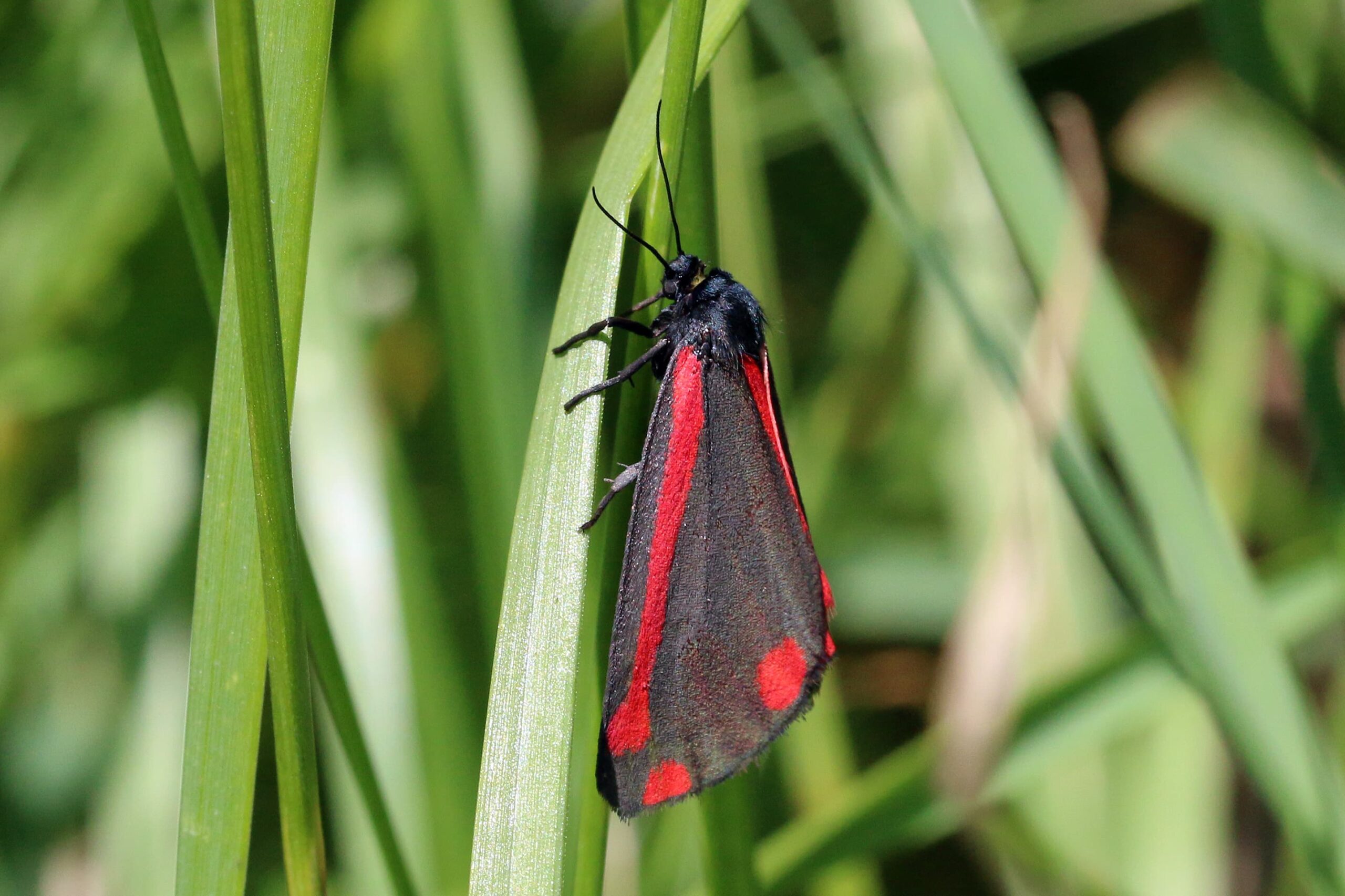
Scientific Name: Tyria Jacobaeae
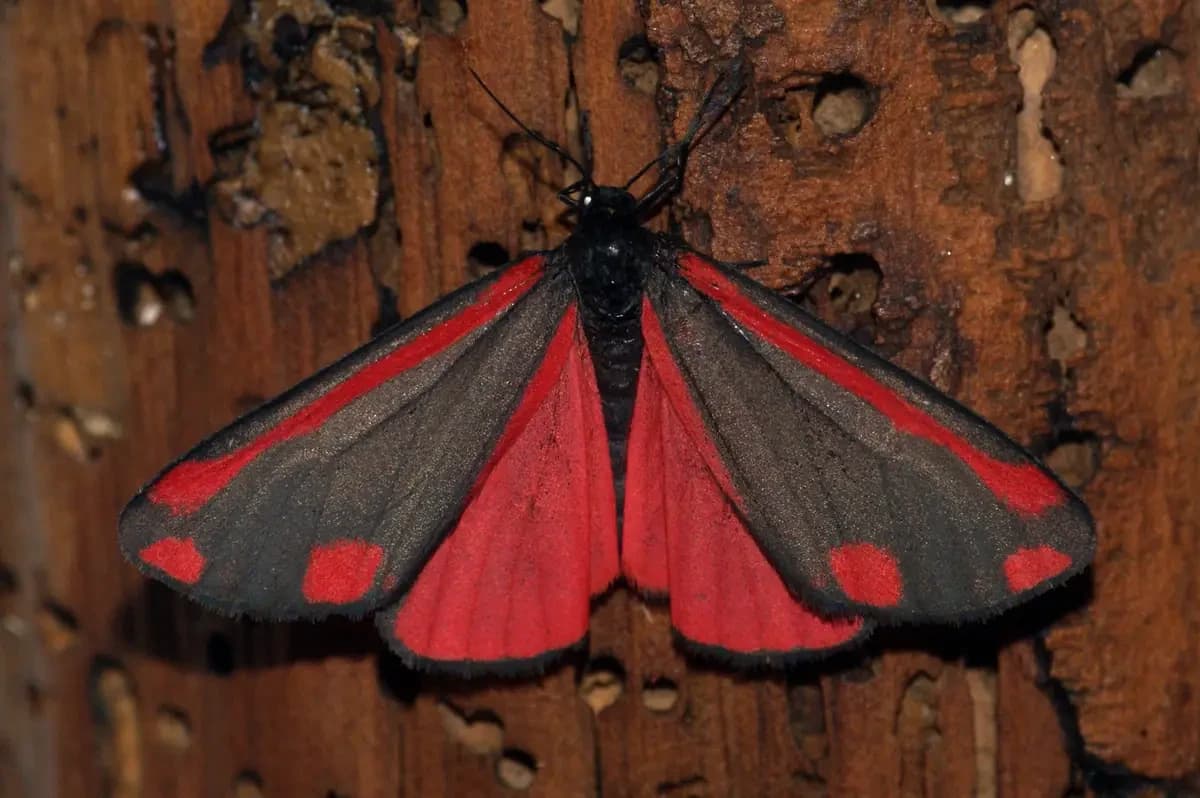
Looks very similar to the six-spot burnet but different; the cinnabar moth is such a beauty. The wingspan is from 3.2 to 4.2 centimeters, and it is black and red in color. It got its name from the red patches on its black forewings, and its bright colors scream poison to predators. On rare occasions, some individuals have red wings with a black border, yellow markings instead of red, or completely black wings. Cinnabar moths are native to Europe and Asia, with a wide range across the Palearctic all the way to Australia. These day-flying moths inhabit coastal areas, farmlands, grasslands, heathlands, moorlands, and woodlands where there are gardens. They usually perch on ragwort plants, chilling during the day without a worry of being eaten.
5Clouded Buff
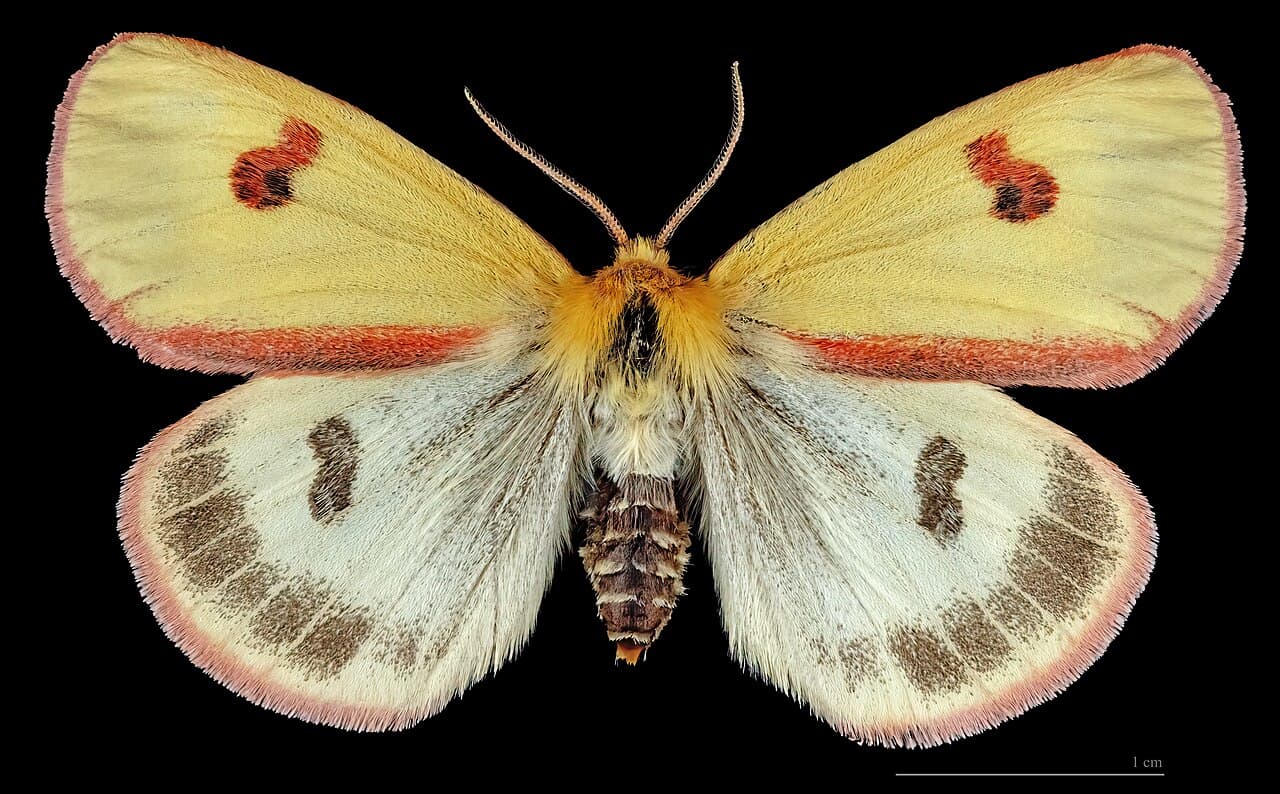
Scientific Name: Diacrisia Sannio
A clouded buff is a beautiful moth that is yellow in color, with a pink margin on the wings for males. Females look rather different, with orange-red veins on the forewings and black hind wings. Males fly in sunshine during the day, while females are more nocturnal, so they rest during the day. This species is also found in the Palearctic region, from Ireland to Siberia, but not in North Africa. Similar to other day-flying moths out there, this one inhabits heathlands and moorlands, as well as chalk and limestone grasslands.
6Currant Clearwing
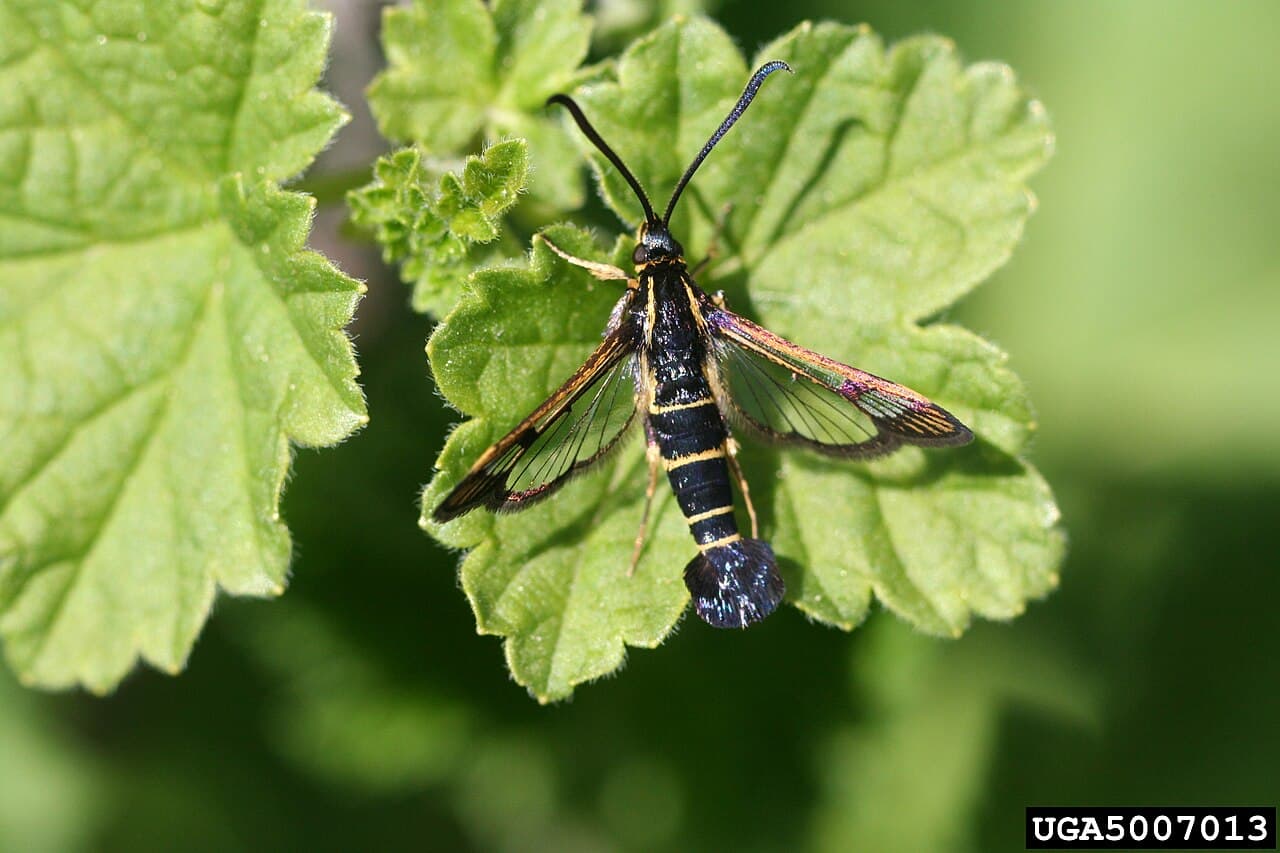
Scientific Name: Synanthedon Tipuliformis
Have you ever seen a moth that looks like this? A currant clearwing has transparent wings, with scales on the edges, discal spots, and veins of the wings. These scales shine in blue-black shades, giving a stunning contrast. Its body is black in color with lateral yellow stripes, and it has a gorgeous tail fan. Currant clearwing is endemic to the Palearctic, but it is an invasive species in the Australasia and Nearctic realms. They seem to behave well in their homeland, but they act as destructive invasive species in Australia, New Zealand, and North America. The larvae of this species are stem borers that cause severe damage to plants like blackcurrants and redcurrants. Heavy infestations can cause significant branch dieback and wilting, or even kill the host plant.
7Hummingbird Hawk Moth
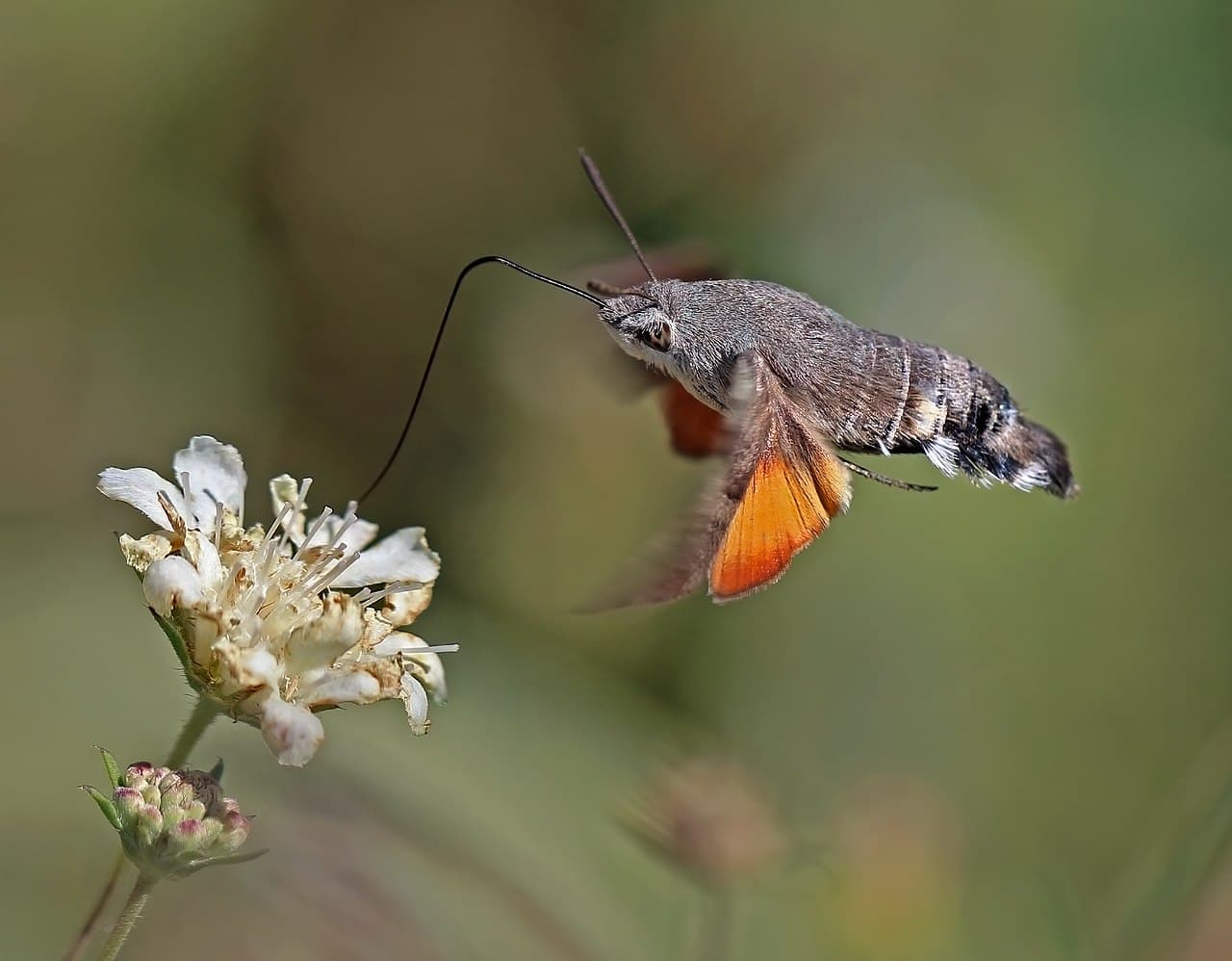
Scientific Name: Macroglossum Stellatarum
An insect that looks and behaves like a bird, this is not something that you come across every day. A hummingbird hawk moth got its name from its resemblance to hummingbirds, and it lives up to its name. This moth has a wingspan of around 4.6 centimeters, and brown forewings with crisscross thin black lines. As for the hind wings, they are orange in color with a black edge. It has a highly elongated proboscis that is nearly the length of its body. So when not in use, it keeps this appendage coiled up tightly. That’s not all; it even has elongated hairs that look like feathers and the tail of a hummingbird.
The hummingbird hawk moth has a distribution across Africa, Asia, and Northern Europe. Some of the common habitats of these moths are bushes, gardens, meadows, parks, and woodland edges where flowers are abundant. It feeds exclusively on nectar from plants such as honeysuckle and red valerian. Even its feeding behavior is similar to that of a hummingbird, by using its proboscis to feed on nectar while hovering in the air. And guess what, its little wings can beat 80 times per second, which is faster than any moths out there. These day-flying moths fly during the day, especially in bright sunshine, but also at dusk and dawn.
8Oak Eggar
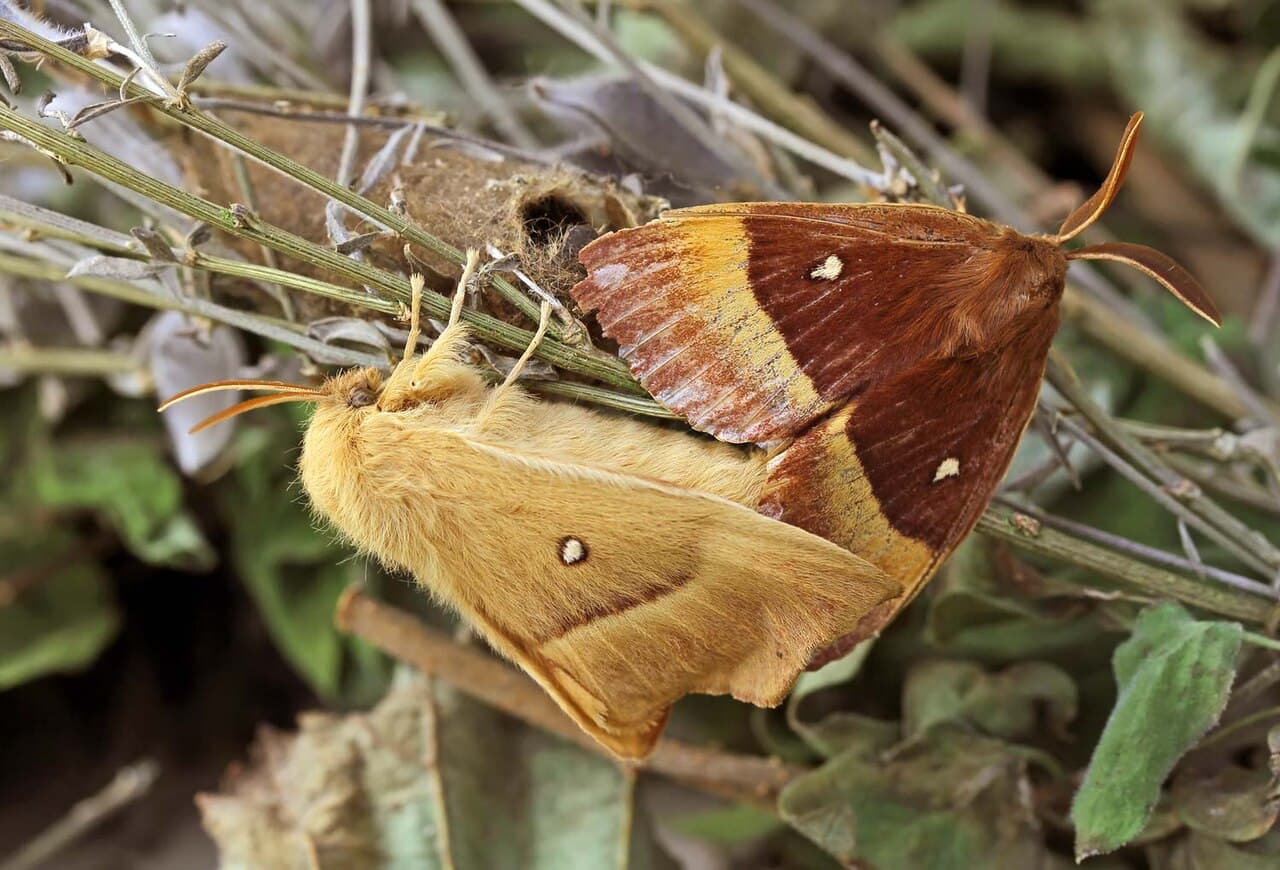
Scientific Name: Lasiocampa Quercus
An oak eggar has a wingspan of around 4.5 centimeters for males, and 7.5 centimeters for females. A male oak eggar has a fluffy body and rich brown wings with a white spot on each forewing. As for the female, she is paler and sandy brown in color, and she also has spots on her wings. Males are active during the day, flying fast and low over the vegetation searching for resting females. Females can also fly, but they are more active at night when they are sometimes attracted to lights. Oak eggar moths are found in Europe, and northern and western parts of Asia, inhabiting downland, heaths, hedges, moor, and scrubs. These day-flying moths can thrive in various habitats because they are not picky eaters. Despite their name, they don’t feed on oak; they feed on a variety of plant species, mainly bilberry and heather.
9Scarce Forester
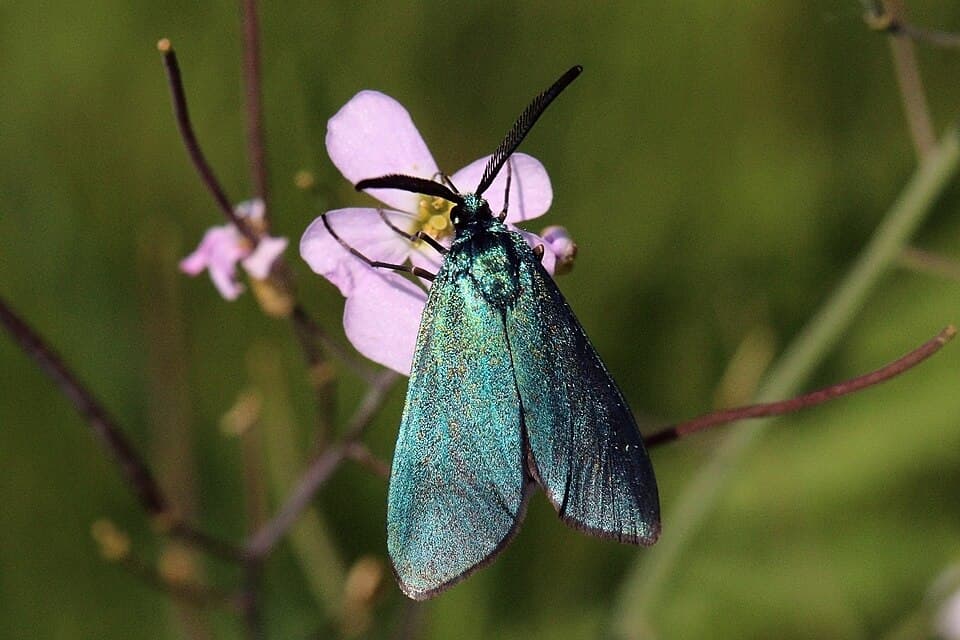
Scientific Name: Jordanita Globulariae
As a brother of the burnet, this day-flying moth is also pretty bright when it comes to color. It is small; the male has a wingspan of 1 to 1.7 centimeters, and the female’s wingspan is 0.7 to 1 centimeter. Both sexes have iridescent blue-green bodies and wings with dark legs and antennae. This one lives across Europe from the Iberian Peninsula through the Balkan Peninsula to Turkey. Scarce forester moths inhabit calcareous grasslands, humid grasslands, nutrient-poor grasslands, and pastures. It is common to see these moths on sunny days flying in chalk or limestone grassland.
10Silver-Y
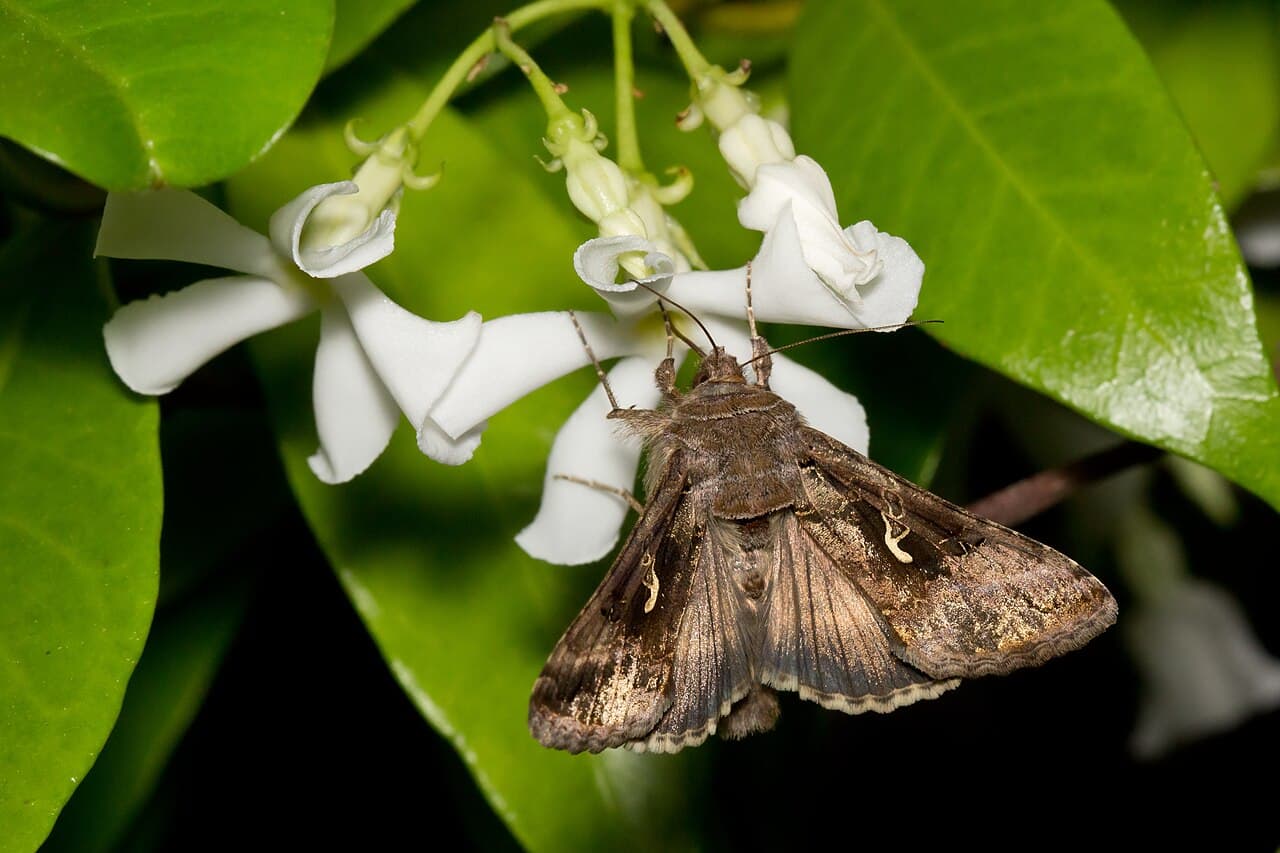
Scientific Name: Autographa Gamma
The name is quite interesting, don’t you think? Why silver Y? This day-flying moth got its name from the silvery Y-shaped marking on each of its forewings, giving it its distinctive look. A silver Y moth has a wingspan of about 3 to 4.5 centimeters, and the wings have brown and gray shades. As a day-flying moth, this coloration is very useful for them to camouflage when they are out. The silver Y is widespread across Asia and Europe, but it also has a distribution in North Africa and the Palearctic. Adults inhabit open areas like coastal areas, grasslands, wetlands, and woodlands, where they can visit gardens to feed on flower nectar. In some areas, they are considered insect pests because larvae feed on crops and plants like grapes, lettuce, radishes, etc.
Related Post: Beautiful Moth Species