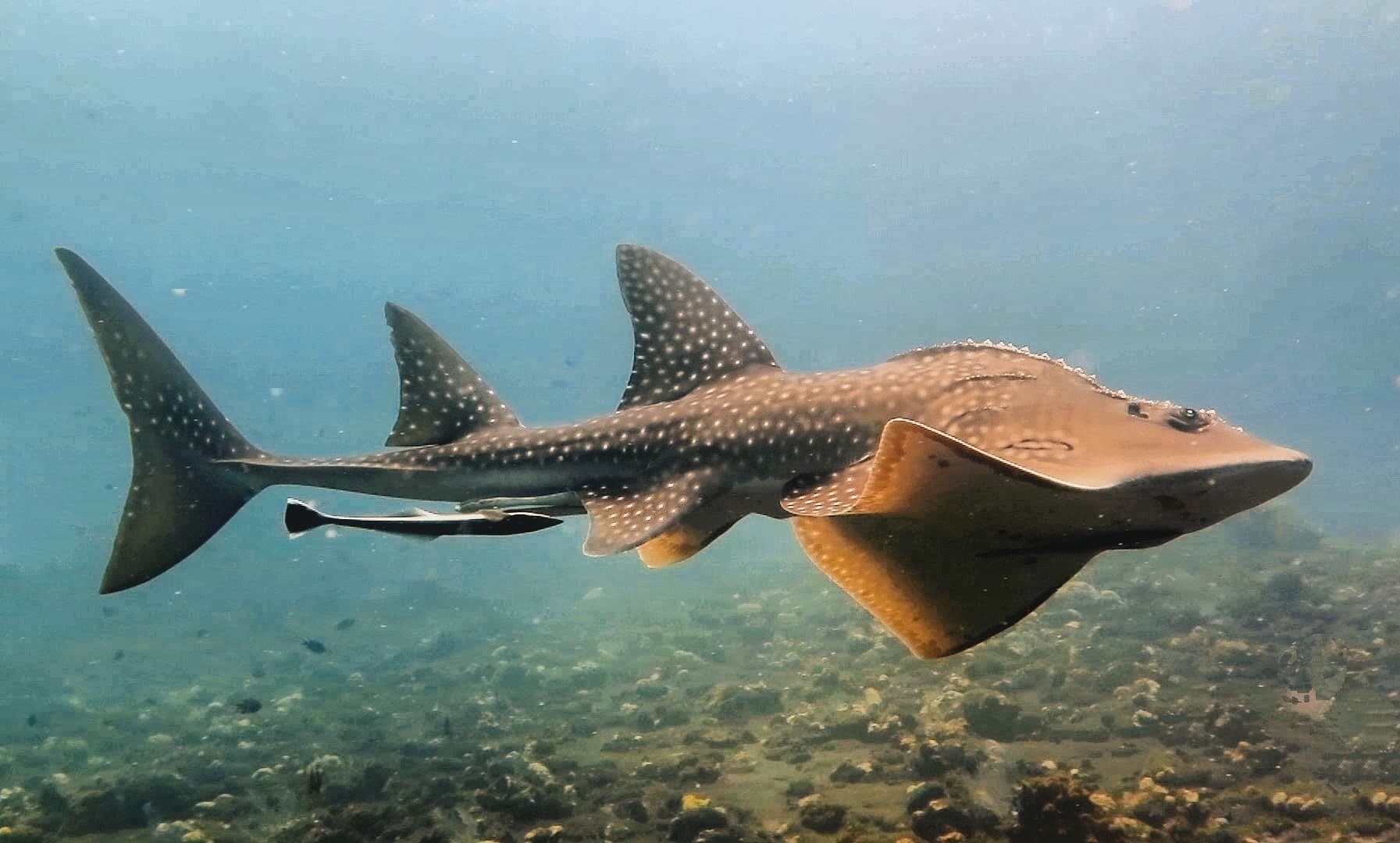
Bowmouth guitarfish is a close family member of skates and true guitarfish, but it is actually a ray. It also goes by the names mud skate and shark ray, and it is a rare fish species. This marine creature not only has a fascinating appearance but also behavior. We should definitely dive deeper and find out more below.
1Appearance
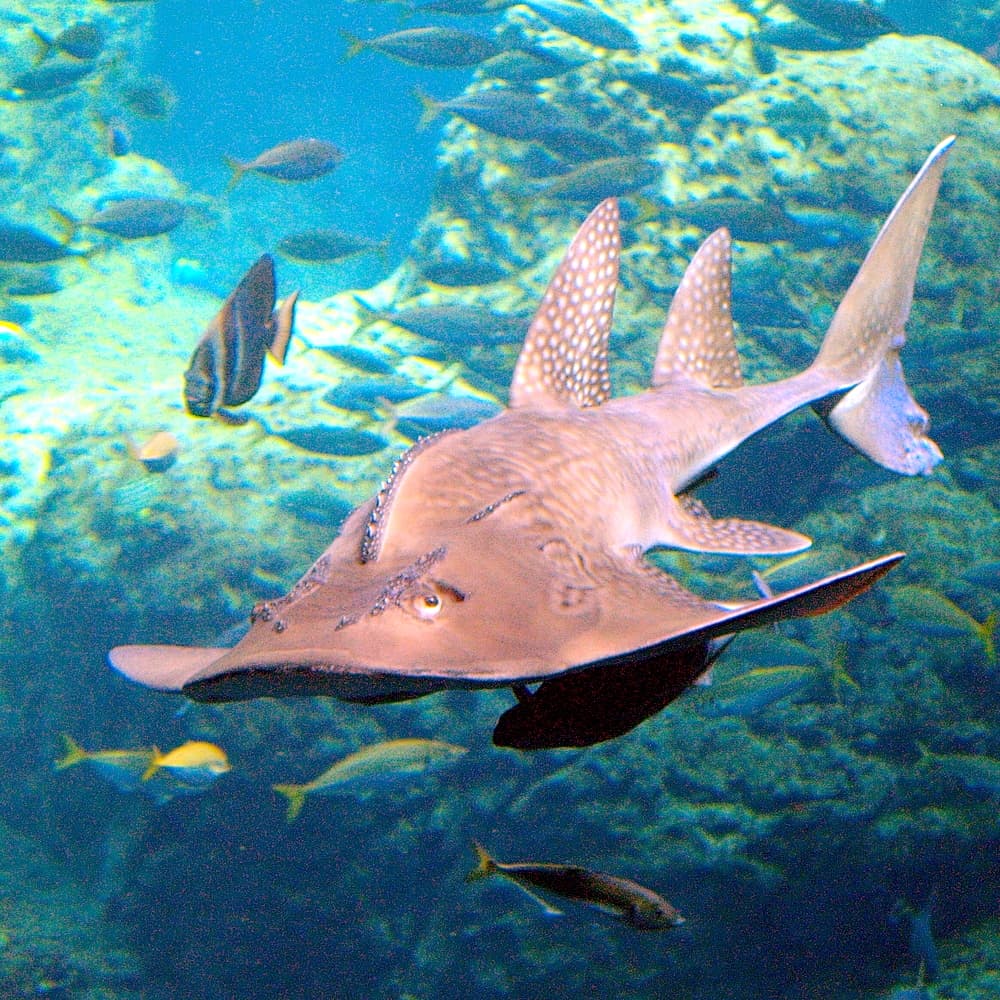
When it comes to appearance, it is very obvious that the bowmouth guitarfish looks out of this world. A bowmouth guitarfish is a large species that can reach a length of up to 2.7 meters. The fish is bluish to brownish gray above, with a light gray to white underside to camouflage. There are prominent white spots all over its body and fins. It has a short head that is flattened and wide, and a rounded snout. On its head and back, there are bands of thorny ridges that give it a very strange look. Its mouth forms a longbow shape with an undulating line; hence the name. As for the tail, it is much longer than the body, and it ends in a large and crescent-shaped caudal fin. Bowmouth guitarfish are gentle giants; they are not aggressive, and they often flee from divers.
2Feeding & Habitats
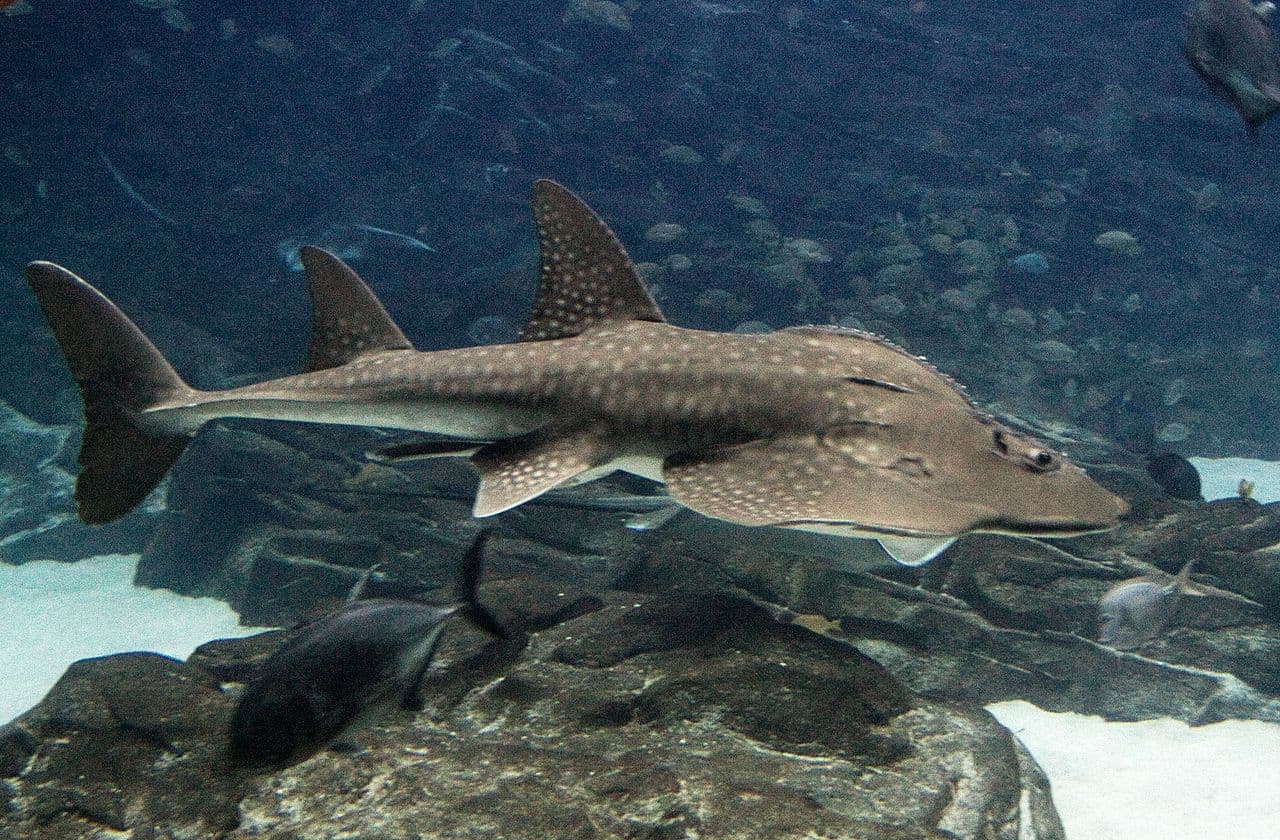
Bowmouth guitarfish lives in the tropical coastal waters of the Western Indo-Pacific, hanging out on the sea floor. They prefer muddy or sandy areas near underwater structures. Looking intimidating, this fish is a predator of bony fishes, crustaceans, and mollusks. It locates prey by smell, and it uses its head and pectoral fins to press its prey against the seabed. Then it swallows the prey with its mouth, which is on the underside of its body. With their ridged jaws and flat teeth, crunching bottom-dwelling crustaceans and mollusks is very easy. They do have predators, and their main predators are tiger sharks and humans.
Nothing can survive humans. Bowmouth guitarfish is classified as Critically Endangered on the IUCN Red List due to artisanal and commercial fisheries for their fins and meat. People use their fins in shark fin soup, and their meat is very popular in India, either dried, fresh, or salted. Along with that, habitat degradation and destruction also play a part in affecting their population. Due to late sexual maturity and low reproductive rate, their numbers are not doing very well.
Related Post: Electric Rays That Can Shock You