
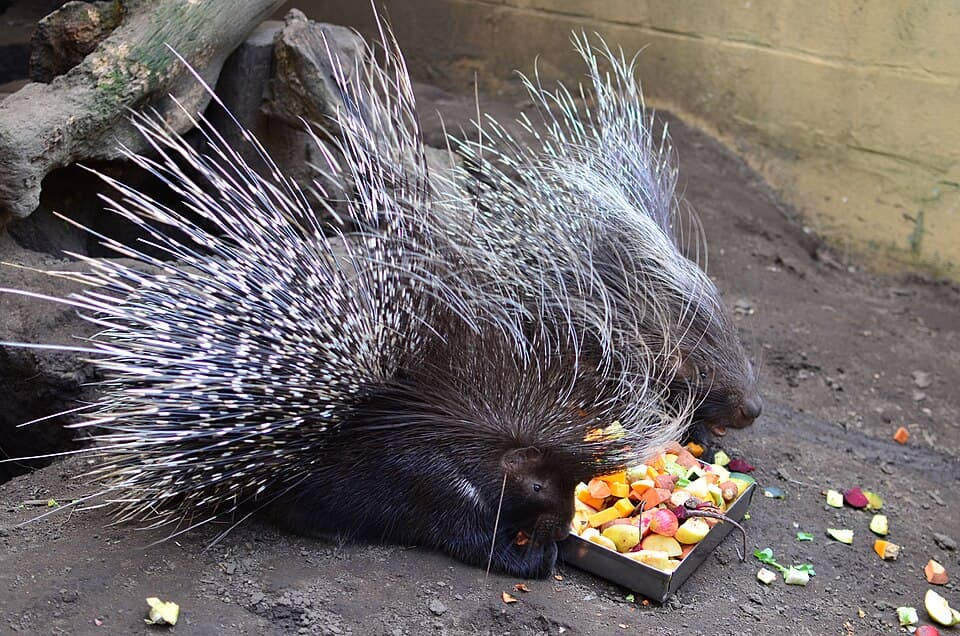
You probably don’t know, but there are Old World porcupine species and New World porcupine species out there. Old World porcupines live in Africa, Asia, and Europe, and they are strictly ground-dwelling animals. This is why their quills grow in clusters to protect them from predators on the ground. New World porcupines are native to North, Central, and South America, and they are tree-dwelling. Therefore, their quills are interspersed among their fur, and many species have prehensile tails to help with climbing. We are going to talk about the Old World porcupine species today, so let’s see what they are below.
1African Crested Porcupine
Scientific Name: Hystrix Cristata
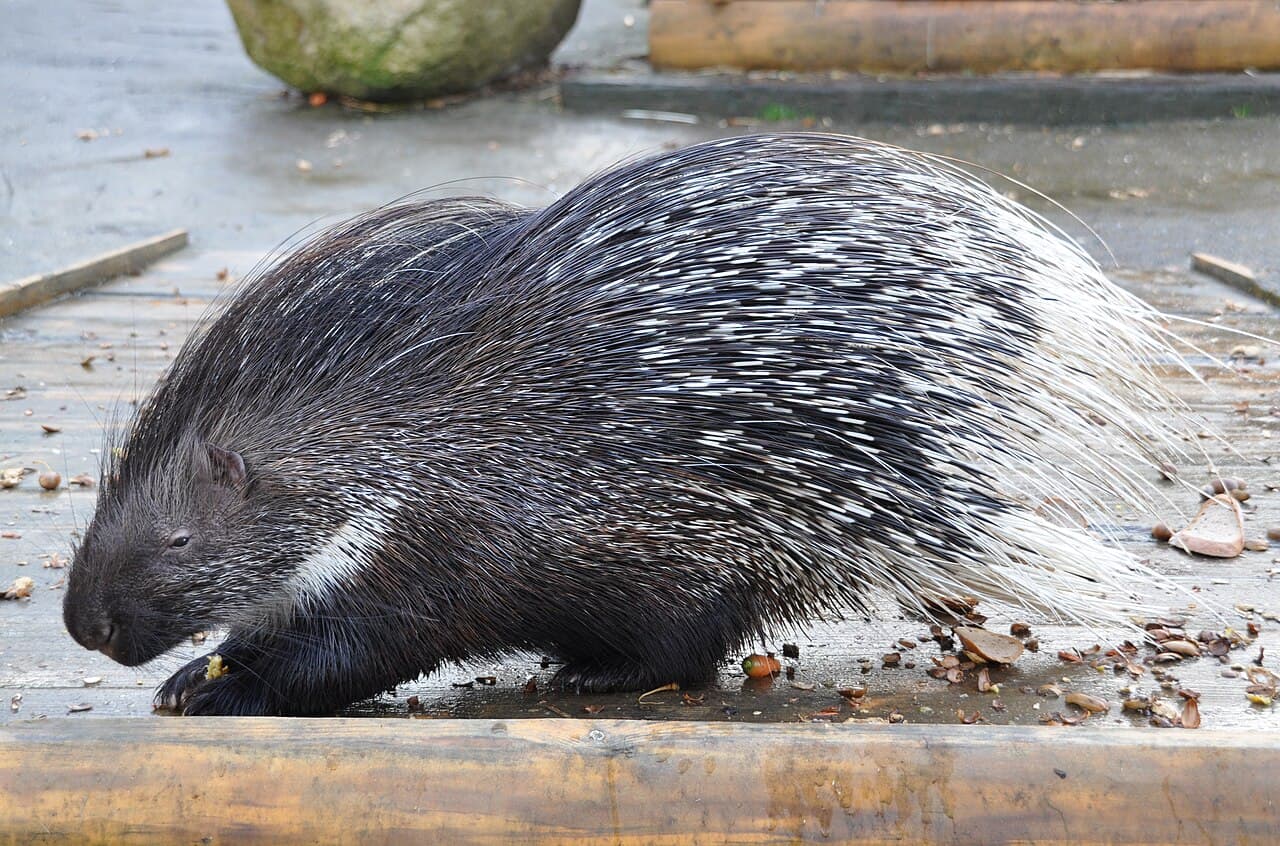
The African crested porcupine, or just crested porcupine, is one of the largest porcupine species in the world. It is around 60 to 83 centimeters from head to rear, excluding the tail. The body of a crested porcupine is almost entirely covered with black or dark brown coarse bristles. Its distinctive feature is the black and white quills that run along its head, nape, and back. This porcupine can raise these quills into a crest to make itself look bigger; hence the name. These sturdy quills can be up to 35 centimeters long, and they are for defense against predators. On its short tail, there are rattle quills at the end that produce a hiss-like rattle just like a rattlesnake.
When disturbed, it begins by raising and fanning its quills to intimidate the intruders. If the disturbance continues, this porcupine will stamp its feet, whirr the quills, and charge back first to stab the enemy. As dangerous as it sounds and looks, this defense mechanism has killed hyenas, leopards, lions, and even humans. They would go out of their way to attack anyone, so it is good to respect the distance.
This Old World porcupine species is native to Italy, North Africa, and Sub-Saharan Africa, including Central Africa, East Africa, and West Africa. They inhabit forests, grasslands, rocky hillsides, and woodland savannas where they live in a group of up to 20 individuals. As a terrestrial mammal, a crested porcupine roams the land at night looking for food. Being herbivores, they feed on bulbs, leaves, and roots, as well as carrion, insects, and small vertebrates.
2Cape Porcupine
Scientific Name: Hystrix Africaeaustralis
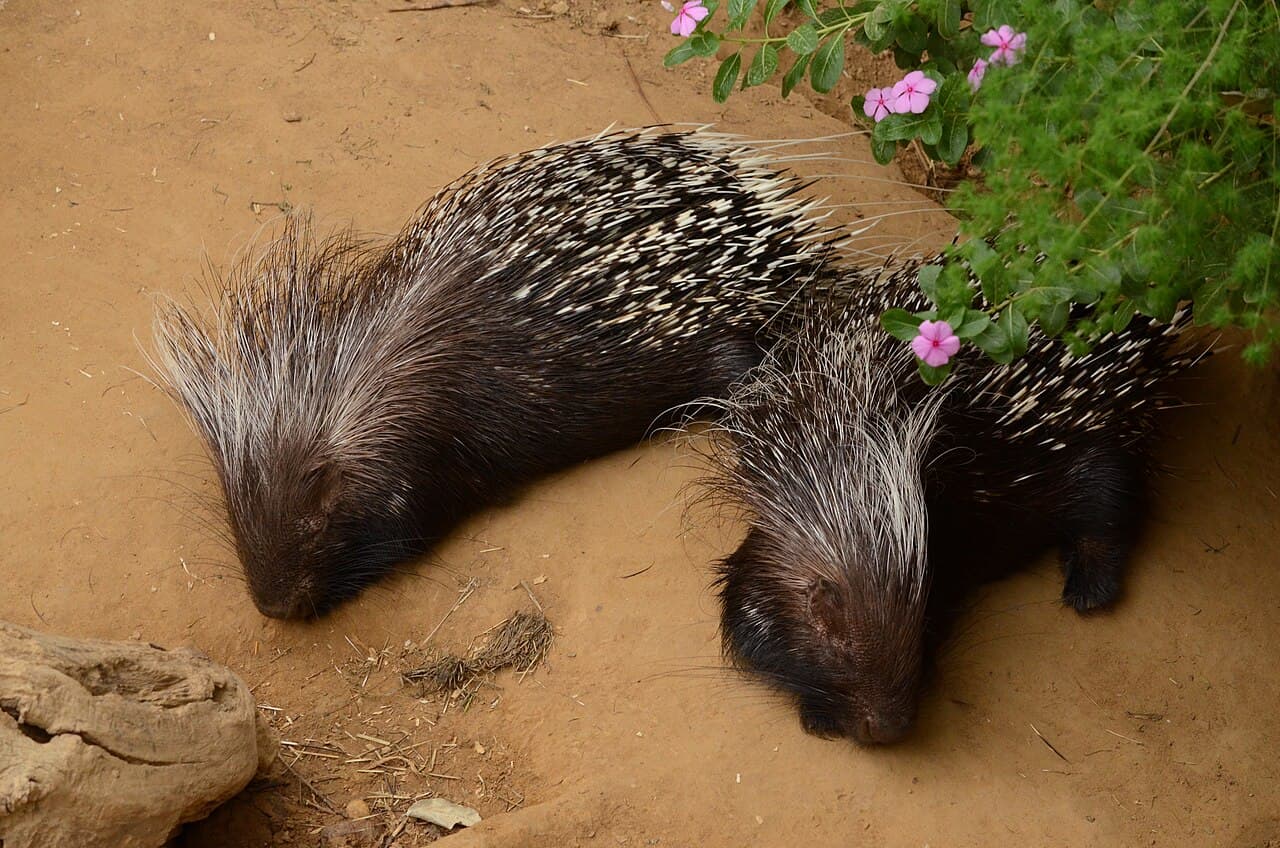
Cape porcupines are slightly larger than the crested porcupines, and they are one of the largest rodents in Africa. This Old World porcupine species is around 63 to 81 centimeters long from head to the base of the tail. Its tail adds around 11 to 20 centimeters, and it is covered in quills. The whole body is covered in long spines that are up to 50 centimeters long. Along with that, the thick and sharp quills on its body can be as long as 30 centimeters. The Cape porcupines look very similar to the crested porcupines when it comes to appearance and size. You can differentiate them by a band of short white spines along the midline of the rump that only the Cape porcupines have.
As for this species, it is native to Central and Southern Africa, inhabiting dense forests and dry deserts. This porcupine lives in open areas where food is available, and where there are caves and rocky crevices for shelter. It inhabits brushlands, rocky areas, savanna grasslands, scrublands, and semi-arid deserts. Cape porcupines eat mostly plant material like bark, bulbs, fruits, roots, and tubers. It is also not uncommon for them to feed on bones and carrion on some occasions. They are cautious and shy, and they only come out at night to search for food. Porcupines are monogamous, and this species also lives in small family groups that include an adult pair with offspring. Farmers consider them pests because they can feed on crops like ground nuts, maize, potatoes, and root crops.
3Indian Crested Porcupine
Scientific Name: Hystrix Indicus
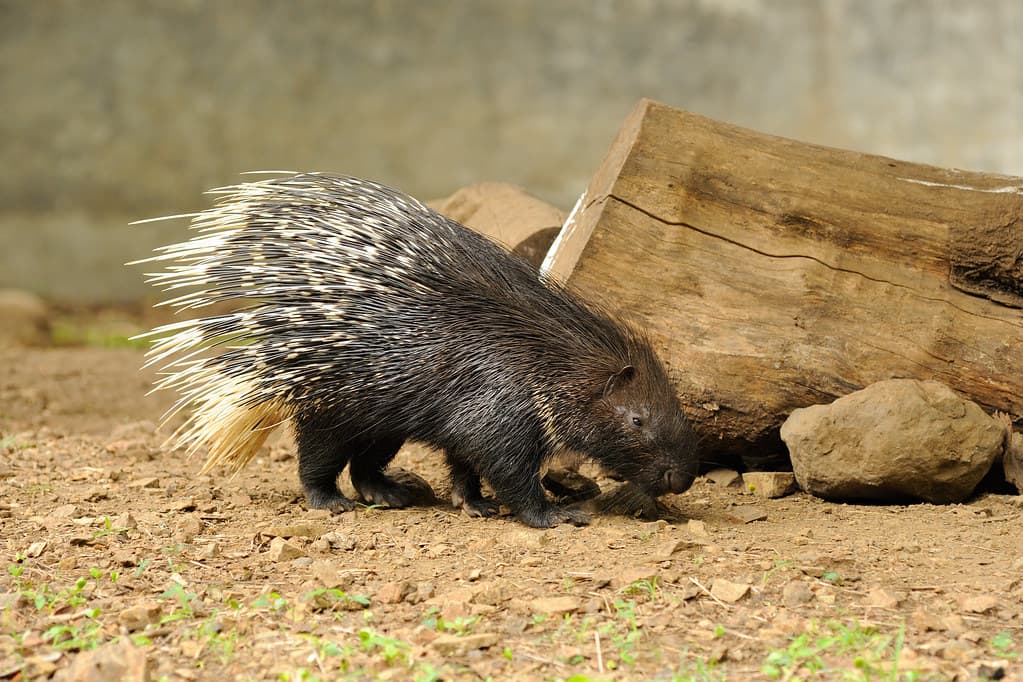
Having longer quills compared to other Old World porcupines, the Indian crested porcupine is very easy to recognize. This rodent reaches 1 meter long from head to tail, and it has quills on its neck to tail. The quills on this porcupine species can reach up to 51 centimeters long. It has a stocky body, and the quills are very dense on its back and rump. There are shorter quills on its tail, and they are white in color. Just like other porcupines out there, this one also has strong and long claws that they use for burrowing.
Indian crested porcupines are native to South Asia and West Asia, living in a wide range of habitats. They prefer rocky hillsides, but they also inhabit forests, gardens, plantations, temperate shrublands, and tropical shrublands. Their habitats should have sources of food such as bulbs, drupes, fruits, grains, roots, and tubers. Apart from plants, they also feed on insects and small vertebrates if they come across one. Throughout its range, this porcupine species is hunted as a food source. As far as their population is going well, they are still facing threats from habitat loss, hunting, and persecution from farmers.
4Malayan Porcupine
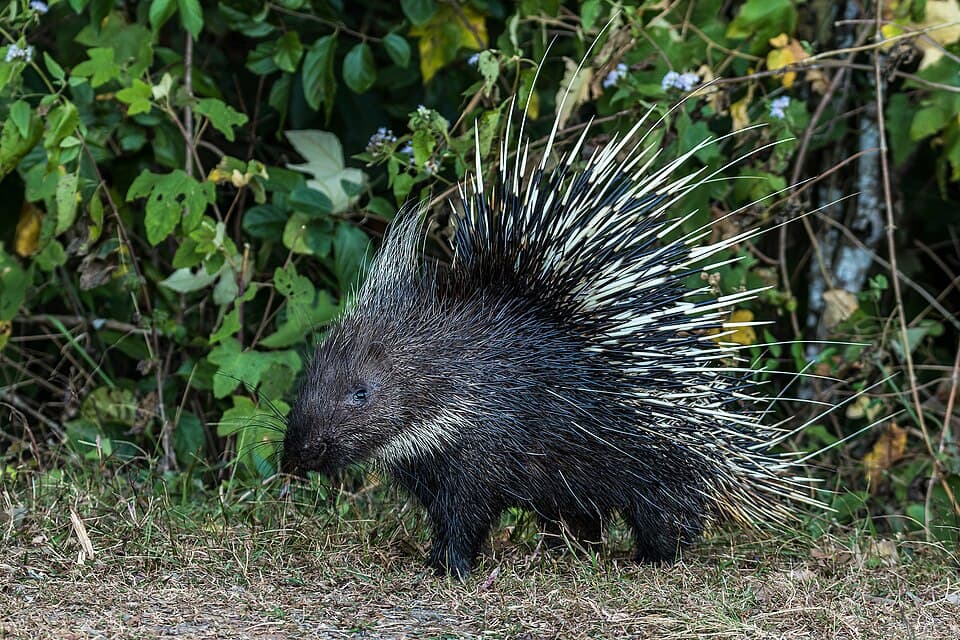
Scientific Name: Hystrix Brachyura
Just like other Old World porcupine species on the list, this one is also large and stout. A Malayan porcupine is around 85 centimeters from head to tail. Its front half of the body has coarse hairs that are dark brown or near black in color. The quills on its lower body parts are rough with black and white or yellow stripes. The Malayan porcupine, or Himalayan porcupine, is an Old World porcupine species native to South and Southeast Asia. They inhabit various types of forests and open areas near forests, and they also stray into nearby agricultural areas and plantations. Their diet consists of bark, fallen fruits, large tropical seeds, roots, and tubers, as well as carrion and insects. Thanks to their powerful jaws, crushing nuts and seeds is very easy for these porcupines. As for threats, people hunt them for their bezoars and meat, and habitat loss.
Some Porcupine Facts
- Baby porcupines are called “porcupettes”.
- When the quills are lost, they will grow back.
- Old World porcupines are terrestrial; they cannot climb trees, but they can swim.
- The quills of porcupettes are soft when born, and they become harder as the babies mature.
- Porcupines cannot shoot their quills; the quills only come loose once they are embedded in the intruders.
- Porcupines are rodents, and their incisors will never stop growing. It is common for them to gnaw on bones to sharpen their incisors and to get minerals.
Related Post: Largest Rodents In The World