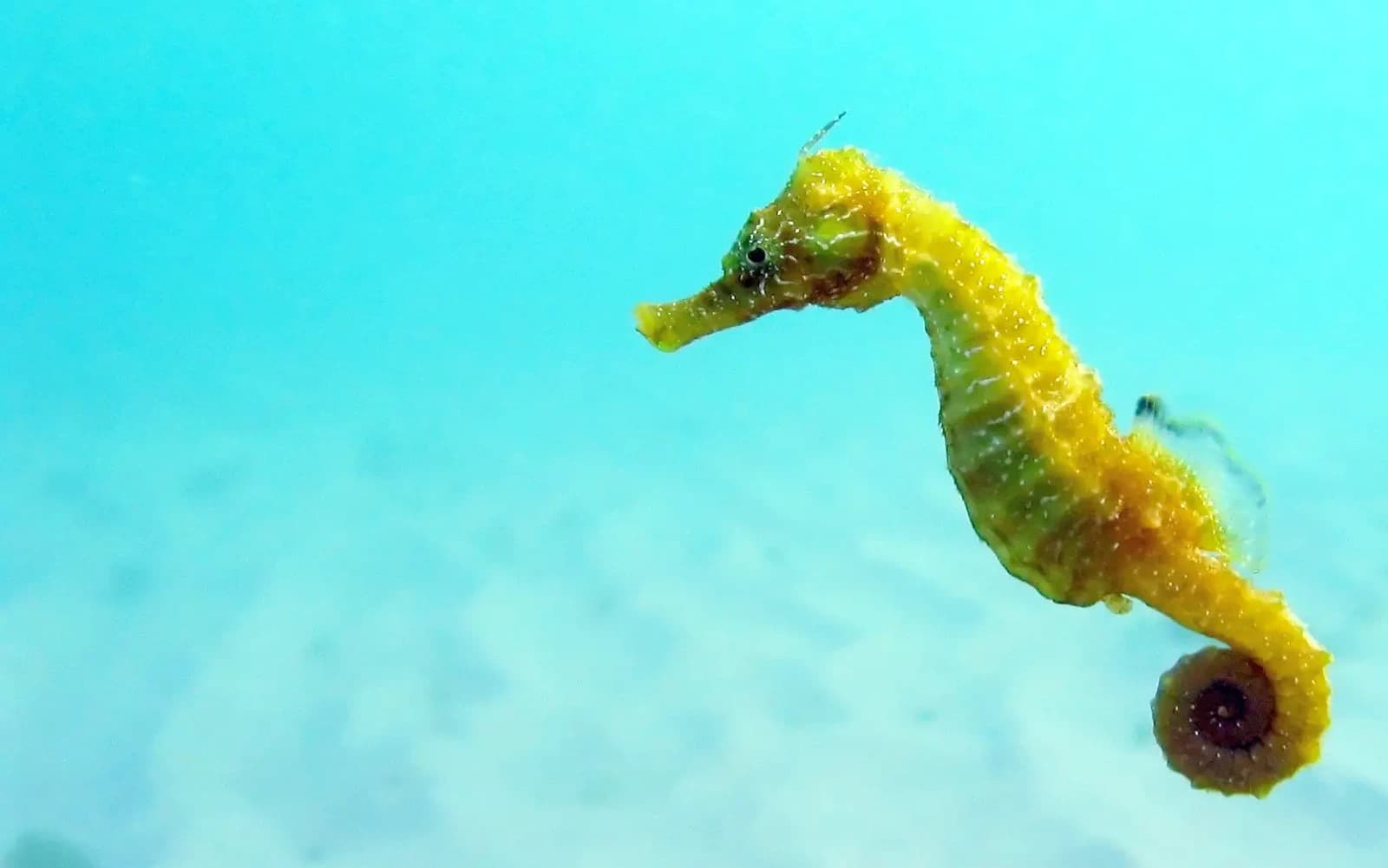
So far, there are over 50 known seahorse species, but we are going to discuss the most beautiful of them all. Do you know what the Latin name for seahorse Hippocampus means? Hippo means horse, and campe means caterpillar or monster. Interesting, isn’t it? This small marine bony fish is the only animal where males are the ones who get pregnant. Outstanding fatherhood aside, many seahorse species out there look absolutely magical and you will find 10 of that below.
1Common Seadragon
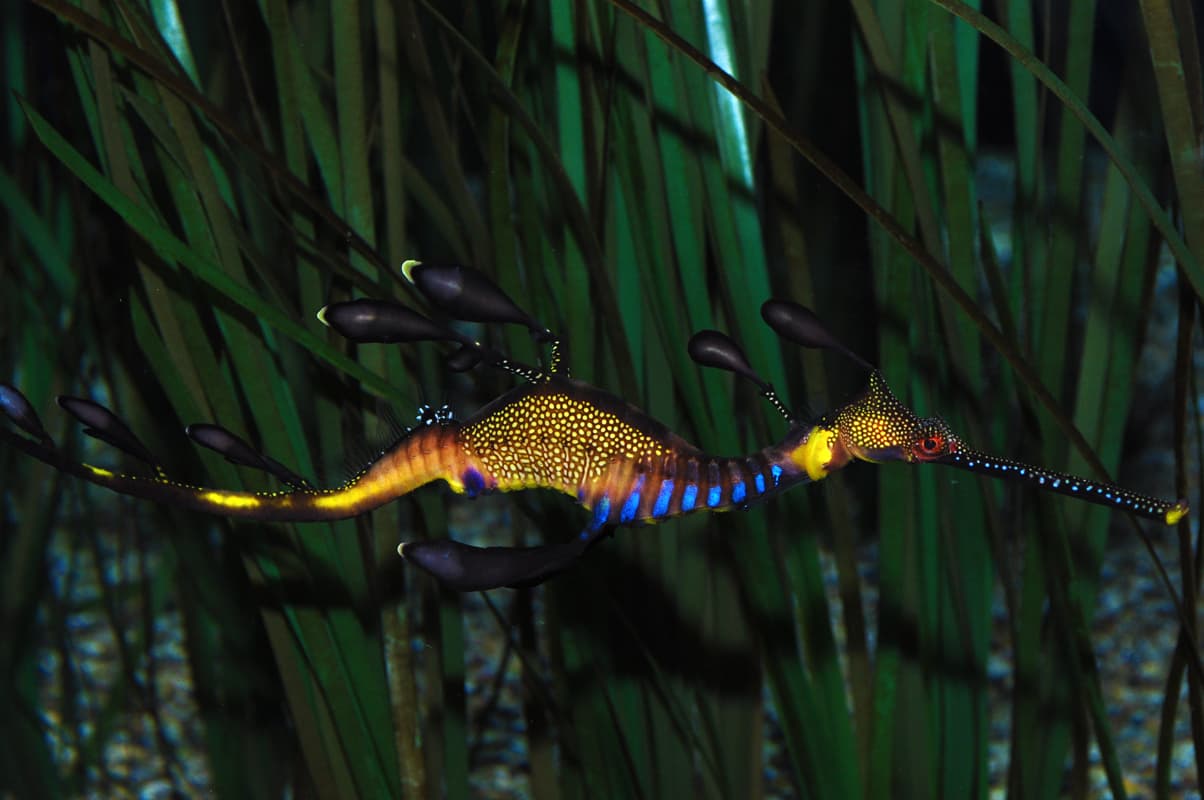
Scientific Name: Phyllopteryx Taeniolatus
The common seadragon is the beauty of the ocean, and it can grow up to 45 centimeters in length. Adults of this species are reddish in color with purple and yellow striped markings and spots. Males have narrower bodies, and they are darker than females. It also goes by the name “weedy seadragon” for its small leaf-like appendages that resemble kelp or seaweed fronds. These appendages are not just for show; they provide camouflage and protection to the seahorses. What makes them different from other seahorses is that they lack the prehensile tail. That means they don’t anchor themselves to plants; instead, they drift in the water among kelp and seaweed masses. On top of that, they also lack a pouch for rearing the young. Male seadragons carry the eggs in the brood patch on the underside of their tail instead.
For once, we talk about something from Australia that is not freaky or straight up a killer. The common seadragon is endemic to Australia, and it is the marine emblem of the state of Victoria. It hangs out around rocky reefs, seagrass meadows, and seaweed beds where it can camouflage and look for food. Individuals are either on their own or in pairs, and they feed on invertebrates, tiny crustaceans, and other zooplankton. They have tube-like snouts that function like a drinking straw that they use to suck food. Their beauty makes them very popular in the international aquarium trade, which threatens their numbers. Along with that, other threats like habitat degradation and habitat loss also harm their population. The common seadragon is classified as Vulnerable on the IUCN Red List at the moment.
2Korean Seahorse
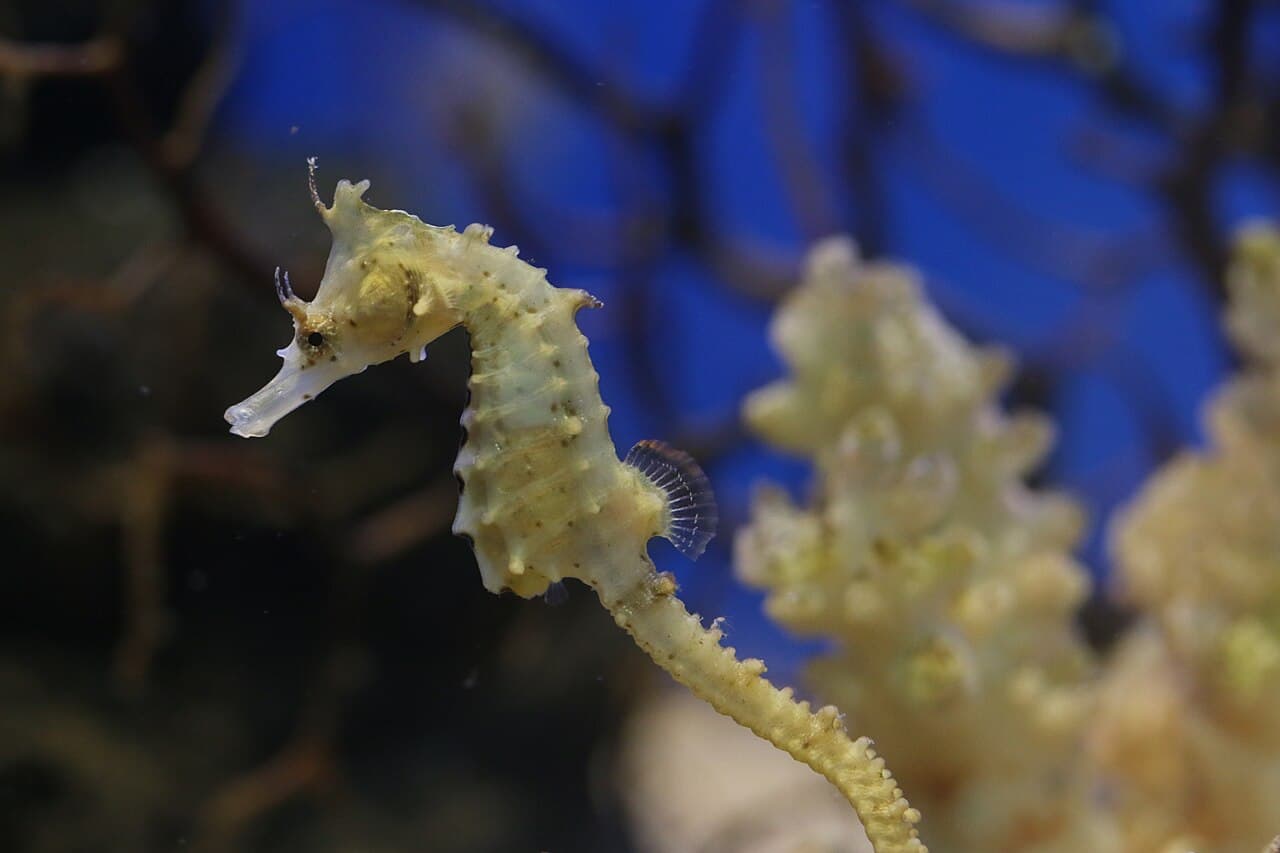
Scientific Name: Hippocampus Haema
A Korean seahorse can reach a length of 11 centimeters, and males have a longer tail than females. It has 10 body segments, plus 35 to 38 tail segments, and double gill openings. On the top of its head, there is a pronounced and tall backwards-swept crown, giving it its distinctive look. The Korean seahorse comes in many colors, including black, brown, magenta, orange, white, and yellow, with black, red, or white stripes. Haema means seahorse in Korean, and this beautiful seahorse species is the most common in Korean waters; hence the scientific name. It is native to the northern Pacific Ocean, living in seaweeds and weeds on shallow soft bottoms. This seahorse feeds on copepods, isopods, and small and slow-moving crustaceans found in their Sargassum seaweed habitats.
3Lined Seahorse
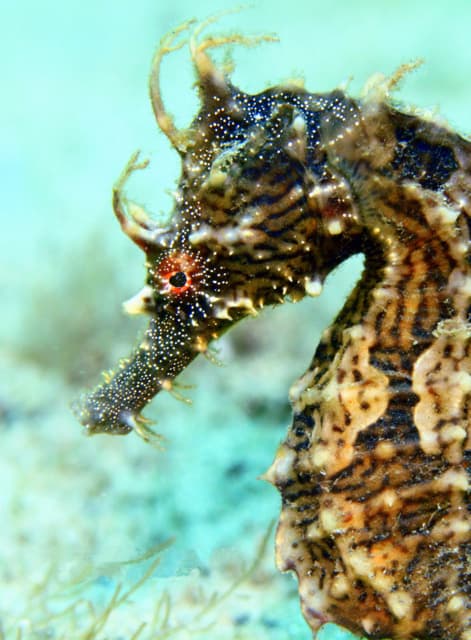
Scientific Name: Hippocampus Erectus
The lined seahorse is a pretty large bony fish, reaching a length of around 12 to 19 centimeters. You can tell a male and a female apart from each other by the larger size and longer tail in males. Its color ranges from black and gray to green, orange, and red. It is common for this species to have white lines outlining its neck area; hence its name. This one can swim, and it slowly swims in an upright position by using its fin for guidance while swimming.
This beautiful seahorse species lives in the Western Atlantic Ocean all the way to Venezuela, inhabiting marine intertidal and marine neritic habitats. The lined seahorses live in marine vegetation such as mangroves, Sargassum, seagrass, and sponges. It mainly feeds on brine shrimp and minute crustaceans, which it sucks through its snout. The habitats and food sources of these seahorses are facing threats from coastal growth and pollution, causing their population decline. People also catch them to use in Chinese medicine and the aquarium trade, contributing to their Vulnerable status on the IUCN Red List.
4Long Snouted Seahorse
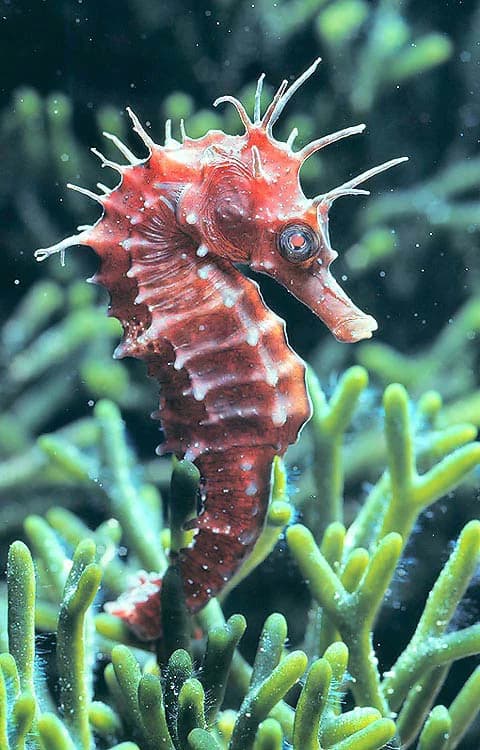
Scientific Name: Hippocampus Guttulatus
One of the biggest seahorses on the list today, the long-snouted seahorse can reach a maximum length of 21.5 centimeters. It has a slender body, a fleshy horse-like mane on its neck, and a prehensile tail. Along with that, it has a very long snout that is more than one-third the total length of its head. A long-snouted seahorse’s color ranges from dark green and red to brown, orange, and yellow, with small white dots.
The long-snouted seahorse is native to shallow and coastal waters of the northeast Atlantic, including the Mediterranean. It lives close to Posidonia and seagrass meadows, or in mixed habitats with sandy bottom and rocks with algae. This one feeds on fish eggs, larvae, small crustaceans, and other planktonic organisms. The long-snouted seahorses are relatively rare, and their population is not doing so well. Not different from many seahorse species out there, people also catch them for the aquarium and traditional Chinese medicine trades.
5Pacific Seahorse
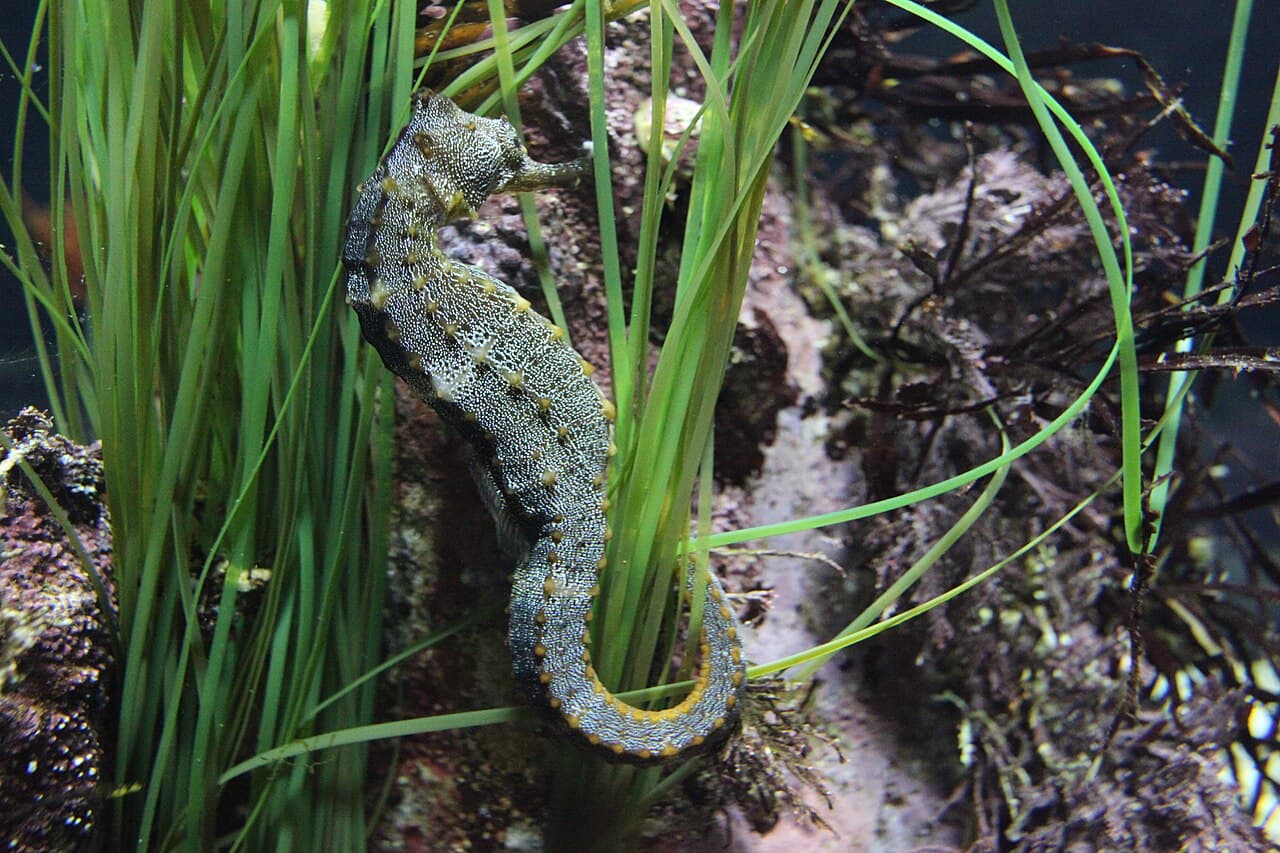
Scientific Name: Hippocampus Ingens
The Pacific seahorse, aka the giant seahorse, is one of the largest seahorse species, reaching 19 centimeters long. Some individuals can even grow up to 30 centimeters maximum. It has a distinctive curved neck and a long tubular snout. This one comes in a wide range of colors such as brown, gray, green, maroon, and yellow. You can tell a male apart from a female by its prominent keel. One fascinating part is that their eyes can move independently of one another, similar to a chameleon.
This large seahorse species lives in shallow coastal and sub-tidal waters of the Eastern Pacific Ocean. They inhabit coral fans, eelgrass beds, kelp, mangroves, reefs, seagrass beds, and sea fans. Their diet consists of small organisms such as mysids, small crustaceans, and other plankton. Unfortunately, this beautiful seahorse species is facing many threats, and they are considered Vulnerable on the IUCN Red List. They are dried as curios, used in Chinese medicine, or sold to the aquarium trade. Locals also kill and use them to make crafts and jewelry to sell to tourists.
6Shiho’s Seahorse
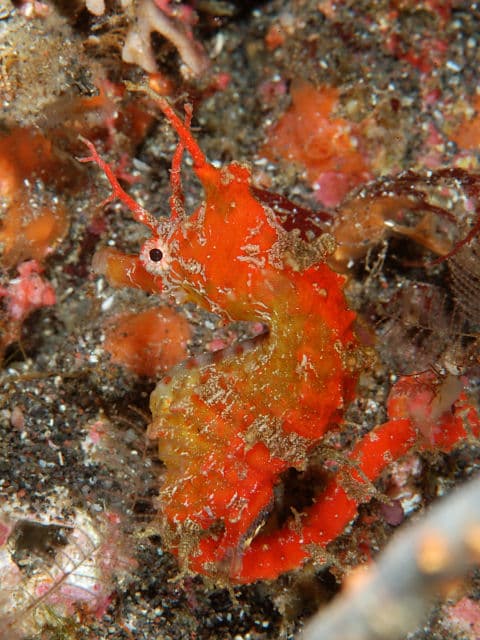
Scientific Name: Hippocampus Sindonis
Shiho’s seahorse, or Sindo’s seahorse, is a small seahorse that reaches a length of only around 8 centimeters. It has a prominent round-tipped cheek spine and a double eye spine, and the front spine is shorter than the back one. These vibrant fish are usually bright in color, and they come in shades of red and yellow. Females have fleshy filaments over their eyes and crowns, while males tend to have a smoother crown. This little seahorse species is endemic to the Pacific coastal waters of Japan, thriving in shallow coastal zones. It inhabits a diverse range of environments, ranging from shallow and high-energy algae reefs to calmer soft-bottom marine habitats. Not different from many species out there, this one is facing threats, and its category on the IUCN Red List is Vulnerable.
7Short-Headed Seahorse
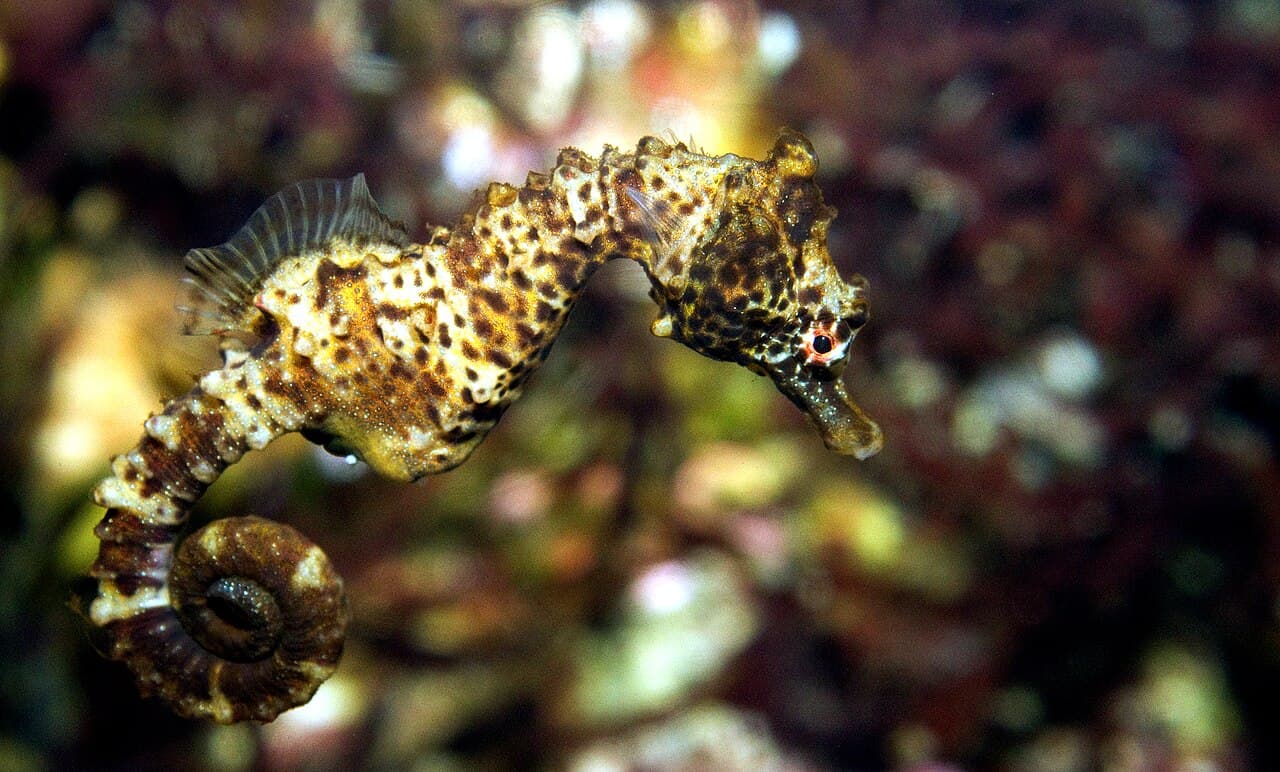
Scientific Name: Hippocampus Breviceps
The short-headed seahorse or knobby seahorse is a small seahorse that grows up to around 10 centimeters. It has a small and slender body, with a short snout and raised coronet. The coloration is usually drab gray to bright yellow-orange, with small black spots all over. It inhabits coastal waters in southeastern and southwestern Australia, living in sheltered coastal reefs with macroalgal beds and seagrasses. Other habitats include floating macroalgae, jetty habitats, rock reefs, and sponge reefs. These seahorses feed on caprellid amphipods, gammarid amphipods, harpacticoid copepods, and mysids.
8Slender Seahorse
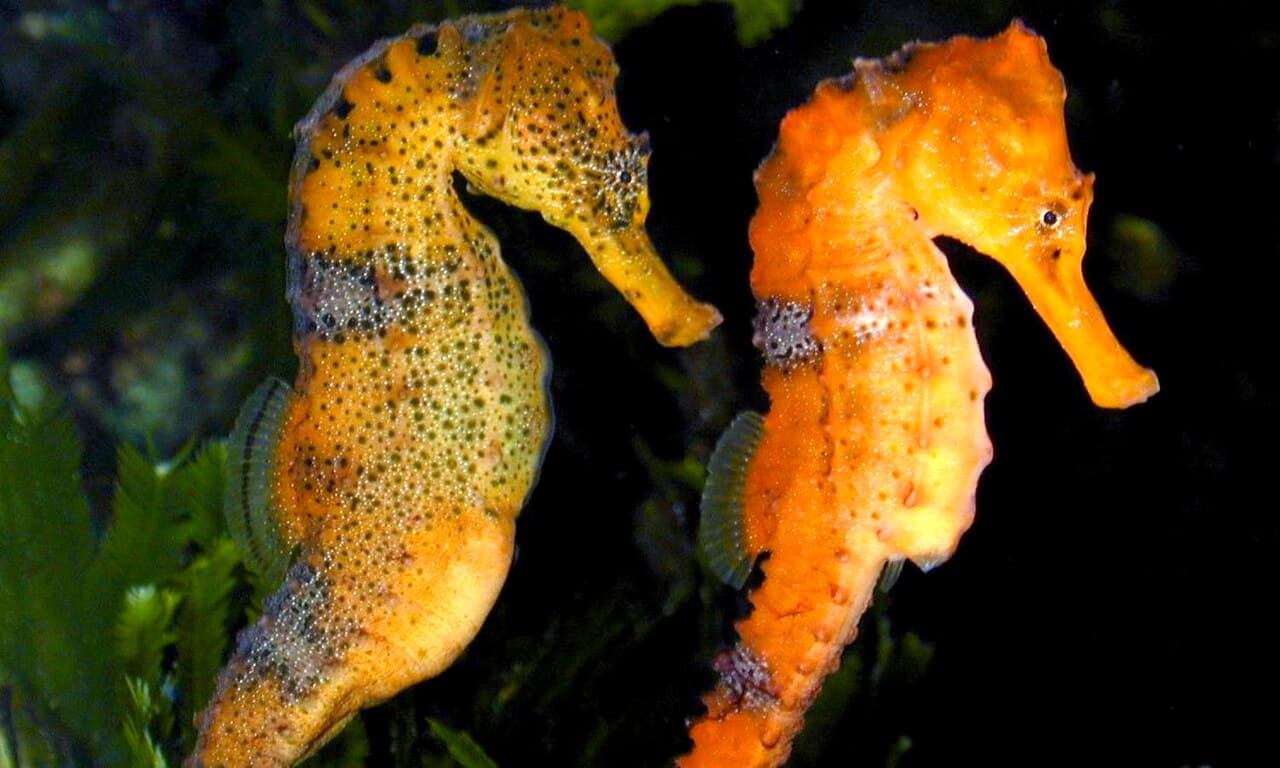
Scientific Name: Hippocampus Reidi
Slender seahorses are around 17.5 centimeters, having a slender body and a long snout. Males are orange, and females are yellow, but both sexes have brown or white spots on their bodies. This beautiful seahorse species usually inhabits shallow waters in subtropical regions. They like hanging out in coral reefs and seagrass beds, as well as gorgonian coral, mangroves, Sargassum, seagrass, and sponges. These bony fish feed on plants, plankton, and small crustaceans using their long snout to suck in food as it passes by. The slender seahorses are classified as Near Threatened on the IUCN Red List. People harvest them for use in aquariums, as medical remedies, as souvenirs, and for religious purposes. Bycatch and habitat degradation are also parts of their population decline as well.
9Spiny Seahorse
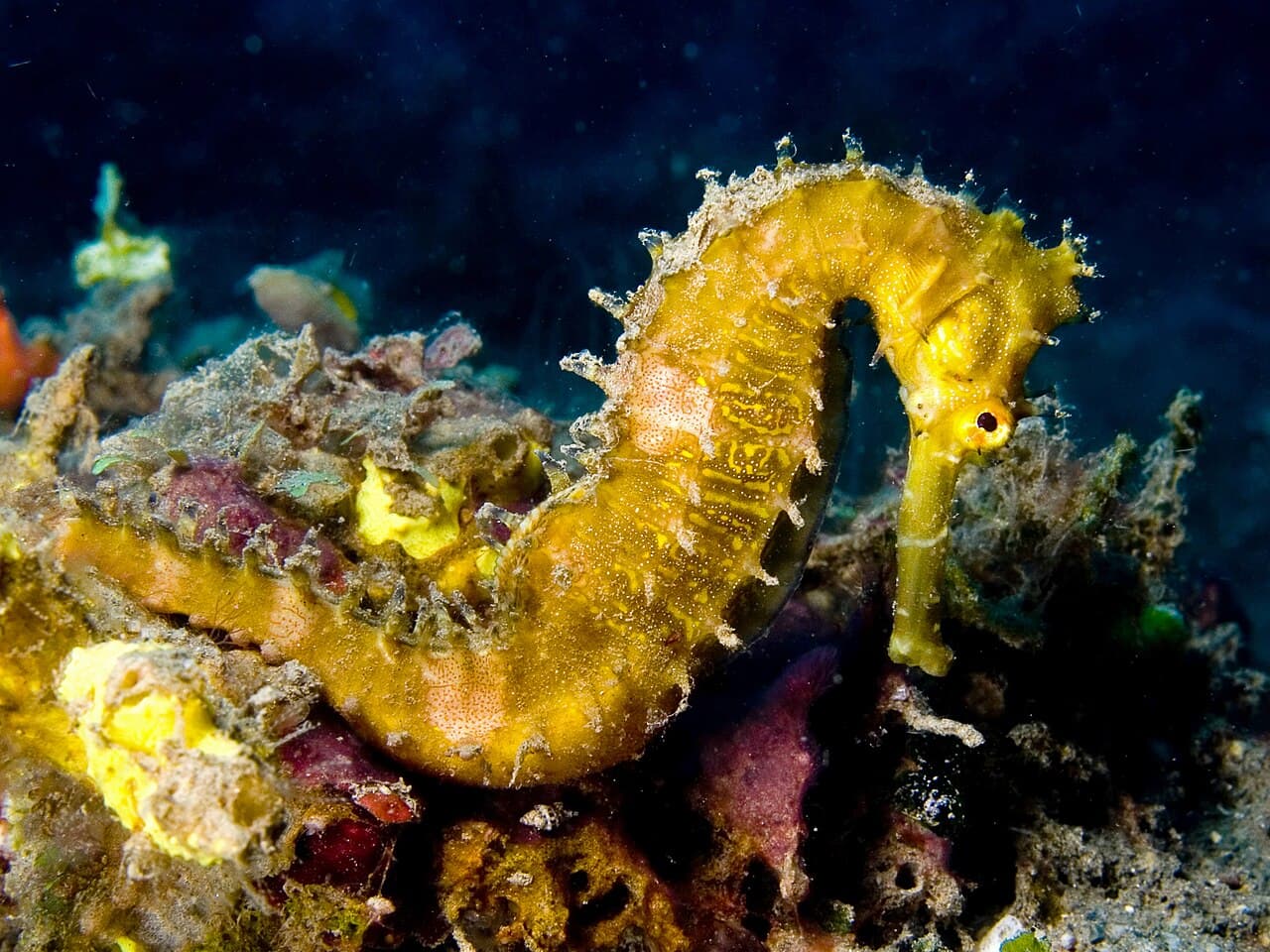
Scientific Name: Hippocampus Histrix
The spiny seahorse or thorny seahorse is a beautiful seahorse species that reaches a length of 15 to 17 centimeters. It has a slender and elongated body that is completely covered with thorns; hence the name. More than that, there are also spines on its head, base of the cheeks, nose, and above the eyes. So spiny. As for its coloration, it ranges from gray and cream to bright yellow, green, red, or even brownish. The color depends on their environment, which helps them camouflage in their surroundings. They are poor swimmer, so they rely on their prehensile tail to cling to seaweed and seagrass.
It is native to the Indo-Pacific, living on a variety of substrates like soft corals, sponges, and weedy rocky reefs. However, they prefer seagrass beds where they can easily camouflage and look for food. Speaking of food, just like other seahorses, this one also feeds on small crustaceans and other planktonic organisms. Currently, this gorgeous seahorse species is considered Vulnerable on the IUCN Red List. People target them for the aquarium trade and for use in traditional medicine. Bycatch and habitat destruction also play a role in their population decline as well.
10Zebra Seahorse
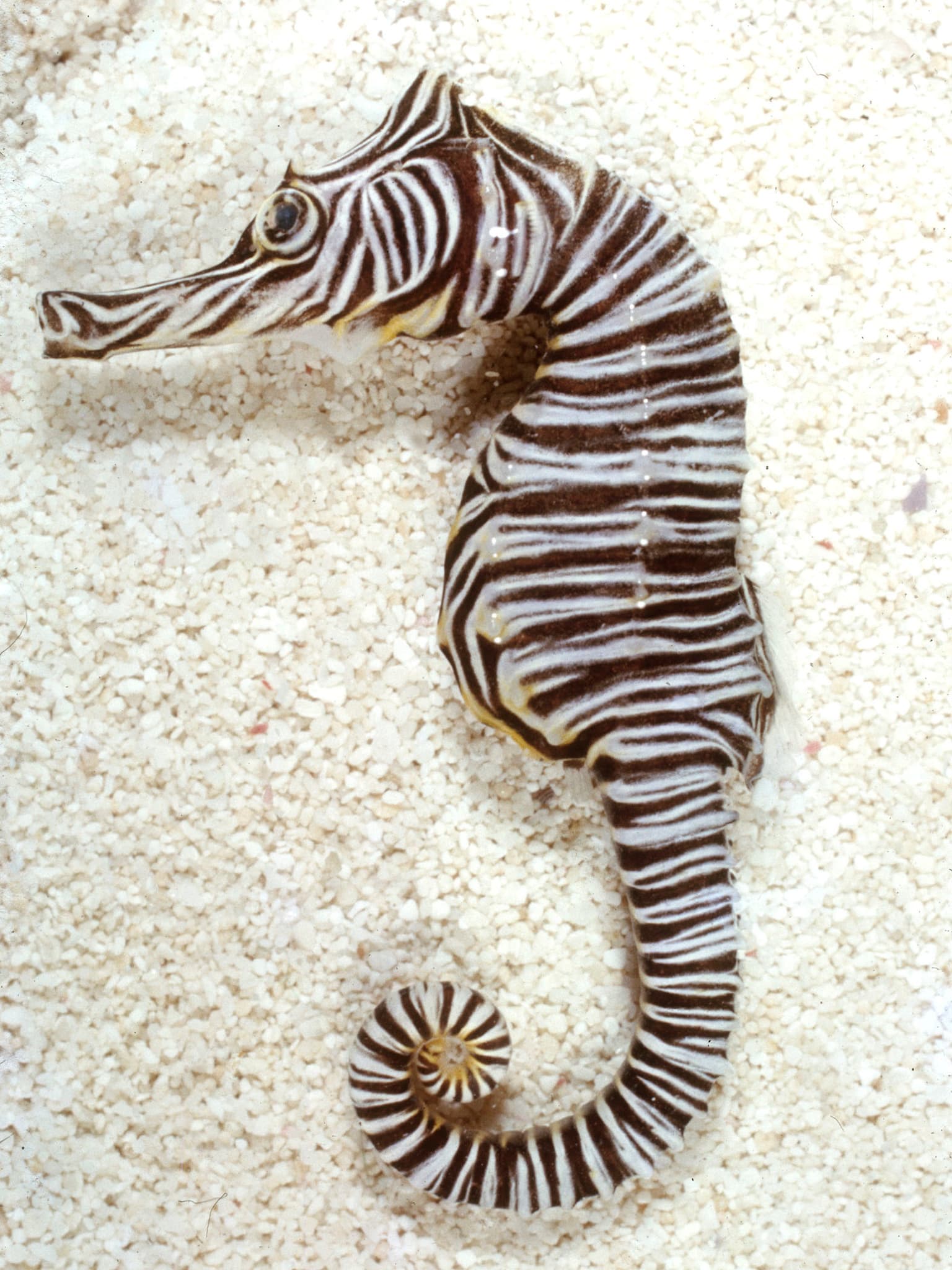
Scientific Name: Hippocampus Zebra
Looking absolutely unreal, the zebra seahorses are exactly what their namesake is. A zebra seahorse’s head and body are covered in high-contrast black or dark brown and yellowish-white bands. There are small and sharp spines or tubercles with bright yellow tips running along its back. This zebra species is rather small, reaching about 7 to 9.4 centimeters maximum. It has a long and flexible prehensile tail that it uses for anchoring and gripping itself to the sea floor. This beautiful seahorse species is endemic to Australia, inhabiting in and around coral reefs. Across their range, they feed on small crustaceans and zooplankton. Zebra seahorses are deep-water species, and they are very rare, so seeing one is considered very lucky.
Related Post: Beautiful Sea Slug Species