
Giant wētā is a flightless insect native to New Zealand, and there are 11 giant wētā species in total. Each of them has a very strange appearance, but they only make a living minding their own business. This insect is not dangerous or harmful, and they actually like to keep to themselves. Let’s dive deeper and learn more about each of the 11 giant wētā species below.
1Bluff Wētā
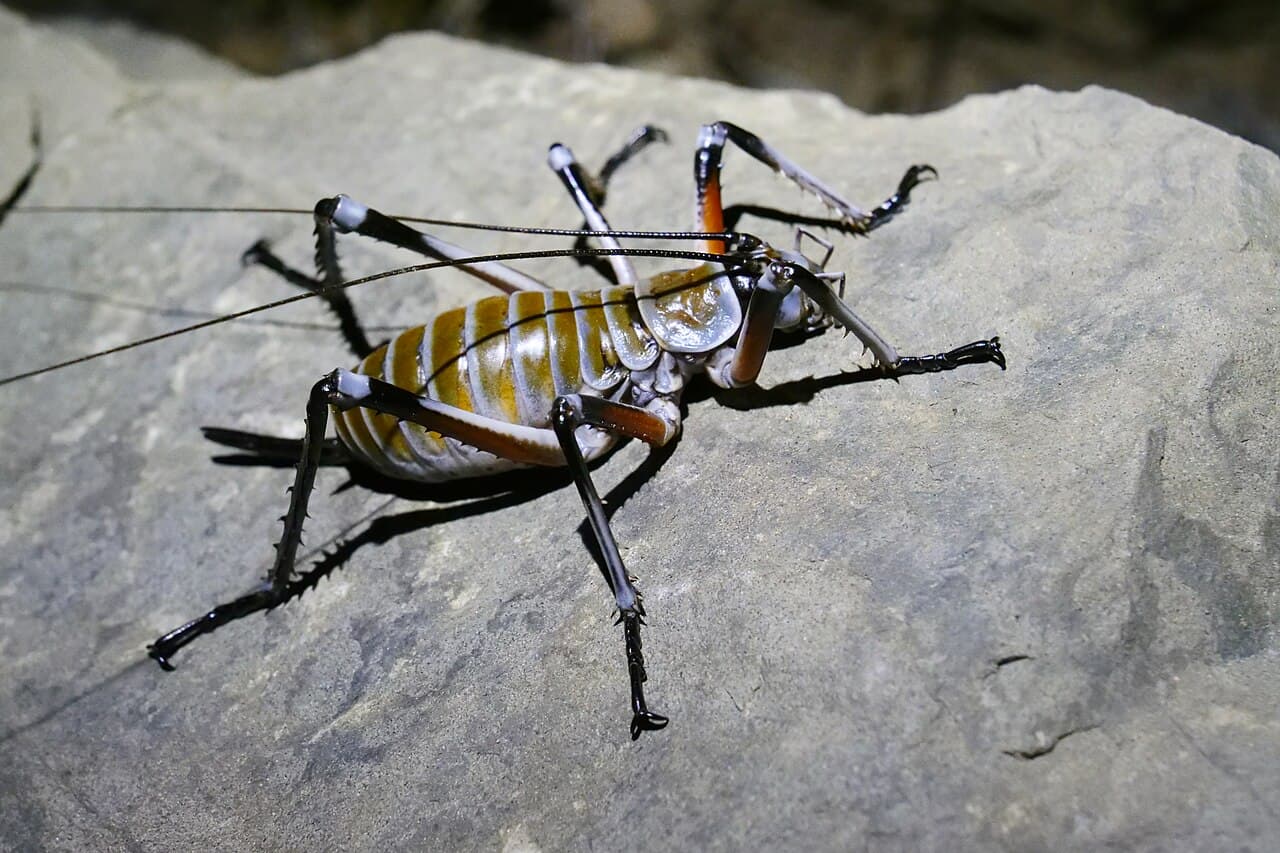
Scientific Name: Deinacrida Elegans
A bluff wētā has a long and brown body, with smooth, rounded, and pale gray edges. Females are larger and heavier than males, having a body up to 10 centimeters long. Bluff wētā have long legs that are steel-gray in color, with black, red, and white stripes. The long legs of bluff wētā make them great rock climbers and escapers from predators. They also have very long antennae that are about 2.5 times the length of their whole body. Both the head and antennae are very important for these insects as they use them to find food, mate, and sense danger.
Endemic to New Zealand, there are two areas where the bluff wētā live: the Kaikōura region and Mount Somers. It is common for them to hang out inside dark, narrow crevasses, on vertical rocky bluffs, and under dense overhanging plants. During winter and colder months, these critters stay deep inside their dens in the rock to conserve body heat. When warmer days approach, they become more active and spend more time outside. As herbivores, they mostly feed on leaves of trees and shrubs, but they do eat insects sometimes.
Their lifespan is two years, and it takes them one year to mature. They are mostly solitary, and they only come together to mate. When a female is ready to mate, she releases pheromones so that the males can find her.
2Cook Strait Giant Wētā
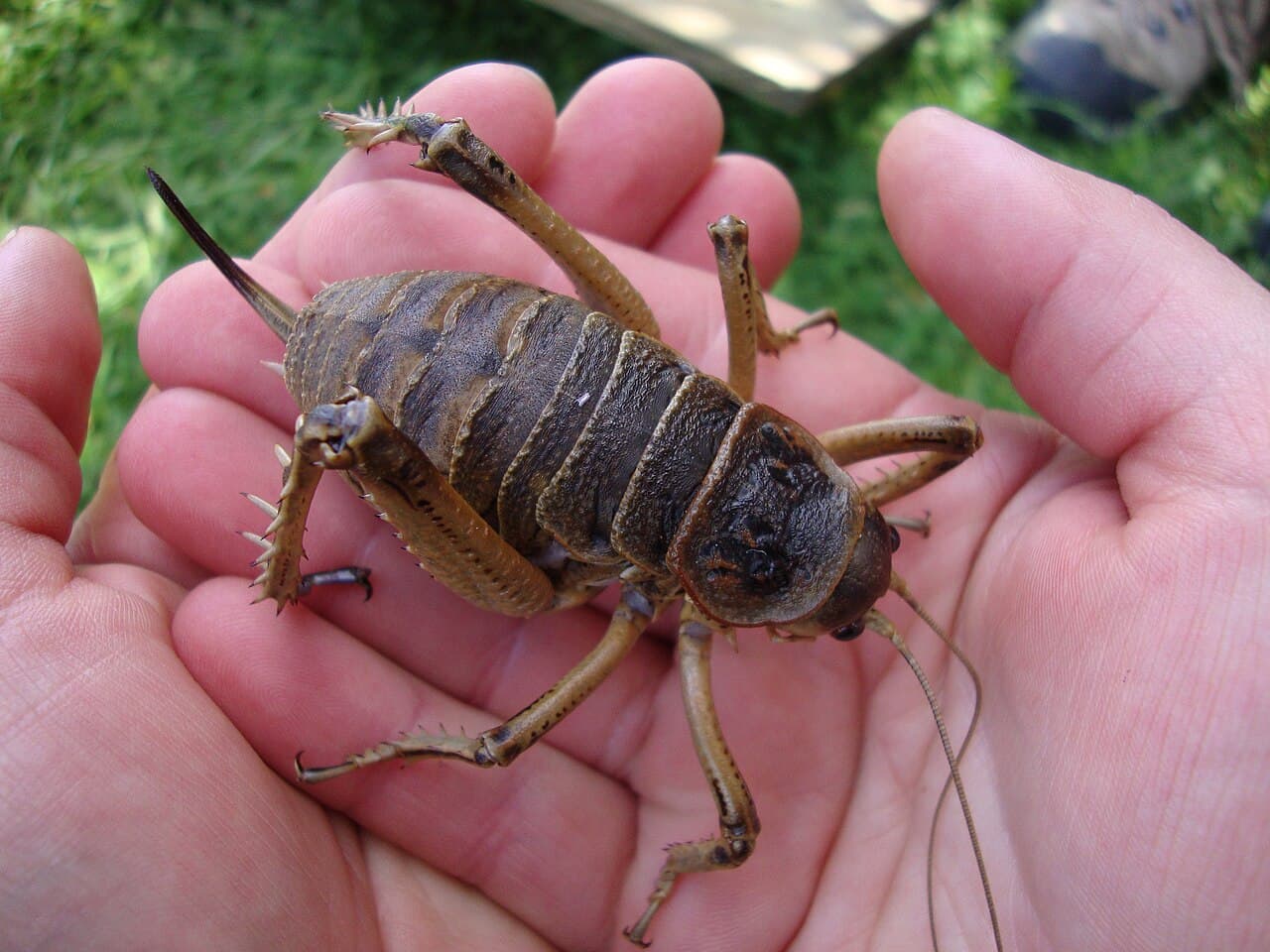
Scientific Name: Deinacrida Rugosa
As for the Cook Strait giant wētā, it only reaches about 7 centimeters long, and females are larger than males. Both sexes lack wings, and they have a very similar appearance. It has a brownish-yellow body that is bulky and heavily armored, as you can see. The upper surface is covered by a series of thickened and overlapping plates with black markings. This giant wētā species has a large head, large jaws, and elongated hind legs with large spines on them. When threatened, a Cook Strait wētā raises its hind legs in the air in a defensive display. It waves its legs while making clicking or hissing sounds. Similar to the brothers in the family, it also uses its antennae to navigate its surroundings.
Their population is around 10,000 individuals, scattered across many islands in the Cook Strait; hence the name. So this species only occurs on the islands of the North, South, and Middle Trio, Stephens, Maud, Somes, and Mana. They feed on aerial parts of plants, decaying wood, flowers, and low-growing shrubs at night. During the day, they hide in the grass, under logs or rocks, and in shallow soil burrows. These wētā live alone and move around a lot. During the mating season, males can travel up to 250 meters in a single night to look for females. After mating, females lay around 200 eggs in the soil, and then die shortly after. It takes a few months for the eggs to hatch in spring. Their lifespan is only around 2 years, and it takes 12 to 18 months to reach full adult size.
3Giant Mole Wētā

Scientific Name: Deinacrida Talpa
Adults are between 5 and 9 centimeters long, and females are larger than males. A giant mole wētā is dark tan, matte-to-glossy dark mahogany brown, or reddish-brown in color. It has a highly robust and stocky body with segments on its torso. Just like most giant wētā out there, it also has a strong armor of chitinous plates covering its body. The head is large and broad, and it has very powerful jaws and mandibles. As for the hind legs, they are large and strong, with sharp spines all over. They also come with exceptionally long and whip-like antennae that they use to navigate dark tunnels.
This little critter has an extremely restricted range, only exclusively in the Paparoa Range on the West Coast of the South Island. It inhabits steep alpine slopes heavily covered in carpet grass, loose granite, peaty soil, and tussock. The giant mole wētā received its name from its behavior of living in burrows just like a mole. In fact, it is the only giant wētā species that is known to dig and live inside subterranean burrows. It uses its powerful mandibles and legs to dig deep tunnels into alpine soils and beneath boulders. As both an herbivore and a scavenger, it feeds on decaying plant matter, roots, and subalpine vegetation. It is a critically endangered species, and it is highly vulnerable to habitat loss and predation by pests.
4Herekopare Wētā

Scientific Name: Deinacrida Carinata
While most giant wētā species are large, this one is rather on the smaller side. It is only around 2.5 to 4 centimeters, and females are larger than males. Both sexes are dull brown in color, and that helps them with camouflage to avoid predators. The population of this one is restricted to a few offshore predator-free islands: Codfish Island, Herekopare Island, Kundy Island, and Pig Island. Their main habitats are clearings, forest margins, low-growing shrubs, and grasslands where they can blend in very well with their color. They feed on a variety of flowers, fruits, grasses, lichens, leaves, as well as other invertebrates. The population of this small wētā is facing threats from predation by cats, rats, and wēka.
5Kaikoura Giant Wētā

Scientific Name: Deinacrida Parva
Adults can grow up to 10 centimeters big, and females are larger than males. However, males have longer legs that they use to compete with each other for mates. The Kaikoura giant wētā has a round and brown body, with 6 spines on the lower hind legs. It lives on the northern half of the South Island, and it is very rare, so its information is also very little. This wētā prefers open scrub areas near forest edges and rocky river terraces. Where they live, they feed mainly on leaves of shrubs and trees. On some occasions, females also eat carcasses of dead or dying insects for extra protein during the breeding seasons. Their population is facing threats from habitat clearance and predation by pests; hence being Nationally Vulnerable.
6Little Barrier Island Giant Wētā

Scientific Name: Deinacrida Heteracantha
Here you are looking at the heaviest giant wētā species, weighing up to 70 grams. As for size, larger adult females are around 6.5 centimeters from head to the tip of the abdomen. It has a broad body and a round head, but the mandibles are rather short despite the body size. At the same time, their antennae are also short since they don’t really need them. What they need is a strong kick, and their powerful hind legs that are twice their length can definitely deliver that. How long are the legs, you might ask? Up to 17.5 centimeters long.
The name says it all; you will only come across this wētā on Little Barrier Island. They are arboreal forest dwellers, inhabiting second-growth forests and mid-level tall kauri forests. This wētā also has a nomadic lifestyle, and they keep moving to a new location. During the day, they hang out above ground level, in the cavities of trees, or under loose bark. At night, it comes out to feed on flowers, forest foliage, fruits, and leaves. It is listed as Vulnerable on the IUCN Red List because of ongoing population declines and restricted distribution.
7Mahoenui Giant Wētā
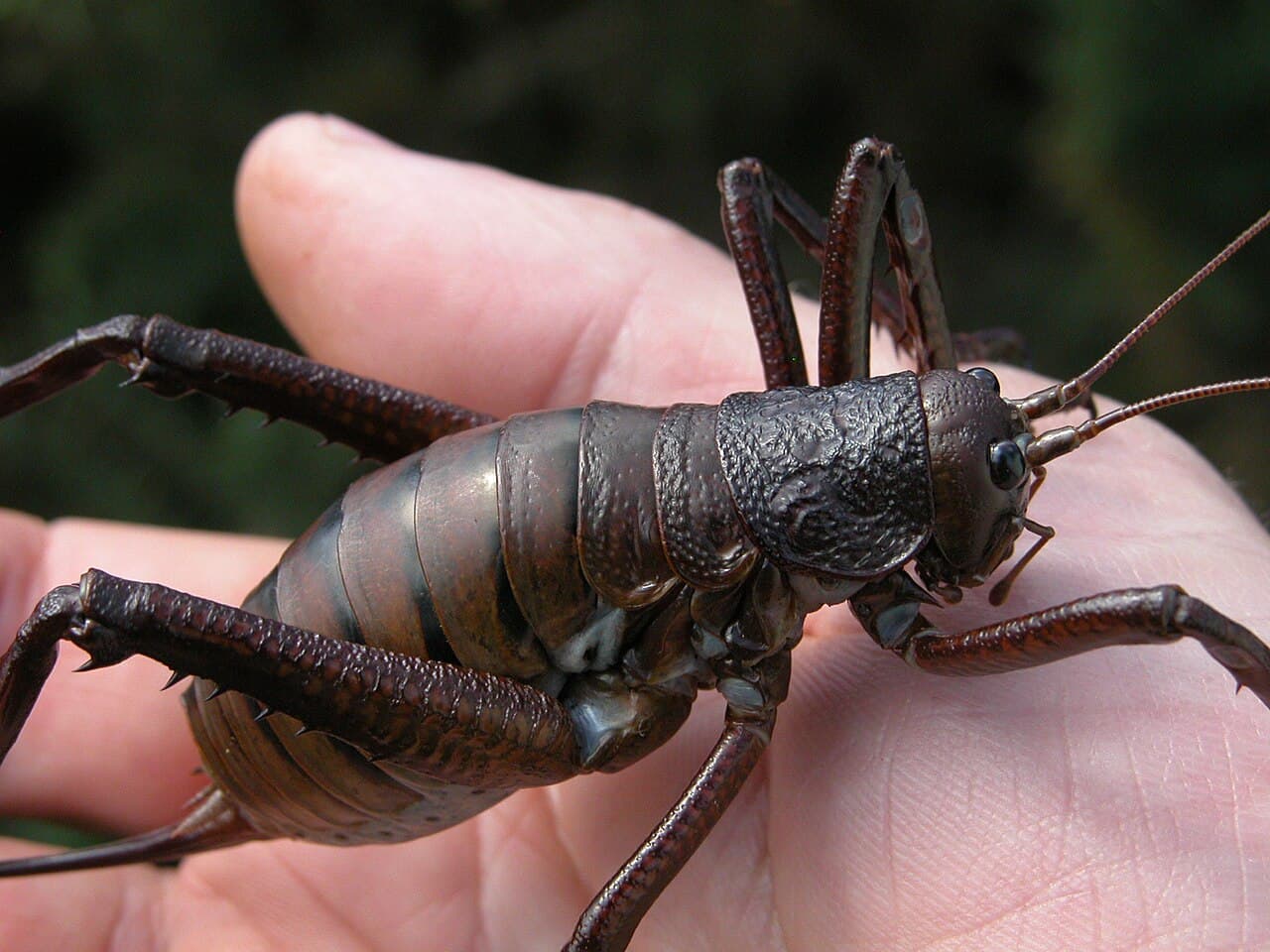
Scientific Name: Deinacrida Mahoenui
A Mahoenui giant wētā reaches 7.5 centimeters long, and females are larger than males. The unique thing about this giant wētā species is that they have two color morphs. Over two-thirds of the population are mahogany brown, and around 31% of the population are golden yellow. There was one female whose one side was brown, and another was yellow, cool, right? The name tells everything about it comes from, Mahoenui, a very small population at that. This species only lives in Tawa Forest in Mahoenui, and another population lives in farmland covered with introduced gorse. The latter is not their natural habitat, and gorse is also an invasive plant species as well. Regardless, this wētā is highly vulnerable to predation from hedgehogs, mice, mustelids, and rats.
8Mt Arthur Giant Wētā

Scientific Name: Deinacrida Tibiospina
This is another small giant wētā species that grows to only around 3 to 4 centimeters long. Adults have different shades of brown, but some individuals have a reddish hue on their bodies. Speaking of bodies, there is a compressed appearance and dense spines on the upper side of their hind femurs. And if you look closely, you can see that the armor plates on their back are wrinkled. This is one way to recognize this species; those armor plates are different from the others’. The Mt Arthur giant wētā is endemic to the South Island, living only in some alpine zones of Kahurangi National Park. They hide and feed amongst the leaf bases of flax plants, native tussocks, and snow grass. Despite being small, these critters thrive in harsh alpine climates such as cold temperatures and heavy winter snow.
9Mt Cook Giant Wētā

Scientific Name: Deinacrida Pluvialis
Probably the giant wētā species with the least information, there is very little known about this one. We know that it lives in alpine and subalpine areas on the western side of the Southern Alps. Hence, the other name is Southern Alps giant wētā. It inhabits areas with dead plants and moss, so its body is dark brown so that it can blend in. Adults are around 5.5 centimeters, and females are also bigger than males. Both sexes have a heavily armored body that can withstand the harsh alpine environments. They also have long and powerful hind legs with large and strong mandibles to protect themselves from predators. Currently, they are considered Nationally Endangered due to population decline from predation by mice and stoats.
10Poor Knights Giant Wētā
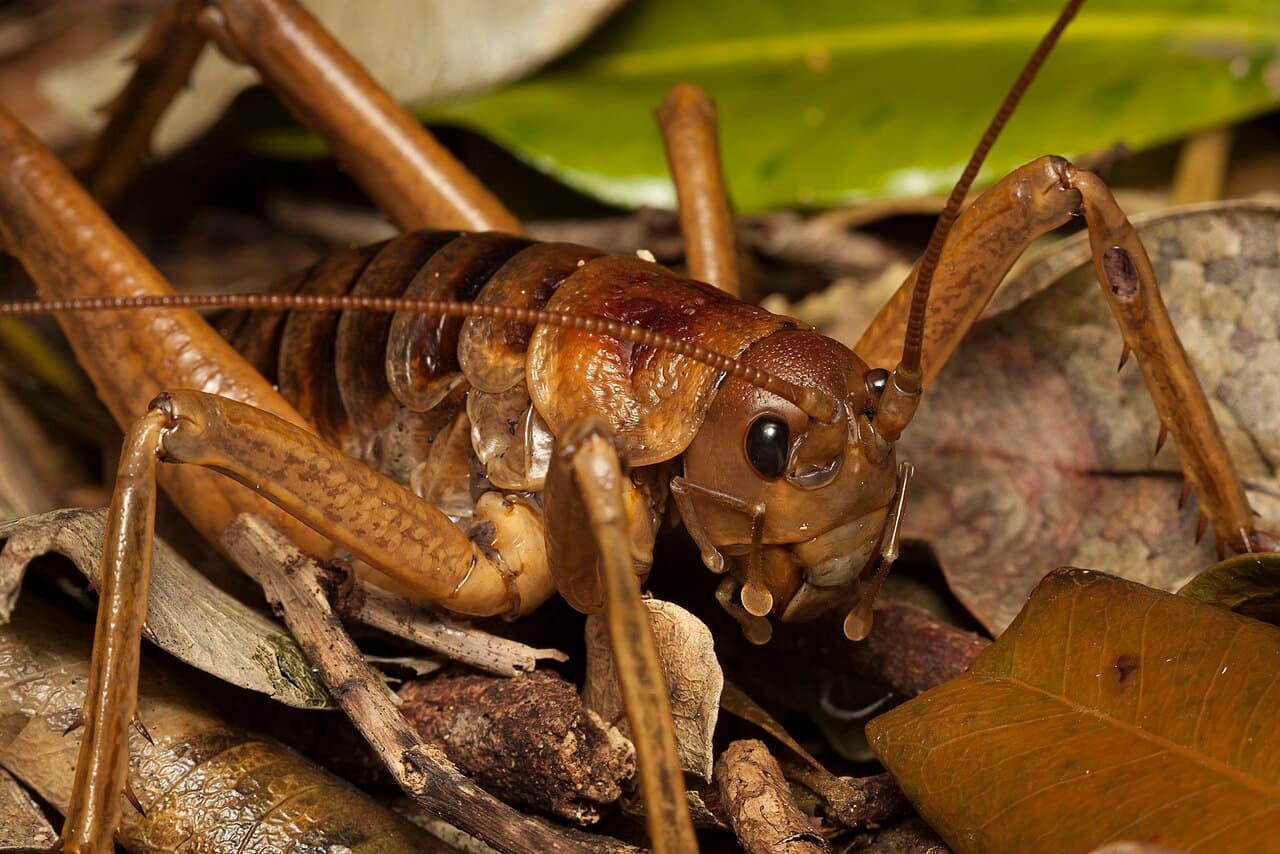
Scientific Name: Deinacrida Fallai
The Poor Knights giant wētā is the second-largest wētā species in the world, with females reaching 7.3 centimeters long. These wētā are light brown in color, with black stripes along the side of their body. Their bodies are broad, and they have long dark brown legs. This giant wētā species got its name from where it is endemic to, the Poor Knights Islands. These forest dwellers spend most of their time on tree branches and trunks at night, and above ground during the day. They primarily feed on plant parts from kanuka and pohutukawa trees. With a nomadic and solitary lifestyle, they move from tree to tree with their strong legs; jumping distances. Unfortunately, this species is considered Vulnerable on the IUCN Red List due to its restricted distribution and small population.
11Scree Wētā

Scientific Name: Deinacrida Connectens
The scree wētā or alpine scree wētā is a smaller member of the giant wētā species. Males reach about 3.5 centimeters, and females are around 7.2 centimeters, and both sexes vary in color. In some populations, individuals have mostly black bodies, while some have a mix of gray, olive, and red. Not different from other species, this one also has long antennae that are about half its body length. They also have a series of thickened overlapping plates made of a hard chitinous exoskeleton on their bodies.
This species only occurs in the South Island of New Zealand, living in alpine zones. These little critters stay in crevices or under rocks of scree slopes during the day. When the night comes, they also come out to feed. They are omnivores, and they feed on dwarf shrubs, herbs, high-alpine plants, and lichens. While most giant wētā species are docile, this one tends to be more aggressive. It will bite if provoked, but its bites do not do any harm to us at all. And with their powerful hind legs, they are always ready to kick at predators when threatened. When it comes to population, this giant wētā species is not a threatened species.
Related Post: Unique Animals Native To New Zealand