
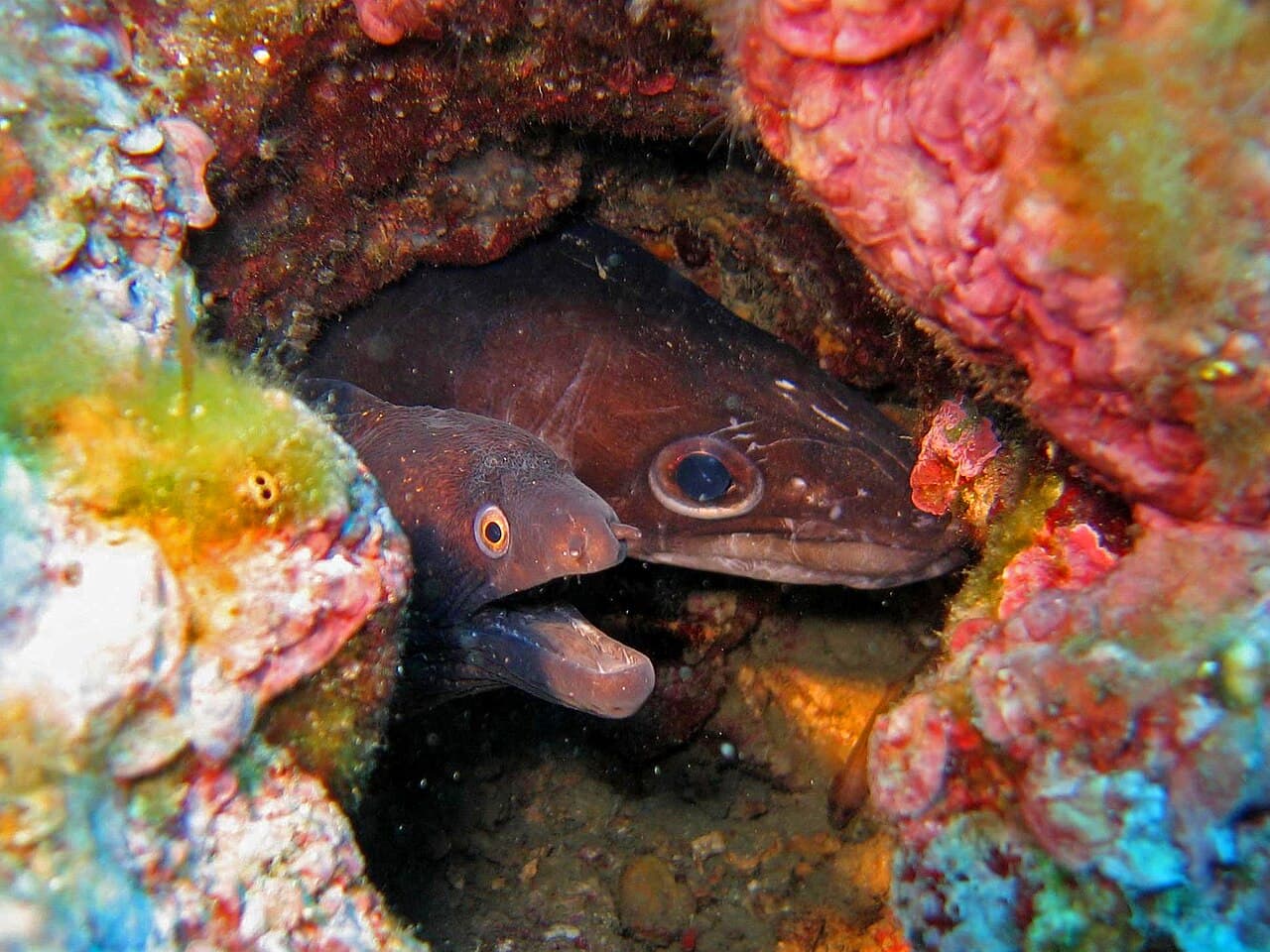
European conger eel is the largest true eel by weight, and they look quite scary as well. However, these slimy giants are more than just the appearance, and we are going to find out more about them today. So if you are interested in finding out more about their life and other things, feel free to check them out below.
1Appearance
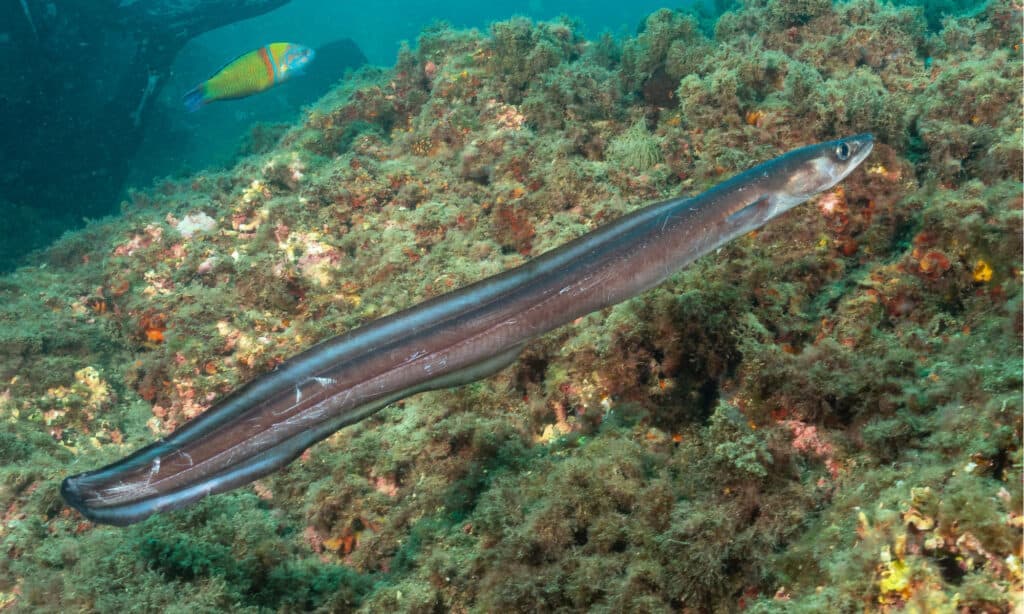
On average, a European conger eel reaches a length of 1.5 meters, and 3 meters maximum. You can tell a female apart from a male by the size, as females are larger and longer than the males. Being the largest eel in the world by weight, this serpent can be as heavy as 160 kilograms. The head is cylindrical, and the rest of the body flattens out towards the tail. Its long body does not have scales, and it is usually gray to blackish in color, while the belly is white. There is a row of small white spots aligned along the lateral line, giving a distinctive look.
2Behavior
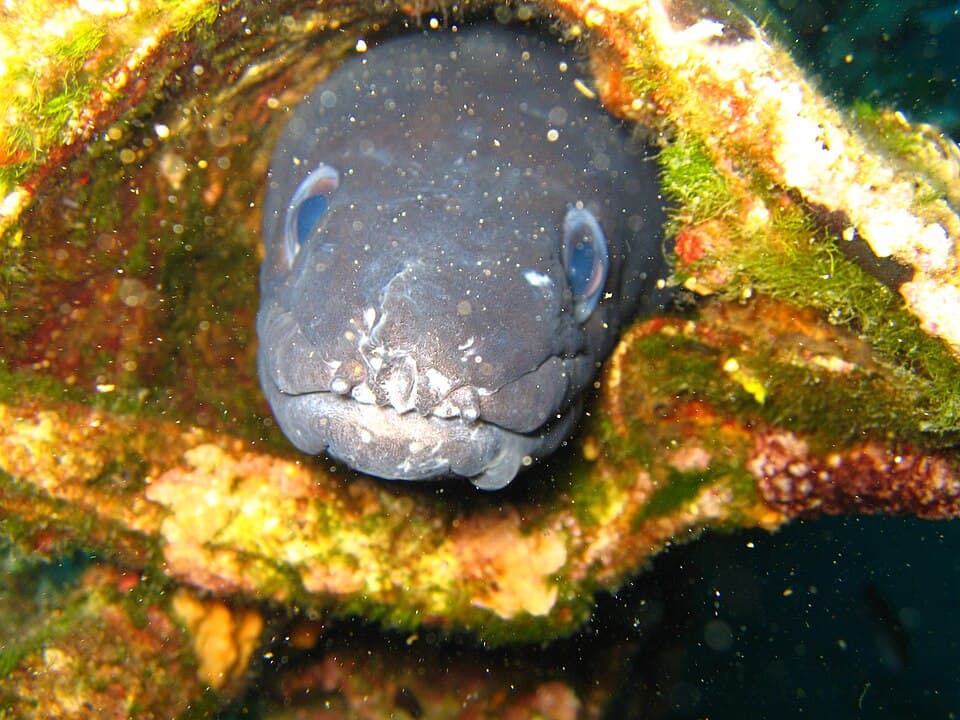
When they are between 5 and 15 years old, their bodies will undergo a transformation. They will have the reproductive organs of both males and females increasing in size, and they will become lighter. Females will increase in weight and size more than the males, and they will migrate to the spawning areas. European conger eels only mate once, and the female will produce several million eggs. After laying their eggs, both the male and female will die.
As a large eel with some sharp jaws, it is inevitable to not put those teeth to use. These eels can be aggressive to humans, and larger ones can pose a danger to divers. The thing is that they don’t go out of their way to attack humans, only the ones who get too close. That is not all, European conger eels are also cannibalistic, and they eat each other sometimes.
3Feeding & Habitats
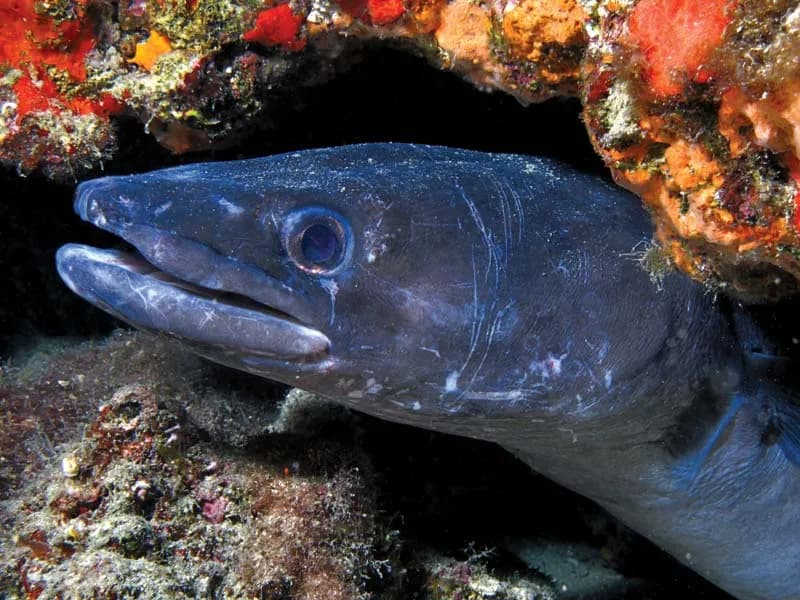
Native to the Northeast Atlantic, their habitats are not different from other moray species. A European conger eel usually lives in holes among rocks, and sometimes they share a hole with moray eels as well. They are normally found on rough and rocky broken ground, close to the coast when young. As they mature, they move to deeper waters. During the day, it hides, and it comes out to hunt when the night creeps in. Some of the most common meals that they prey on are cephalopods, crustaceans, and fish. At the same time, they also scavenge on dead and rotting fish as well.
Related Post: Dragon Moray Eel Facts