Have you ever wondered if there is any fish with a big forehead? I had the same question, and there are actually many species of fish with a big forehead out there. Some of them live in fresh water while others reside in brackish waters. Take a look at the list below and find out what they are.
1Asian Sheepshead Wrasse
Scientific Name: Bodianus Reticulatus
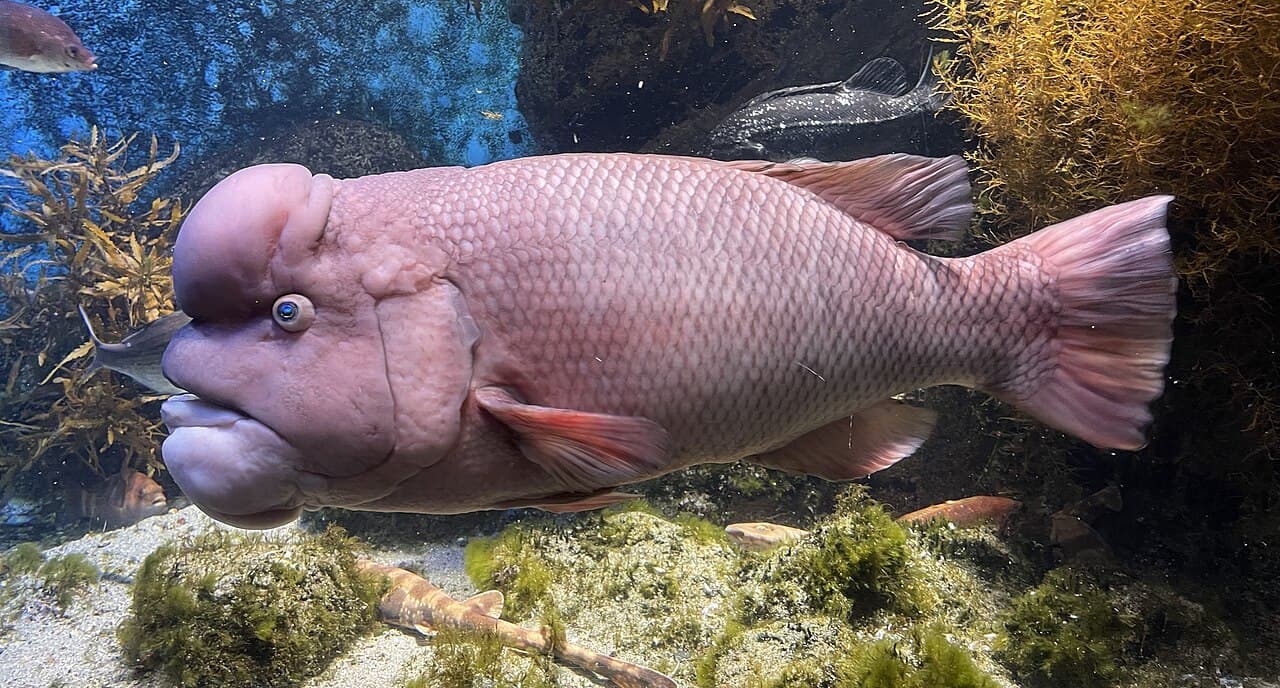
The Asian sheepshead wrasses, or kobudai, are one of the largest wrasse species out there. An Asian sheepshead wrasse can reach up to 100 centimeters long, and adults have a very unique appearance. Juveniles look very normal, but adult males have a globiform and bulky body with a large forehead. Males are larger than females, and both sexes have hard tooth-like structures that are excellent for crushing crustaceans. Adults are dull pink-gray or dark red in color with lighter bellies and faint white lines.
The most impressive part is their sex-changing ability because all of them are born female. If a female is among the strongest and largest of her group by around 10 years, she will begin the transformation. The process can take months, and her appearance will switch to that of a male in the end. It is also the case when the largest local female senses the absence of the dominant male. No male in the group? No worry, she will be one.
This fish is native to the western Pacific Ocean, inhabiting rocky reef areas and temperate waters. Their range is from Japan and the Ogasawara Islands all the way to China and Korea. Males are territorial, and they will fight to control harems of females. Their diet consists of marine vertebrates such as crabs, mollusks, and sea urchins, but they also feed on small fish. With these strong jaws and teeth, hunting and crushing shells are effortless for them. Currently, they are facing threats such as habitat degradation, habitat loss, overfishing, and pollution.
2California Sheephead
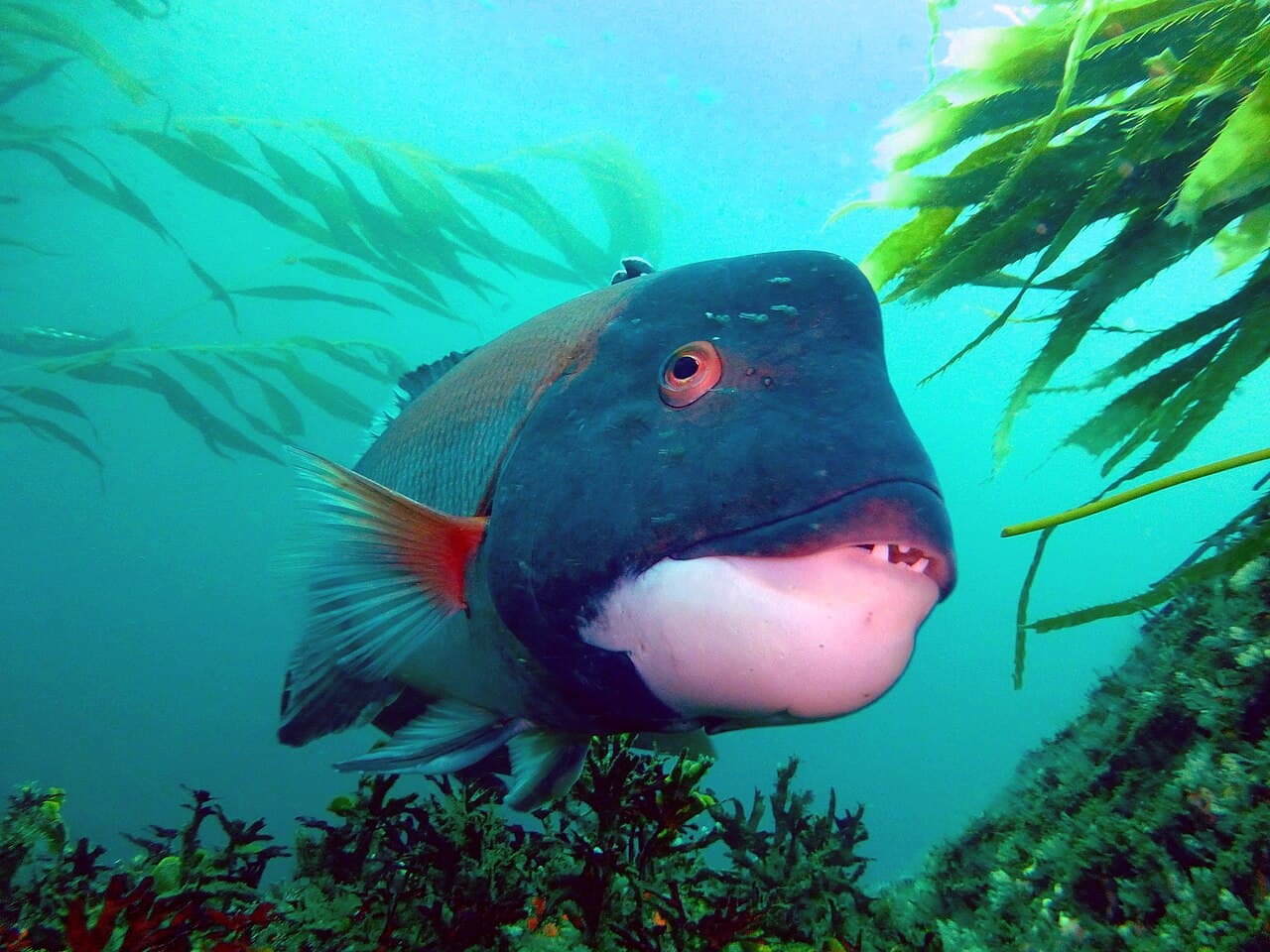
Scientific Name: Bodianus Pulcher
Some fish do look weird, don’t they? A California sheephead is an interesting fish that reaches a length of up to 91 centimeters. A male California sheephead is larger in size, and it has a black head and tail, reddish orange midriffs, and red eyes. You can recognize a male by the fleshy forehead bump that females don’t have. A female of this species is silvery or dull pink in color with white undersides. Both sexes have white chins and large protruding canine teeth for crushing animal shells. Just like the Asian sheephead, the California sheephead are also born female. Then, they will morph into their male form at some point in their life stages depending on environmental conditions and pressures. The transitional phase takes between two weeks and several months
This fish with a big forehead is a species of wrasse native to the eastern Pacific Ocean. They live in kelp beds and rocky reef habitats that provide them protection from predators. As carnivores, they feed primarily on crabs, crustaceans, lobsters, mollusks, and sea urchins. They forage during the day with harem members and the dominant male. This species is now considered vulnerable due to high fishing rates.
3Giant Gourami
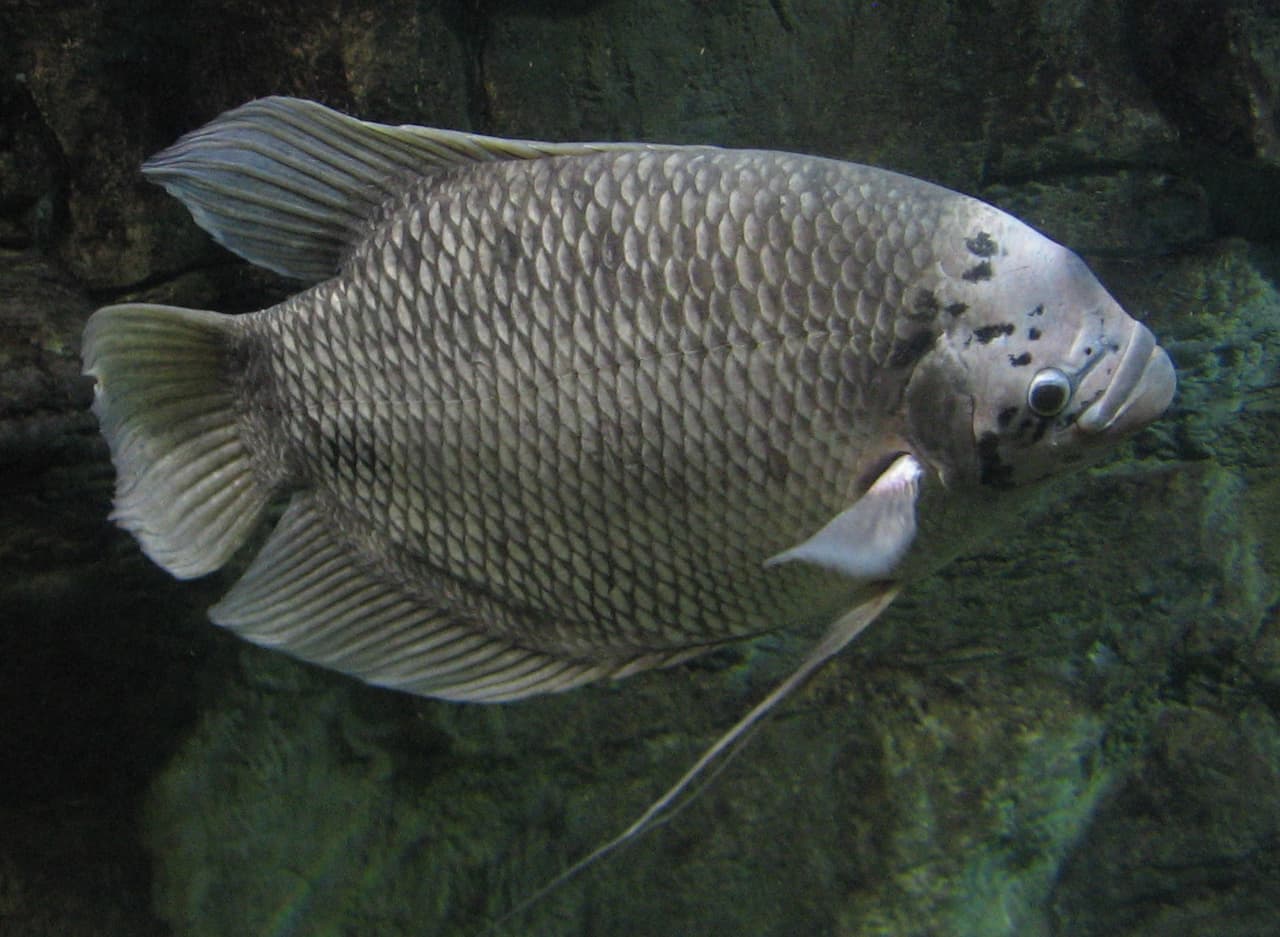
Scientific Name: Osphronemus Goramy
A giant gourami grows up to 80 centimeters maximum, but most are only around 45 centimeters. Juveniles have flat heads, pointed snouts, and colorful bands of cream to yellow-gold and silvery gray-blue on their body. Adults don’t have stripes, and they have either a completely black or a creamy base color. And would you look at that hairline? Adult males have a nuchal hump, which is a swelling on their forehead. Giant gourami is one of the fish with a big forehead, and a special ability. It is capable of breathing moist air, meaning it can survive out of water for long periods.
This species is native to freshwater habitats in Southeast Asia, living in lakes, marshes, ponds, rivers, streams, and swamps. Across their range, they feed on algae, crustaceans, fish, frogs, worms, and sometimes dead animals. Since it is pretty big in size, it is also popular as food as well. In Southeast Asian cuisine, gourami is highly valued as food due to its flavor, texture, and thick flesh. Its flesh is also rich in minerals and proteins. And since it doesn’t have fine bones within it flesh, its price is higher than many fish as well.
4Humphead Glassfish
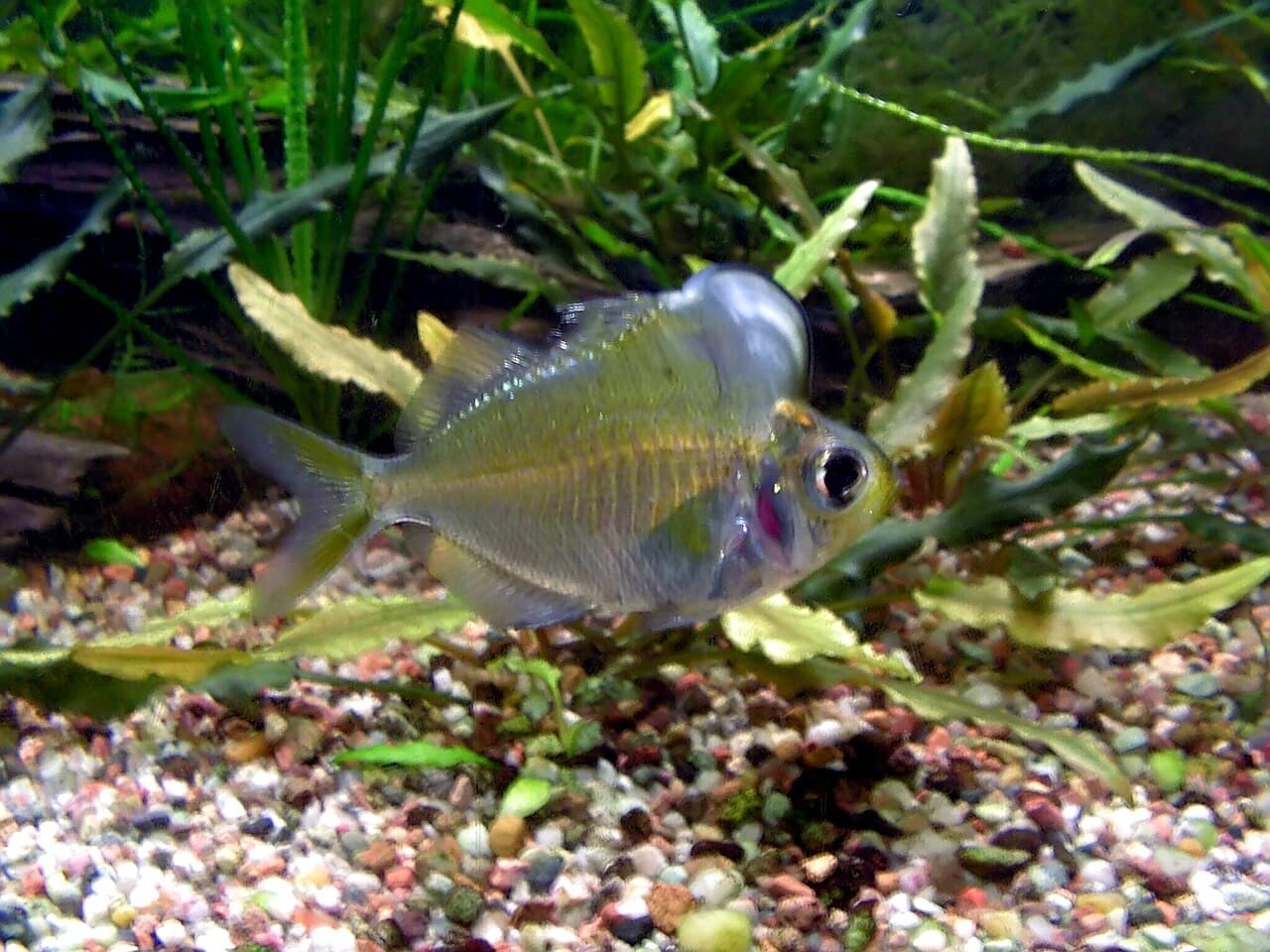
Scientific Name: Chanda Pulcinella
A humphead glassfish is a small fish that grows up to only around 8 centimeters, and 10 centimeters maximum. It has a transparent body that makes it very unique, and that makes it very popular as a tank fish. The name says it all: “humphead”, a fish with a big forehead. It has a prominent hump in front of the first dorsal fin that forms a very long spine. Both males and females have this hump, but it is larger in males. The humphead glassfish is native to the fast-flowing streams in the Ataran basin in southeast Myanmar and west Thailand. They like to live in large clear-water rivers, especially near large rapids and waterfalls. This fish feeds on crustaceans and small aquatic insects that they can find.
5Mahi-Mahi
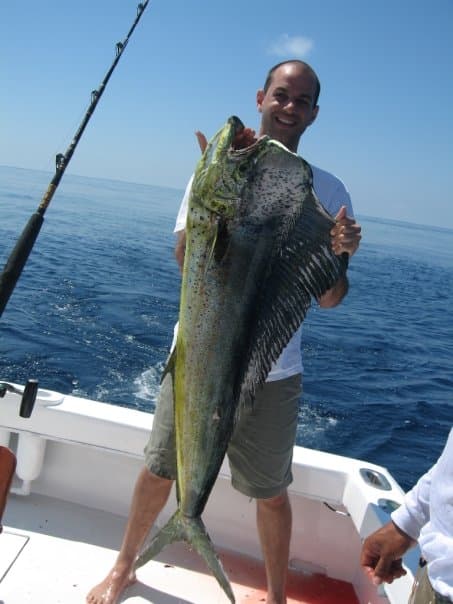
Scientific Name: Coryphaena Hippurus
The mahi-mahi or dolphinfish has a compressed body, and one very long dorsal fin extending from its head to tail. On average, a mahi-mahi can reach a length of 1 meter, but there are large males that measure up to 2.1 meters. As you can see, mature males have this distinctive forehead, and females have a rounded head. Both sexes are golden in color on the sides, with bright blues and greens on the sides and back.
Dolphinfish have a distribution across the Caribbean Sea, the Pacific Coast, Southeast Asia, and many other places worldwide. They live near the surface in tropical and subtropical waters, and larger males prefer open ocean habitat. This strange-looking fish feeds on cephalopods, crabs, crustaceans, small pelagic bony fish, pelagic larvae of benthic body fish, and more. Mahi-mahi are very popular in commercial and sport fishing.
6Napoleon Wrasse
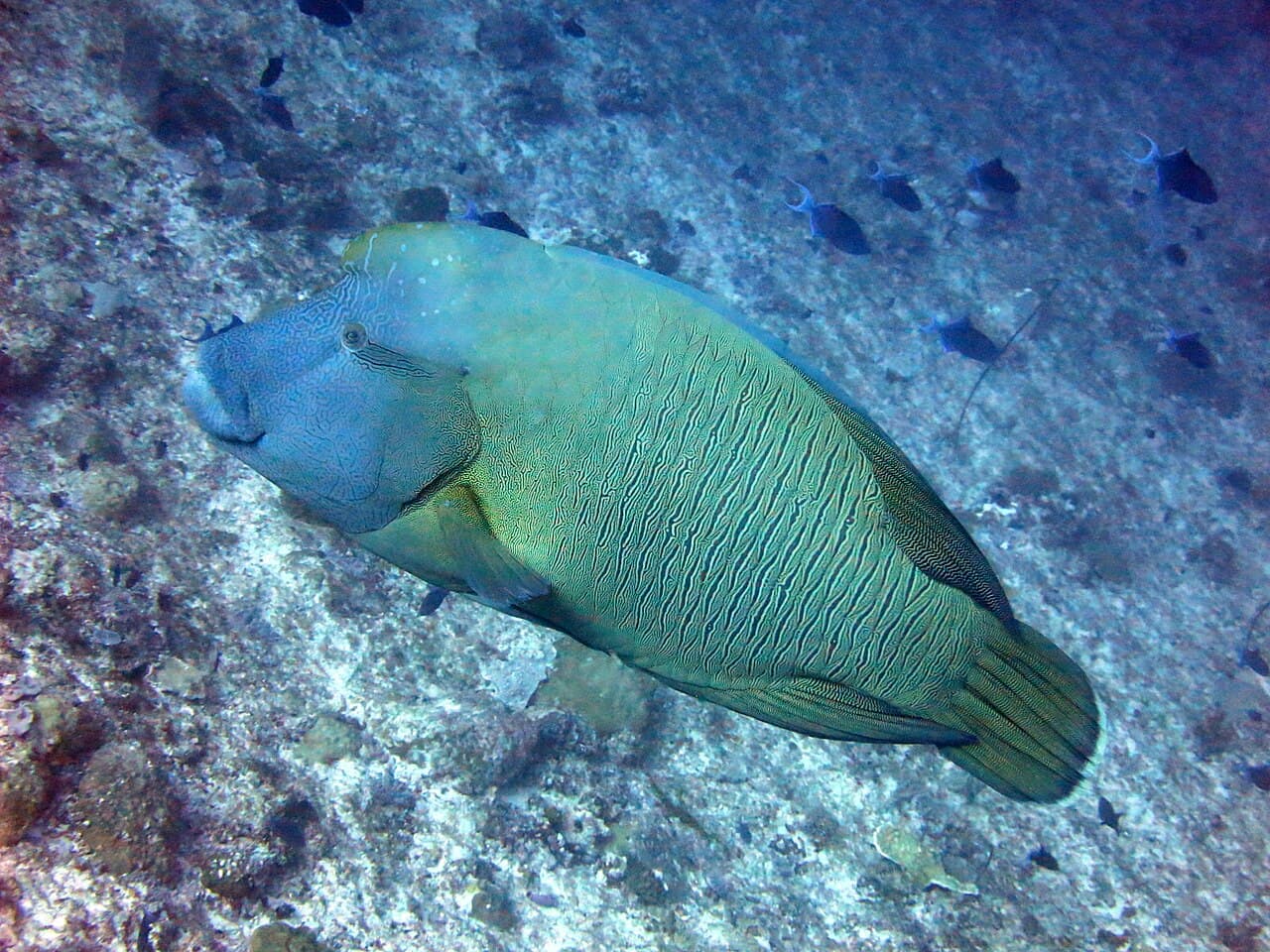
Scientific Name: Crassilabrus Undulatus
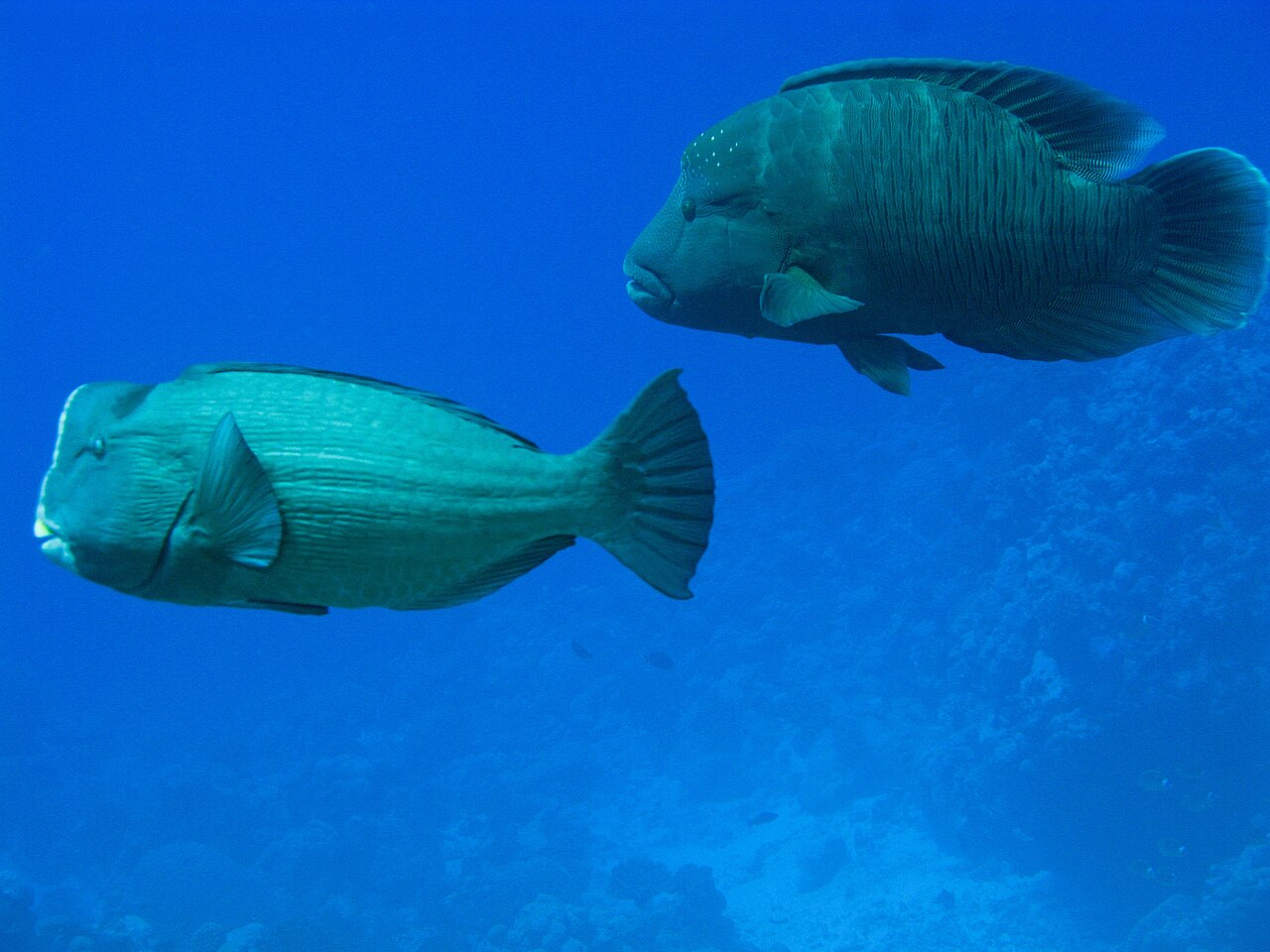
Also goes by the name Māori wrasse and humphead wrasse; this one is actually the largest wrasse species. Males are larger than females, and they reach a length of up to 2.2 meters. Meanwhile, females are only around 1 meter long. Their colors can vary between olive and more vibrant shades of green and purplish-blue. The appearance of this fish is like no other, with its thick lips and two black lines behind its eyes. However, the most distinctive part is the hump on the forehead of males, making them one of the fish with a large forehead.
The Napoleon wrasse is mainly found on coral reefs in the Indo-Pacific region, living alone or in pairs. They hunt during the day, and stay in a cave or under a ledge at night. A Napoleon fish can turn their eyes 360 degrees, giving them excellent vision. It is one of the predators of the reef ecosystem, and these opportunistic predators feed on various invertebrate species. Some of their meals include crustaceans, mollusks, sea urchins, starfish, stingrays, and other fish. This species is classified as Endangered on the IUCN Red List. Their population has declined due to food-fish trade, habitat degradation, habitat loss, illegal fishing, local consumption, and more.
7Parrotfish
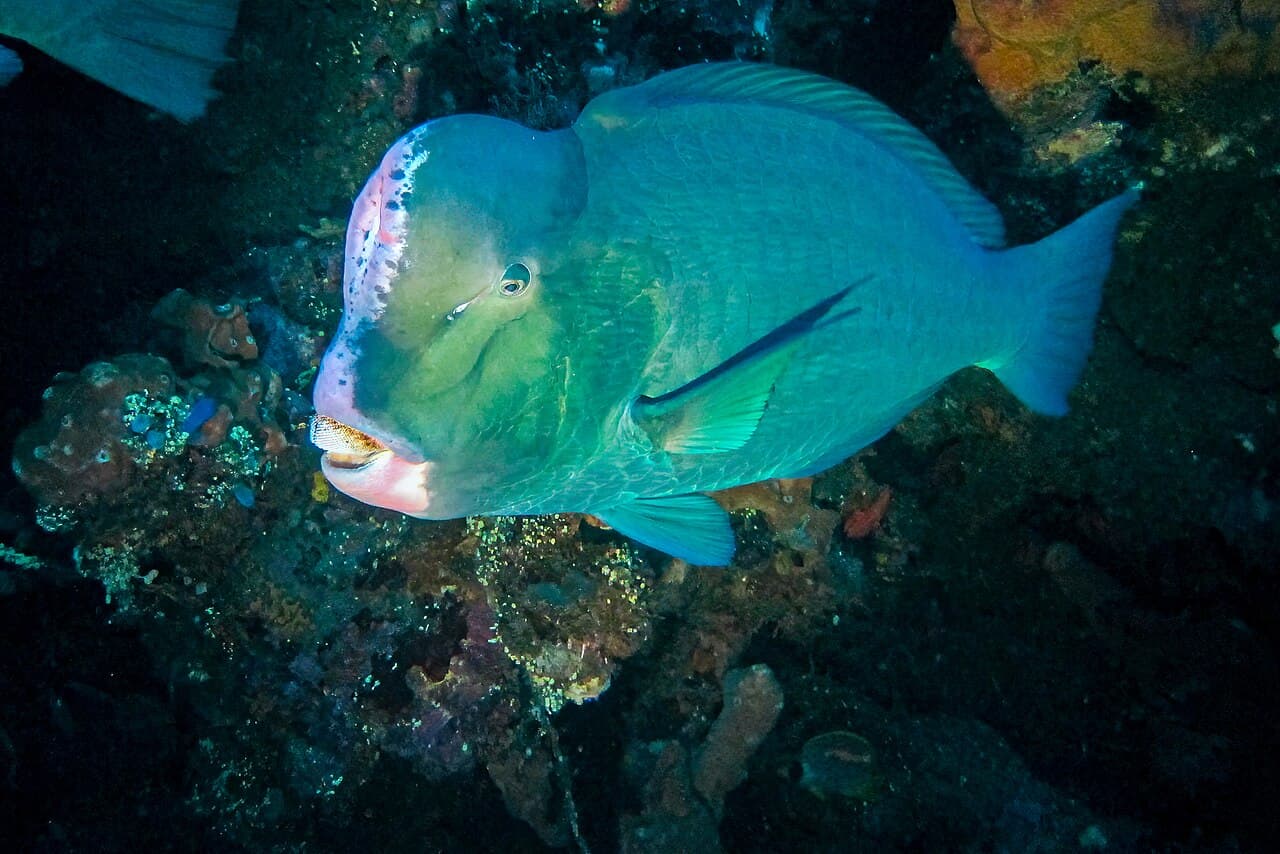
Scientific Name: Scarinae
A parrotfish has a parrot-like beak that they use to break coral and other rocky substrates to feed on algae. These teeth grow continuously, and there are about a thousand teeth lined up in 15 rows. Most species reach a length of 30 to 50 centimeters, and only a few species grow up to over a meter. A majority of parrotfish look like this, making them a whole family of fish with a big forehead. Males have a protruding hump on their face, and a very colorful body.
There are around 95 species in the family, and their members are abundant in the Indo-Pacific. This one also swaps from female to male as they grow, and the process takes between two and three years. A large and colorful male will defend a harem of smaller and duller females. They inhabit coral reefs, rocky coasts, and seagrass beds. Parrotfish nibble on algae growing on dead coral, but they accidentally swallow coral sometimes. With their powerful beaks, a parrotfish can munch on coral at a rate of 20 bites per minute.
8Redhead Cichlid
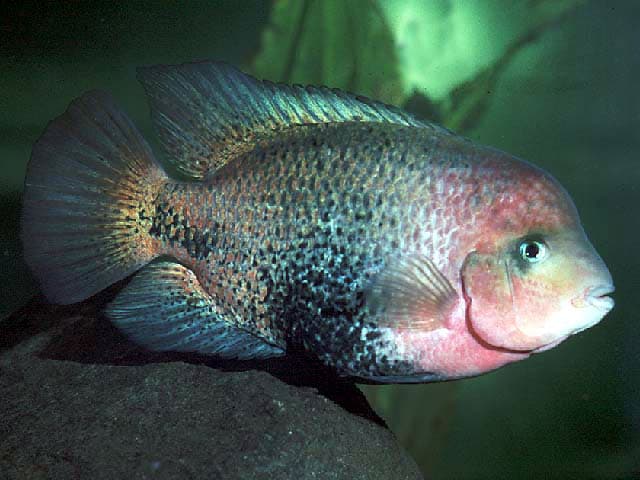
Scientific Name: Vieja Melanurus
Redhead cichlid can reach a length of 35 centimeters, and males are larger than females. Adult and breeding males have an orange to pinkish-red head with a green, blue, pink, and golden-orange body. Very bright and pretty, the redhead cichlid is also one of the fish with a large forehead. Males have a prominent nuchal hump on their forehead and large spines on their anal fin. They are quite popular in aquaculture because of their bright coloration and unique appearance.
This species is native to the Atlantic slope of Central America, living in a wide variety of freshwater habitats. They inhabit slow-moving or standing waters such as floodplain lakes, lagoons, and lowland river parts. At the same time, they can also tolerate brackish environments. As herbivores, this fish feeds on aquatic macrophytes, detritus, and plant matter.
9Redhump Eartheater
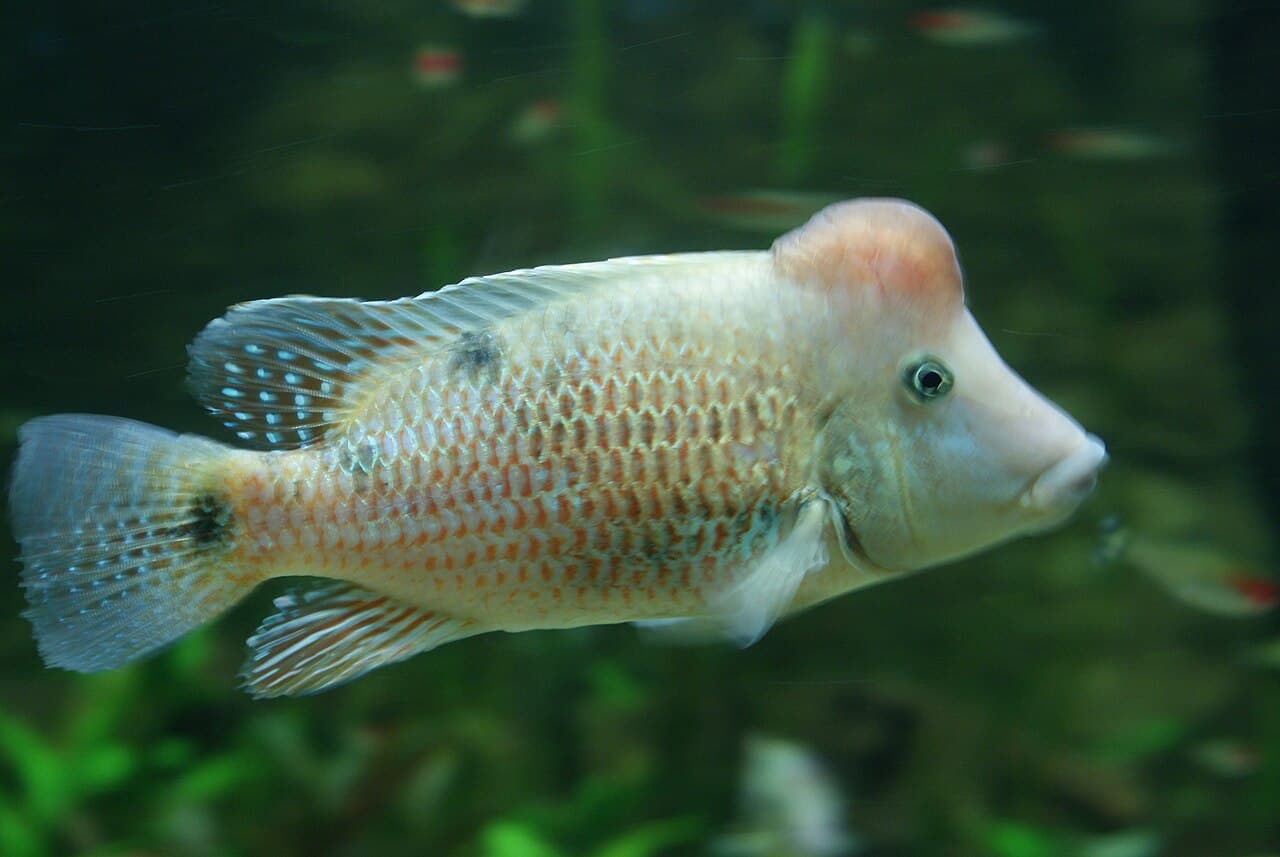
Scientific Name: Geophagus Steindachneri
When it comes to fish with a large forehead, male redhump eartheaters have to be on the list. An adult redhump eartheater reaches 7 to 20 centimeters long, and males are larger than females. Males of this species have a large and bright red or orange nuptial hump on their heads. Females lack this large hump, and their forehead has a simpler coloration. More than that, mature males develop an iridescence on the scales on their sides and very large humps. The redhump eartheater is native to river drainages in northern and western Colombia and northwestern Venezuela. When it comes to feeding, they take substrate material into their mouths and sift out inedible bits of gravel or sand. What they look for is detritus and small organisms that they can feed on.
Related Post: Cute Animals With Big Ears