With over 1,000 stick insect species across the world, I managed to find some of the rather unique-looking ones. What I like about stick insects is that you can stand right next to one, and you can’t even tell that it’s them. The camouflage is just so top-notch; some look like sticks while some look like leaves. You will find 12 eye-catching stick insect species on the list below, feel free to let me know your most favorite.
1Black Beauty Stick Insect
Scientific Name: Peruphasma Schultei
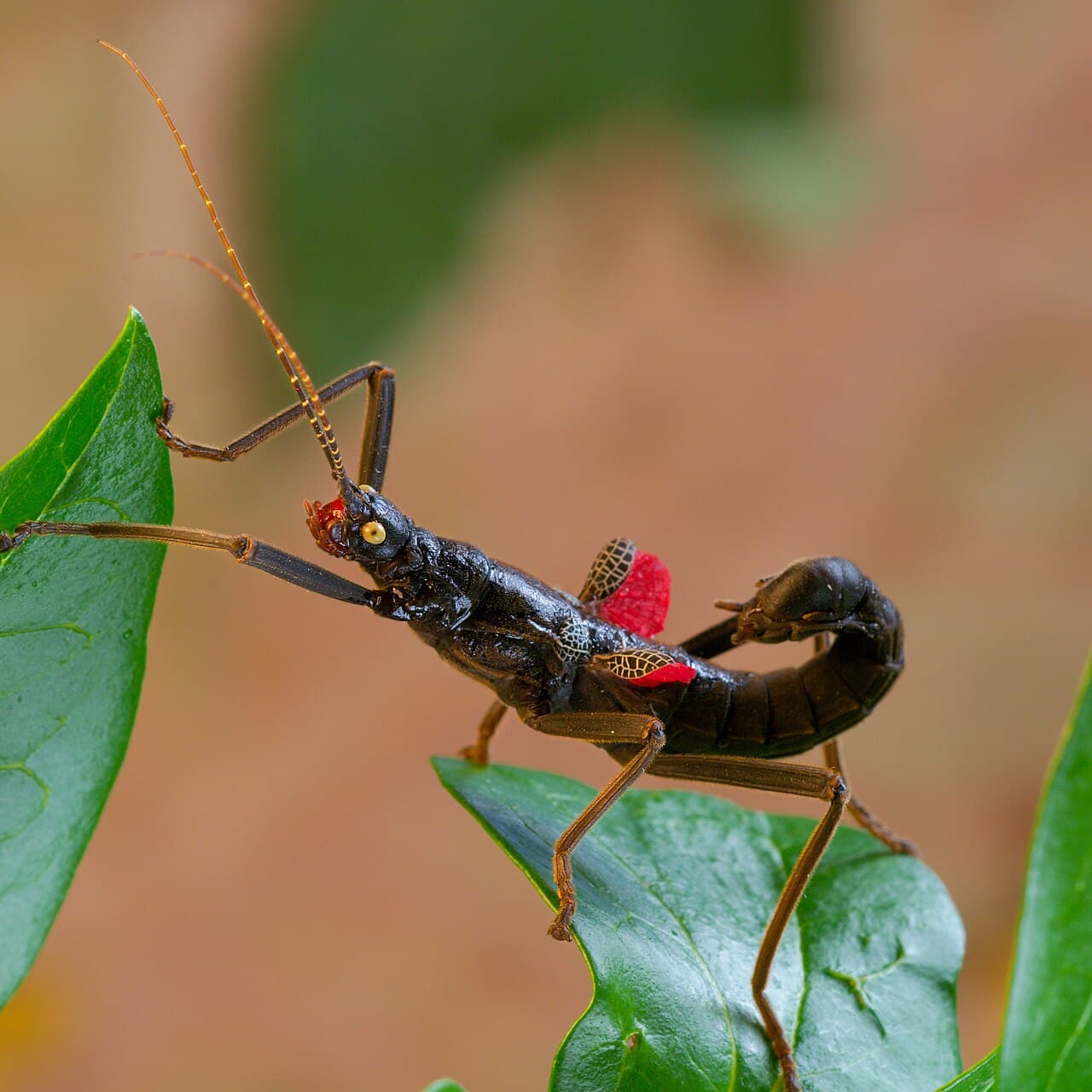
Scary or pretty, beauty is in the eyes of the beholder. A black beauty stick insect has a very unique appearance and life. Females are larger than males, growing up to 5.5 centimeters, while males are 4.3 centimeters maximum. Both sexes have a black velvety body, bright red wings, yellow eyes, and red or brownish mouthparts. When disturbed, they can spray a defensive liquid from glands at the rear end of their head. This spray has a strong odor and is strong enough to cause irritation to the eyes and skin upon contact.
This striking stick insect species is endemic to areas with grasslands and forest habitats in Peru. Their distribution is so small that they only live within 5 hectares in size. As herbivores, they feed exclusively on leaves and vegetation from plants called pepper trees. This stick insect species can reproduce both sexually and asexually, and the breeding season is in the summer. Because of their small range and population, they are now listed as Critically Endangered on the IUCN Red List. The main threats to their numbers are habitat loss due to land conversion for agriculture and livestock farming, and wildfires.
2Blue Stick Insect
Scientific Name: Achrioptera Manga
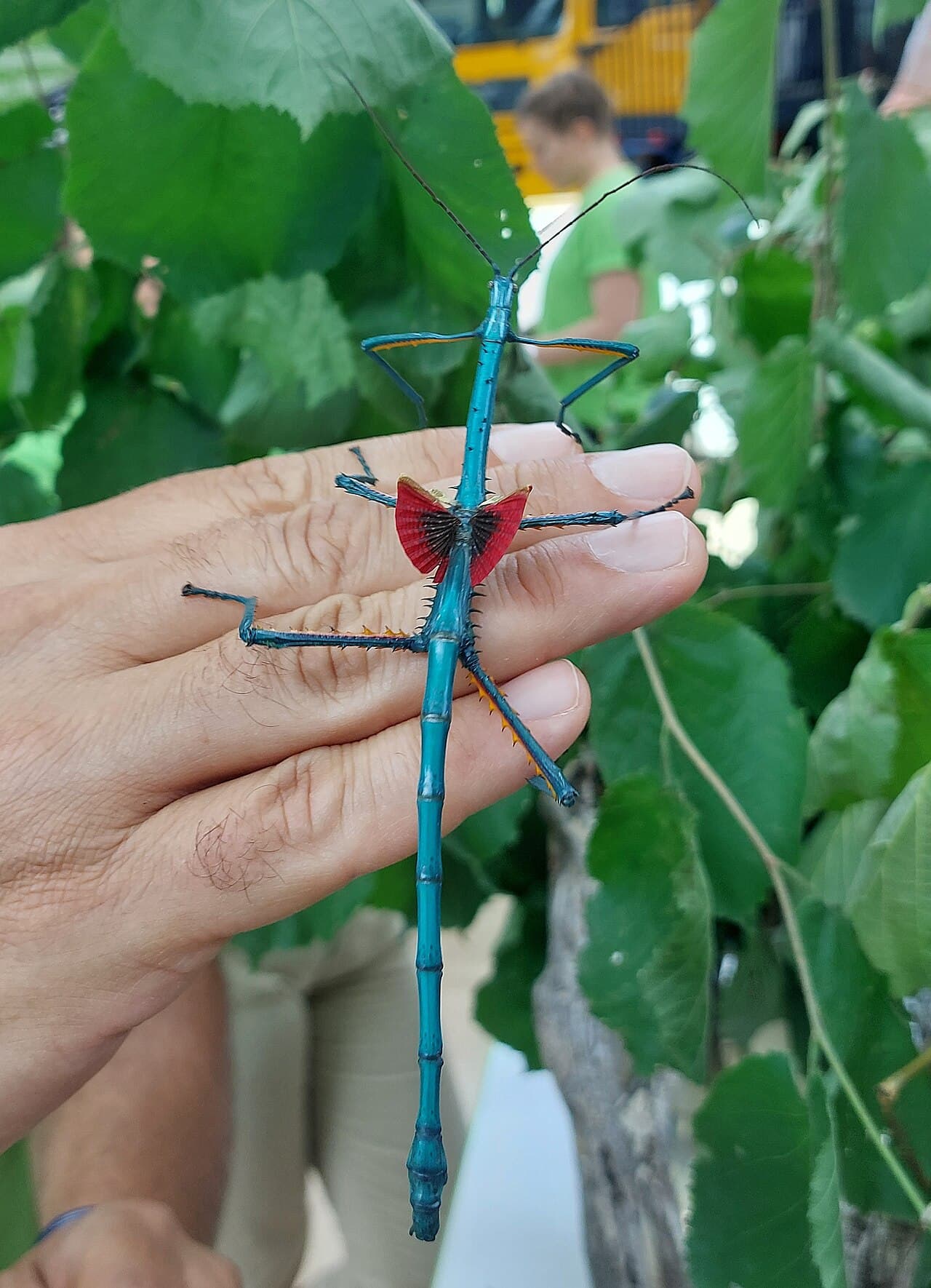
The blue stick insect is one of the largest among the family, reaching 24 centimeters long. Usually, stick insects blend in with their surroundings with their appearance and colors. On the other hand, male blue stick insects stand out vibrantly with their striking colors. Males have a blue dorsal body and orange ventral parts of their femora. They don’t have spines on their pronotum, prosternum, and sterna IV-VI. Females are brown, and have a pair of small spines on their prosternum and up to 10 spines on their heads. Also, females are larger, reaching 24 centimeters, while males have slimmer and shorter bodies that are 14.5 centimeters maximum.
This stick insect species is found in Madagascar and the Comoros Archipelago, living in deciduous dry forest cover. Their herbivorous diet consists of fresh tree and shrub leaves from bramble, oak leaves, raspberry, and rose. They cannot fly, so they rely on other abilities to deter and irritate predators. Females have a dull color so they blend in with sticks, while males display bright color that indicates a toxic taste. Also, when threatened, they open and rub their alae to produce stridulating noises. At the same time, they also have neck glands that produce repellent substances to keep predators away. They have a very short lifespan, 4 to 6 months for males, and 5 to 8 months for females.
3Gecko Stick Insect
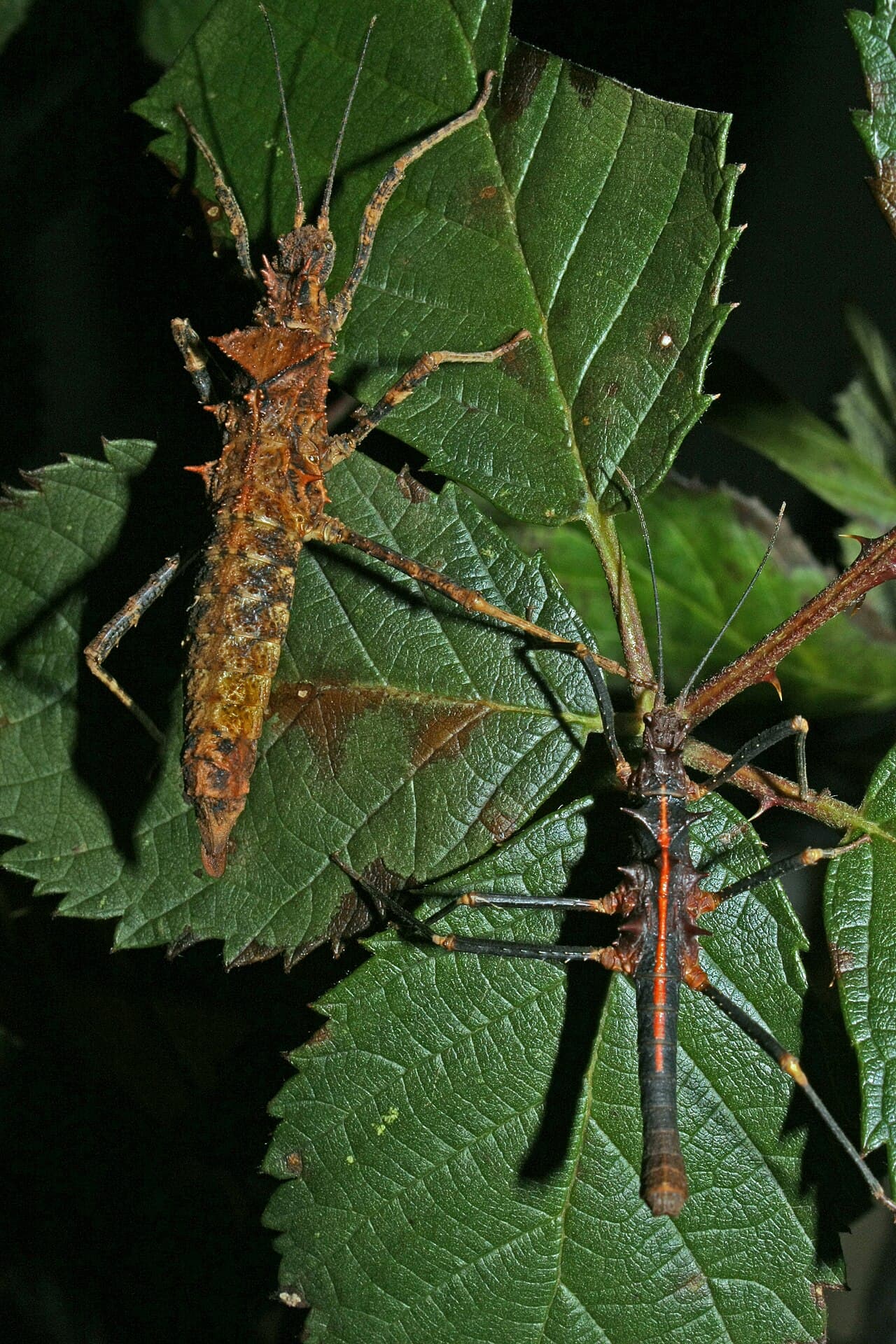
Scientific Name: Hoploclonia Gecko
Here we have an interesting stick insect species that possesses some distinctive features. The gecko stick insects are wingless in both sexes, so they don’t travel too far even when finding mates. Males are 3 to 3.5 centimeters long, and they have spines in pairs on their head and thorax. They have a dark and mostly black-brown color, with a bright yellow-orange to red longitudinal line. Females are 4 to 5 centimeters, and they are dark or red-brown in color with clear spines on the thorax. Both sexes also have a rugged and prehistoric look with sharp thorns that look like no others. The gecko stick insects are native to the northwest of Borneo, inhabiting rainforests.
4Giant Prickly Stick Insect
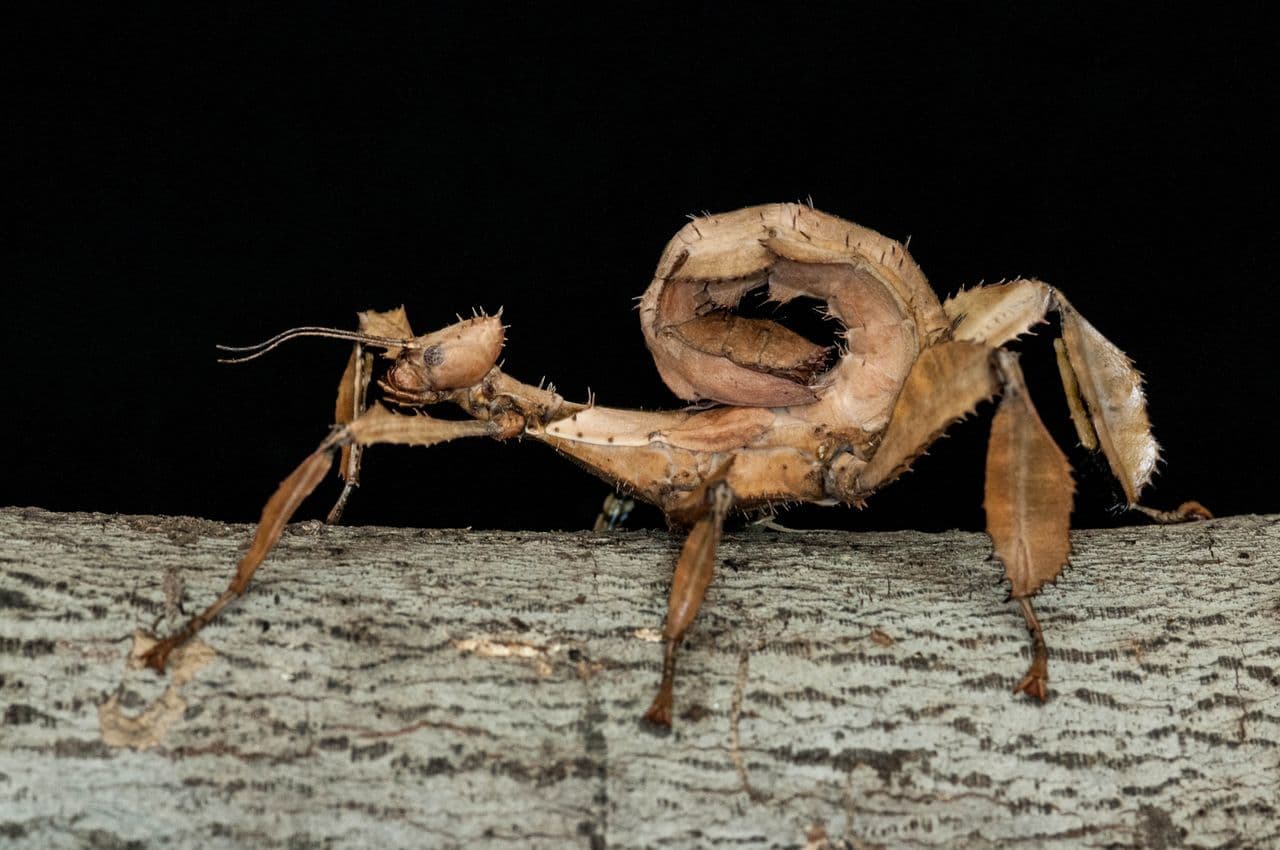
Scientific Name: Extatosoma Tiaratum
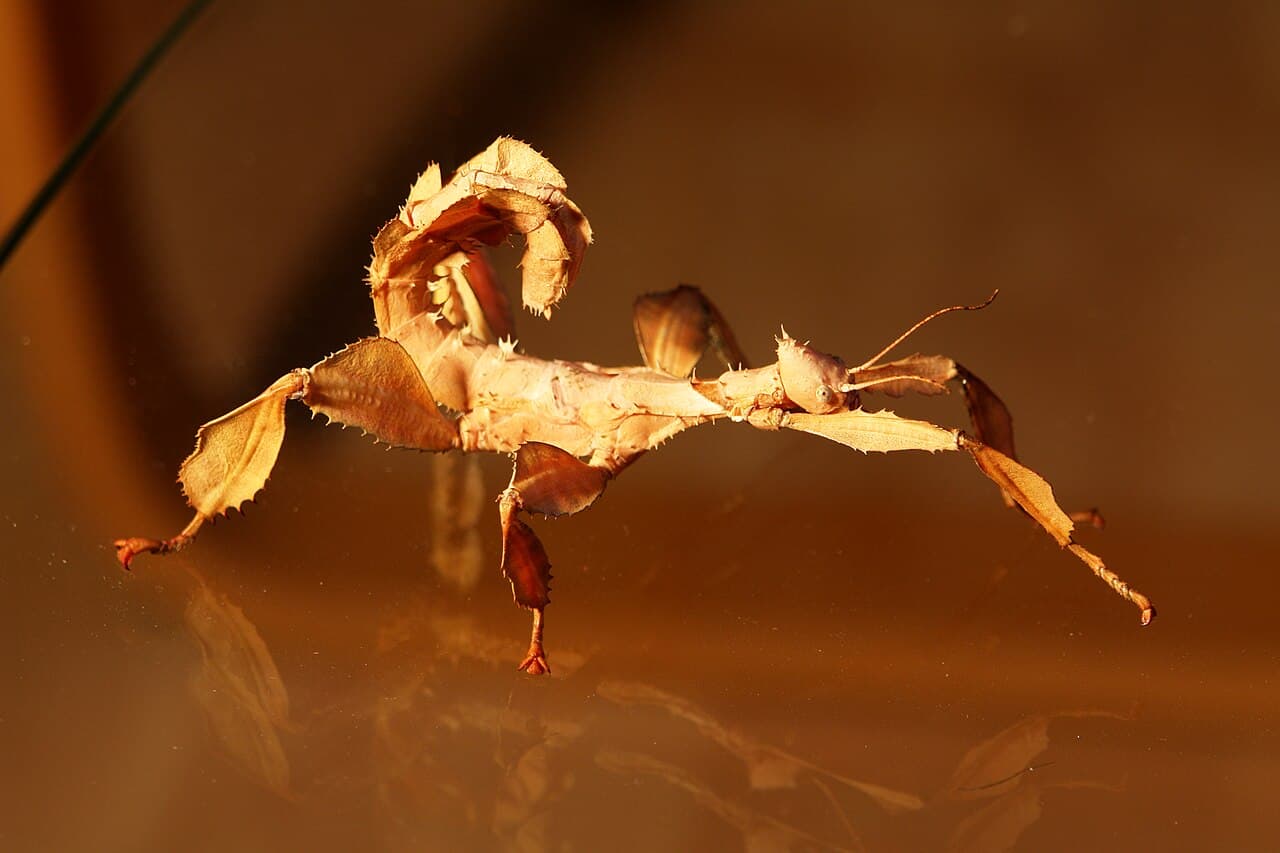
It is not every day you come across a stick insect that looks like a scorpion like this one. An adult female reaches about 20 centimeters, and she is covered in thorn-like spikes for camouflage and defense. Males are smaller and thinner, growing to only about 11 centimeters, and they only have spikes around their faces. Females cannot fly, while males are good flyers, and that benefits them in search of females. When threatened, both sexes adopt a threat pose that resembles a scorpion pose, but males will also play dead.
When it comes to things that look weird, one has to be from Australia. The giant prickly stick insect is endemic to rainforests in Australia, ranging from NSW and eastern Queensland to South Australia. They live in the lush tropical and semi-tropical forests, mostly high in the canopy of eucalyptus and other broad-leaved trees. These stick insects are herbivores, and they feed on leaves like bayberry, bramble, guava, hawthorn, raspberry, rose, and salmon berry. Just like other stick insects out there, this one is also nocturnal and will only come out at night.
5Knob-Necked Stick Insect
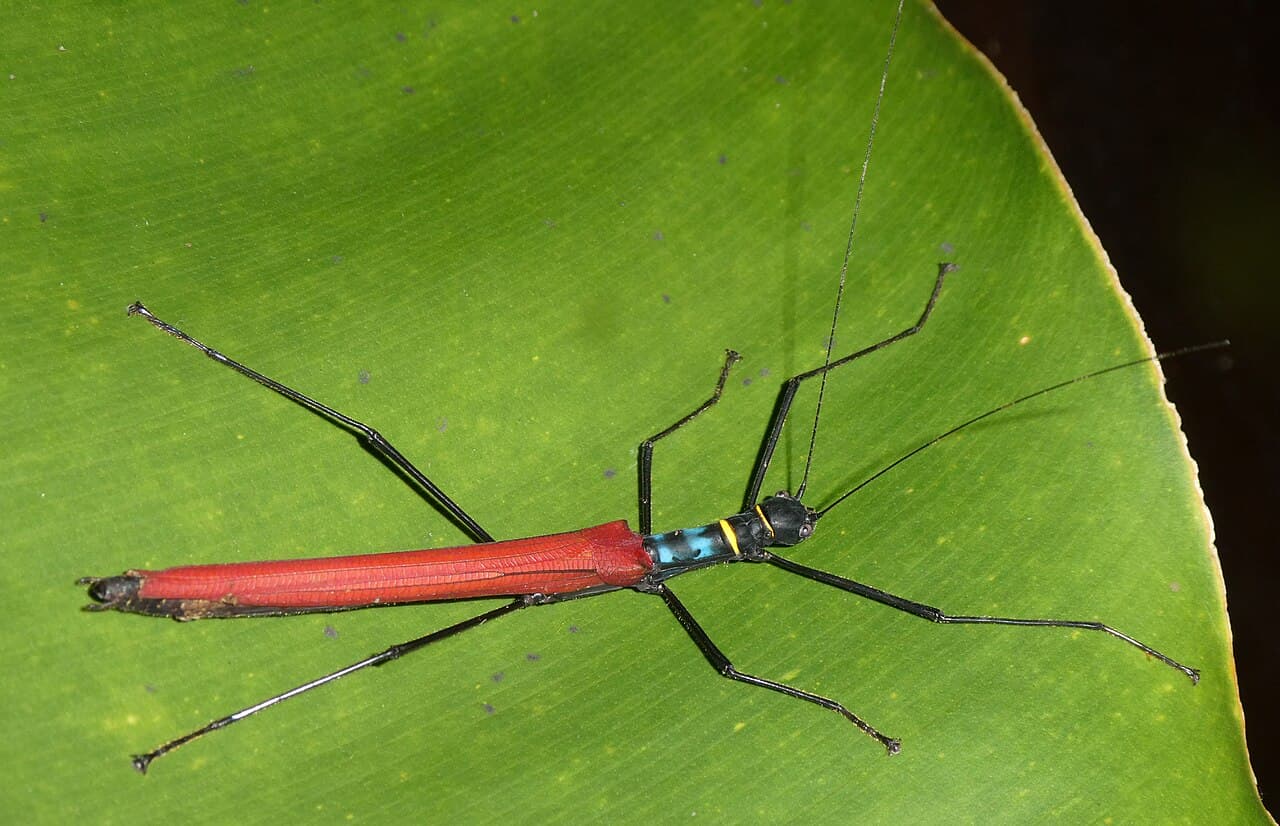
Scientific Name: Calvisia Hennemanni
Looking very different from most stick insect species out there, the knob-necked stick insect is one of a kind. It has a slender and twig-like body just like the others, but it has a distinctive conical structure near its neck. Hence, the name. This spot has raised bumps, cones, or knob-like projections that make it look different from the others. Both sexes have shades of brown, dull green, and mottled gray, or tan to blend with bark and foliage. The knob-necked stick insect is native to the island of Borneo, specifically in Malaysia and Sabah.
6Madagascan Devil Stick Insect
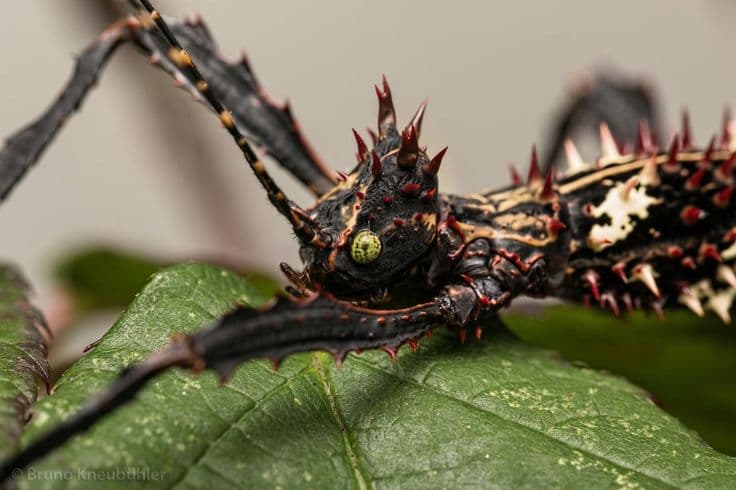
Scientific Name: Parectatosoma Hystrix
Unsure whether to call this a stick insect or a spiny insect, but the middle name devil should sum it up. Both males and females have sharp red and white spines along their bodies, and they have bright green eyes. The body is mottled with rough skin that mimics lichen, moss, or rough tree bark that they hide in. These spines are more than enough to keep predators away, but they have other defense mechanisms, too. When threatened, they can secrete a white liquid from glands behind their heads. This liquid can cause irritation and scare the enemies away. The Madagascan devil stick insects are native to the rainforests of Madagascar, feeding on plants.
7Margin-Winged Stick Insect
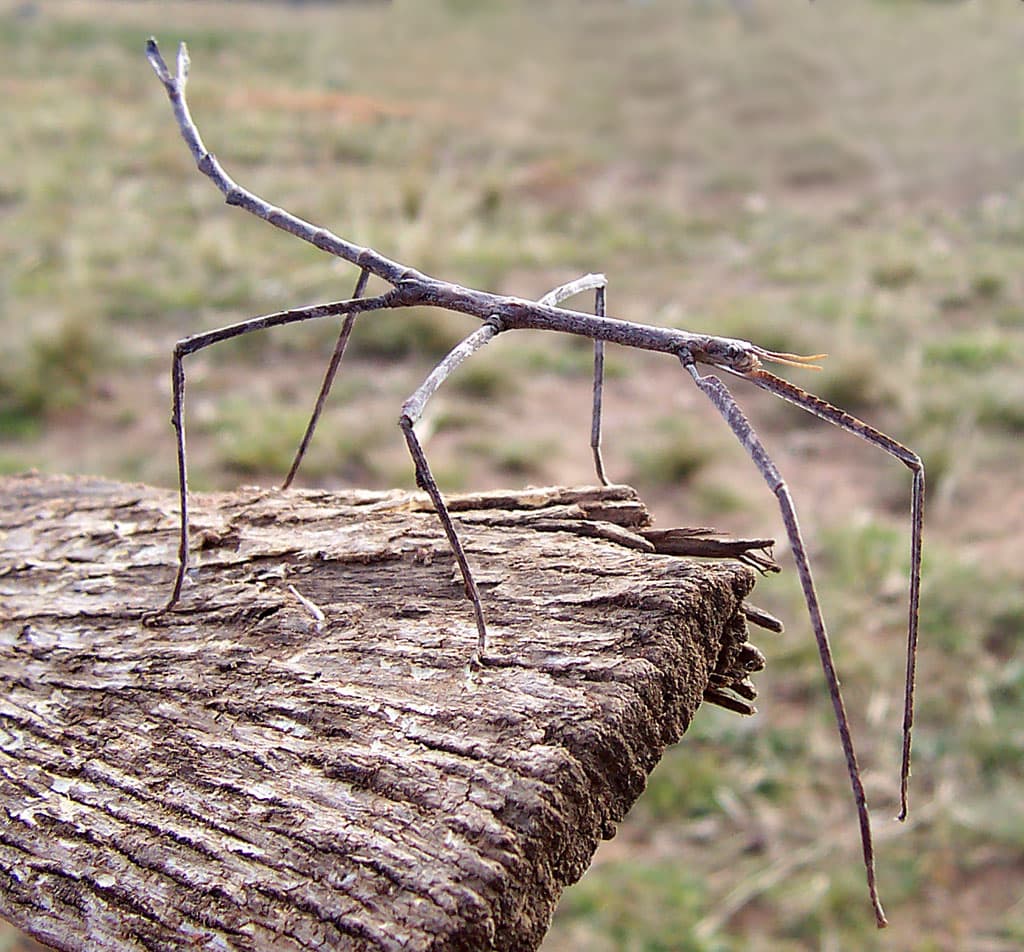
Scientific Name: Ctenomorpha Marginipennis
There is no way you can tell that this is a stick insect; it looks just like a dead stick! A margin-winged stick insect resembles a eucalyptus twig, and it can reach 20 centimeters long. Males are long and slender; they have full wings, and they can fly. Females are larger and heavier than males, but they have smaller wings so they cannot fly. Both sexes are gray-brown in color, with light pinkish brown legs and head. The margin-winged stick insect is endemic to southern Australia, living in heaths and woodlands but prefers coastal environments and open eucalyptus forests. They feed on leaves from the eucalyptus tree and other tree species, where their appearance and coloration can easily camouflage in.
8Metallic Green Stick Insect
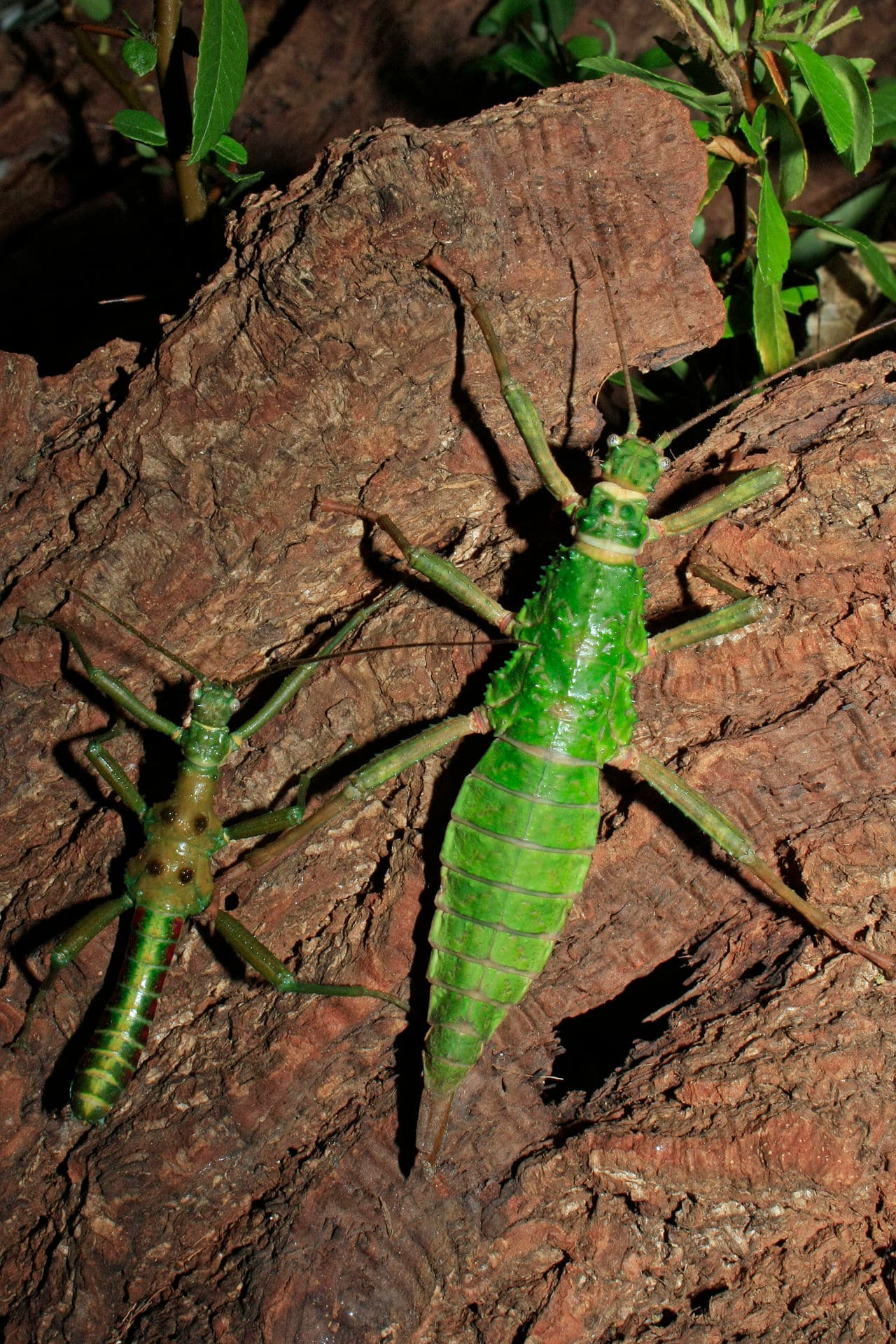
Scientific Name: Mearnsiana Bullosa
Rather on the bright side, the metallic green stick insects stay true to their name. This stick insect species is the most colorful in the family Heteropterygidae with its shiny green bodies. Males have a striking color pattern of metallic green, yellow, and red highlights. As for females, they have a matte, mossy green or plain green-brown color. Both sexes are thornless and wingless, but females are larger than males. Females are from 8 to 9.8 centimeters, while males only reach 4.5 to 5.1 centimeters. This species is native to the Philippine islands of Leyte and Mindanao. The unique thing about them is that adults don’t hide during the day. They simply hang out in the food plant without a care in the world. Should you touch them, they will drop to the ground and start running away.
9Peppermint Stick Insect
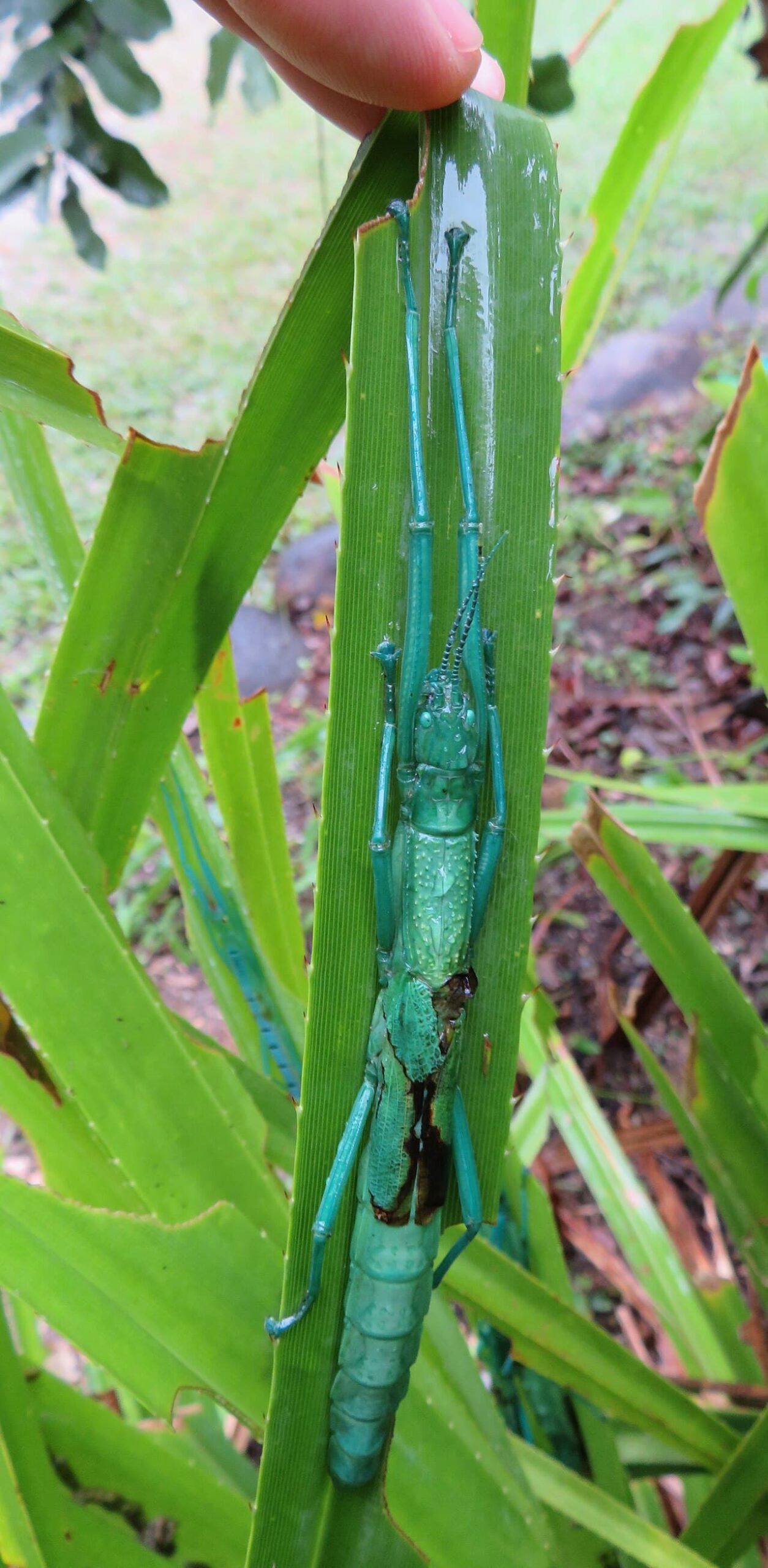
Scientific Name: Megacrania Batesii
Males of this species grow to about 7.6 to 8.7 centimeters, and females are 9.8 to 13.7 centimeters long. Both sexes are pale green in color, and they cannot fly despite having wings. How it got its name is quite interesting, and it is from the fluid that it sprays. When threatened, this phasmid will defend itself with an irritating fluid with an odor that resembles peppermint. Despite having the spray, they still fall prey because they are slow and clumsy. Some of their common predators are black butcherbirds, centipedes, green tree ants, and spiders.
This unusual stick insect species is found in northeastern Australia, the Bismarck Archipelago, New Guinea, the Solomon Islands, and possibly the Philippines. They like to rest on the upper surfaces of the leaves in such an adorable pose. They have their front and mid legs stretched far forward, and their hind legs stretched to the rear. The peppermint stick insect is listed as Vulnerable on the IUCN Red List due to anthropogenic or natural hazards.
10Sunny Stick Insect
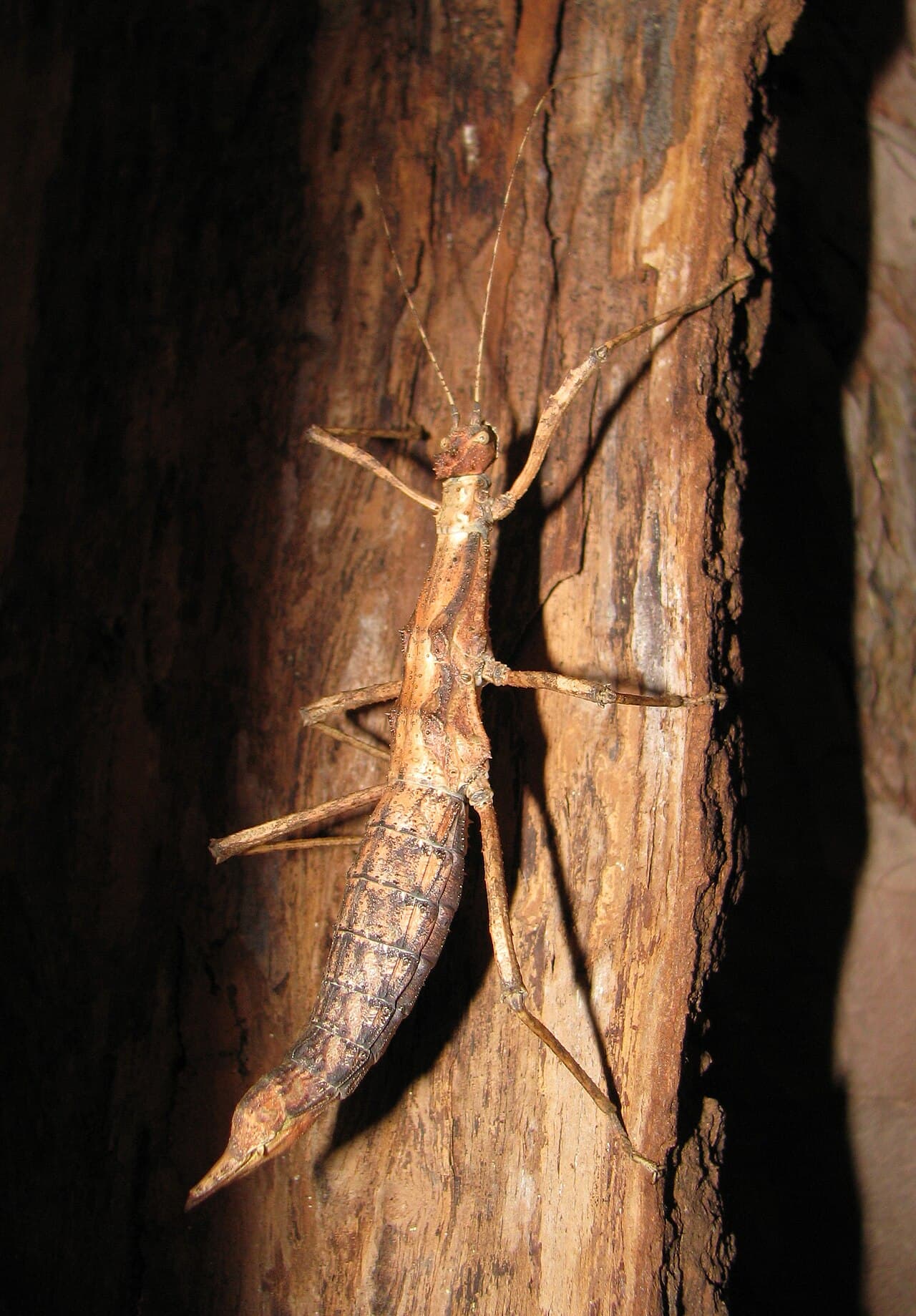
Scientific Name: Sungaya Inexpectata
A bit stout for a stick insect, isn’t it? Females can reach a length of 8 to 8.5 centimeters, and only females have that stout appearance. At the end of their abdomen is a beaked secondary ovipositor that surrounds the primary ovipositor. The beauty is in the crown of spines on the back of their head, making them look out of this world. Males, on the other hand, are only 4 to 5 centimeters long, and they are 2.5 times more slender. Their coloration varies from black and caramel to gray, light brown, mossy green, orange, and more. This phasmid is native to the Philippines, and it is a very popular species in captivity.
11Touch-Me-Not Stick Insect
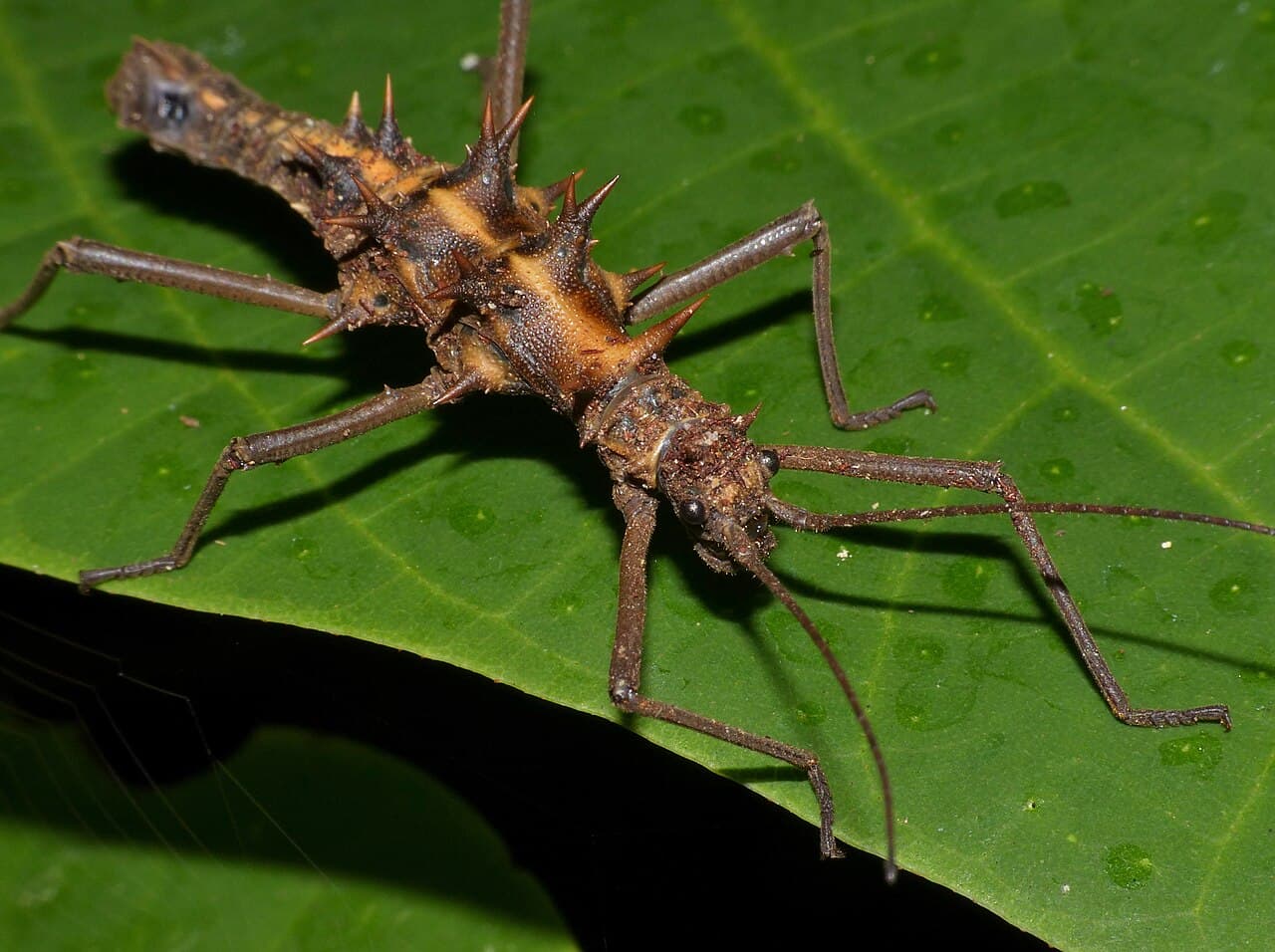
Scientific Name: Epidares Nolimetangere
What a name, right? Smaller males are around 3.5 to 4.3 centimeters, and females are 4.5 to 4.8 centimeters long. Depending on the location, these insects can be brown and green or vibrant red. Both sexes are wingless, and they have a pair of spines on the head and on the anterior margin of the mesonotum. They also have spines on their abdomen, and this is why you shouldn’t touch one. Small yet heavy-bodied, these insects are stout, broad, and compact rather than long and slender like other stick insect species. This species occurs in Borneo, inhabiting low shrub vegetation of the tropical rainforests. They feed exclusively on leaves, and their lifespan is 1 to 2 years.
12Yellow Umbrella Stick Insect
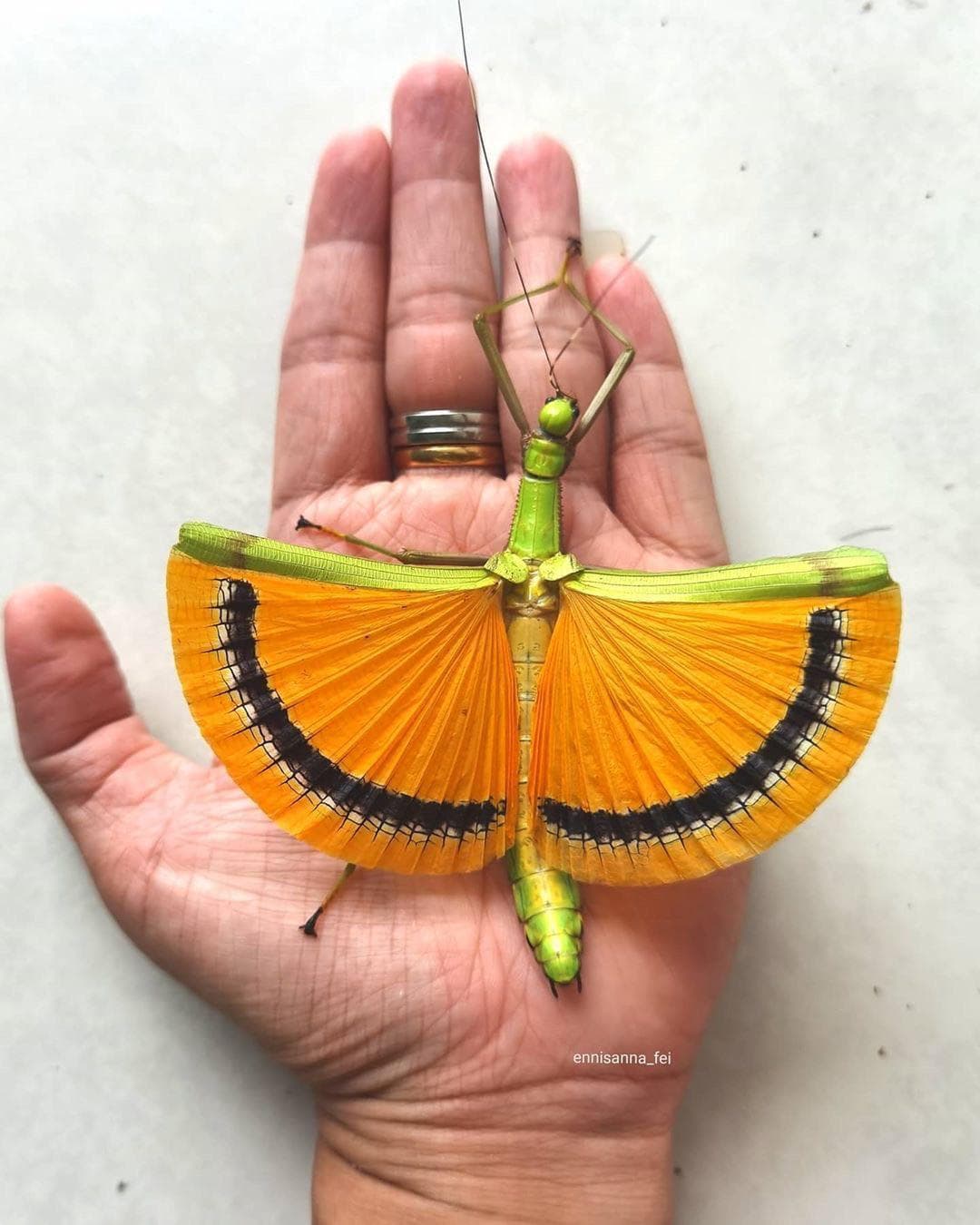
Scientific Name: Eurynecroscia Nigrofasciata
This stick insect has a bright light green to yellow-green crown, cephalo-thorax, and upper wings. Their flanks, abdomen, and lower head are brown, and there are black bands on their orange wings. Females are bigger than males, being 9 centimeters long, and males are 5.8 centimeters. This phasmid is famous for the female wings that fan out like a bright umbrella when they intimidate predators. This species occurs in Southeast Asia, in Peninsular Malaysia and on Borneo and Sumatra islands of Indonesia. They inhabit tropical forests where they can camouflage in leaves or plain green twigs when resting. Their diet includes fresh leaves from bay tree, bramble, ivy, and more.
Related Post: Beautiful Mantis Species