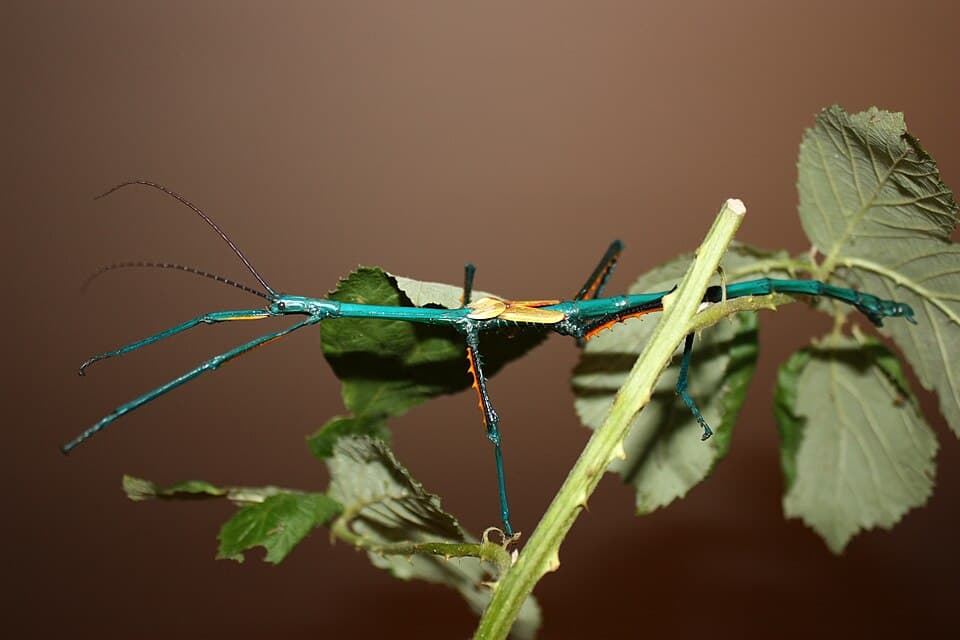
Achrioptera manga is one of the stick insect lovers’ favorites, and the appearance says it all. Metallic stick insect is pretty flamboyant while still being able to camouflage really well, making them even more fascinating. There is more to them than just their bright colors and large size, so let’s learn more about this stick insect below.
1Appearance
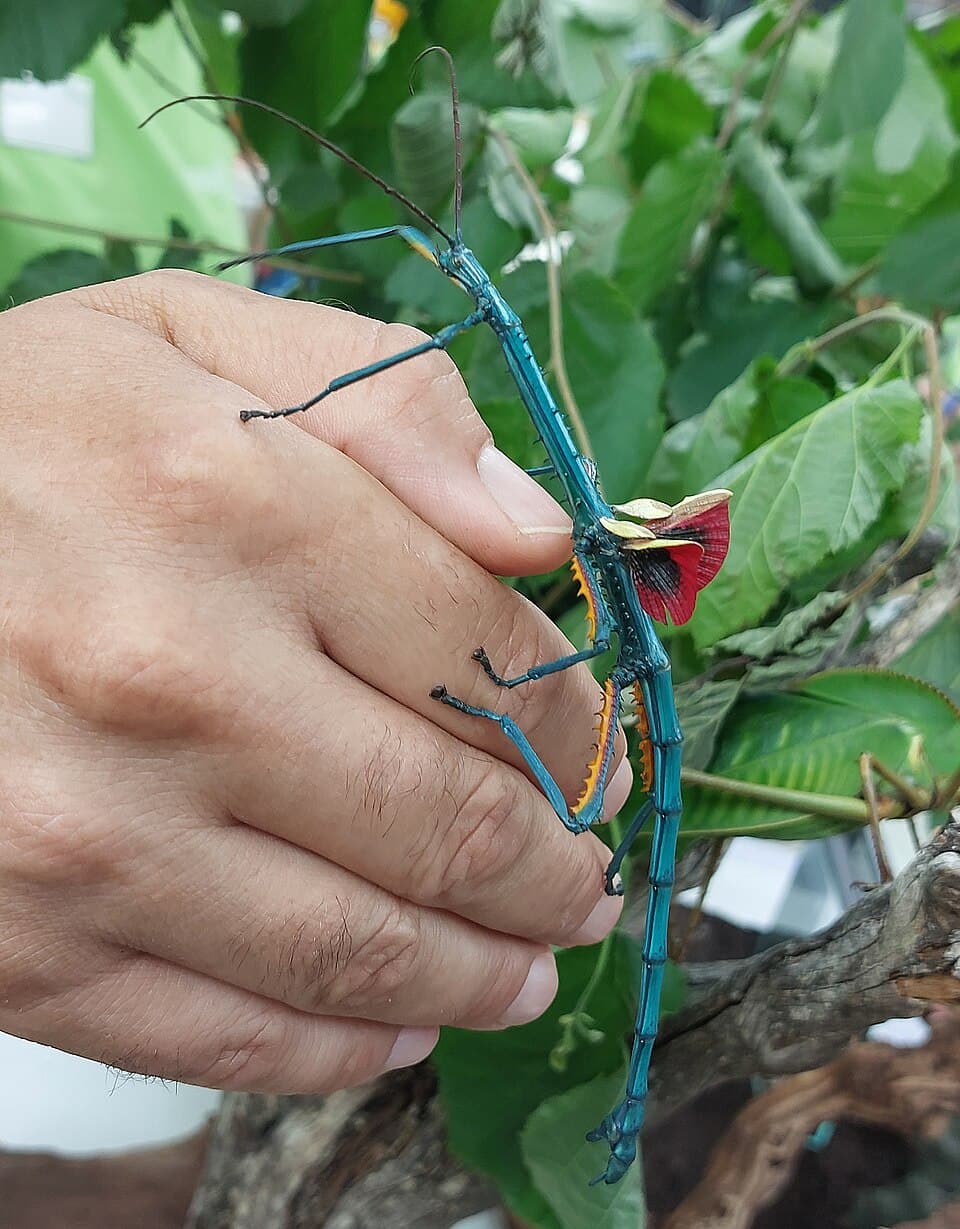
Metallic stick insects are one of the largest insects, measuring up to 24 centimeters long. Males have a blue dorsal body coloration and orange ventral parts. However, males have slimmer bodies than females, but they are smaller in size, measuring only 13 to 14.5 centimeters. Male metallic stick insects stand out against their surrounding foliage, even though they should camouflage. They are metallic turquoise-blue in color, and this coloration serves the purpose of attracting a mate. What’s interesting is that birds and other animals don’t really come for them despite their extravagant brightness.
The smaller males have full wings, while females have reduced wings, but both sexes have reddish wings. Despite having wings, they cannot fly. Females are bigger and longer, and they have a more robust abdomen, and their overall coloration is brown or tan. Females also have their own unique features that set them apart from other species, with a pair of small spines on their prosternum. Both sexes have a long, elongated body, with long legs and antennae.
2Behavior
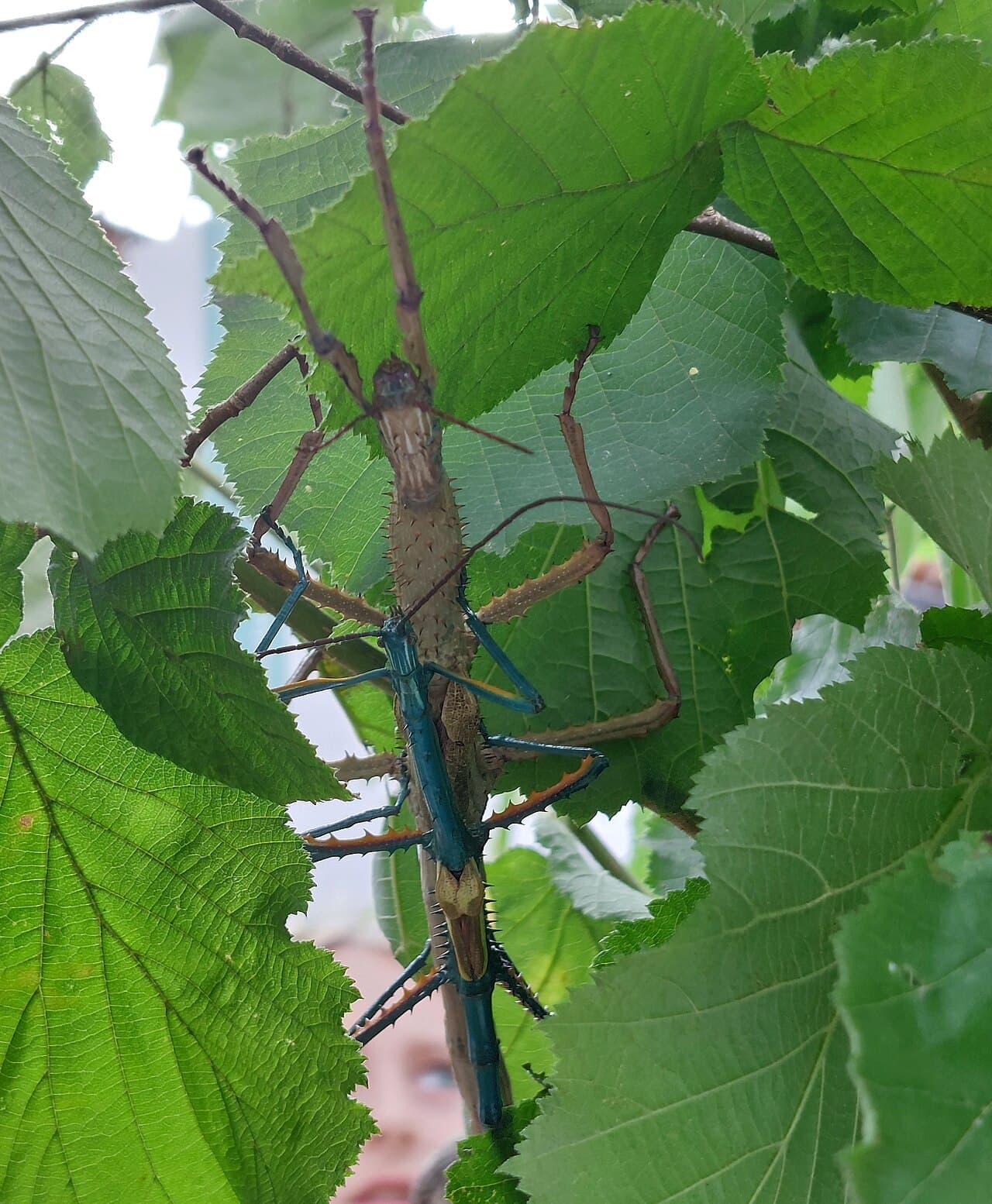
Metallic stick insects do not have a seasonal breeding period; they produce year-round. Males usually stay with females a few days after mating. Females lay 40 to 50 eggs by dropping or scattering them on the forest floor and into the leaf litter. The eggs hatch after about 4 to 5 months, and nymphs reach sexual maturity in roughly 4 to 6 months.
During the daytime, a metallic stick insect stays in a freezing pose to avoid detection by predators. They even sway like a twig in a breeze from time to time. Females are duller in color, so they blend in perfectly with other sticks in their natural habitats. When disturbed or threatened, they open and rub their second pair of wings to produce stridulating noises. They also have neck glands that produce repellent substances to dissuade predation upon them as well. As for males, they may open wings to flash the contrasting colors to startle the enemies before escaping. The last resort is to just let go and fall on the litter, relying entirely on camouflage upon landing.
3Feeding & Habitats
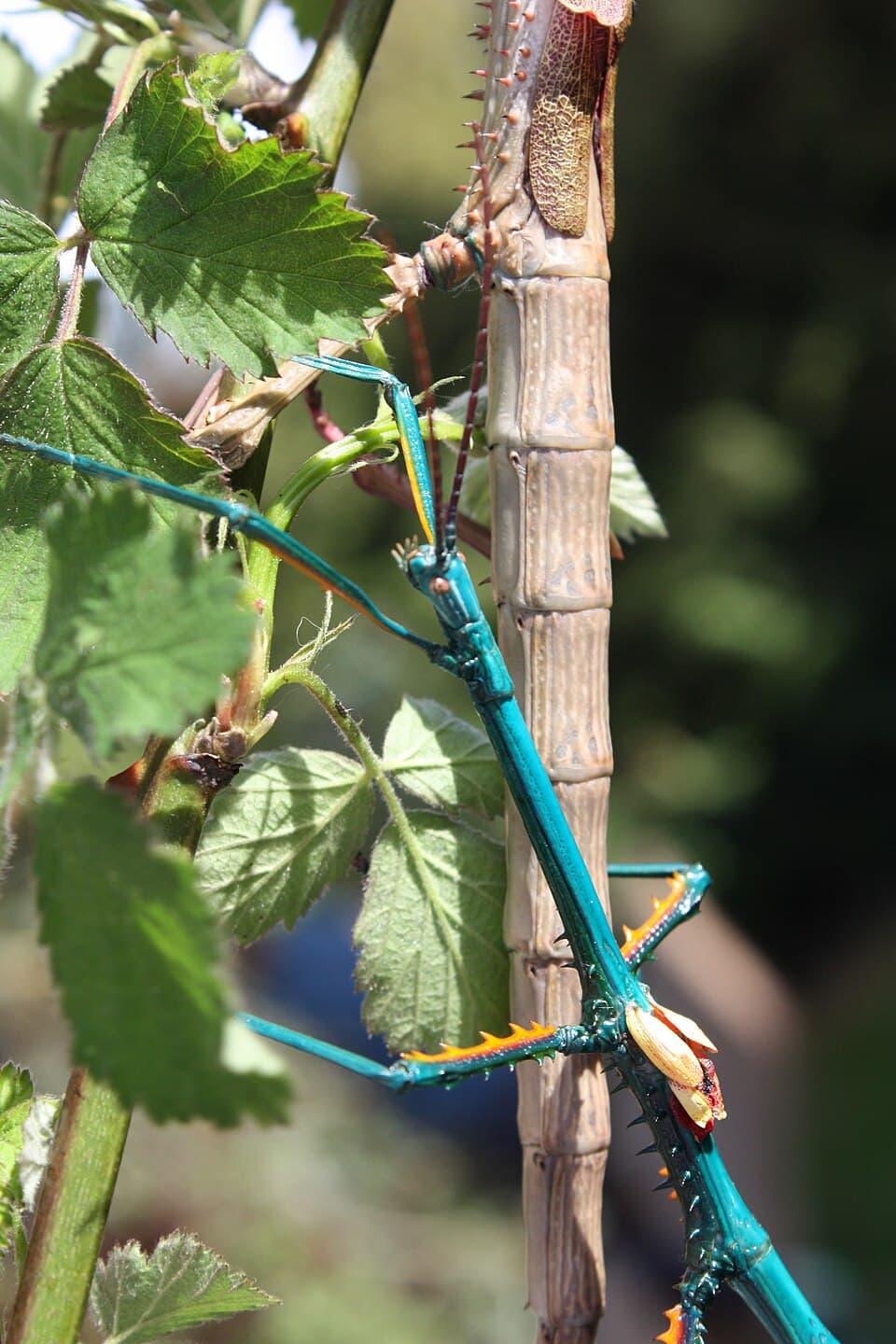
Metallic stick insects are endemic to the far north area of Madagascar, inhabiting dry deciduous forests and tropical shrublands. Their habitats are restricted to forests of the Forêt d’Orangea and Montagne des Français. They spend their day camouflaging, feeding, and resting on branches and foliage high in the forest canopy or understory. Being nocturnal, they come out after dark to feed on broad-leaved plants and woody dicots like bramble, eucalyptus, oak, and raspberry. The wild population is facing threats due to local deforestation despite being in protected areas.
Related Post: Striking Stick Insect Species