
Harem-based animals refer to an animal group with one dominant male who mates with all females in the group. In return, this male provides protection for everyone, and he will drive off any males that want to join the harem. Usually, the dominant male allows his male offspring to stay in the group until they become juveniles. There are quite a lot of harem-based animals in the wild, but let’s just discuss some of them today.
Bird
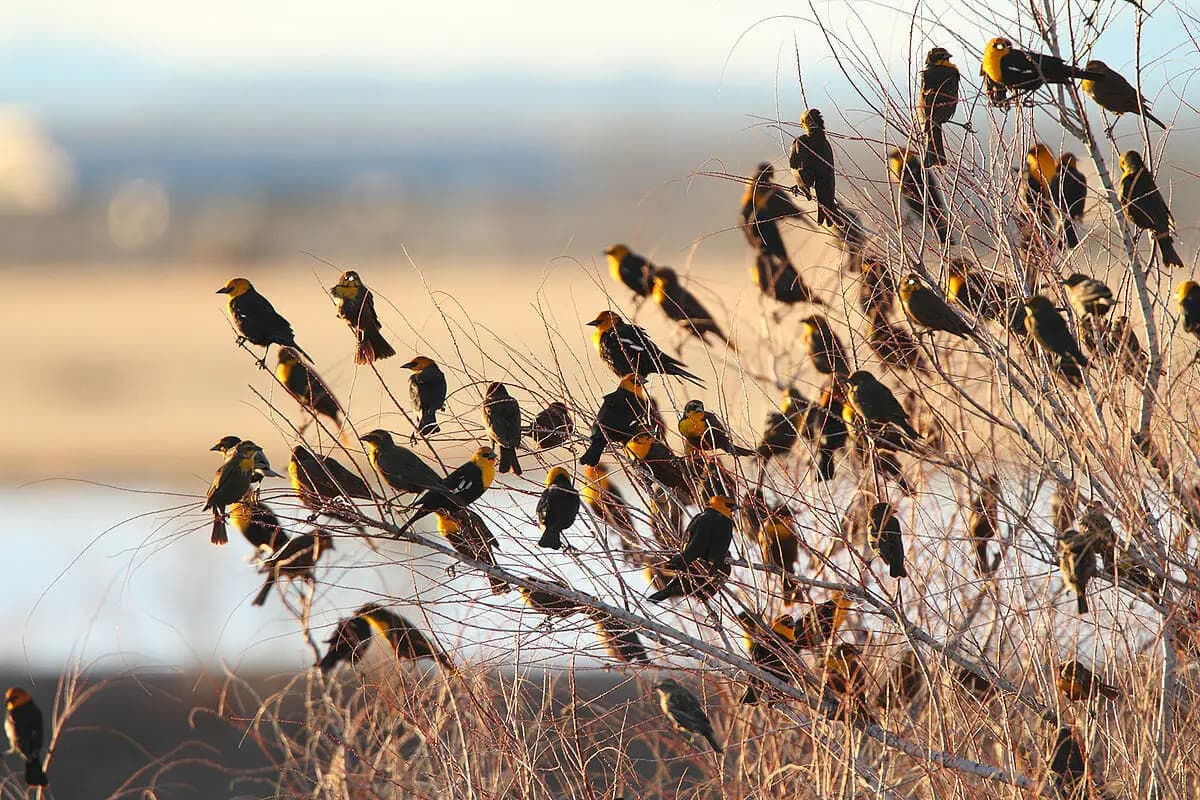
When it comes to harem-based animals, birds are less romantic. In a bird’s love world, both sexes in some species tend to be promiscuous. As the breeding season approaches, they get together, mate, and move on. The harem is fairly busy, and there are dozens of eggs laid at the end of the mating. Some males protect the harems, while others protect the eggs and hatchlings. You will find 3 bird species below, so let’s find out.
1Common Pheasant
Scientific Name: Phasianus Colchicus
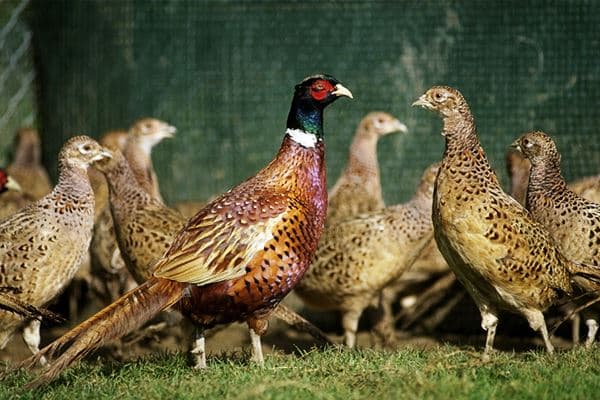
Pheasants are colorful birds that come in various forms, from very flamboyant to nearly white or almost black. Adults are around 60 to 89 centimeters long, with a long tail that takes up almost 50 centimeters of the total length. In brighter birds, their plumage is bright gold or fiery copper-red with an iridescent sheen of green and purple. Females are rather dull in color and smaller in size, being mottled brown and 50 to 63 centimeters long. Common pheasant is native to Asia, but it also has a population in parts of Europe as gamebird. Their natural habitats are grasslands near water with small copses of trees, but also common in farmland, scrub, wetlands, and woodland. These birds feed on both animals and vegetables, from small invertebrates to small birds and more.
Males are polygynous, and they normally have a harem of two to fifteen females. A single male dominates the group, and he guards the females from the intrusion of other males. Breeding begins in April, and adult males become territorial and try to attract females while chasing away other males. After mating, the males leave, and the hens build hollow nests in the ground using dead leaves and grass. The mothers lay the eggs, incubate the eggs, and stay near the new hatchlings until they can fly. Young pheasants grow up quickly and can fly within two weeks, but they will remain with their mothers for 6-7 weeks. Common pheasants are widespread throughout their range; however, some local populations are suffering from habitat loss and overhunting.
2Greater Rhea
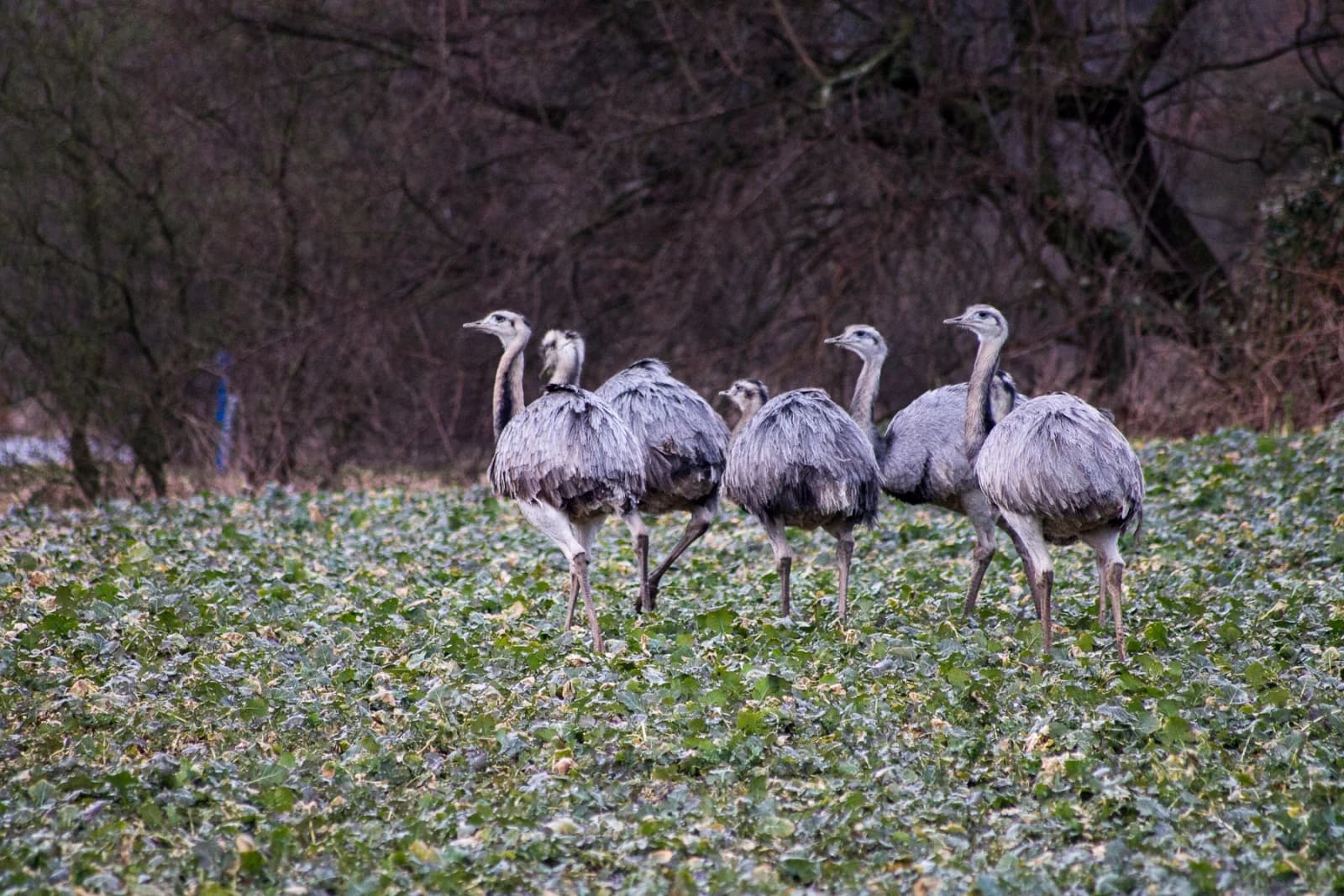
Scientific Name: Rhea Americana
The greater rhea is the largest native bird in the Americas, standing 1.2 to 1.4 meters from beak to tail. Its plumage is brown or gray, and there are feathers covering all over its head, neck, rump, and thighs. Greater rhea is a flightless bird species native to eastern South America, inhabiting a wide range of open areas. It is common to see them in deserts, grasslands, grassy wetlands, savannas, scrub forests, and more. These birds feed on broad-leaved foliage, fruits, seeds, and also fish, insects, reptiles, small birds, and small rodents.
Breeding season starts after winter, and a harem can have from 2 to 12 females. The courting method is by calling and raising the front of their body up while keeping their neck straight and ruffling their plumage. Once a male attracts a female, he will copulate with her and then lead her to his nest. He incubates and takes care of the eggs after the female leaves. Recent studies have shown that some males will utilize subordinate and younger males to help incubate and protect the eggs. If this happens, the dominant male will find a second harem and start the process over again. So his nest can have eggs from several females, and can contain as many as 80 eggs.
Being one of the harem-based animals with a polygynous trait, greater rhea is one of a kind. Males are obviously polygynous, but females are also serially polyandrous. That means females also move around during the breeding season, mating with a male and depositing their eggs before leaving. Once she lays her eggs in his nest, she will move around and mate with another male, and the cycle repeats. Females end up mating with several males, laying eggs in many nests during a breeding season. So in the end, the chicks never know their mothers; most are raised by their father, or an unrelated foster father.
3Red-Winged Blackbird
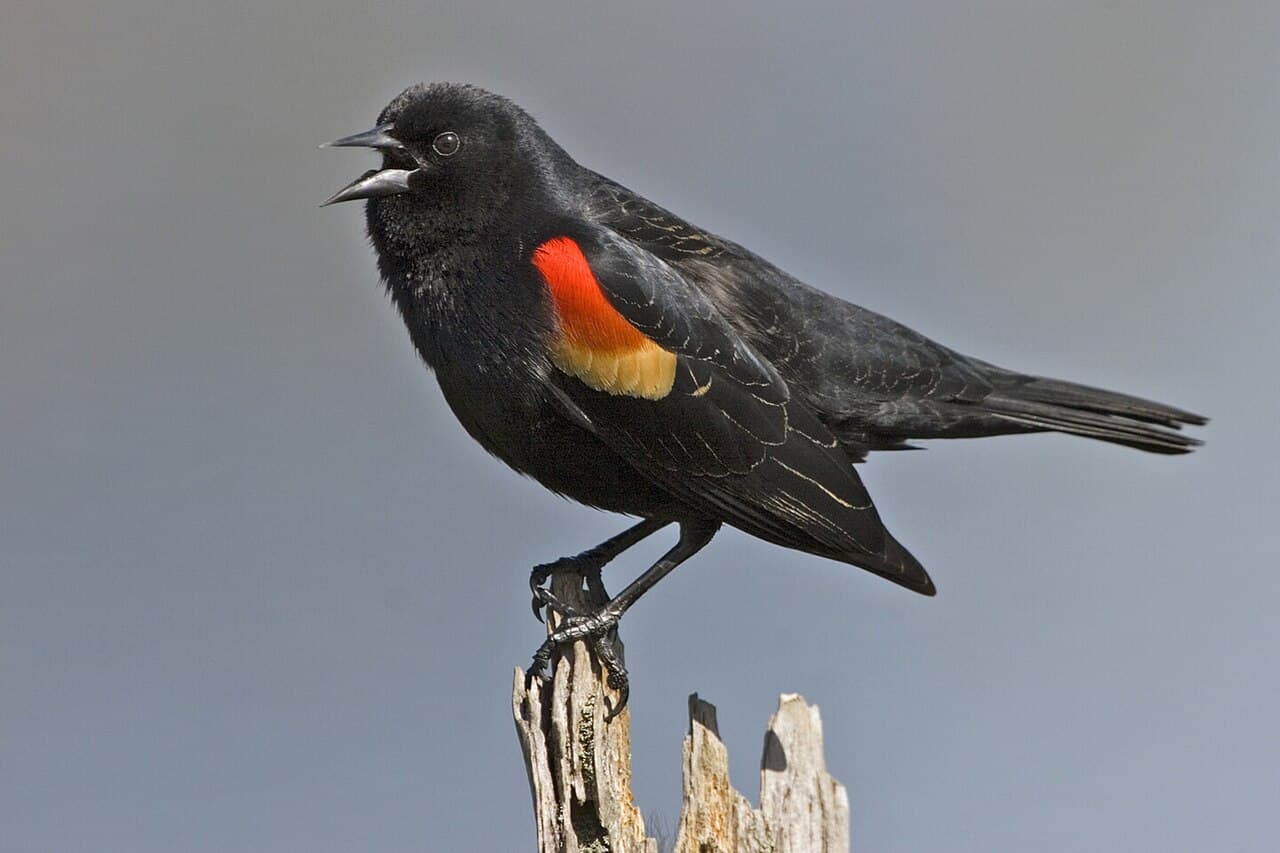
Scientific Name: Agelaius Phoeniceus
A red-winged blackbird is a beautiful bird with black plumage and striking bright red shoulder patches called epaulets. It grows up to 17 to 23 centimeters, with a wingspan of 30 to 41 centimeters. Both sexes are similar in size, but females look more like large sparrows with streaky brown, buff, and white feathers. These birds live in dense stands of plants like cattails, reeds, and sedges, and in areas around lakeshores, ponds, and riverbanks. Red-winged blackbirds are opportunistic foragers with a wide variety of diet options. They mostly feed on insects and seeds, and they forage mostly while walking on the ground, sometimes up in shrubs and trees.
Male red-winged blackbirds are both polygynous and territorial, protecting a harem of up to 15 females in their territory. In spring and summer, females in the harem spend their time nesting on one male’s territory. Females are the primary caretakers of the eggs and fledglings, and males do help sometimes. During the breeding season, territorial males spend up to a quarter of the day defending their turf from intruders. Males are extra aggressive because they carefully pick the location for nesting with abundant food, water, and protection from predators. They will chase other males and attack anything that comes close, including humans and even larger animals like horses.
Fish
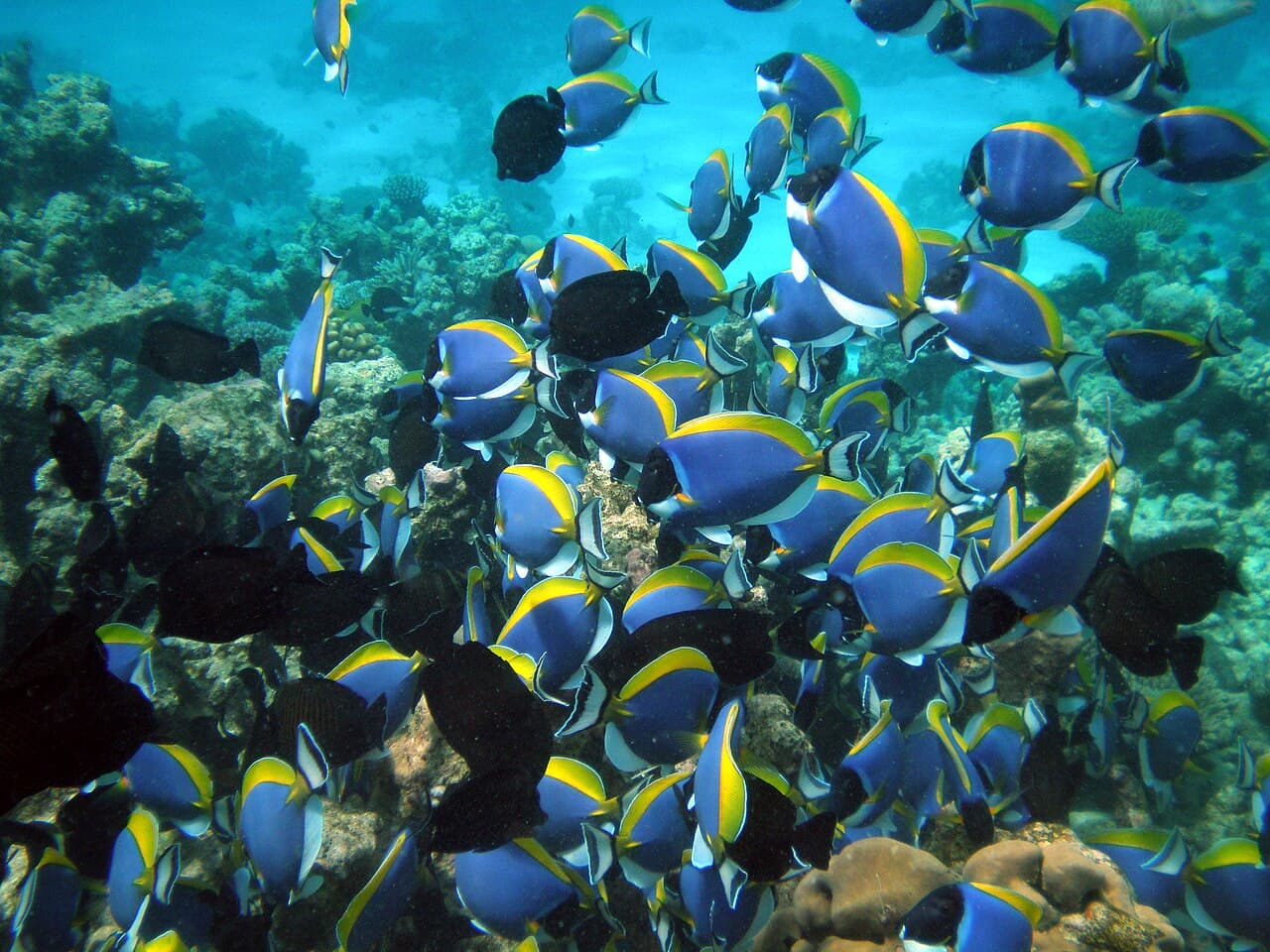
It is a common thing for fish to travel in schools, and things are the same with the ones with harems. The unique thing about harems in fish is that they were all born females, and change their sex some point. This is to ensure successful reproduction, and everything about this is just very fascinating. Let’s see if you think their way of life is very cool as well.
4California Sheephead
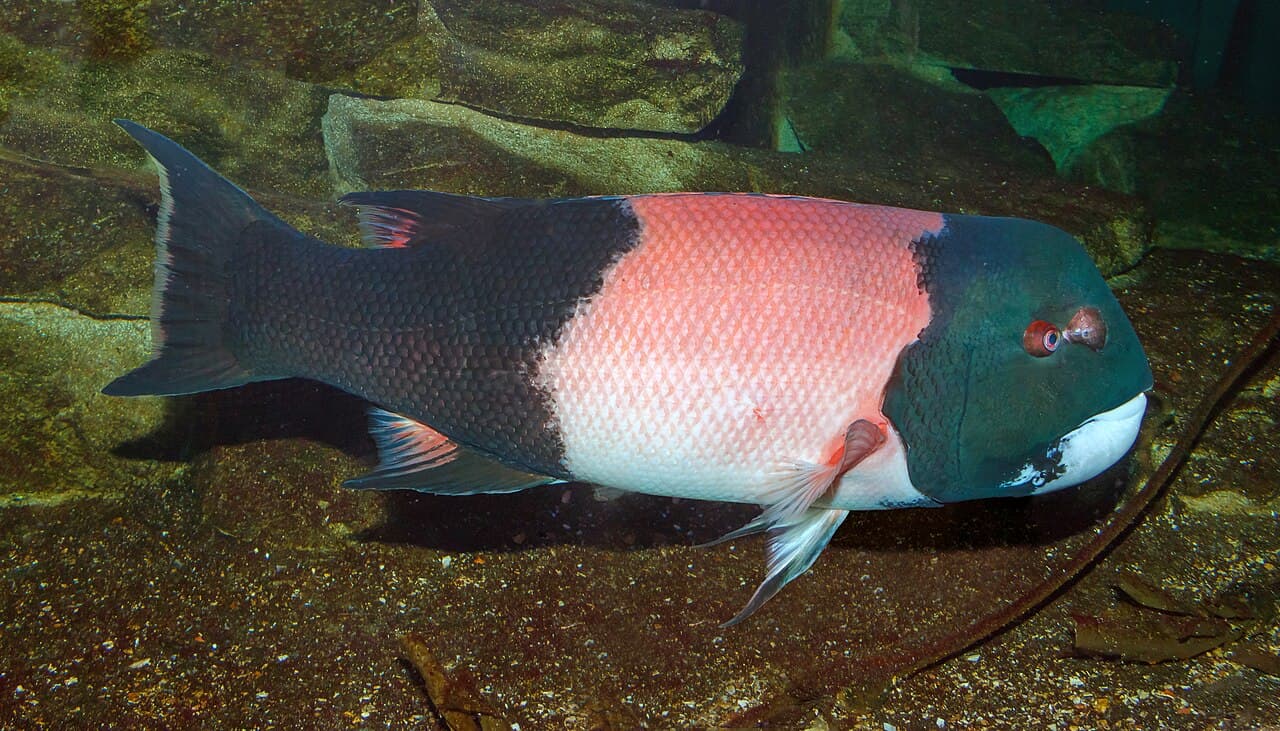
Scientific Name: Semicossyphus Pulcher
California sheephead is very easy to recognize, with its black and red coloration, and its sharp teeth. Females are pinkish to brownish-red, and males have a black head and tail with a vivid red-pink midsection. Males have a prominent forehead bulb and a fleshy chin, while females lack those. Both sexes have strong protruding teeth that they use to crush hard-shelled animals. This predator can grow up to 1 meter in length, but they are usually smaller on average. The California sheephead inhabits kelp beds and rocky reefs along the shore of California, mainly in the Eastern Pacific Ocean. Where they live, they feed on crabs, fish, mollusks, snails, squids, urchins, and more.
A harem of California sheephead consists of one large male and multiple smaller females. The male’s role is defending its territory against other males and fertilizing females in that territory. Being one of the harem-based animals is one thing, being able to change their sex is another fascinating thing. California sheephead are born as females, and some switch to males as adults. The male forms a harem with many females that he dominates and travels with. If he dies, a female in the harem will undergo a sex change and resume the previous male’s responsibility. The transformation process takes 5 days to 2 weeks, and it is usually the largest female who takes the role.
5Hogfish

Scientific Name: Lachnolaimus Maximus
Hogfish is a fish that is flat and oval in shape, and it is around 90 centimeters long maximum. It has a very elongated snout that it uses to search for crustaceans buried in the sediment. Males have a deep and dark band spanning from the snout to the first dorsal spine. Females are pale gray, brown, or reddish-brown in color, with no distinctive patterns. This fish species is native to the western Atlantic Ocean, inhabiting coral reefs and open bottoms where they hang out in groups. It has strong jaws with protruding anterior canine teeth that can crush any hard-shelled prey like crabs and mollusks.
Hogfish live in a harem, which typically consists of a single dominant male and 5 to 15 females or more. Not different from the California sheephead, all hogfish are born female and transform into males later on in life. As they grow larger and gain social dominance at around 3 years of age, the largest female can transform into a male. The dominant male fiercely defends their territory and harem of females against other males. And just like the California sheephead, the largest female in the harem will change her sex and take the lead if the male dies. Things are extra interesting when it comes to reproduction. A single male can spawn multiple times in a day, and a female can spawn multiple times per season. Hogfish eggs can hatch within 24 hours, and they grow and become juveniles within a month or so.
Mammal
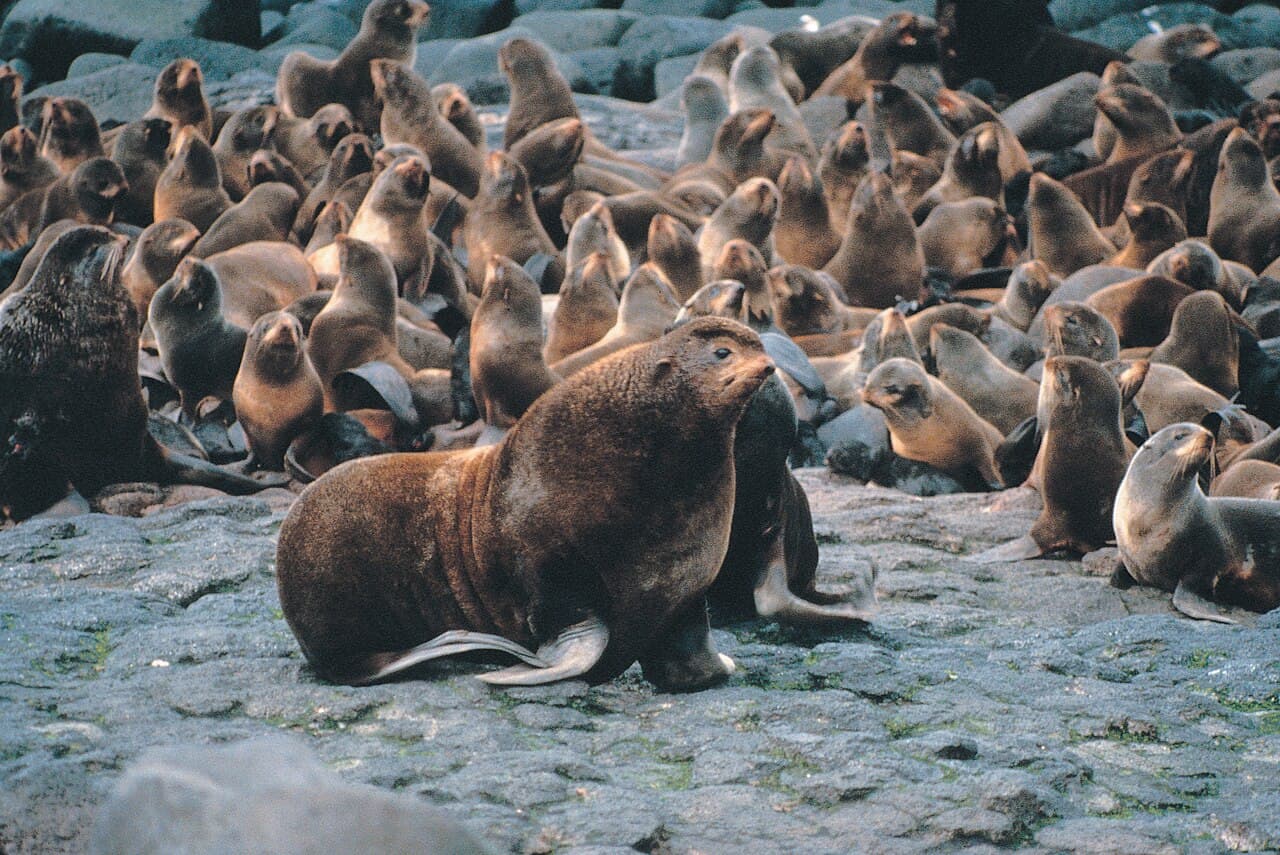
Things are rather aggressive in harem-based animals when it comes to mammals. Males engage in fighting and competition to gain access to females and take control of the harem. Most of the time, they are very aggressive, and they protect their harems and territories at all costs. While we say there is plenty of fish in the sea, the size of the harem is actually larger with mammals. Looks like there are plenty of mammals on land as well, so let’s have a look!
6Bighorn Sheep

Scientific Name: Ovis Canadensis
Bighorn sheep are large sheep with a stocky build, and they stand 90 to 105 centimeters tall. The name says it all, a bighorn sheep has massive curling horns, though only males have them. These horns are large and heavy; they grow continuously, and they can weigh up to 14 kilograms. Females have much smaller horns that are slightly curved or straight. Both sexes have grayish-brown or dark brown fur with a distinct creamy-white rump patch and muzzle. This wild sheep species is native to western North America, where they prefer alpine meadows, hot deserts, and steep rocky mountainous terrain. Thanks to their split hooves with rough interiors, they have enough traction to walk on narrow rock ledges.
Things are rather aggressive when it comes to establishing a harem in the bighorn sheep world. Males will be in rut, and the strongest and most dominant male will have better access to females. During a rut, rams establish dominance by charging at each other and crashing their heavy horns together. The winner can actively pursue females and gather them in a harem of up to 12 females. A ram usually follows and defends the most estrous females. While most males in our list of harem-based animals protect both the females and territory, this one doesn’t. Bighorn sheep do not defend territories, but they will battle other males over mating access to the females.
7Elephant Seal

Family: Phocidae
Elephant seals got their name from the large proboscis that adult males possess, which resembles an elephant’s trunk. There are two elephant seal species: northern elephant seals and southern elephant seals. Both species are very large and heavy, reaching 4.2 to 5.8 meters in length. And in both species, males can weigh up to 10 times more than females. Mature alpha males have a proboscis and a cornified chest, and they are terrifyingly aggressive. Along with that, they are also massive, weighing between 1600 and 2300 kilograms. They gain this mass from just feeding primarily on fish and squid, as well as rays, sharks, and shellfish. Northern elephant seals live in the United States, while southern elephant seals prefer the colder climate of the Antarctic and sub-Antarctic.
The list of harem-based animals is incomplete without the elephant seals, the animals with the biggest harem of them all. A dominant male, aka beachmaster, controls a harem of 20 to 50 or more females during the breeding season. Even more impressive, there are also harems with more than one hundred females as well. On the other hand, if a female gives birth before joining a harem, she may be forced to remain isolated. And if the beachmaster is not efficient enough, peripheral males are able to mate with his harem females. That includes lower dominance, reduced capability in managing females, and size and shape of the harem. But there are also some sneaky ones that try to mate with females when the beachmaster is asleep or busy.
8Elk

Scientific Name: Cervus Canadensis
Elks are the second largest member of the deer family, only second to the almighty moose. An elk has a shoulder height of up to 1.5 meters, and it has a thick body with slender legs. It has a creamy or tan body with a dark brown or russet shaggy mane, and a prominent light-colored rump patch. Males have large antlers that they shed each year as the weather warms. These antlers can reach 1.2 meters in length, and weigh up to 18 kilograms. Elks are native to Central and East Asia and North America. They are herbivores, and they feed on buds, grasses, and twigs in grasslands and open meadows.
As autumn approaches, the breeding season and the rut also begin. A winning male establishes his harem of 15 to 30 females, but there are bigger harems of up to 60 or more females also. However, most of the time, he doesn’t have full control of the harem. There are younger or less dominant males known as satellite bulls that hang around the edge of the harem. These bulls often try to sneak matings or challenge the main bull from time to time. They may even gang up on the dominant bull so that one can challenge him while the others mate with the harem. As gregarious animals, elk still live in groups of up to 400 individuals, either male herds or female herds.
9Hippopotamus
Scientific Name: Hippopotamus Amphibius
A hippopotamus has a barrel-shaped body that can weigh up to 4.5 tons, and it has short legs. It can get up to 5 meters long, and stand up to 1.65 meters tall. The skin of these tanks is hairless and thick (6 centimeters thick), and they are grayish-brown in color. Their eyes, ears, and nose sit high on top of their head so they can breathe while the rest of the body stays underwater. These giant land mammals are native to the lakes, rivers, and swamps of sub-Saharan Africa. They consume a wide variety of plants, eating around 40 kilograms of grass each day.
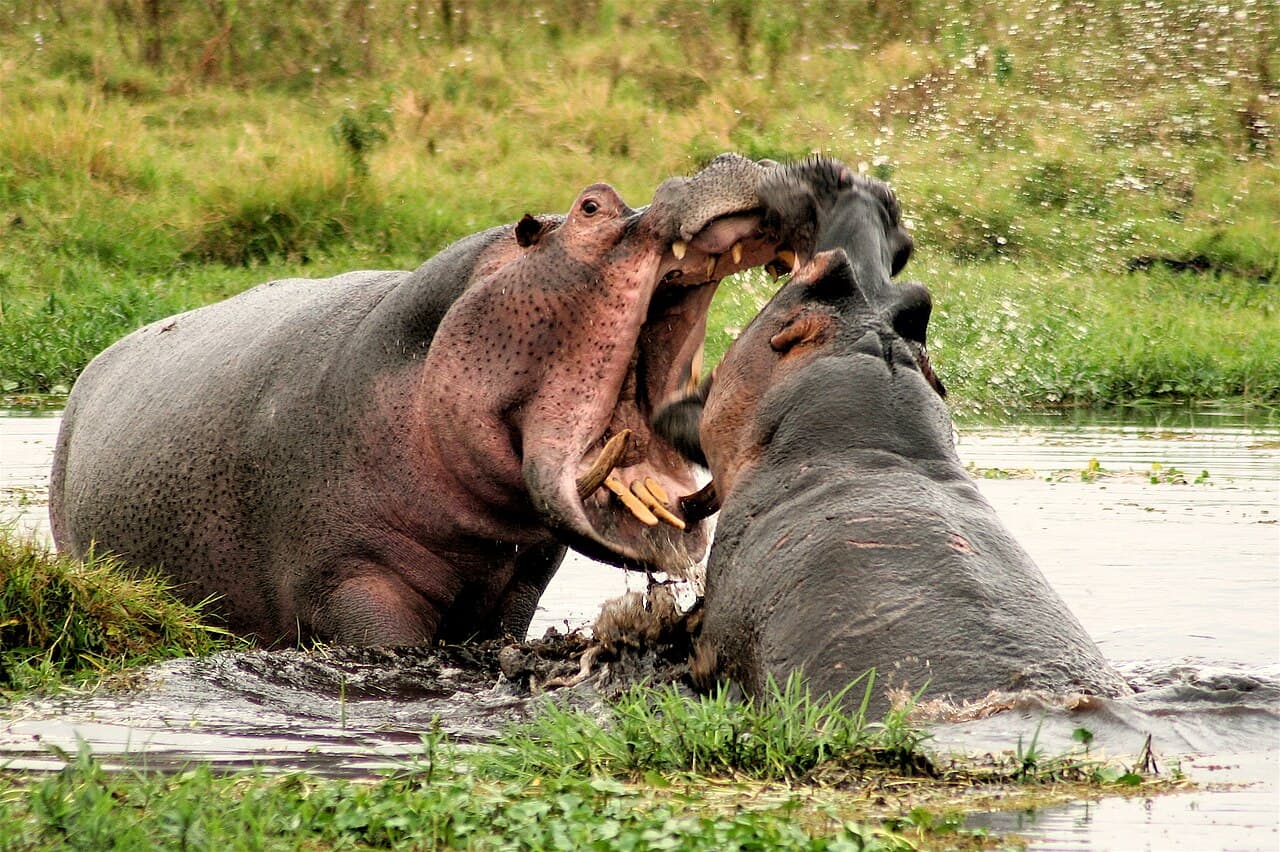
Hippopotamus are polygamous, meaning one male mates with multiple females (usually 7 to 15) within his territory. These bulls are grumpy, and they will not hesitate to use their sharp teeth on other males. Males that control the most desirable territories have the most successful reproductive rate. Let’s say we can give this one to the hippo because these harem-based animals only mate every two years. Mating happens in the water, where females are forcibly submerged in the water by the males. There are also rare cases where they may choose to mate on land. Also, females give birth underwater, and this helps the mothers conserve their energy during the birthing process. This also protects the newborn from being attacked or eaten by land predators like hyenas and lions.
10Sea Lion
Family: Otariidae
Sea lion is an adorable mammal with long fore flippers, a big chest, and a big belly. It has short and thick fur that covers a thick layer of blubber that keeps it warm in the ocean. Not to be confused with seals due to a similar appearance, you can tell them apart by their ears. Sea lions have a small ear flap on each side of their head, while seals just have a tiny opening for ears. Sea lions live along the coastlines and islands of the Pacific Ocean, and they are very strong swimmers. They can go as fast as 30 kilometers per hour, and they can stay underwater for up to 20 minutes. As carnivores, they feed on clams, crabs, fish, and squids, and they swallow their food whole despite having teeth. They mostly use their sharp canine teeth for protection against predators.
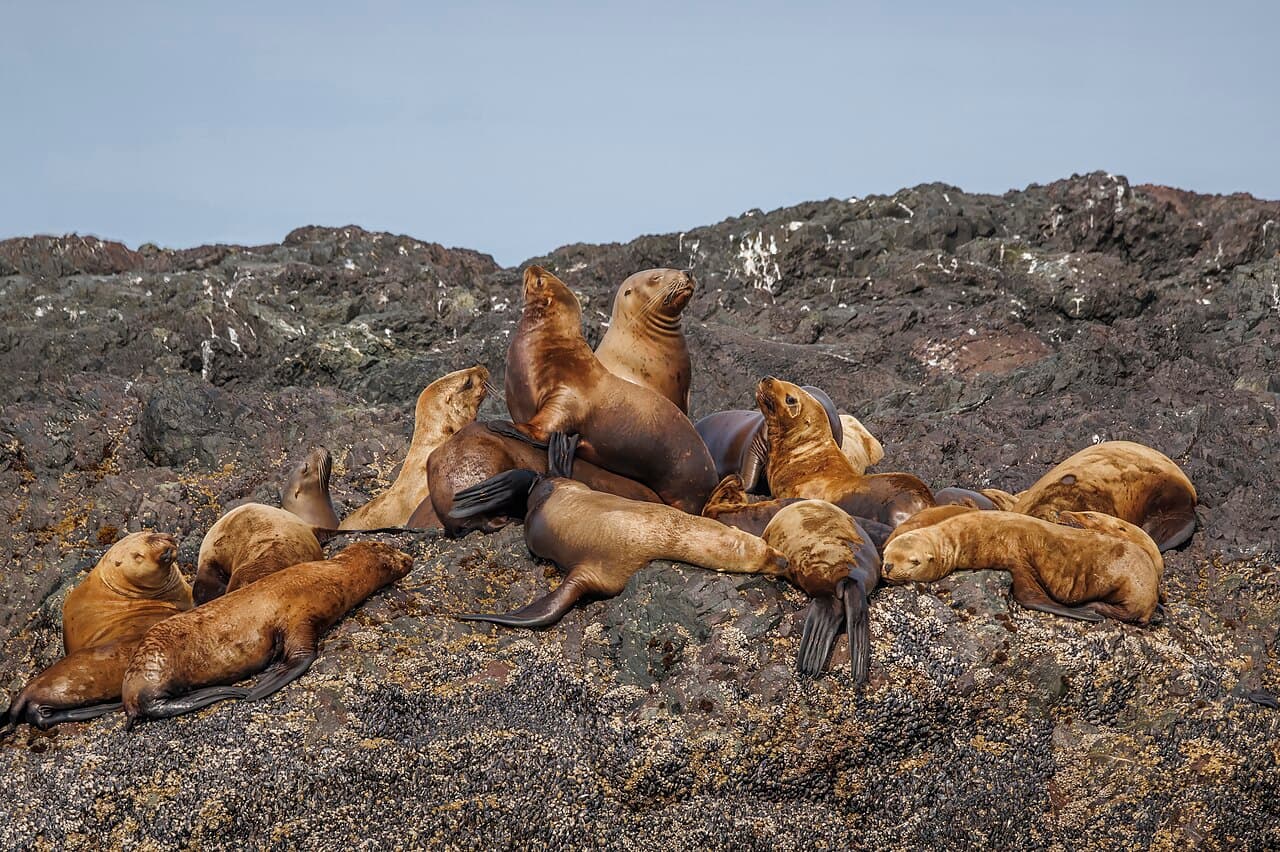
There are 6 sea lion species, and all of them are harem-based animals. Prior to the breeding season, the males will feast on extra food to create extra blubber to sustain themselves and guard their territory. Males bark loudly and intimidate each other through stares and head shakes while defending their territory. Once a bull establishes his territory, he will try to gather as many females as possible to form his harem. A harem can have up to 15 females, and the dominant male is extremely protective of his harem. Pups are able to walk soon after giving birth, but the mother continues to nurse the pups for around 6 months. As a harem gets larger with the arrival of the pups, the group becomes more noisy. Sea lions communicate with each other using barks, honks, roars, and trumpets, and a breeding site can have multiple harems.
Related Post: Monogamous Animals That Mate For Life