Giant jumping spider is a whole different story when you see one, because of its size. It is very common to see the tiny jumping spider every now and then, and they are pretty adorable. When they are as large as the giant jumping spider, it might freak you out a little bit. If you have never heard of or seen this arachnid before, you might like to read some information about them below.
1Appearance
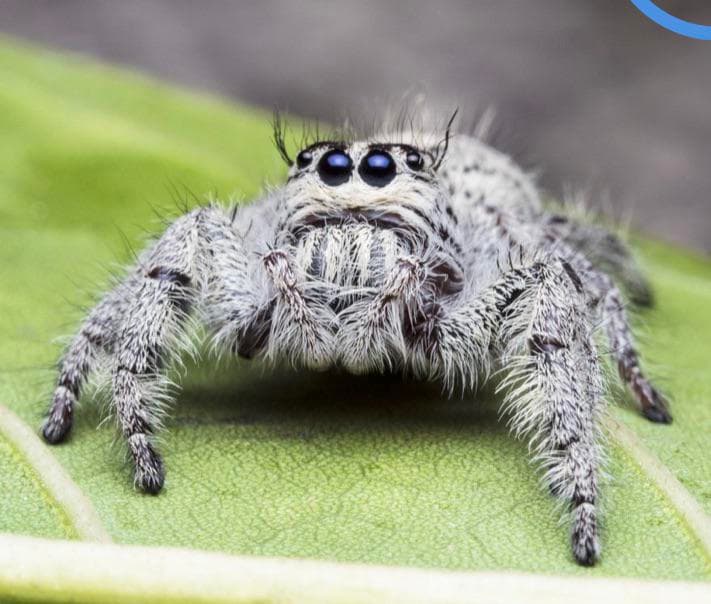
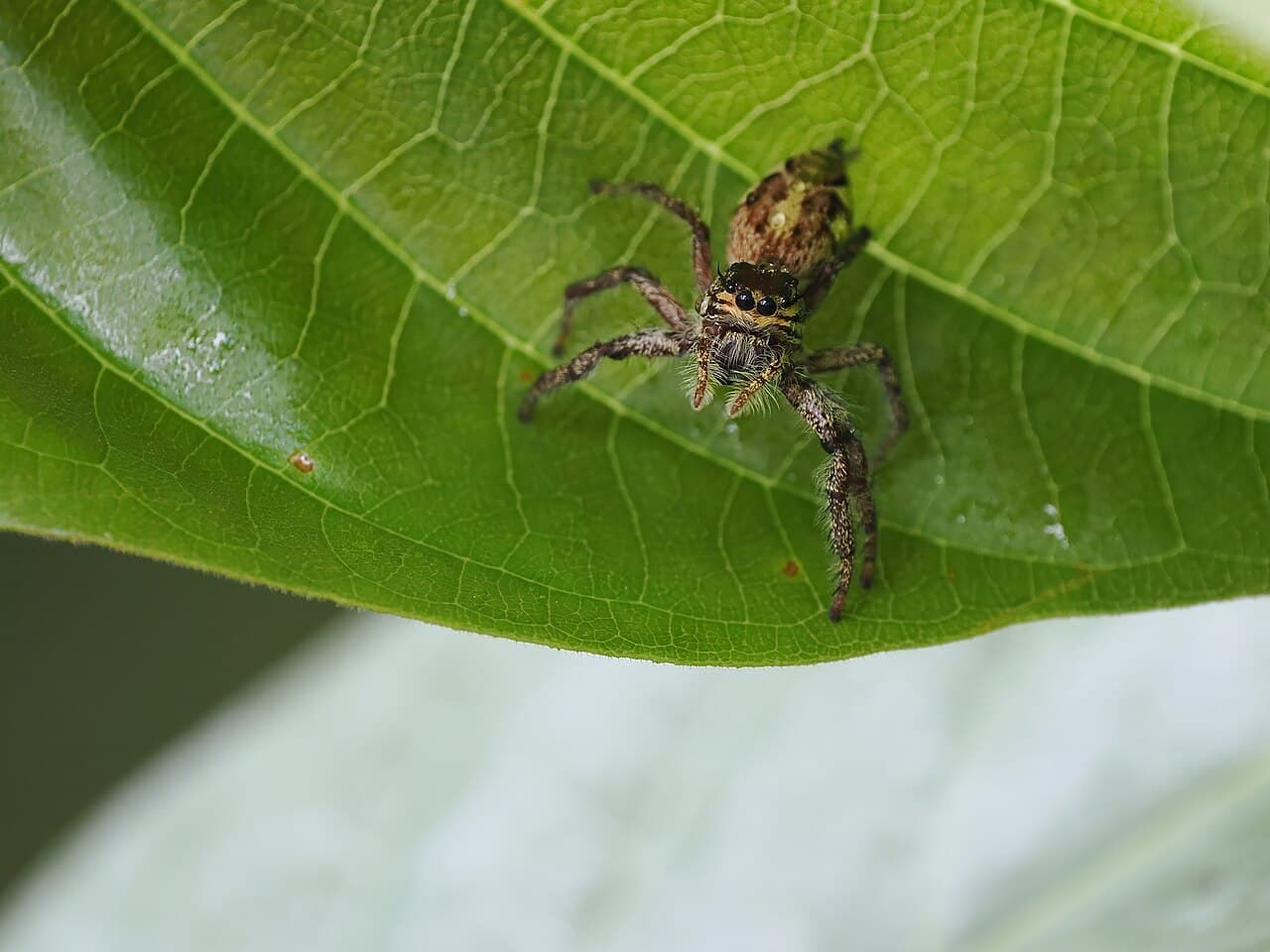
Being one of the largest jumping spiders, this giant jumping spider ranges from 1.8 to 2.5 centimeters in length. Males and females look different from each other, but they both have a very hairy and stout body. Adult males are darker in color; they have less setae, longer appendages, and long chelicerae. Females have distinctive stripes at the front around their face, and a black band across the carapace. Along with that, they also have a mottled abdomen, with shades of beige and brown. This arachnid has 8 eyes arranged in 4 rows, with two massive and glossy forward-facing eyes in the center. These two large eyes offer both focus and vision, helping them spot predators and prey.
2Behavior
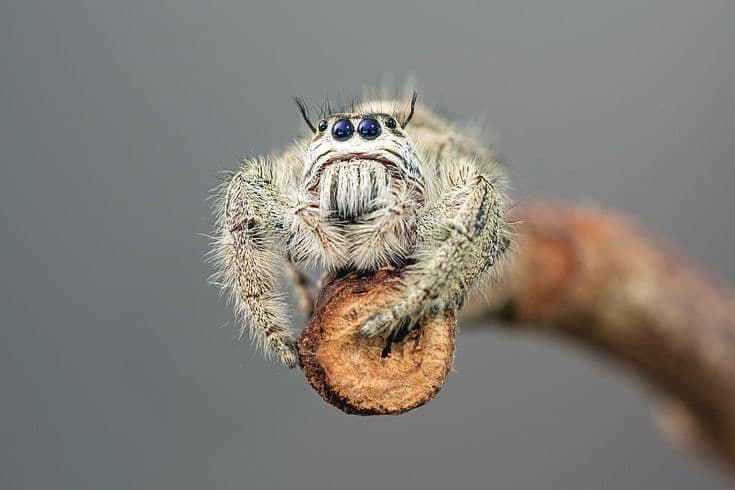
The giant jumping spider has exceptional eyesight and high intelligence, with their complex analytical skills to stalk and hunt prey. It uses its forward-facing eyes to spot and calculate distances to potential prey with high precision. One interesting thing about jumping spiders is that they do not rely on leg muscles to jump. They use a hydraulic mechanism by pumping hemolymph rapidly into their legs to extend them for massive leaps. At the same time, they also anchor a silk safety line before jumping in case they slip. Despite the name “giant”, these creepy crawlies are very gentle. This is why they are very popular among hobbyists because they are calm and docile.
3Feeding & Habitats
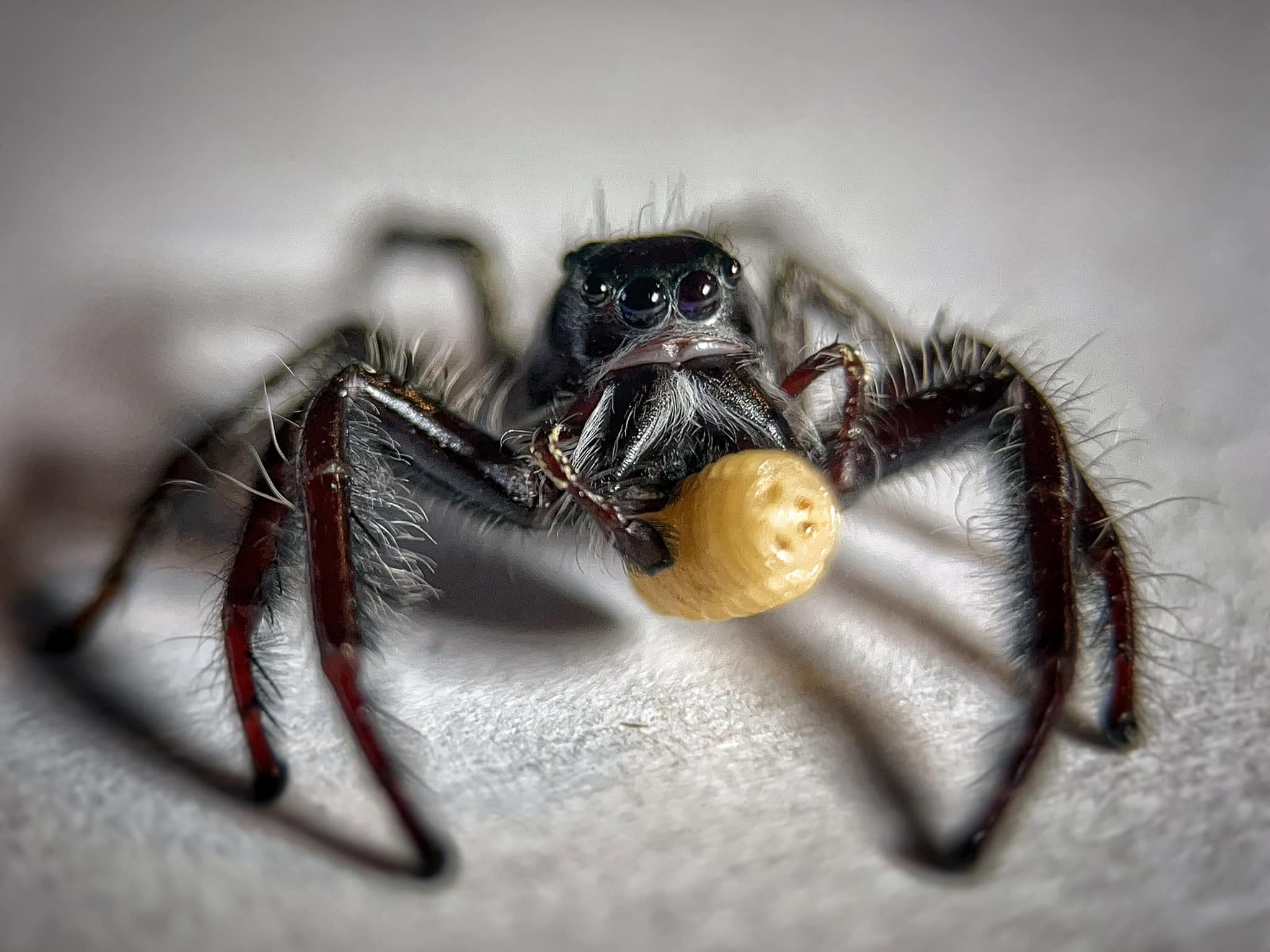
The giant jumping spider is a permanent resident throughout Southeast Asia and some parts of Australia. They inhabit grasslands, rural areas, tropical forests, and urban areas, spending time high up on plants and trees. Just like other jumping spiders out there, this one feeds on small insects that it can catch. They are active hunters that stalk and leap upon prey, and they do not use a web to catch meals. Some of their common meals are flies, grasshoppers, moths, and other small-and-medium-sized arthropods. Occasionally, they also supplement their moisture intake by drinking plant juices, nectar, or sap. Also, the venom of a giant jumping spider is harmless to humans, and it only works on small insect prey.
4Predators & Threats
In the wild, the giant jumping spiders fall prey to larger arboreal predators such as birds and reptiles. As for environmental threats, they are vulnerable to habitat loss due to deforestation and habitat degradation. Rapid agricultural expansion, logging, and infrastructure development across Sumatra also significantly fragment their natural environment. Not to mention the exotic pet trade; being the world’s largest jumping spider causes a high demand for this species.
Related Post: 7 Largest Spiders In The World