
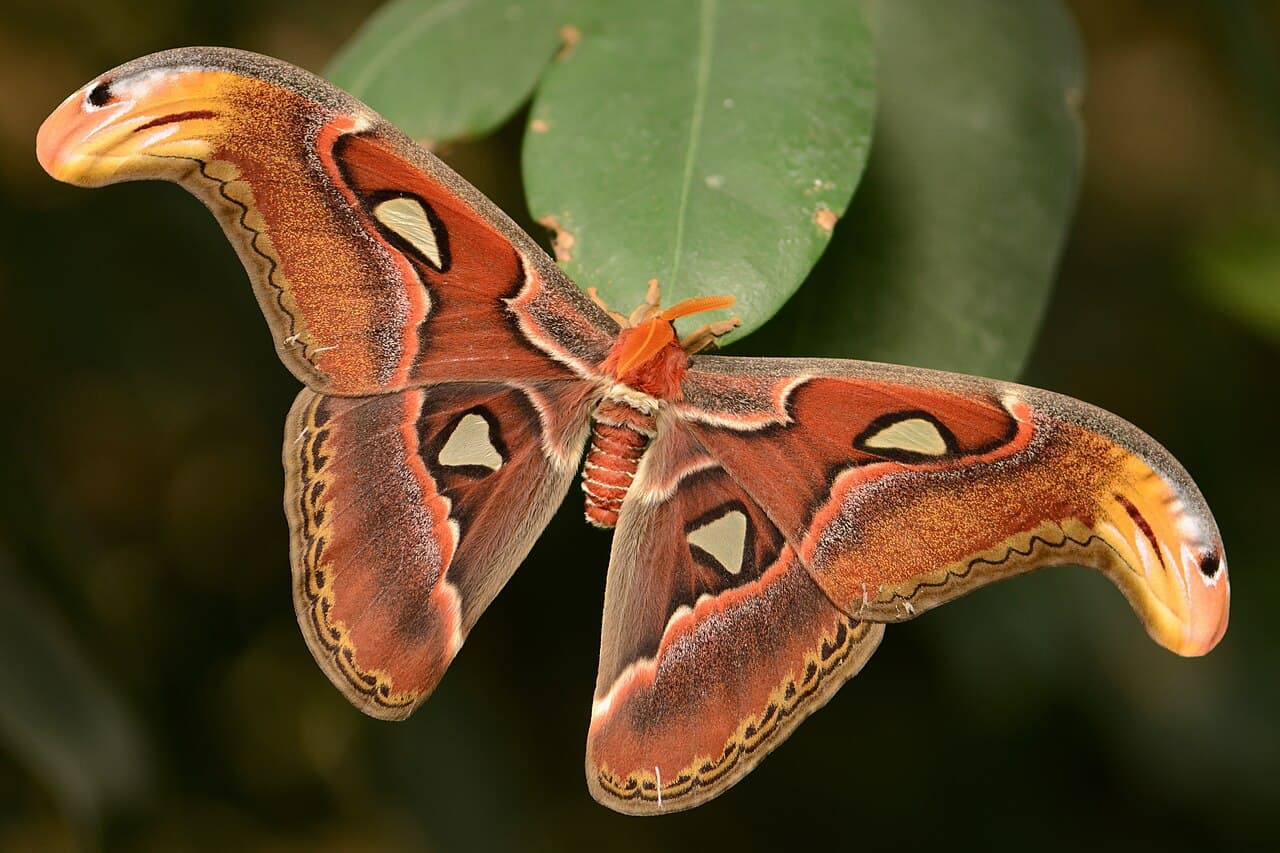
Atlas moth, the name says it all about the size of this bug. Being the largest moth in the world, the focus is usually on their measurements, but they are more than that. We are going to talk more about their life, overall appearance, and more. Let’s take a quick read and learn more about the atlas moth below.
1Appearance
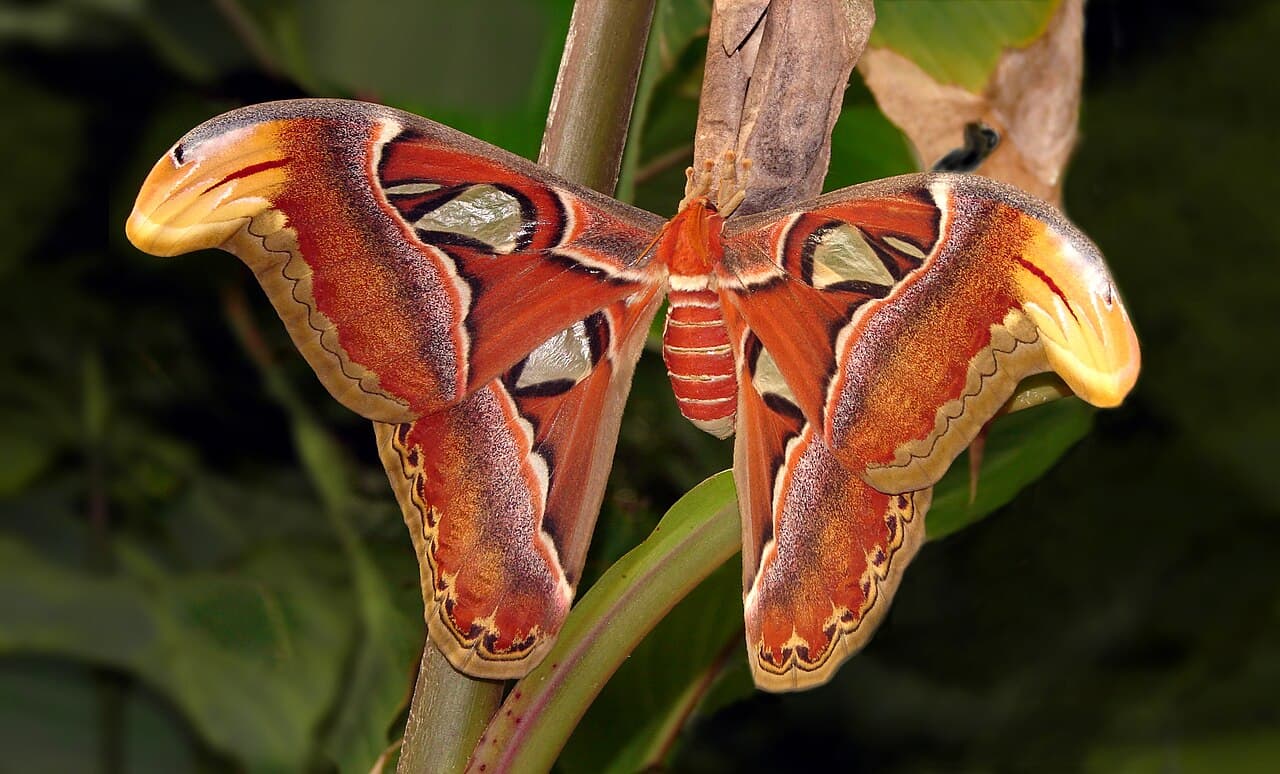
An atlas moth has a very hairy and stout body that is small compared to the massive wings that it has. Its body is only around 5.4 to 6.7 centimeters long, and females have larger and heavier bodies than males. The almighty atlas moth is one of the largest winged insects, with a wingspan of 25 to 30 centimeters. The upper side of the wings is reddish brown with a pattern of black, pink, purple, and white lines. As for the undersides of the wings, they are paler in color. On the tip of both forewings are prominent extensions that resemble the head of a snake. When there are predators, the moth will move its wings to mimic a snake to intimidate the enemies. Despite their large wings, adult Atlas moths are weak and unsteady fliers.
2Behavior
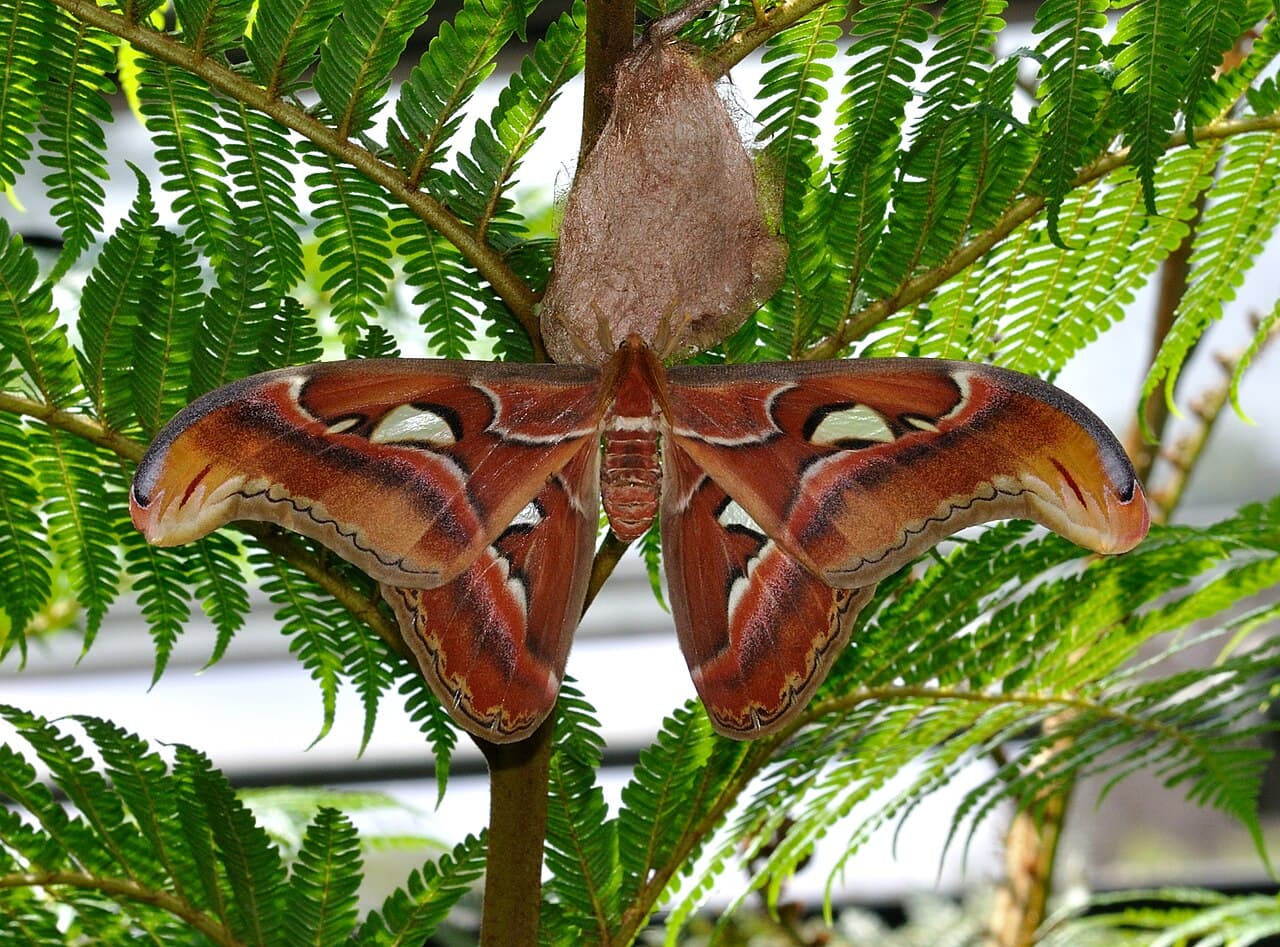
As caterpillars, they are also pretty large, being 12 centimeters long. They are bluish-green in color, with spiny protuberances and a white waxy coating. Two weeks after hatching, the caterpillar feeds nonstop, first on its eggshell, then on leaves. This is to make sure that it has enough food to last for its pupa and adult moth stages. When the feeding is done, they spin a cocoon filled with bits of leaves and emerge after about a month. Even as a caterpillar, they come with self-defense mechanisms. They have a secretion with a powerful odor that they can spray at a long distance to deter predators.
This moth is pretty chill; it rests on a tree trunk with its wings closed during the day. Should a bird approach, hoping for a snack, the moth will open its wings, displaying two snake heads. The birds will be confused and fly away, and the moth can get back to chilling again. Their lifespan lasts between one and two weeks, so the sole purpose of these large moths is to reproduce before their death. Females release pheromones through a gland on the end of the abdomen to attract nearby males. Males can detect these pheromones from several kilometers away with the chemoreceptors on their feathery antennae. A female will wait for a male to come along to fertilize her, then she lays her eggs and dies.
3Feeding & Habitats
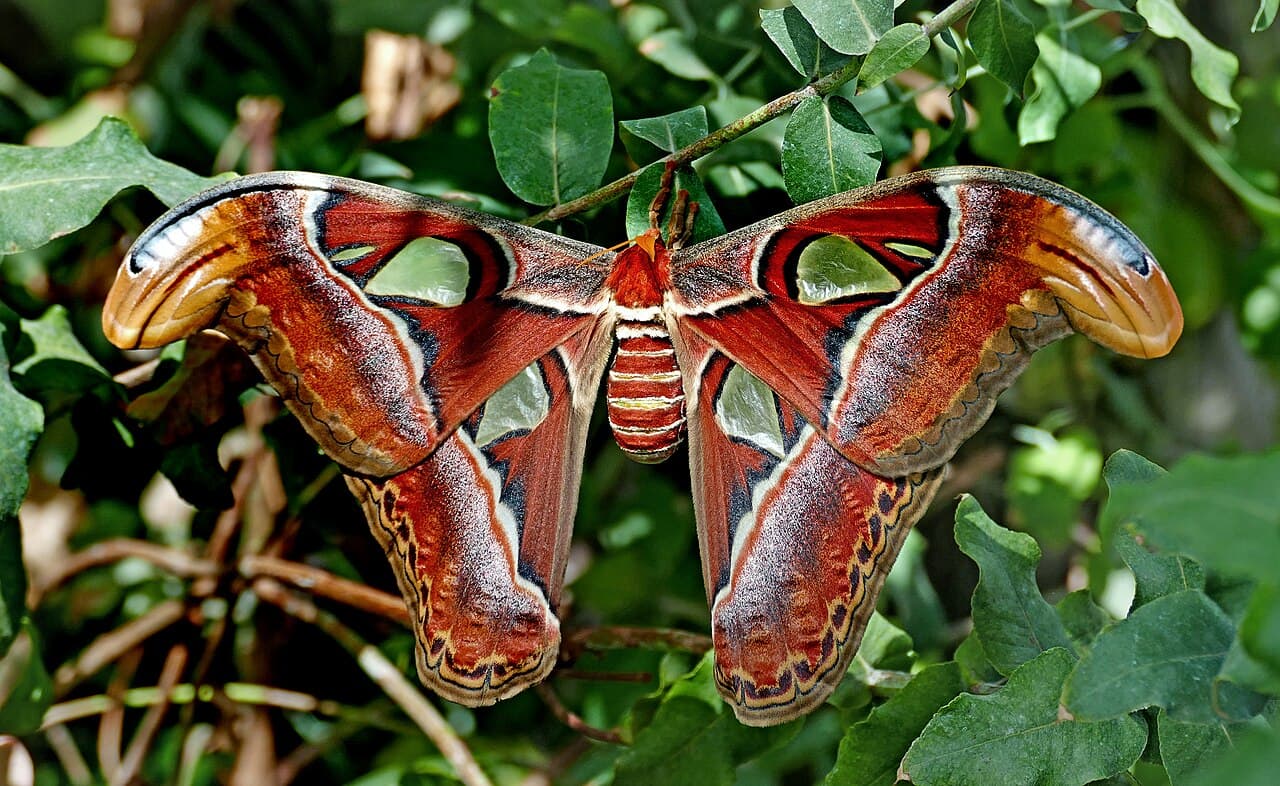
The atlas moth is endemic to Asia, living in dry tropical forests, secondary forests, and shrubland forests. They have a wide range across East Asia, South Asia, Southeast Asia, all the way to Borneo. Adults lack fully formed mouthparts, so they cannot eat, and they rely entirely on fat reserved during the larval stage. This means they live for only a short time, just long enough to seek out a mate. As for the atlas moth caterpillars, they feed on leaves of cinnamon, citrus fruits, guava, and Jamaican cherry trees. In India, people cultivate atlas moths for their silk because of its durability. More than that, people use their cocoons as small pocket change purses in Taiwan.
The population of atlas moths is not facing threats from predators, but rather from other factors. Threats like climate change, habitat fragmentation, habitat loss, light pollution, and moth trapping are harming them and other large moths.
Related Post: Things You Don’t Know About Baphomet Moth