Marmoset, aka sagoin or zaris, is a New World monkey species with a very striking appearance. There are 22 marmoset species in total, and all of them have similar features and looks. Today we shall find out about some general information about these primates. Along with that, we will also take a look at some of the beautiful marmoset species as well. Let’s take a look and see which one is your favorite.
Appearance
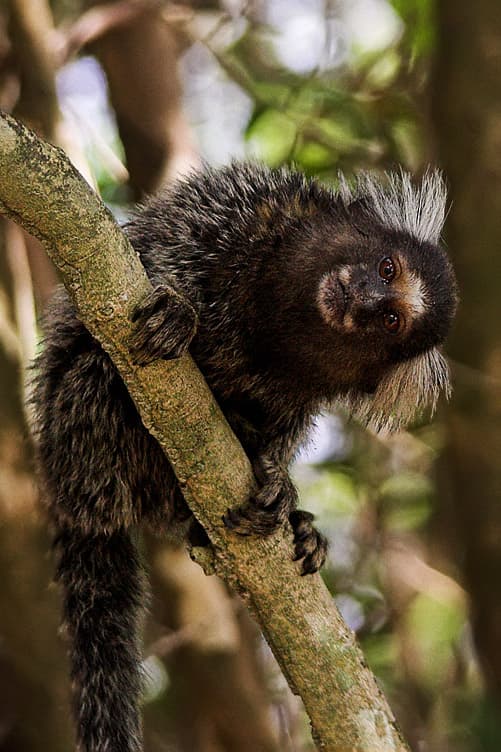
A majority of the marmosets have a small body that measures only around 20 centimeters long. This primate has claws instead of nails; they have non-opposable thumbs, and there are tactile hairs on their wrists. These features allow them to hook into tree bark, which makes climbing up and down trees in a vertical position effortless. The feature every marmoset shares is the long tail that they use for balancing and communication. Common marmosets are the most common species, and they are notable for their gray-black ringed tails. And, of course, the white tufts of hair around their ears.
Feeding & Habitats
Marmosets are native to South America, but they also have some distribution in Central America and Southern Mexico. This primate inhabits deserts and a variety of forest types such as coastal forests, dry savannas, rainforests, and spiny forests. Not different from other primates out there, marmosets are very active and social animals. They live in a family of 3 to 15, and they spend their days in tree canopies foraging for food. The family consists of one or two breeding females, an unrelated male, and their offspring. Twins are very common with marmosets.
Usually, they feed on flowers, fruits, fungi, gum, leaves, nectar, sap, tack, and insects. They use their strong incisors to chew holes in tree trunks and branches to harvest gum inside. During the dry season, plant exudates and tree gums make up around 80% of their diet. It is very important for their survival chances, and they won’t have to compete with others for food. After feeding, they will leave scent marks at that feeding hole so that they can come back for more when they are hungry. Very smart, as they won’t have to spend time looking for a new source at all. Occasionally, they also eat small lizards, snails, tree frogs, and bird eggs.
Adorable Marmoset Species
1Black-Tufted Marmoset
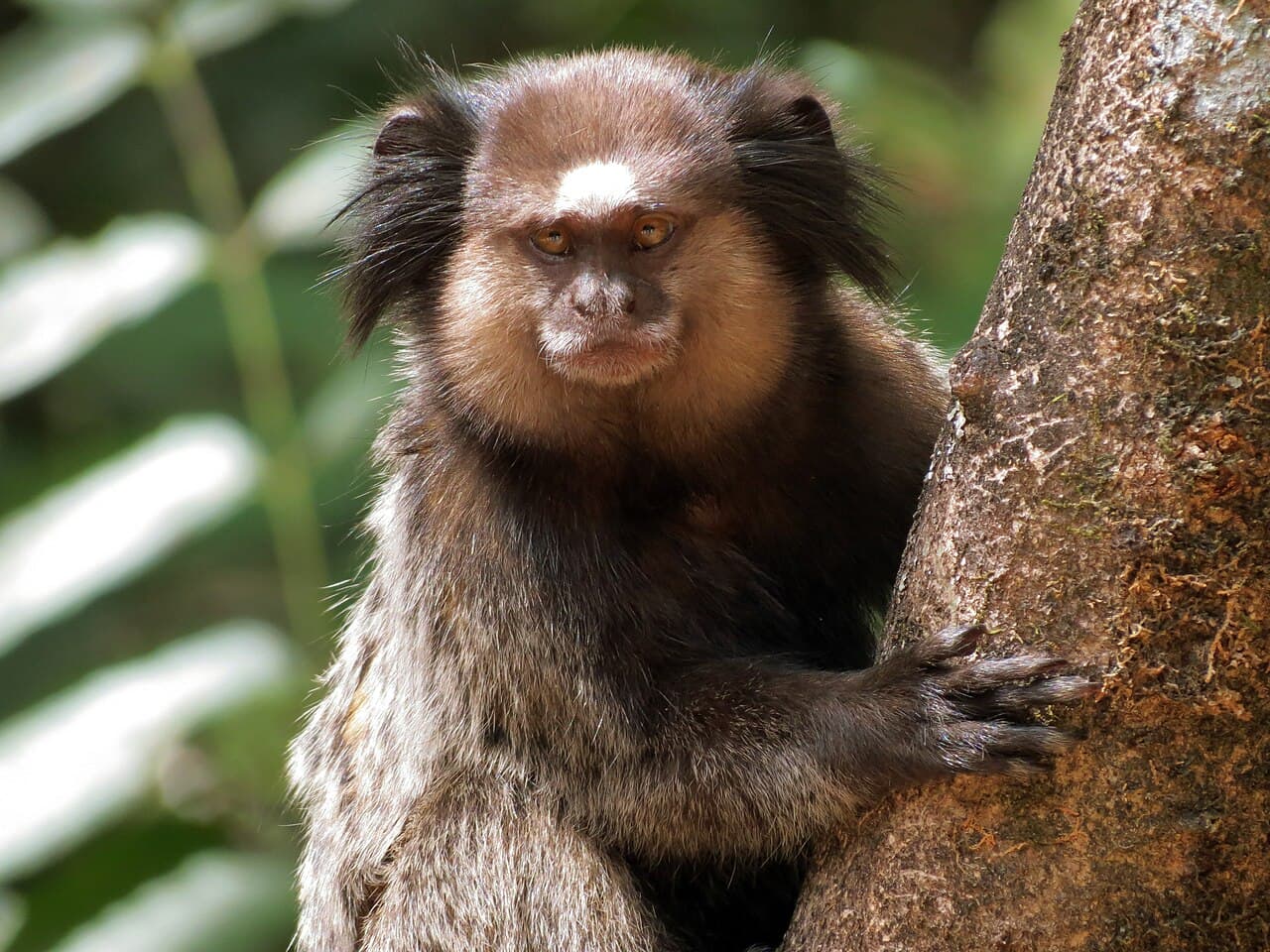
Scientific Name: Callithrix Penicillata
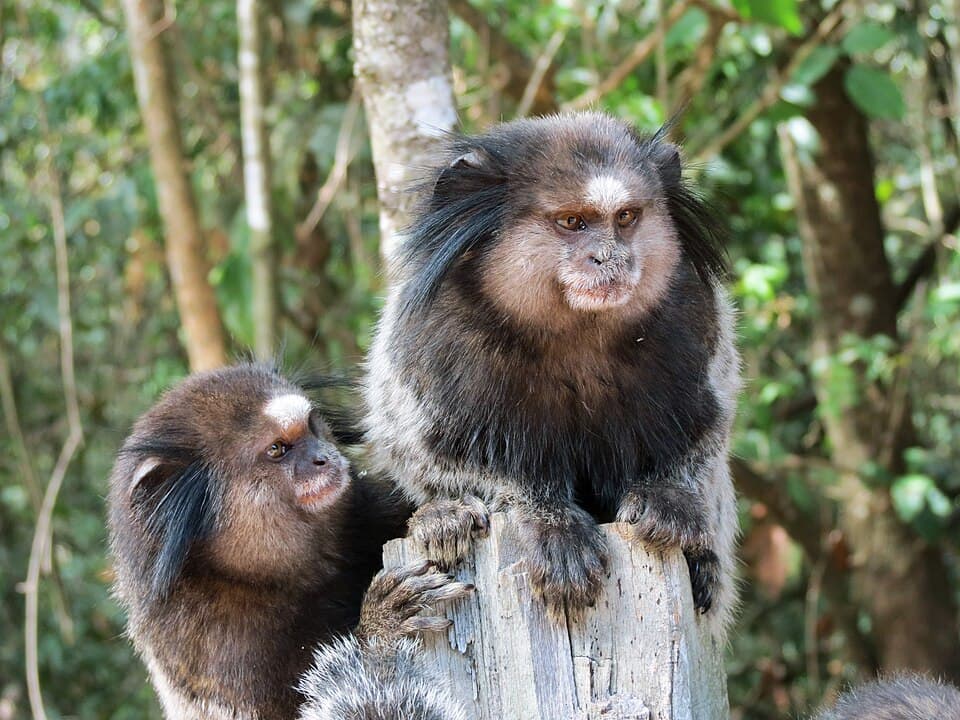
The black-tufted marmoset measures 19 to 22 centimeters in size, and it has a ringed tail that is around 30 centimeters. Just like the name suggests, a black-tufted marmoset has black tufts of hair around its ears. Their cheeks are gray, and there is a contrast of black fur and a white spot on the top of their head. The head of this marmoset is black or brown, while its abdomen, limbs, and upper body are gray. Looking so plump, this marmoset species is only 0.34 kilograms in weight, as heavy as a can of soda.
The black-tufted marmosets live primarily in the Neotropical gallery forests of the Brazilian Central Plateau. They inhabit rainforests where they spend most of their arboreal lives in trees below the canopy. However, in areas where there is human disturbance, marmosets adapt to live in backyards, gardens, parks, plantations, and secondary forests. These primates live in groups of 2 to 14 that include a monogamous reproductive couple and their offspring. Everyone has their roles, and juvenile offspring and males help the female in raising the young. Their diet is mainly tree saps, but they also feed on baby birds, bird eggs, mollusks, small arthropods, and small vertebrates. Members in the group share food together, and they also share food sources and sap trees with other marmoset groups. Despite being adaptable and widespread, their population is facing threats from deforestation, habitat fragmentation, hybridization, and illegal pet trade.
2Buffy-Tufted Marmoset
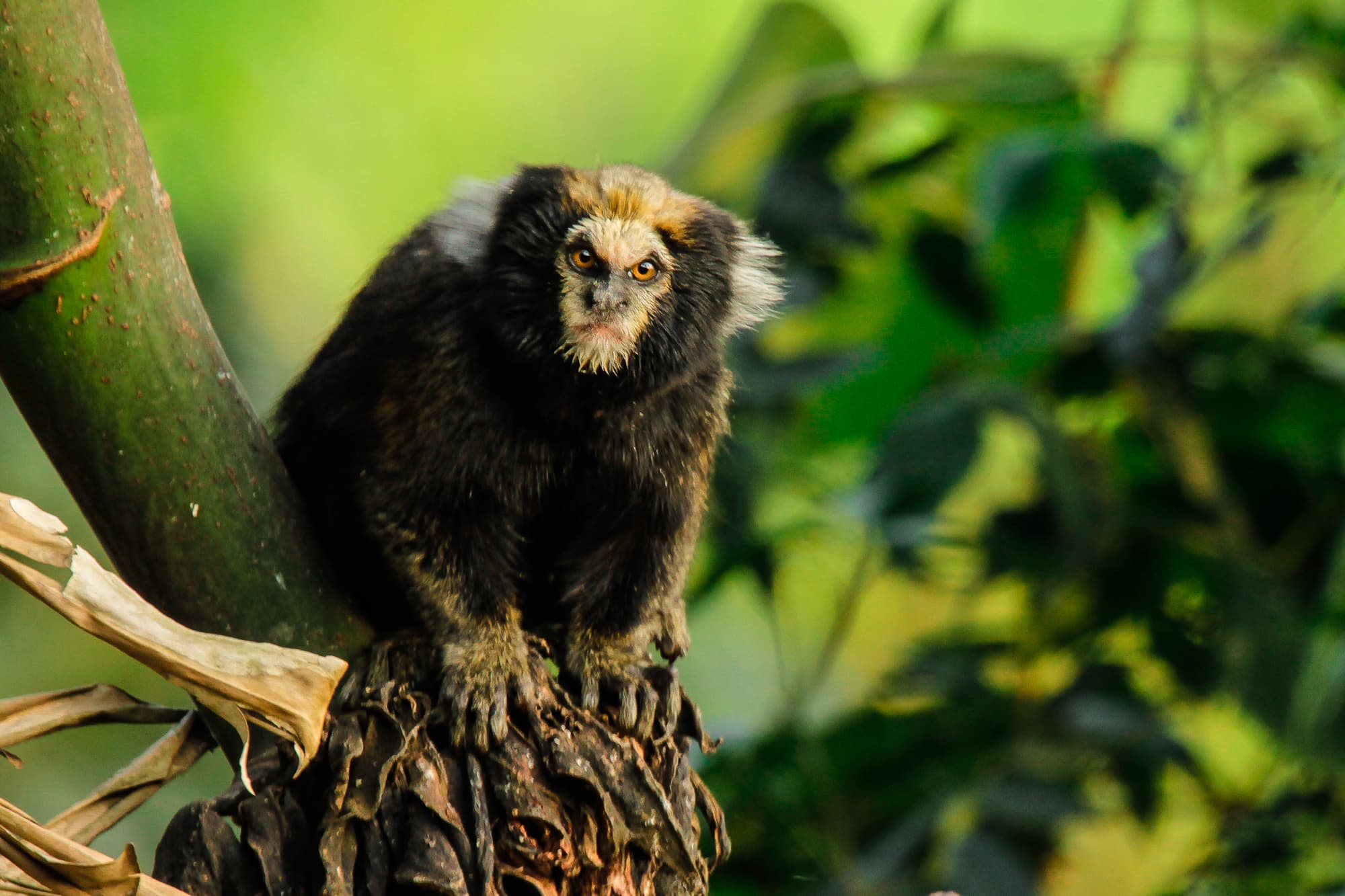
Scientific Name: Callithrix Aurita
The buffy-tufted marmoset, or white-eared marmoset, has a very distinctive appearance, especially on its face. A white-eared marmoset is a small primate that measures 21 centimeters, with a tail that reaches 35 centimeters. Its long tail has black rings on it, and this tail is non-prehensile. It has gray-black skin, short tufts of white hair on the sides of its face, and an orange crown. This marmoset has a thick coat that helps with thermal regulation in colder mountainous regions. The part that stands out the most is its whitish face and facial expression. Almost looks like it wears a mask that has a grumpy face. Recognizing one is pretty easy with that face.
This marmoset species is endemic to the forests on the Atlantic coast of Southeast Brazil. They inhabit mixed montane, ombrophilous, and semi-deciduous forests where they forage and travel in the lower canopy and dense understory vegetation. Buffy-tufted marmosets spend almost their lives in trees, living in groups of 4 to 8 individuals. They feed on resins and other plant secretions as well as fruits and tree gum. When their main food sources are scarce, they also eat bird eggs, bugs, insects, and small reptiles they can find. The most interesting part is that it is one of the only primate species that eat bamboo fungi. They are now classified as Endangered; these primates are still threatened by hybridization, widespread deforestation, and yellow fever outbreaks.
3Common Marmoset
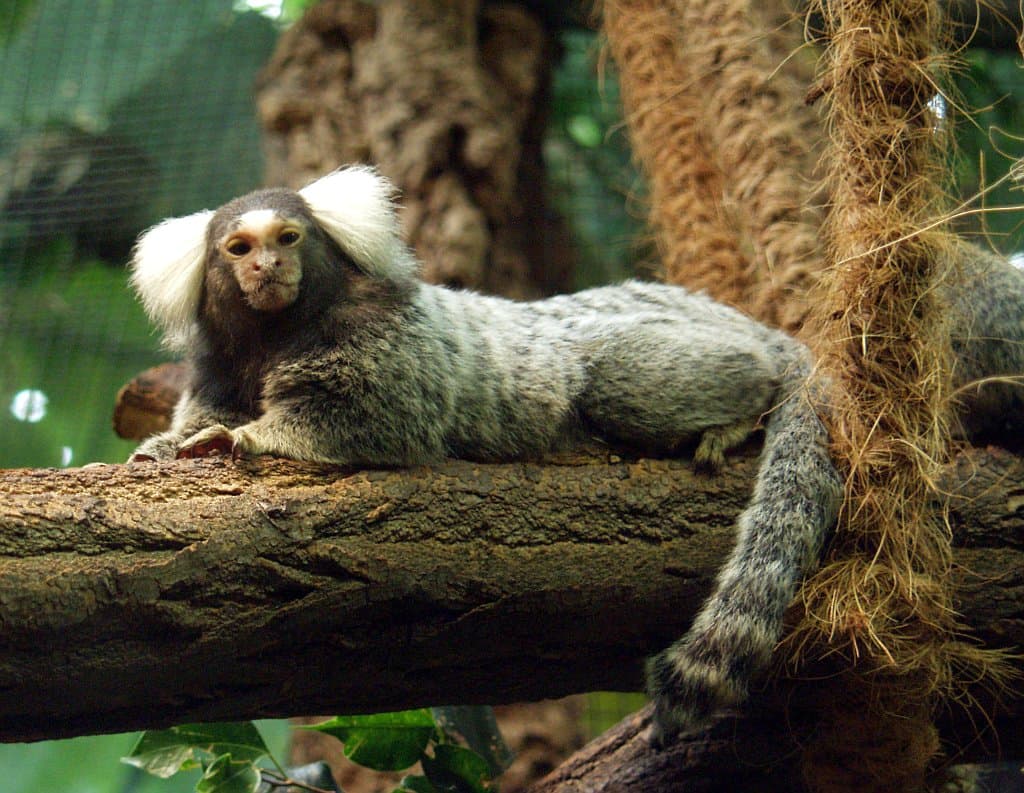
Scientific Name: Callithrix Jacchus
Common marmosets are small New World monkeys that have an average size of 18.5 centimeters. Its pelage has a combination of brown, gray, and yellow, and its long tail has black bands on it. A common marmoset has a black face, with white ear tufts on the side and a white spot on the forehead. The common marmoset is the most common marmoset species among the others, with a large population also. They are native to east-central Brazil, living in a number of forest habitats. Common marmosets live in Atlantic coastal forests and semi-deciduous forests, as well as riverine forests and savanna forests. Not different from other marmoset species out there, this one also feeds on gum, latex, resin, and sap. In addition to those, they also eat bird eggs, flowers, frogs, fruits, fungi, infant mammals, lizards, nectar, and snails.
4Gold-and-White Marmoset
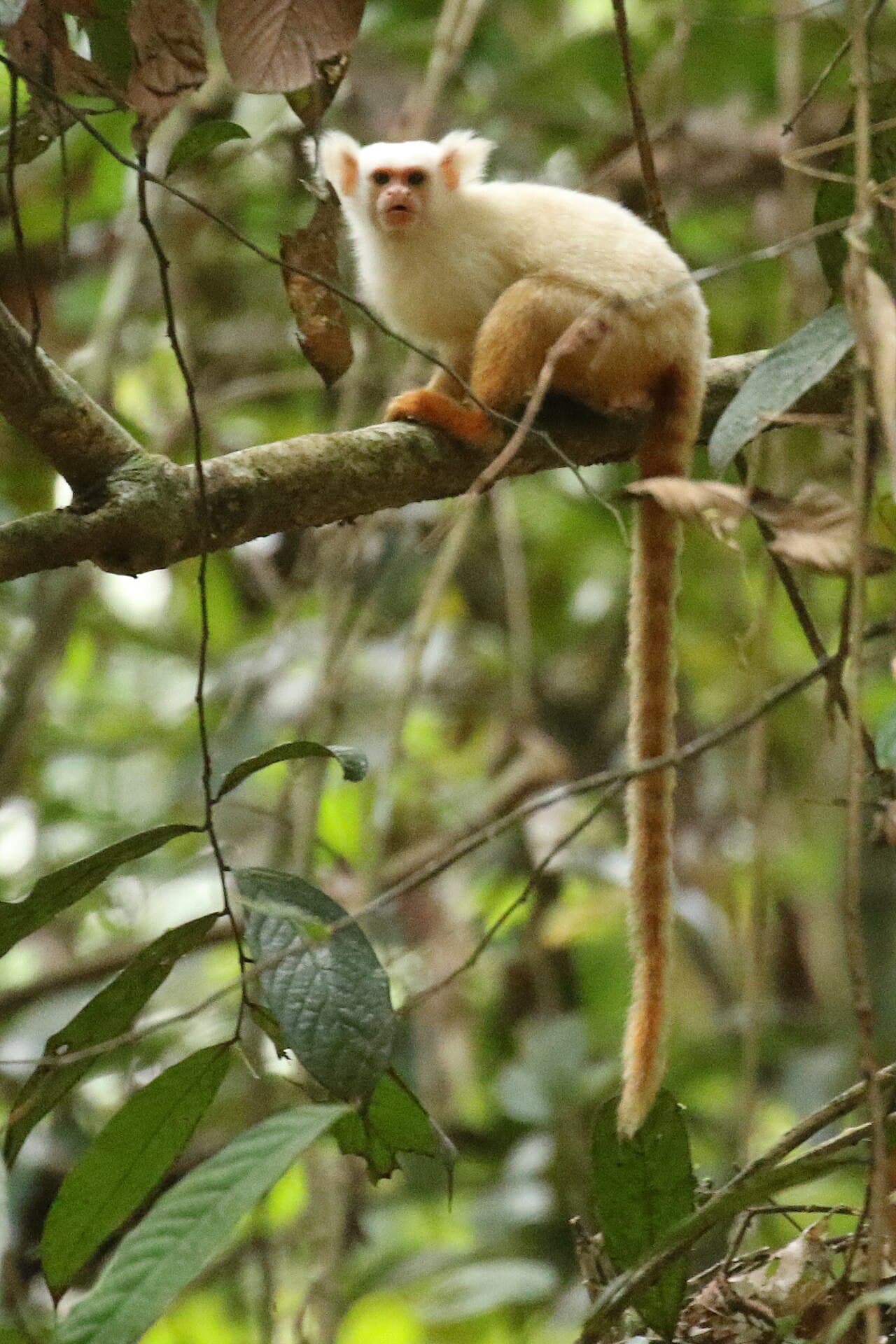
Scientific Name: Mico Chrysoleucos
You are looking at the most striking marmoset species that looks absolutely different from other marmosets. The gold-and-white marmoset, or silky marmoset, is a small marmoset species that measures 19 to 26 centimeters in length. It also has a non-prehensile and bushy tail that adds another 32 to 40 centimeters to its little body. This marmoset species has a very unique appearance, with its silky white fur coat and yellow-golden undertones, and white hands and feet. The face and ears are pink, and there are white tufts of fur on each ear.
This primate is endemic to the Amazon rainforest in eastern Amazonas state, an area known as “the arc of deforestation”. They live in a family of 4 to 20, depending on the availability of food sources. Speaking of food, their diet is just like other marmosets out there. The menu consists of bird eggs, fruits, flowers, nectar, small animal prey, tree gums, and other exudates. They forage and eat during the day, and sleep within dense vegetation and tree hollows during the night. The current threats to their population are habitat fragmentation and loss, but they are doing well at the moment.
5White-Headed Marmoset
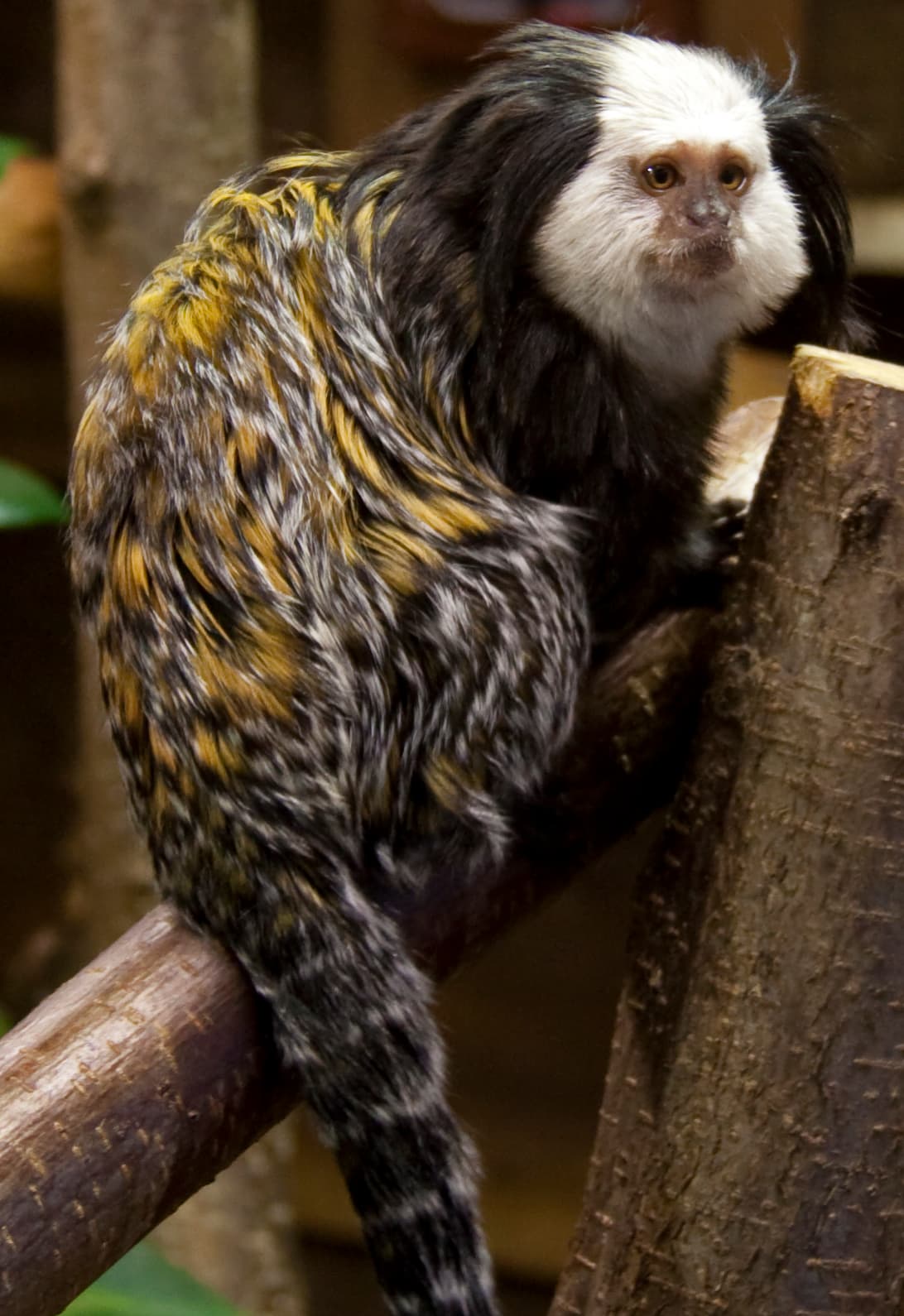
Scientific Name: Callithrix Geoffroyi
The white-headed marmoset is a petite primate that is only about 20 centimeters in length. The tail is 20 centimeters long, and it is black with brown and black bands. It is black or gray in color, and it has a distinctive white face and neck. There are long black tufts of hair protruding from the side of its head, which contrast with its white face. The back of this marmoset is also black and gray, but there are gorgeous highlights of golden orange. This gives it a distinctive appearance, making it very easy to recognize.
As for this marmoset species, it is endemic to forests in Eastern Brazil, mainly in the Atlantic Forest. It inhabits lowland tropical forests, secondary forests, and sometimes near human-modified areas, where they live in deciduous forests, densely forested areas, and submontane forests. The white-headed marmosets also live in groups, and they are intensely affiliative as they cuddle during sleep, and groom each other. Across their range, these New World monkeys feed on flowers, fruits, insects, nectar, and tree gums. Sometimes, they also eat insects, reptiles, and small amphibians. Similar to many marmoset species out there, the population of this one is also facing threats from forest destruction.
Related Post: Intelligent Primates You Don’t Know