Devil’s coach horse beetle is definitely a strange name for a bug, and here’s why. Since the Middle Ages, people believed that this beetle was associated with the Devil; hence the name. It also goes by the names devil’s coachman, devil’s footman, and devil’s steed. And British folklore has it that this beetle ate the core of Eve’s apple, so crushing this kind is equivalent to the 7 sins being forgiven. Beliefs aside, we are going to find out about this large beetle’s information today, so check it out below.
1Appearance
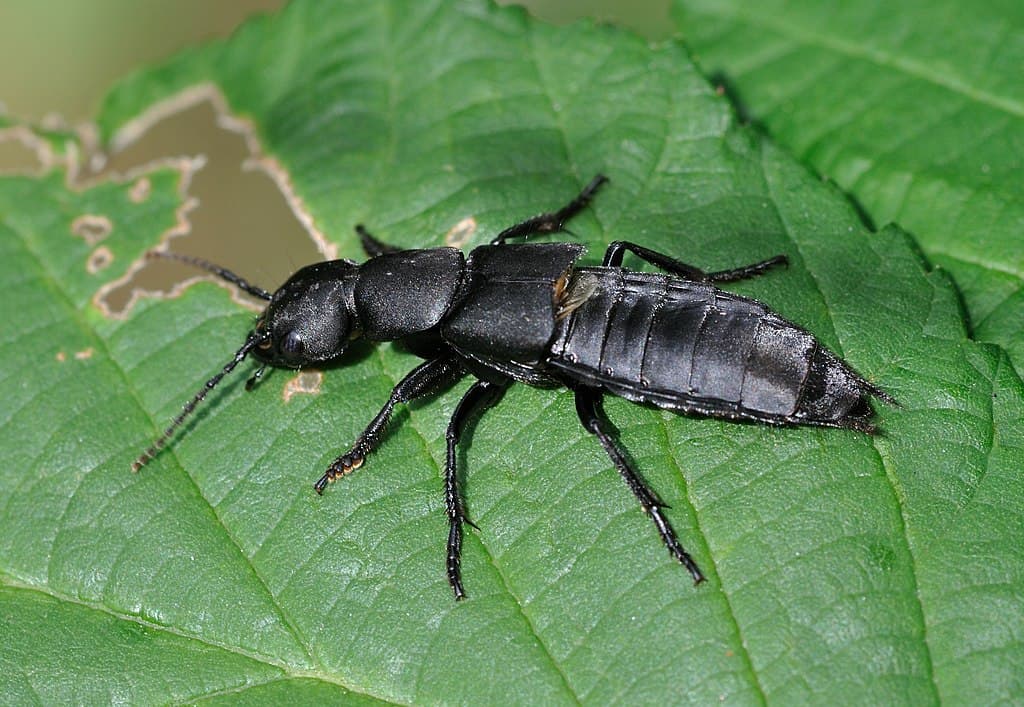
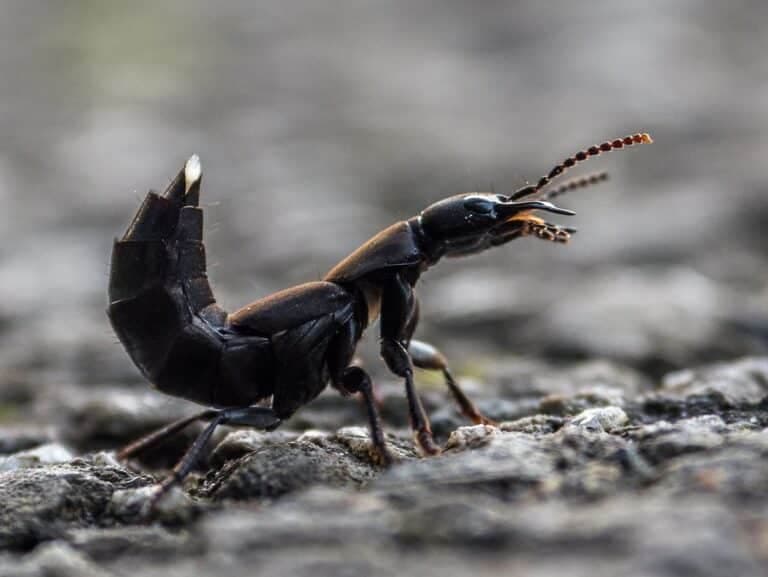
A devil’s coach horse beetle is a black beetle with a long body that reaches 2 to 3.2 centimeters long. It has a large head that accommodates its super large mandibles that are capable of piercing human skin. The body of this beetle is covered in fine black hairs, and its body is also black in color. It has up to 8 abdominal segments, all covered by hardened plates. It can fly, but it rarely uses its wings as it prefers running along the ground instead. An interesting thing about its wings is that it has a shortened wing case that only covers the thorax.
2Behavior
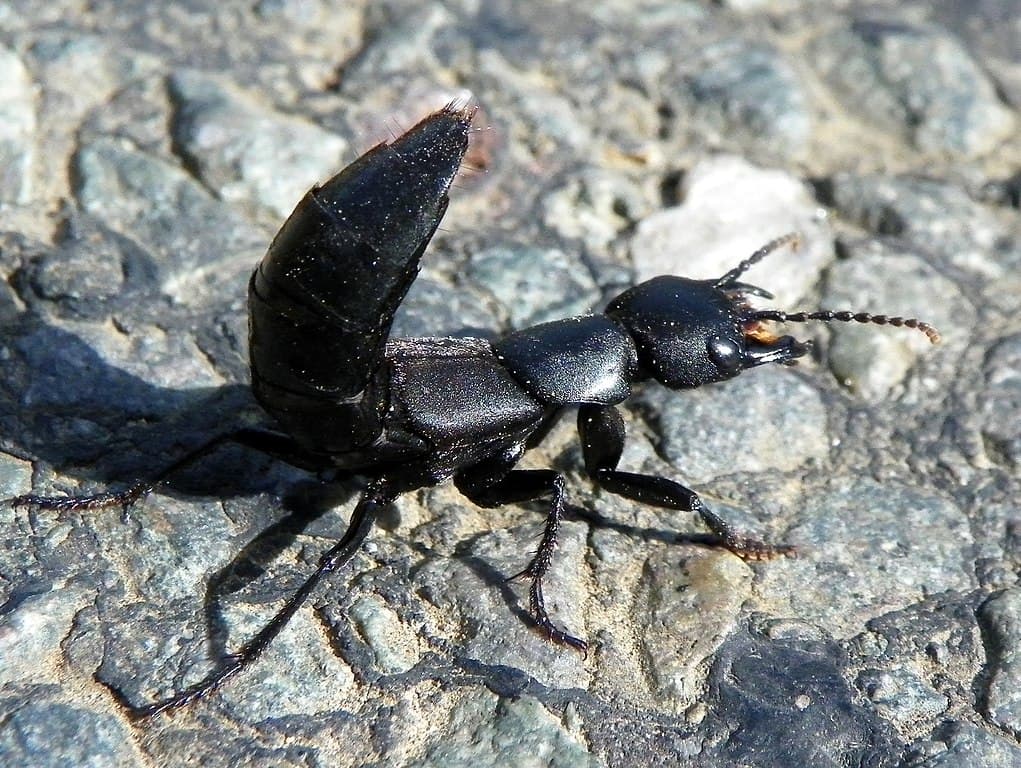
To protect itself from predators, it will deliver a painful bite with its strong pincer-like jaws. The interesting thing about this beetle is that it raises its long and uncovered abdomen and opens its jaw when threatened. They are not aggressive, and their bites are not venomous, but you still shouldn’t provoke one. If it continues to feel threatened, the devil’s coach horse beetle can emit a foul-smelling odor as a defensive secretion while raising its abdomen. So when you see one having a scorpion-like pose, it is time to back off. What you don’t know is that the devil’s coach horse beetle is somehow fearless, and it stands its ground.
3Feeding & Habitats
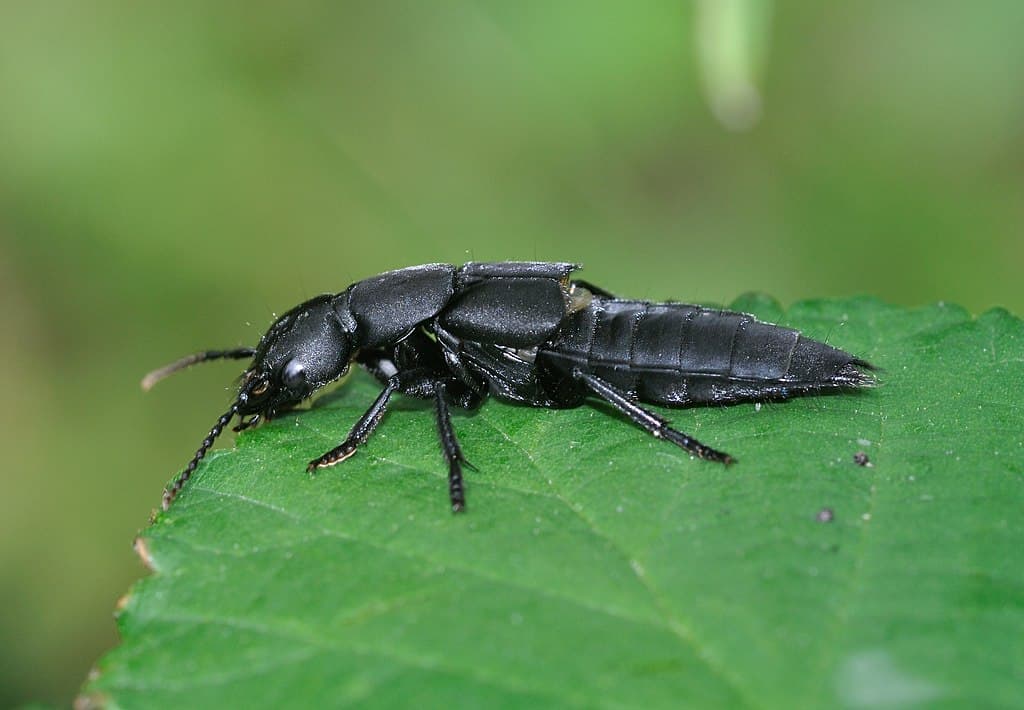
Being a common and widespread beetle species, devil’s coach horse beetles have a wide distribution in most of Europe and North Africa. They live in areas with damp conditions like gardens, heath and moorland, hedgerows, meadows, parks, and woodlands. To hide from predators during the day, they usually stay under leaf litter, logs, or stones. When the night comes, it starts hunting for prey, feeding on a wide range of invertebrates. Some of the devil’s common foods include caterpillars, slugs, snails, spiders, woodlice, worms, and even carrion. It uses its large jaws and front legs to turn the food into a ball-like shape called a bolus. The devil’s coach horse is actually an important biological control against pest species, so don’t kill them if you see one.