Hoatzin is a pretty-looking bird with a mixture of beautiful coloration, and that beauty should be admired from a distance. Because that bird stinks. That manure-like odor actually has a purpose: to deter predators from hunting them. A hoatzin is the kind of bird that you have to see to believe that it is actually real. The local name for hoatzin is actually Canje pheasant, and it is definitely something you have never seen before. There are a few other fascinating things about hoatzin, so let’s find out what they are below.
1Appearance
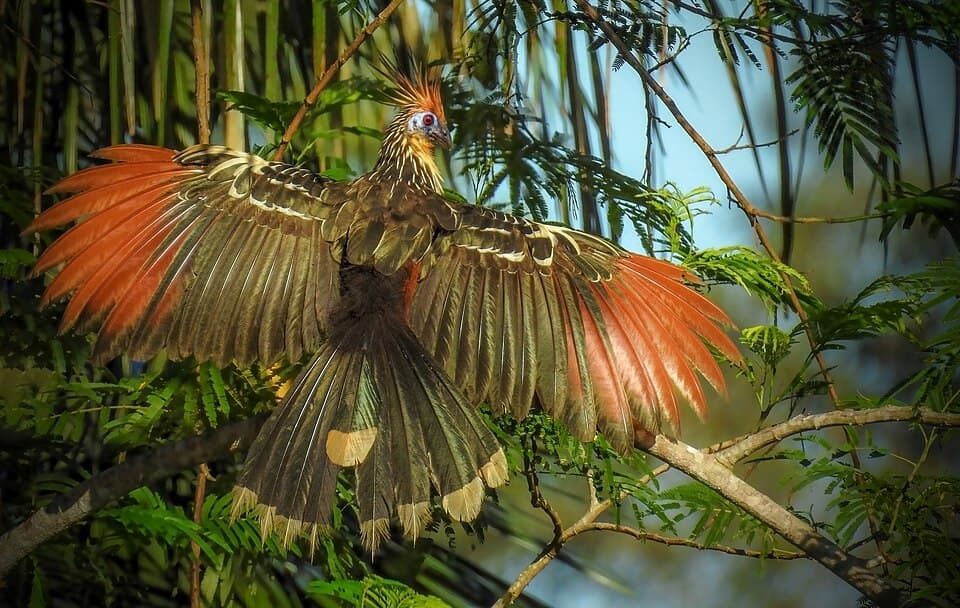
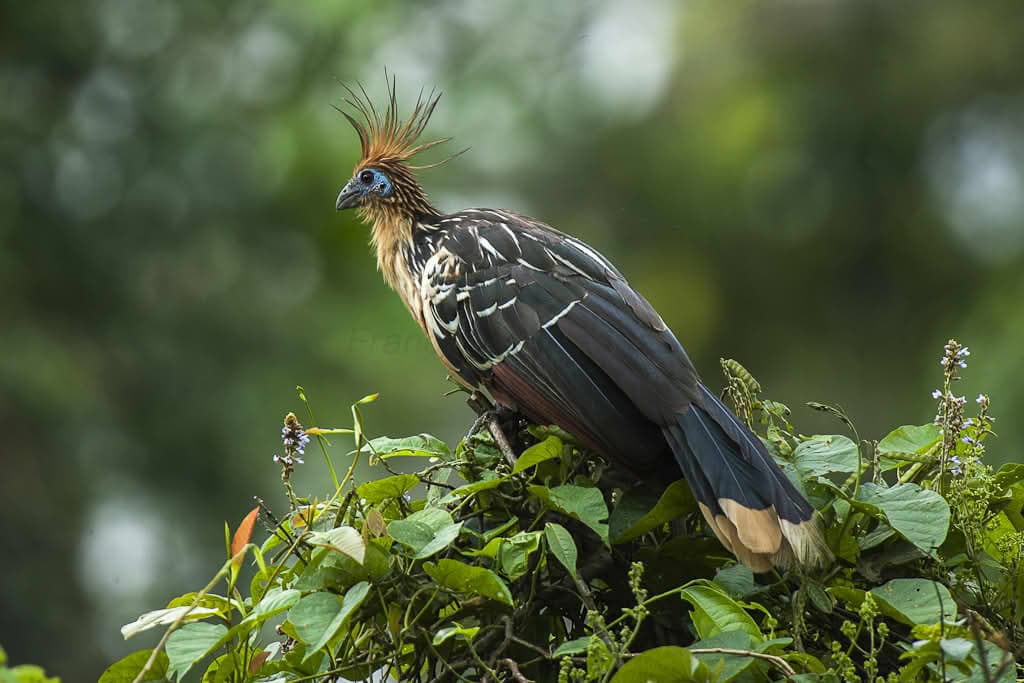
A hoatzin is 65 centimeters in length, and it has a long neck, and a small head for a large body. Its beak has serrations that help cut leaves into smaller pieces before swallowing. It almost looks prehistoric with its blue face and maroon eyes, along with the beautiful spiky rufous crest. The upperparts are dark brown with blue, bronze, or olive iridescence, and white streaking on the nape. Its tail is iridescent bluish to greenish-brown with a whitish tip at the end. The beauty lies in the underwing coverts and flanks that are rich rufous-chestnut when the bird opens its wings. Both sexes look similar, although females have a slightly shorter crest.
Even hoatzin chicks are interesting, being born with two claws on each wing and oversized feet. These features are helpful for their survival, as they can scramble around tree branches without falling into the water. And should they fall, they will also use those claws to climb the trees back up to their nests. As the chicks grow, the claws will reduce in size.
2Behavior
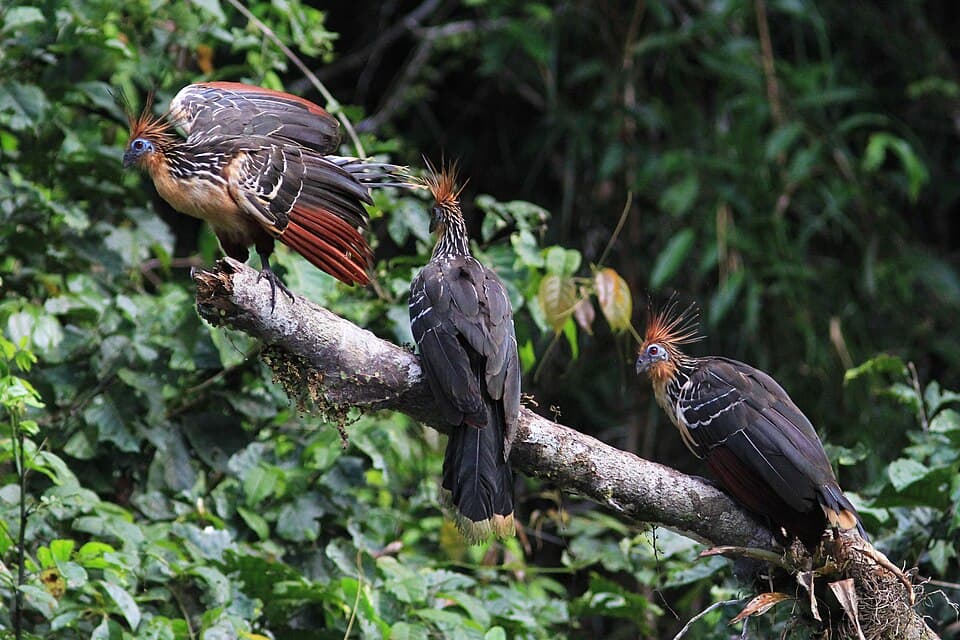
Hoatzins are gregarious birds that occur in flocks of up to 100 individuals in the dry season. They are seasonal breeders, and they breed and nest during the rainy season. These monogamous birds often sit in groups in the open and retreat into denser cover when disturbed. Hoatzins are not the best flyers; they move clumsily around waterside vegetation, making loud noises. They nest in small colonies, and each pair lays a few eggs in a stick nest in a tree branch hanging over water. The young leave the nest at 2-3 weeks, but they are dependent on the adults for food for 2-3 months. Chicks cannot fly until they are around 60 days old. The indigenous people in Brazil sometimes collected their eggs for food and hunted the adults, though consumption of mature bird is rare.
The hoatzin is a noisy bird that makes a variety of hoarse calls such as croaks, groans, grunts, and hisses. It often spreads its wings while making these calls, either to communicate or deter predators. When predators like great black hawks attack a hoatzin nesting colony, the adults will fly noisily about. This is to divert the predator’s attention while the chicks move away from the nest and hide among the thickets. These chicks will also drop into the water and swim under the surface to escape if the predator finds them. Once safe, the chicks will use the claws on their wings to climb back to the nest.
3Feeding & Habitats

The hoatzins are folivores, and they primarily feed on swamp buds and leaves, but also flowers and fruits occasionally. They come out to feed at dawn and dusk, and they spend the daytime resting in trees. What is unique about this bird is that its digestive system contains specialized bacteria in the front part of the gut. The bacteria break down and ferment the food that they eat, the process used by ruminant mammals, not birds. So during the digestion process, the bacteria release methane that the bird then belches out. The unpleasant smell lands its nickname: the stinkbird.
This bird is found in the Amazon and Orinoco Basins in South America, and it is a national bird of Guyana. Hoatzin is a tropical bird that lives in various habitats, including mangroves, riparian forests, and swamps. They settle in shrubs and trees along the margins of lakes and slow-moving rivers. Their preferred habitats are forests and inland wetlands that are now threatened by Amazonian deforestation. The population of hoatzin is still doing well, though decreasing every year due to habitat loss.
4Smell
The hoatzin goes by the names skunk bird or stinkbird because of the strong odor that it emits. People also called it flying cows because of its diet and smell that are similar to that of cows. This odor resembles fresh cow manure or rotten compost, and that smell does travel around. Since these birds burp a lot, there is not a time when they do not smell. Everything has a purpose, and this foul smell actually acts as a chemical defense mechanism. It literally deters most animal predators and human hunters from eating them, or even going near them. And the daredevils who tried the meat confirmed that the meat tastes terrible.
Related Post: Smelliest Animals In The World