A majority of the longest marine eel species are from two species: Conger and Moray. Looking like a snake but actually is a fish, marine eels come in all shapes and sizes as well as colors. Some people find the appearance of the eels unpleasant, but there are so many interesting things about them beyond their looks. Today, we are going to take a look at the 8 longest marine eel species and talk about some of their features.
8Fangtooth Moray Eel
Scientific Name: Enchelycore Anatina
Length: 1.2 meters
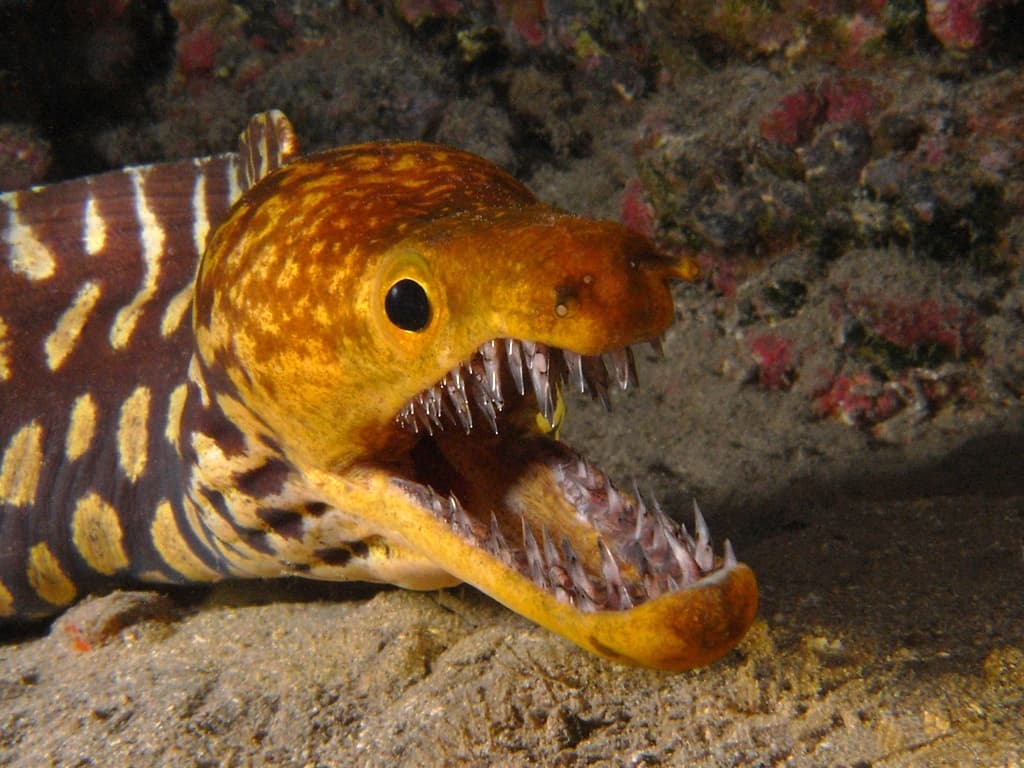
The fangtooth moray eel, or the tiger moray, is one of the longest marine eel species in the ocean. This scaleless fish can reach up to 1.2 meters in length, and it is a fierce predator. It has a distinctive bright yellow head with elongated jaws that are filled with glass-like teeth. Those teeth are dagger-sharp, and they can measure more than 2 centimeters, which is significantly longer than those of most morays. The rest of the body is moderate to dark brown with pale spots on the body and fins.
This eel lives in warmer parts of the eastern Atlantic Ocean, and it also entered the Mediterranean Sea. It inhabits rocky bottoms that are rich in crevices where it can reside and hide. They are very territorial, and they will not tolerate any incursions into their living area. Where they live, they feed on benthic fish, cephalopods, and crustaceans, and squids are their most favorite food. Morays have very powerful bites, and so does this one. Despite looking so intimidating, this species only attacks when feeling threatened. So as long as you don’t put your hand in their cavities, you are absolutely safe.
7Longfin African Conger
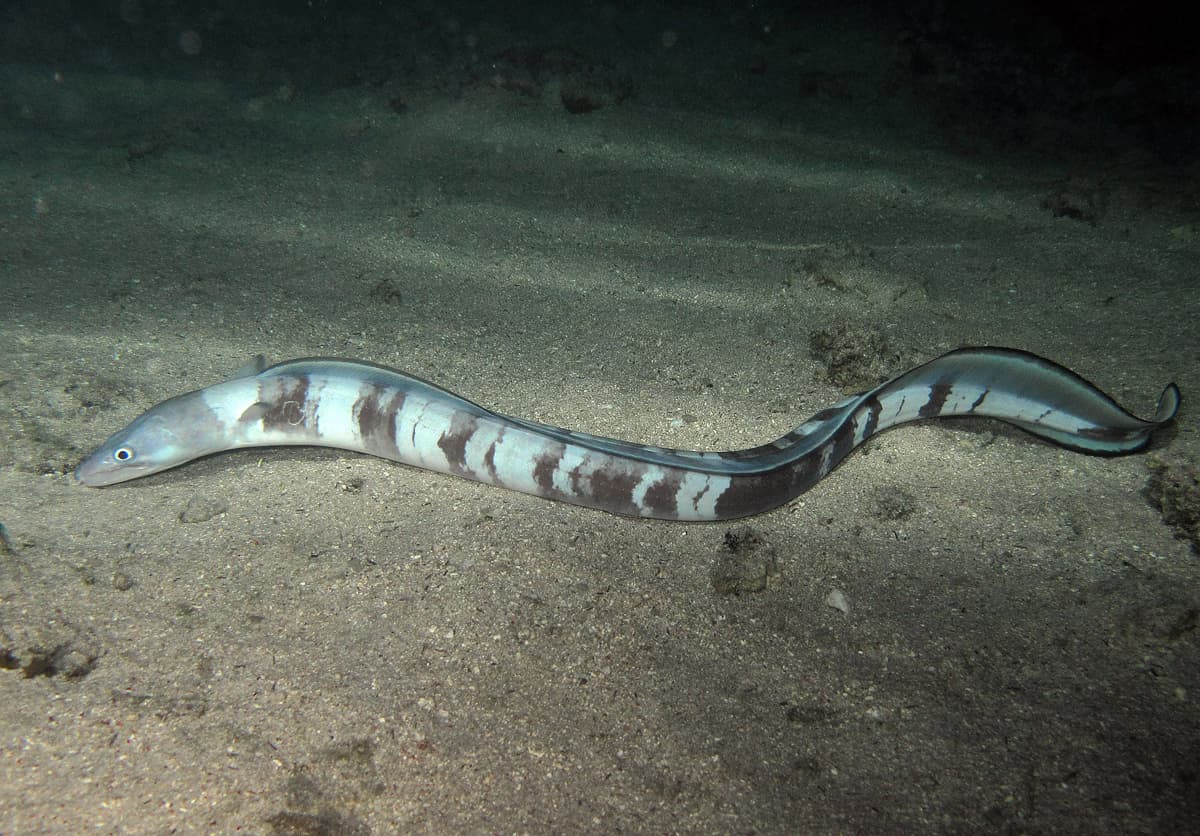
Scientific Name: Conger Cinereus
Length: 1.4 meters
This marine eel species has a slender and elongated body that reaches about 1.3 to 1.4 meters. It is gray-brown during the daytime, and it shows blue-gray bands at night to aid in camouflage when hunting. There is a dark line below its eye that extends across its upper lip; hence the nickname mustache conger. The longfin African conger has a distribution in the Indo-West Pacific, living in shallow coastal and reef habitats. It inhabits reefs, sandy bottoms, and seagrass beds with crevices, rubble, or sand where it can hide during the day. This eel is solitary, and it feeds on crustaceans and small fish, though it may scavenge on occasion.
6Southern Conger
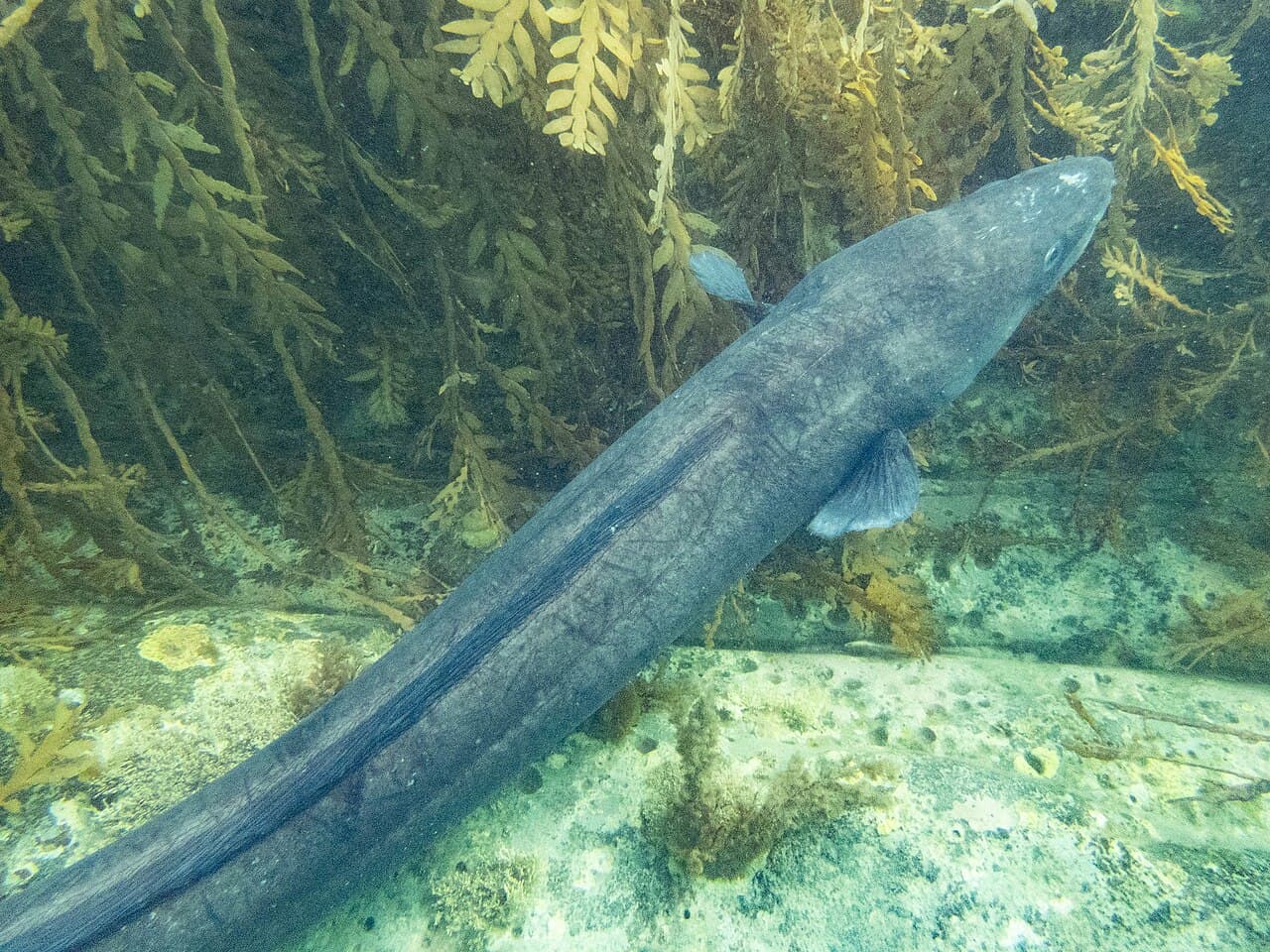
Scientific Name: Conger Verreauxi
Length: 2 meters
The southern conger is a long marine eel species that reaches a length of 2 meters. Its body is long and slender, yet very robust; and it is smooth and scaleless. It is dark grayish to bluish-black in color, and the jaws, throat, and trunk are paler. Not different from other conger eels, this one also has a long head and wide mouth, with strong and sharp teeth. This marine eel species is found in the eastern Indian Ocean and southwestern Pacific Ocean. This nocturnal predator lives in temperate coastal waters, primarily in rocky reef environments. As the night approaches, these predators come out to feed on cephalopods, crustaceans, and fish.
5American Conger
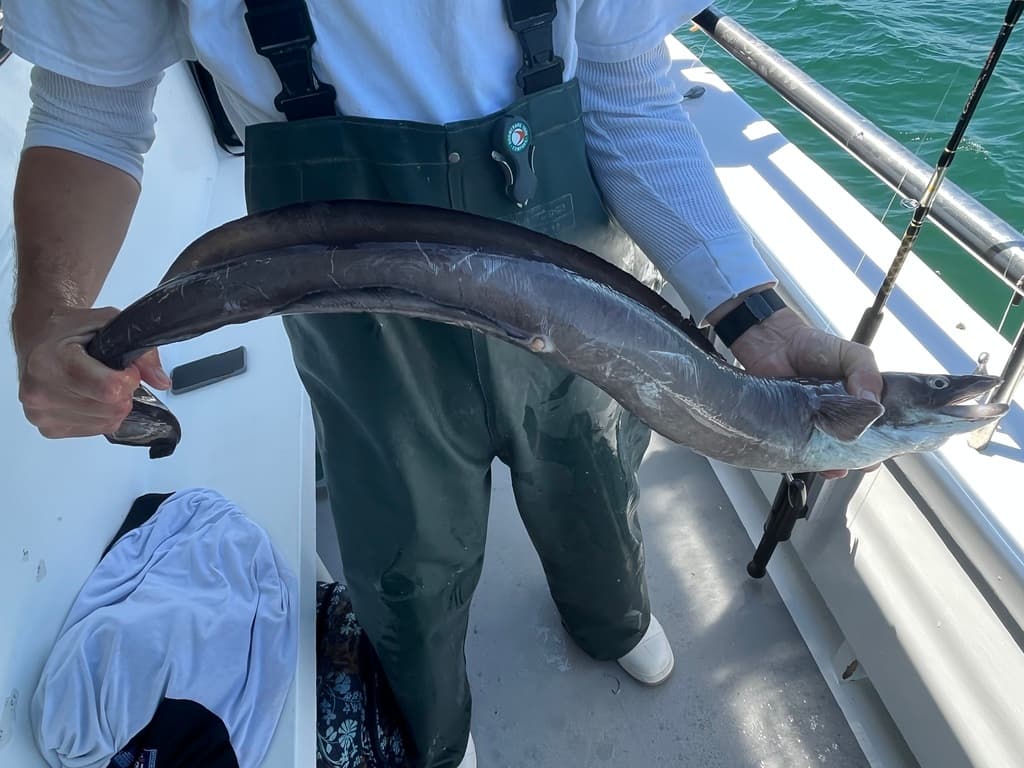
Scientific Name: Conger Oceanicus
Length: 2.5 meters
Being one of the longest marine eel species, an American conger can reach up to 2.5 meters long. It is blue-gray or brown-gray in color with a white underbelly, and this coloration helps it with camouflage in its surroundings. This eel also has a long mouth with many sharp teeth that bite and trap prey. This marine fish has a distribution in the Western Atlantic, where they in live on the seabed. American conger mostly feeds on fish, but they also eat crustaceans and mollusks that they can find. After spawning, the adult males and females die, leaving the eggs to hatch on their own. People consume them as food, and they are also a fierce game fish.
4Green Moray Eel
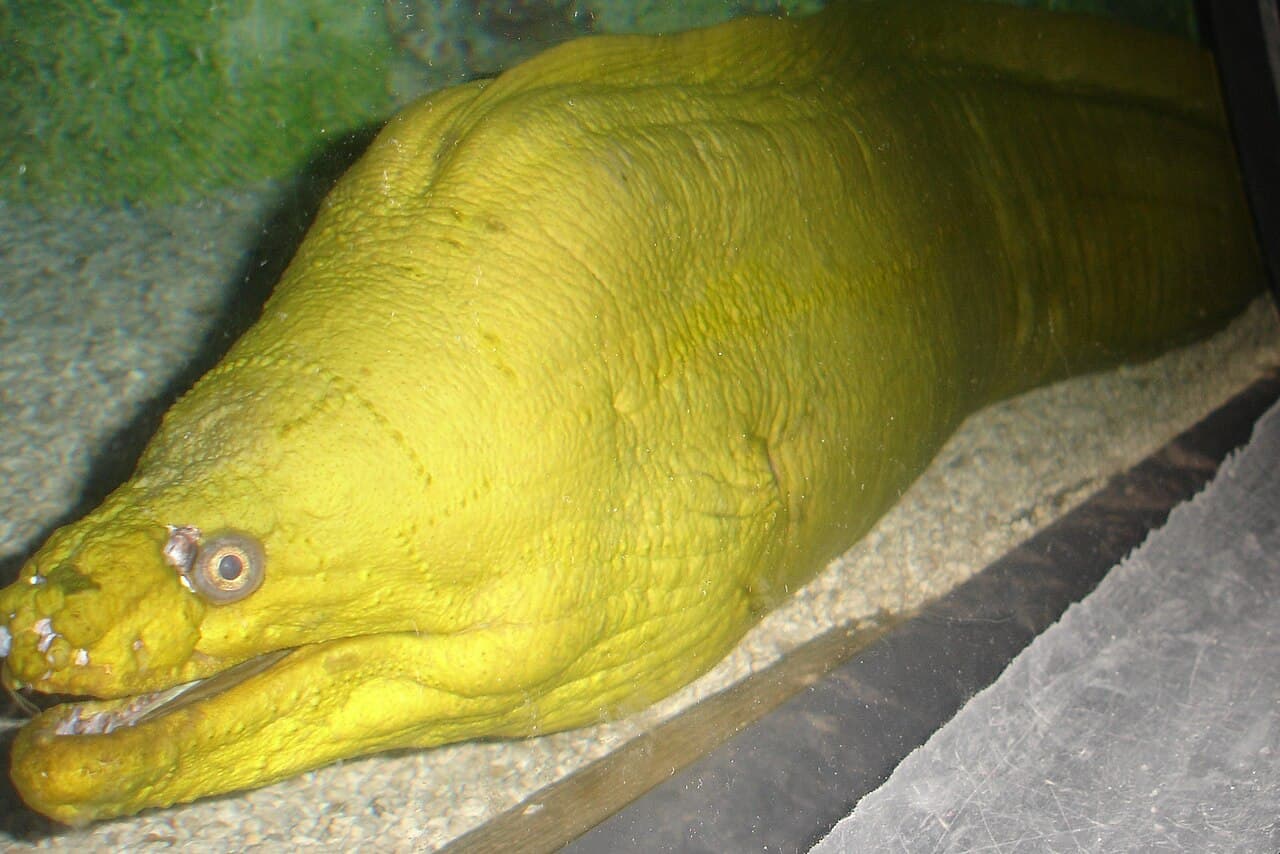
Scientific Name: Gymnothorax Funebris
Length: 2.5 meters
The green moray or yellow moray is one of the longest marine eel species, measuring up to 2.5 meters. Its green color comes from a protective layer of mucus secreted by its specialized goblet cells. This thick yellow mucus protects the eel from diseases and parasites. Under this mucus layer, the color of the green moray is much darker; its skin is actually brown or gray. This large eel species inhabits the waters of the Western Atlantic Ocean, living in coral reefs, intertidal areas, mangroves, and rocky areas. It lives in caves or rock crevices where it can hide before coming out to hunt crabs and fish. Though not safe for humans to eat, there are still threats that are harming their numbers. Bycatch, climate change, habitat degradation, plastic pollution, and ocean acidification are affecting their population.
3Giant Moray Eel
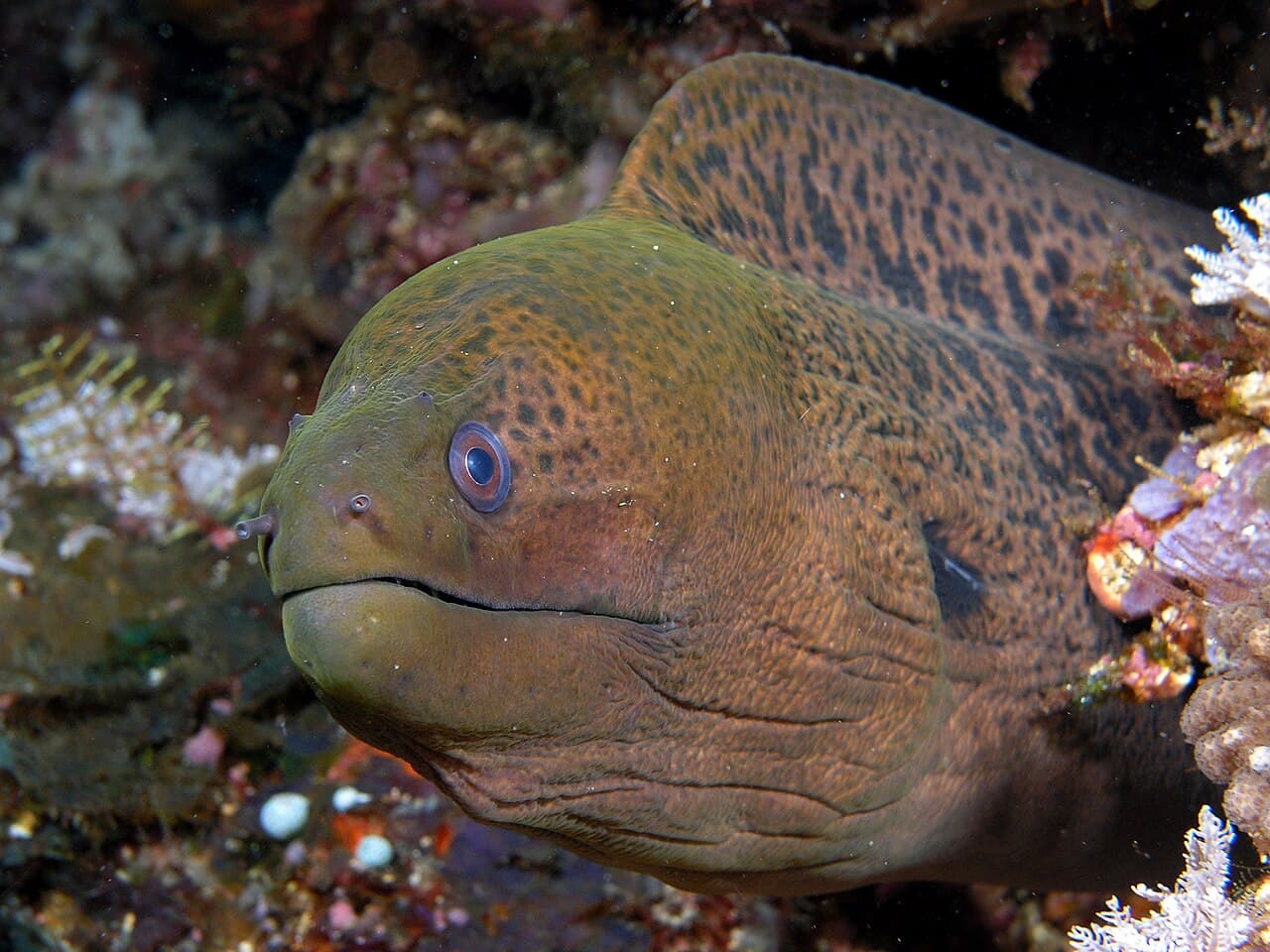
Scientific Name: Gymnothorax Javanicus
Length: 3 meters
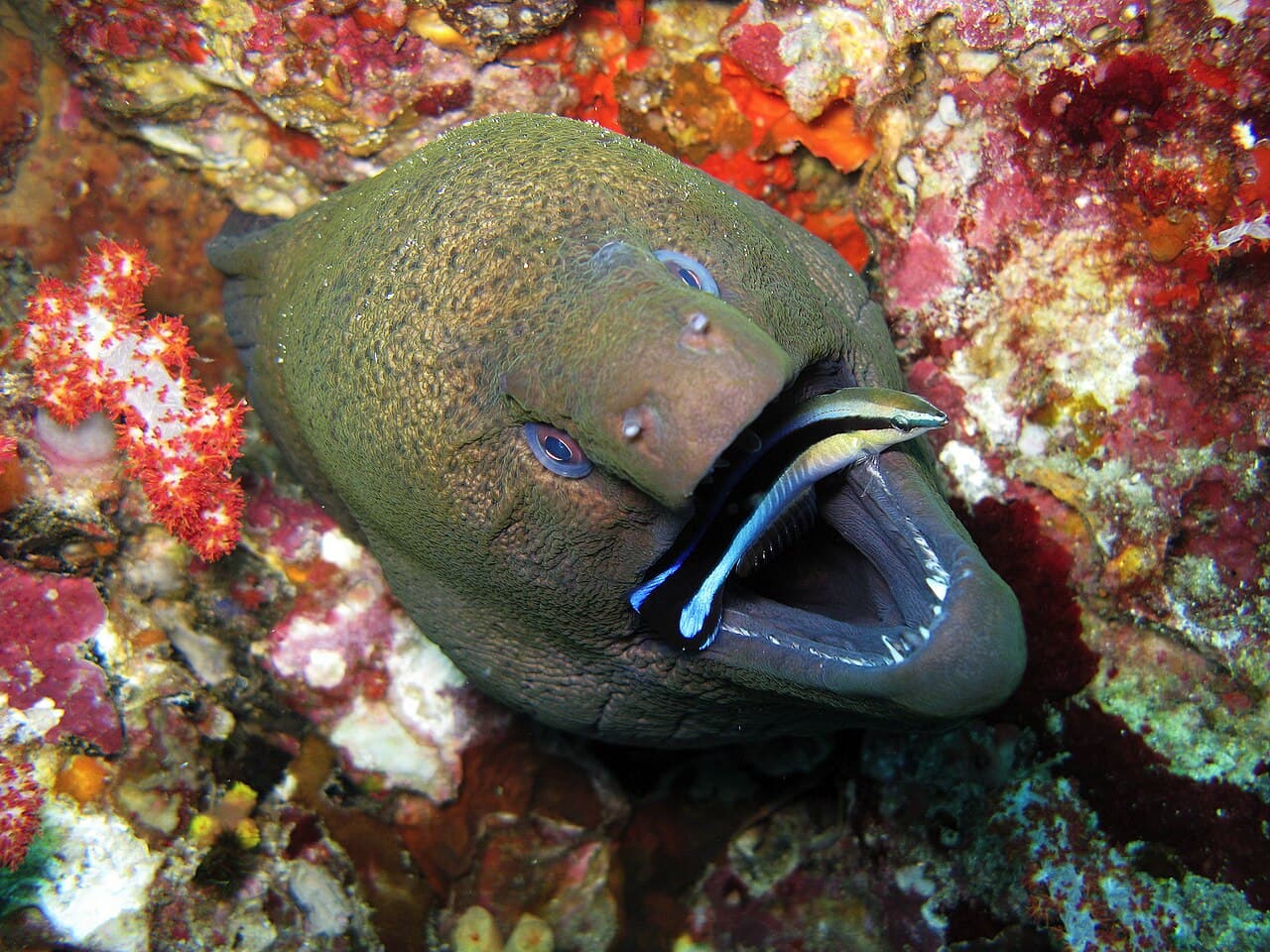
The name says it all; it is a giant, reaching up to 3 meters or even longer in some individuals. It is not only one of the longest marine eel species, but also the largest of all morays. Just like other eels, this one also has an elongated body, and it is brownish in color with dark-brown spots. The head is yellow to brown, and the gill opening is surrounded by a black blotch. It has very sharp teeth and strong jaws, and there is nothing that it is not afraid to bite. People included. However, these giant eels are not aggressive by nature; they will leave you alone if you leave them alone.
Giant moray eels are widespread in the Indo-Pacific region, living in lagoons and on the outer slopes of coral reefs. The diet of this apex ambush predator is mainly fish, but it also feeds on crustaceans. One of the most interesting behaviors in this large eel species is that it engages in cooperative hunting with the roving coral grouper. When the eel hunts in the reef, it may scare the prey up and out of the reef. That means the grouper will get the food. When the grouper hunts above the reef, it causes the prey to seek refuge in the reef. That’s when the moray ambush them.
2European Conger
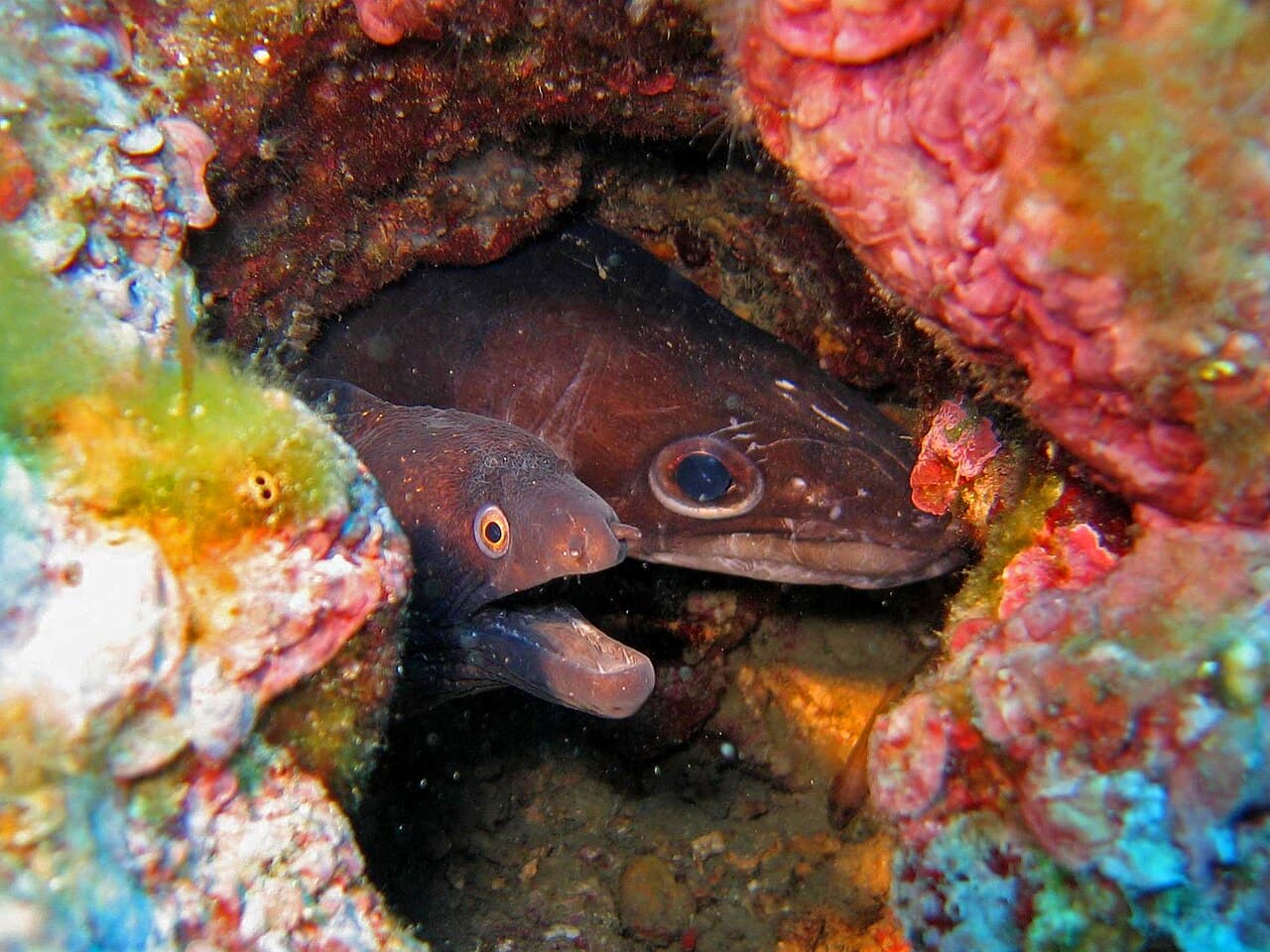
Scientific Name: Conger Conger
Length: 3 meters
Here you are looking at not only the longest marine eel species in the world, but also the heaviest eel. On average, a European conger grows to a length of 1.5 meters, but 3 meters maximum in some individuals. An eel this big is also pretty heavy, reaching 72 to 160 kilograms. Just like other eels out there, this one also has a very long body that is without scales. It is usually gray in color with a white belly, but black individuals are common if they live in deeper water. These eels have long heads, wide mouths, and very sharp teeth, and they can be aggressive to humans. So make sure to keep your distance and don’t hang around their holes.
It is native to the northeast Atlantic, including the Mediterranean Sea, living amongst rocks in holes or “eel pits”. Strangely enough, younger European conger also live in one hole together with moray eels. As they mature, they become territorial, and they are aggressive towards anything that comes too close to their crevice. They hide in their holes during the day, and they come out at night to hunt. If you wonder what they hide from, their predators are dolphins, seals, and even other conger eels. These scaleless fish prey on cephalopods, crustaceans, and fish, but they also scavenge on dead and rotting fish. They rely on their sharp sense of smell to track down prey rather than active chasing. Both males and females die after spawning.
1Slender Giant Moray
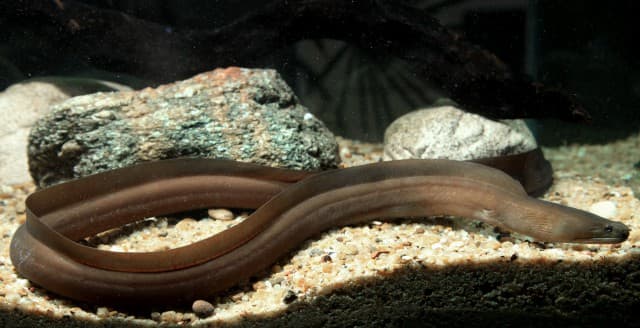
Scientific Name: Strophidon Sathete
Length: 3 – 4 meters
The slender giant moray is the longest member in the moray family, measuring 3.94 meters. It has an elongated body that is brownish-gray in color and is pale towards the venter. The front part of the body is cylindrical, and it flattens out near the tail. As one of the longest marine eel species, it surely has an intimidating look. This giant of an eel looks prehistoric, with pointy fangs that are shown when opening and closing its long mouth. It has sharp, double-row teeth, with the front teeth and inner row being noticeable longr and more prominent.
This eel species is found in the Indo-West Pacific Ocean, living in benthic muddy environments. It frequents estuarine and marine areas such as inner bays and rivers where it feeds on crabs, fish, octopus, and squids. As an ambush predator, it lies and waits, then grabs the prey with its sharp teeth. Depending on the size of the prey, it either squeezes the victim or tears it apart with its sharp teeth.
Related Post: Most Dangerous Eel Species