We all know that these cephalopods have 3 hearts and blue blood, but do we know about the large octopus species? There are over 40 octopus species out there; however, not all of them can grow big. Lucky you, today we are going to talk about some of the largest octopus species that roam the oceans. Some of them are also pretty striking, so let’s check them out below.
10Mimic Octopus
Scientific Name: Thaumoctopus Mimicus
Length: 60 centimeters
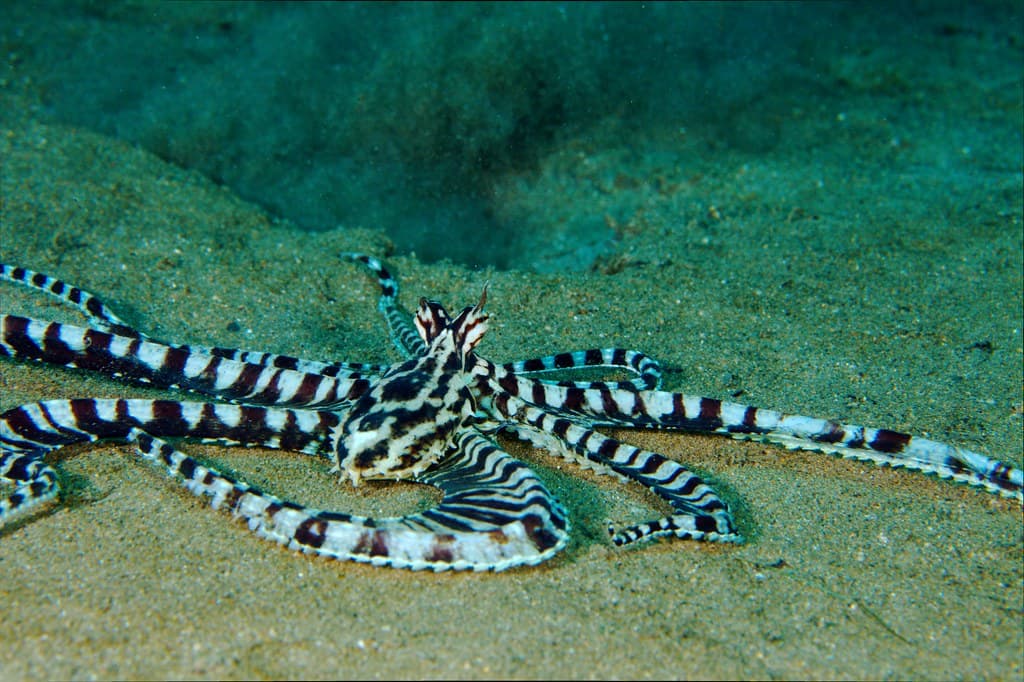
When it comes to large octopus species, this one is rather on the smaller side of the list. It reaches 60 centimeters in length, including arms. Speaking of arms, each arm is lined with two rows of chemotactile suckers that can taste and touch at the same time. A mimic octopus is beige or light brown in color, and there are brown and white stripes on its arms. These stripes allow it to scare off predators by imitating poisonous animals. Born with the ability of mimicry, a mimic octopus uses chromatophores to disguise itself, and it is very good at it. While some mimicry animals mimic objects, this one can mimic a number of other marine animals, which is absolutely impressive. It can mimic flatfish, jellyfish, lionfish, sea snake, stinging anemones, zebra sole, and more.
Mimic octopus appears the most in Indonesia, but its population also spreads across the Indo-Pacific, living in shallow and murky waters. This cephalopod favors sandy or silty seafloors in tropical coastal waters, where they crawl across estuaries, intertidal zones, and mudflats. It uses a jet of water through its funnel to glide over the sand while searching for prey. Some of the most common meals of these cephalopods include crabs, crustaceans, small fish, and worms. While ambush predators wait for a meal to come to them, this one is an active daytime forager. It is nothing difficult to be out in the open when you can change colors and shapes like mimic octopi.
9Southern Red Octopus
Scientific Name: Enteroctopus Megalocyathus
Length: 1 meter
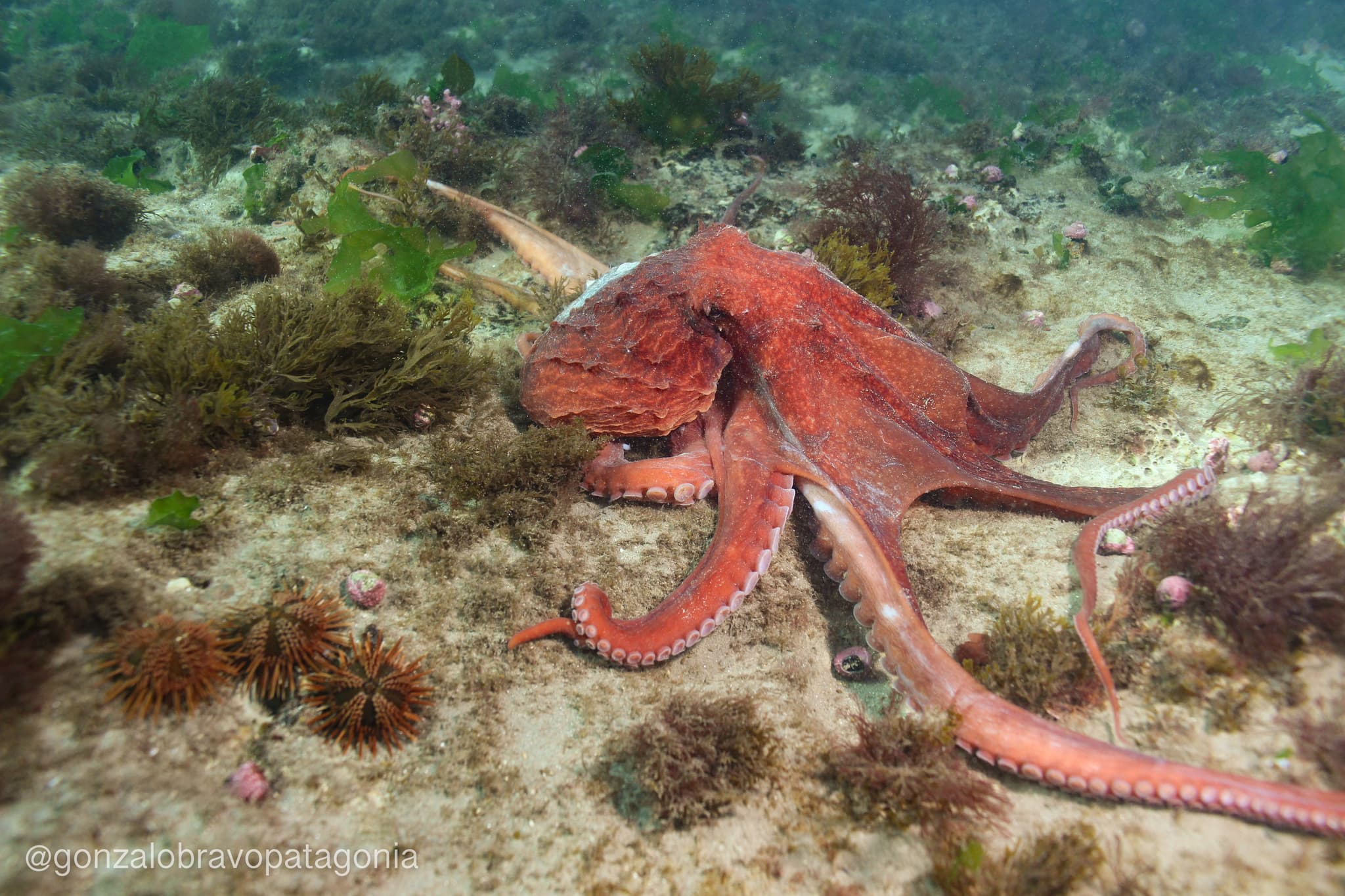
The Southern red octopus or Patagonian giant octopus is a large octopus whose arms can reach a length of 1 meter. Just like the name suggests, it is bright red in color, but its color can also be rust. A Southern red octopus has paddle-shaped papillae, which are one of its distinguished features. It is a large octopus species that lives only in the Neotropical region of southern South America. Adults live in deep water below the surface, while young ones live in shallow and rocky areas near the shore. This cephalopod lives in small caves and crevices, feeding on crustaceans, fish, mollusks, and sea snails.
8Common Octopus

Scientific Name: Octopus Vulgaris
Length: 1.3 meters
The common octopus is one of the largest octopus species, with arms up to 1 meter long. It has a massive bulbous head with large eyes, and intelligence that surprises a lot of people. Each common octopus has different body patterns, and its colors can vary from dark brown and gray to red-brown and yellow-brown. Its most distinguishing body pattern features are highly variable mottle patterns and deimatic patterns. The most impressive thing about this one is its ability to hide in plain sight. It can adjust its pigment cells and muscles in its skin to change colors, patterns, and textures. This allows it to blend and camouflage in its surroundings to avoid predators and hunt.
This large octopus species has a wide distribution across tropical, subtropical, and temperate waters throughout the world. They are benthic dwellers that live in coral reefs and seagrass beds of shallow, rocky, and coastal waters. Another interesting thing about them is that they also do seasonal migrations. During those times, they spend the spring and summer months in shallow water, and migrate to deeper water in the fall and winter. They hunt at dusk, usually feed on bivalve mollusks, crabs, crayfish, gastropods, and pretty much anything they can catch. Because they are so common, people do fish and eat them, and overfishing of common octopus is in Japan.
7Yellow Octopus
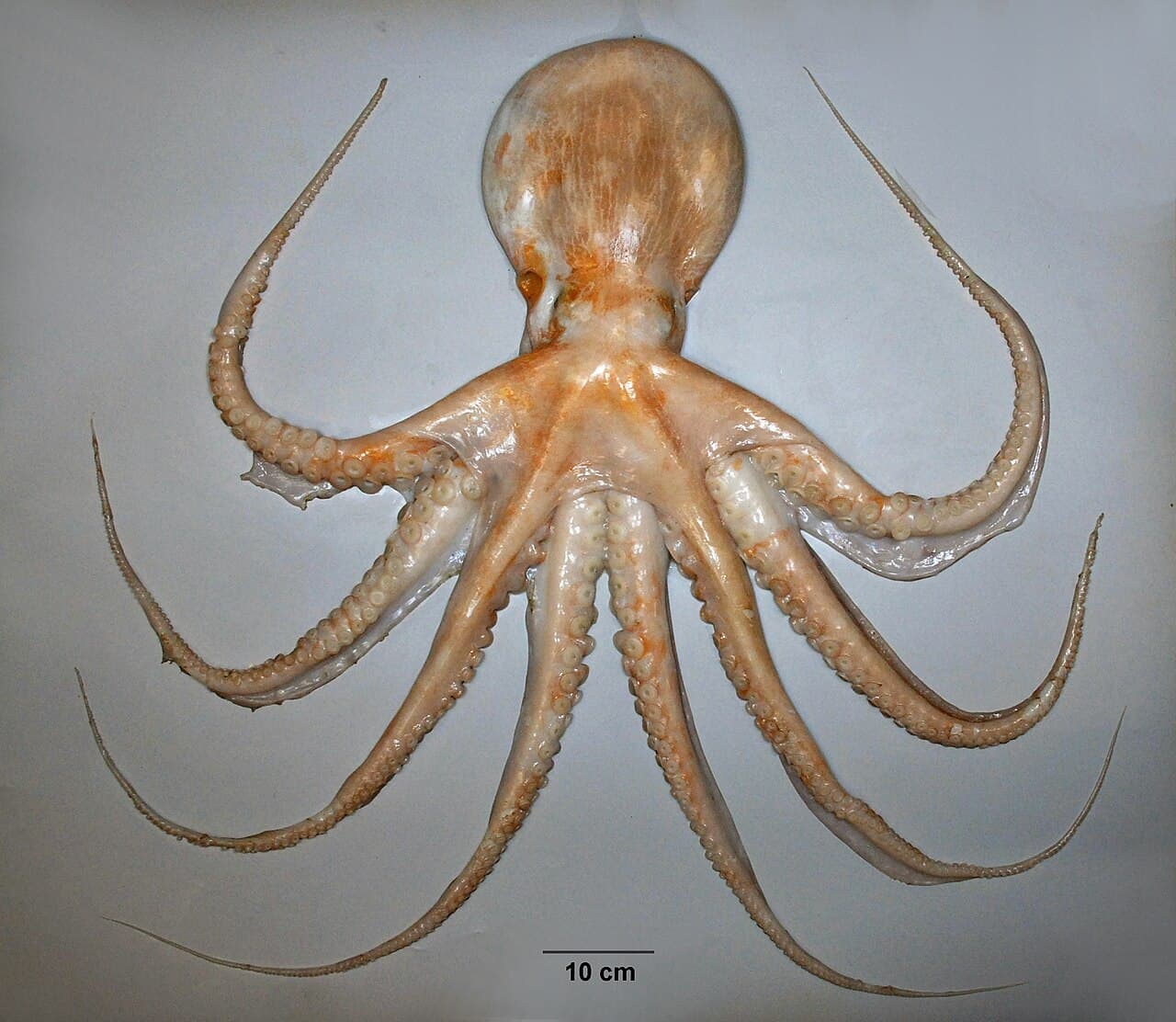
Scientific Name: Enteroctopus Zealandicus
Length: 1.4 meters
Each octopus has its own distinctive features, and so does this one. A yellow octopus is yellow to orange in color, obviously, and it has longitudinal folds on its body and large paddle-like papillae. Both its coloration and papillae help it blend in with its surroundings to avoid predators. Endemic to the waters surrounding New Zealand only, this large octopus species is quite rare. Not to mention that they are quite elusive, this is why information about them is also very little. To this day, we still don’t know where it inhabits or what it likes to eat. It is one of the most important prey to sea lions in New Zealand, especially in the Auckland Islands and Campbell Island.
6Southern Giant Octopus
Scientific Name: Enteroctopus Magnificus
Length: 1.8 meters
People say it is the titan of the Atlantic, a southern giant octopus is a large cephalopod whose arms reach up to 1.8 meters. It has longitudinal folds on its body along with large paddle-like papillae. As for this large octopus species, it is native to Namibia and South Africa. It lives on mud flats and sands in the cold and deep waters off the coasts. This giant octopus has very large eyes that help them hunt in the dim light of the ocean floor. Across their range, they feed on Cape hagfish, deep-sea portunid crabs, and hermit crabs. I tried to find photos of them, but none existed.
5Blanket Octopus
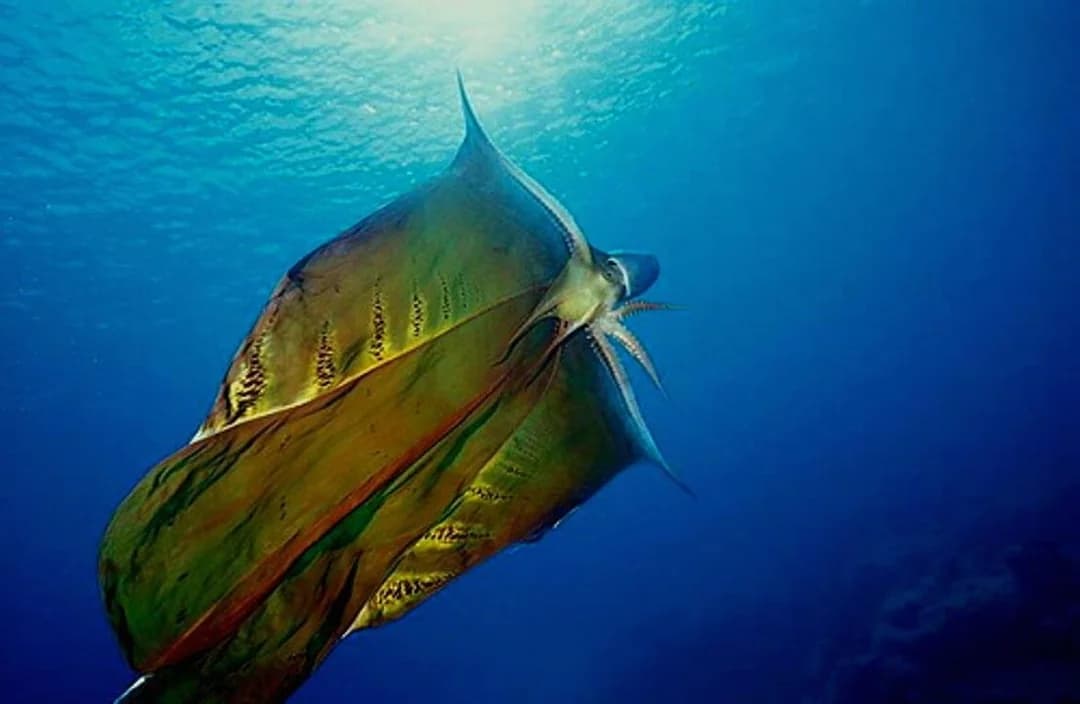
Scientific Name: Tremoctopus Violaceus
Length: 2 meters
The blanket octopus is a very beautiful and rare octopus species that roams the open water. A blanket octopus has a blue or dark purple dorsal surface with a silvery tone on their sides. Its ventral surface is iridescent silvery gold, and the web is deep maroon in color. A female blanket octopus can reach up to 2 meters long, while a male’s maximum length is only 2.4 centimeters. So every blanket octopus that you come across in the ocean is female; males are too small. An adult female blanket octopus has webbing between her arms; hence the name. This unique feature aids swimming, and it allows her to appear larger to deter potential predators. And guess what, they can also detach their sections of the web and escape from predators.
They have a short lifespan of 3 to 5 years, and males usually die first right after mating. The tiny males drift through the ocean seeking a mate when they are 1 to 2 years old. Once find a mate, he detaches his sex arm inside the female’s mantle, and his job ends there. Females will continue to live and grow for months or years longer, spawn their eggs, and brood their eggs. They will then die shortly after the eggs hatch.
Blanket octopi live in coral reefs in the subtropical and tropical waters of the Atlantic, Indo-Pacific, and Pacific Oceans. Coral reefs are where they feed on jellyfish, mollusks, and small fish, and where they hide from predators such as larger fish and whales. They come to the surface at night, and these nomadic cephalopods move about to different locations every few days. The only threat to their population at the moment is habitat loss due to coral bleaching.
4Māori Octopus
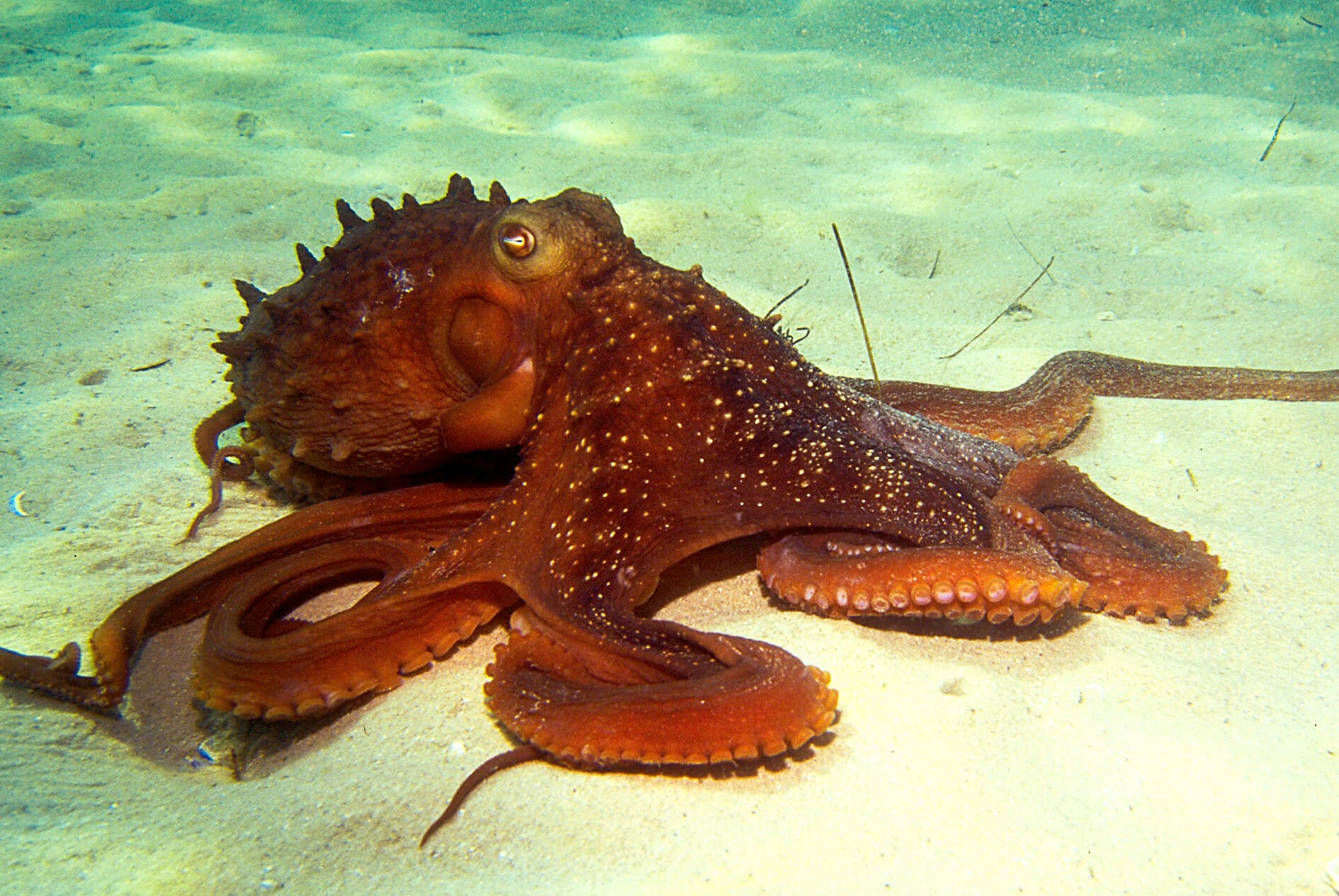
Scientific Name: Macroctopus – Macroctopus Maorum
Length: 3 meters
The Māori octopus, or the New Zealand octopus, is one unique and large octopus species that you should see. Its coloration is different from others, being either dark purple-gray or orange-brown. The arms of these octopi can exceed 3 meters, and there are numerous small iridescent white spots on the arm webs. Those arms are uneven, but the front pairs are the longest, the broadest, and the thickest. The muscular arms that they have actually make them one of the strongest octopi in the oceans.
Native to Australia and New Zealand, Māori octopi live in shallow subtidal areas where they hunt for food. They inhabit kelp forests, rocky reefs, and seagrass beds, and their lairs are very large. The menu consists of abalones, crustaceans, fish, large crabs, and scallops, and they also eat rock lobsters as snacks. Cannibalism is common in this species, and this one will even attack a larger octopus if their habitats overlap.
3Seven-Arm Octopus
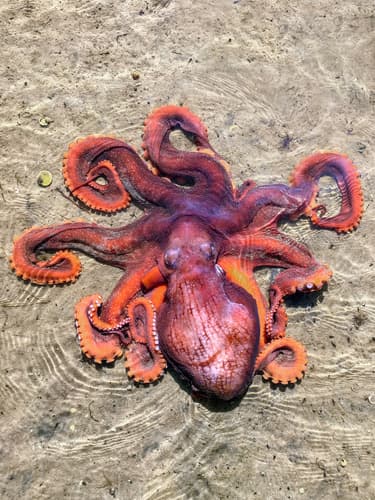
Scientific Name: Haliphron Atlanticus
Length: 3.5 meters
You are looking at the second largest octopus, but what’s with the name, though? It got its name because the special arm that males have is coiled in a sac beneath their right eye. Unlike other octopi out there, this feature gives the appearance of just 7 arms instead of 8. Speaking of arms, they can reach a length of 3.5 meters, and their mantle length is around 70 centimeters. A seven-arm octopus has a thick and blob-like body that is gelatinous and soft, with very large eyes. Its colors range from pale blue and translucent to deep red or dark purple.
This large octopus species is found worldwide in tropical and temperate waters, hiding in cracks and crevices. They usually live deeper in the ocean, dwelling on the ocean floor and the deepest underwater slopes. Just like other octopi, this one is highly intelligent, and it can adapt to any environment easily. The seven-arm octopus feeds on a wide range of food, including crustaceans, fish, jellyfish, and mollusks. This one is an ambush predator, and they forage by drifting passively in the water column, stretching their arms. Doing so allows them to intercept passing prey before catching them with webs on their tentacles. These cephalopods fall prey to larger marine species such as blue sharks, Hawaiian monk seals, sperm whales, and swordfish.
2Frilled Giant Pacific Octopus
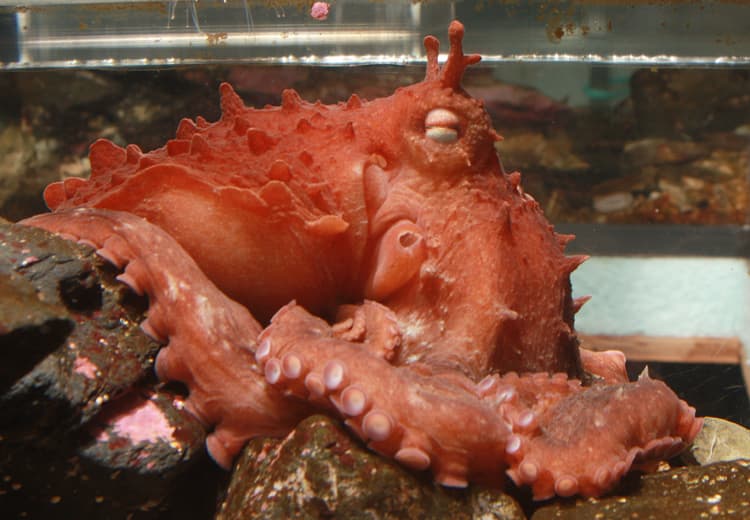
Length: 4.9 meters
The name says it all, the frilled giant Pacific octopus has distinctive frills that run the length of its body. These frills are the bumpy flesh ridge that runs horizontally down the octopus’s body. You can distinguish this one from its close relative, the giant Pacific octopus, by the spots on its head. This large octopus species has two white spots on its head, while the giant Pacific octopus only has one spot. Being one of the largest octopus species in the ocean, the arms of this one can reach up to 4.9 meters. The frilled giant Pacific octopus is a benthic predator that feeds on clams, crabs, and other shellfish it can find. This species was discovered in late 2017, and there is no official scientific name for it yet to this day.
1Giant Pacific Octopus
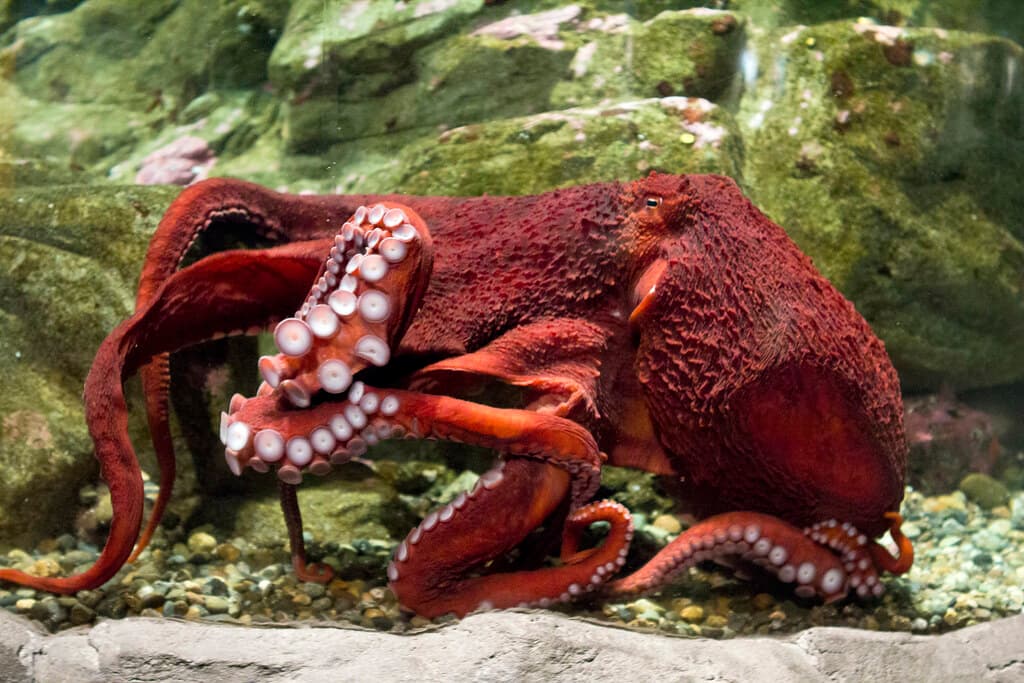
Scientific Name: Enteroctopus Dofleini
Length: 5 meters
Here we have the king of the large octopus species, possessing arms up to 5 meters long. This cephalopod has a huge and bulbous head, with long arms full of thousands of strong suction cups. What’s so cool is that it can operate each arm independently, and no prey can escape from those arms. It is usually reddish-pink in color, with a vein-like pattern that fades to white on the underside of the arms. At the same time, it has special pigment cells in its skin that it uses to change colors and textures. This allows it to blend in any environment, from corals and rocks to plants and more.
Just like the name suggests, this large octopus species lives in the Pacific Ocean, ranging from Japan to Alaska and Baja California. They are solitary, and they only come together to mate; males die after mating, and females die after the eggs hatch. Giant Pacific octopi are den dwellers, and they use their dens for privacy, protection, and shelter. They also bring food back to the den to feed in a safer environment to avoid predators. Being so large, the giant Pacific octopus also has a large appetite, feeding on a wide variety of prey. The meals include abalones, clams, cockles, crabs, fish, lobsters, snails, squids, and other octopi. It catches its prey using its suckers, and then but it using its tough beak. Despite being so large, they still fall prey to bigger predators such as halibut, lingcod, seals, sea otters, and wolf eels.
Related Post: Beautiful Octopus Species