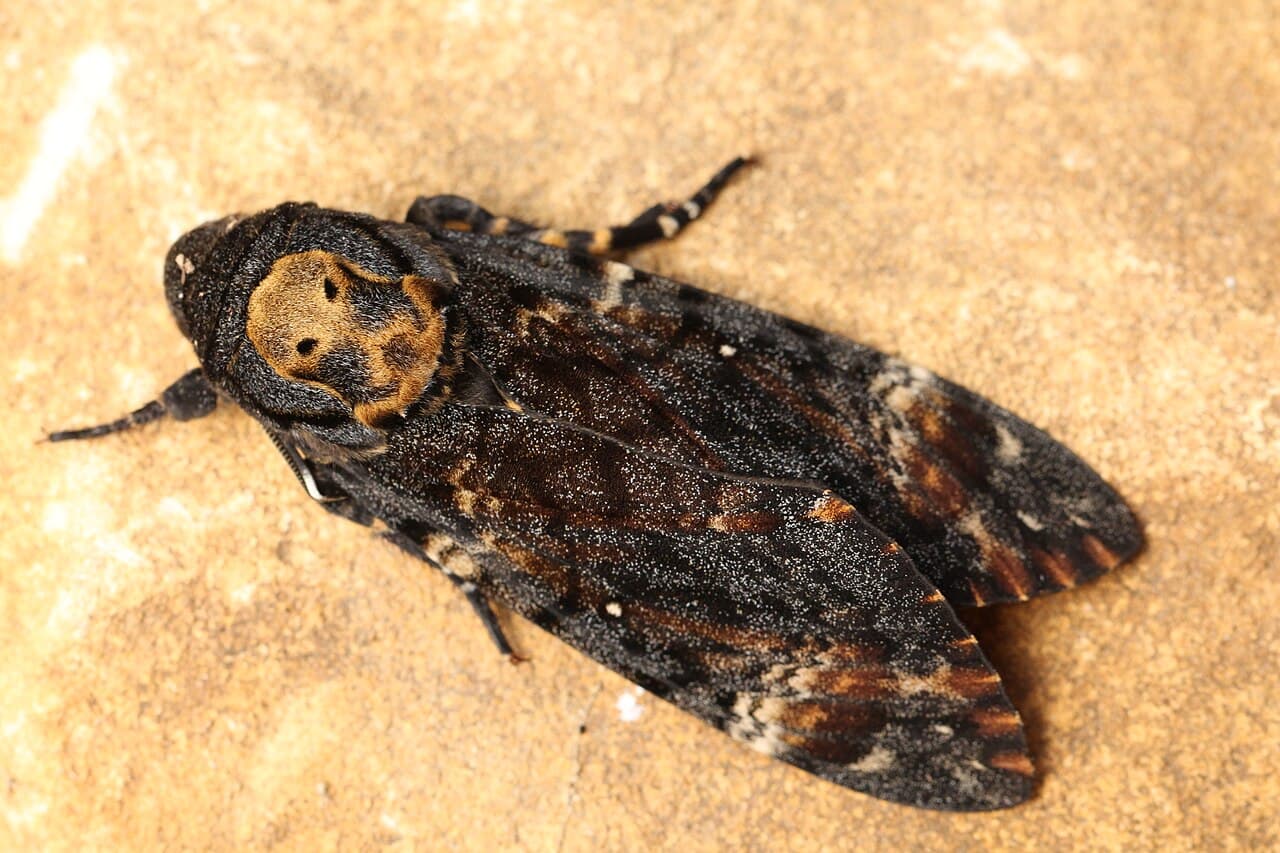
Nature is full of surprises, and the 3 death’s head hawkmoth species we talk about today are one of those. No one would ever have thought a moth could look like that, yet here we are. Each species is unique in its own way when it comes to the markings, and we will explore each of them below. Let’s have a look and let me know which one is your most favorite death’s head hawkmoth species.
1African Death’s Head Hawkmoth
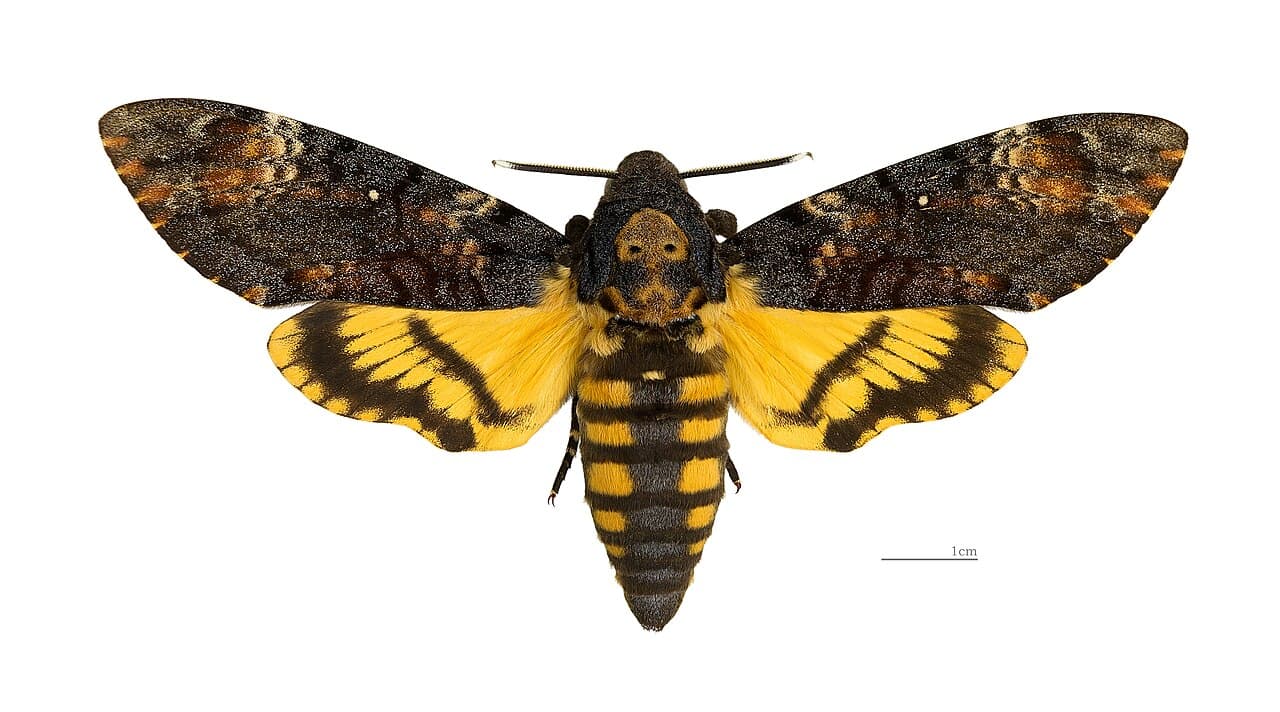
Scientific Name: Acherontia Atropos
An African death’s head hawkmoth has dark upper wings and light lower wings, creating a stark contrast. The forewings are mottled dark brown and pale brown, while the hind wings are orangey-buff with two narrow dark bands. Those wings are very strong, allowing them to be powerful fliers who can fly great distances. It got its name from the patch of short yellowish hairs on the thorax that looks like a skull. The intimidating patterns are one thing, and the size is another thing. An African death’s head hawkmoth can reach a size of up to 8 to 13 centimeters.
Being excellent fliers and migrants, this moth species keeps expanding its range. They are common in the Middle East, Southern Europe, and throughout much of Africa and the Mediterranean region. Their common food is flower nectar from gardenia, honeysuckle, jasmine, nicotiana, and petunia. They are active at night, and they like to raid beehives sometimes for honey. These moths use chemical camouflage to emit a smell that mimics the scent of the bees so that it can blend in. They can also emit an alarm squeak by expelling air from their proboscis when caught to deter people and predators. Speaking of predators, the usual ones are bats, birds, praying mantises, rodents, spiders, and wasps.
2Eastern Death’s Head Hawkmoth

Scientific Name: Acherontia Styx
Looks very similar to the previous one, you can tell these two apart by the bands on their wings. An eastern death’s head hawkmoth has two medial bands on the underside of the forewings instead of one. At the same time, the skull marking that gives this moth its name is also darker. Adults of this species have brown heads, dark thoraxes, and yellow-striped abdomens. The wings of these moths are narrow, giving them agile flying abilities. Their forewings are mottled brown, gray, and reddish in color, and the hind wings are yellow with two black bands.
The population of this death’s head hawkmoth species spreads throughout eastern continental Asia, from China all the way to Israel. Goes by the names Lesser Death’s Head Hawkmoth and Bee Robber, this death’s head hawkmoth species does exactly that. This one is extremely fond of honey, and they will do anything to get some of that sweetness goodies. They have a very stout and strong tongue that can pierce the wax cells of the beehives to suck honey. One interesting fact about this moth is that it can regulate its body temperature by shivering its flight muscles. Doing so allows it to remain active in cooler temperatures.
3Greater Death’s Head Hawkmoth
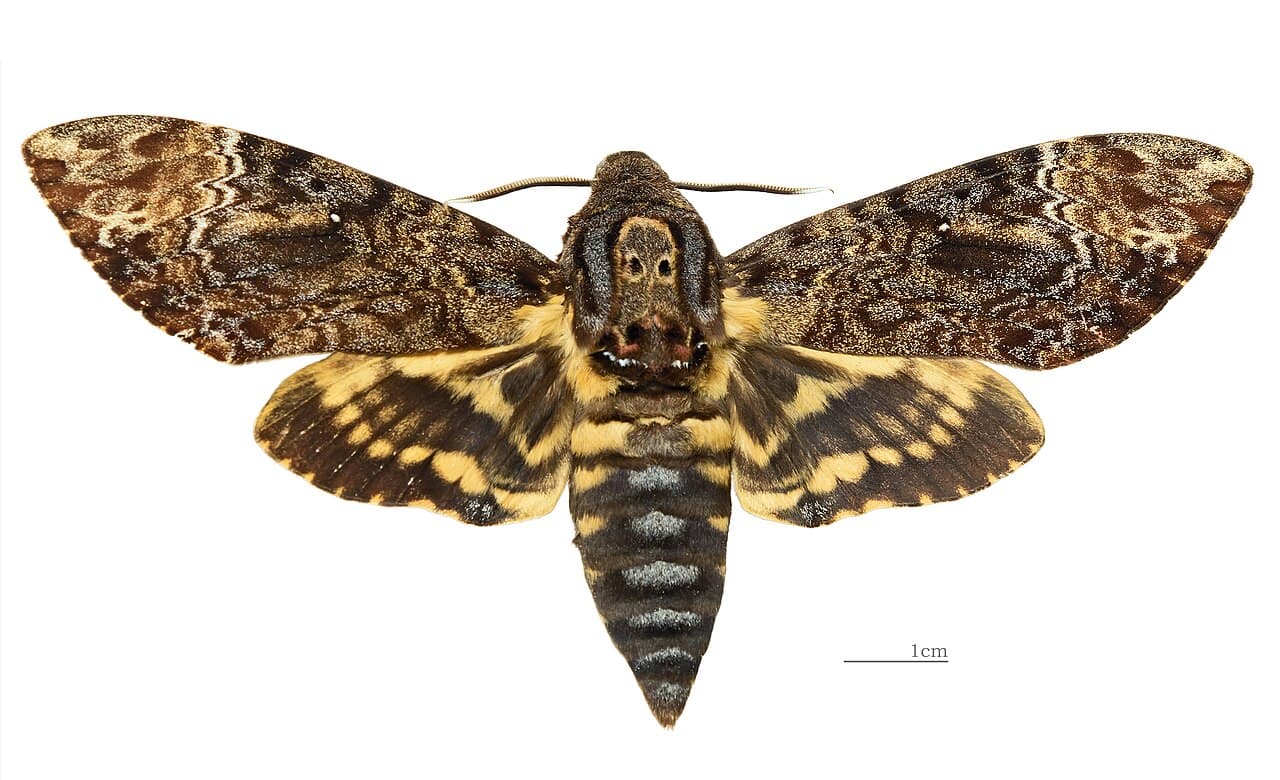
Scientific Name: Acherontia Lachesis
Here we have the largest of the death’s head hawkmoth species, with a wingspan of up to 13 centimeters. This large moth has segmental bands and a gray stripe that occupies so much of the abdomen. It has a dark brown body, and its thorax has a skull-shaped marking that earns it its name. Its hindwing has a large black patch at the base, and the forewings are brown with a small white spot in the middle. The rest of the wings are covered in intricate black, brown, gray, and white patterns. Greater death’s head hawkmoth has a distribution in Asia, inhabiting tropical and subtropical regions.
Related Post: Baphomet Moth Facts