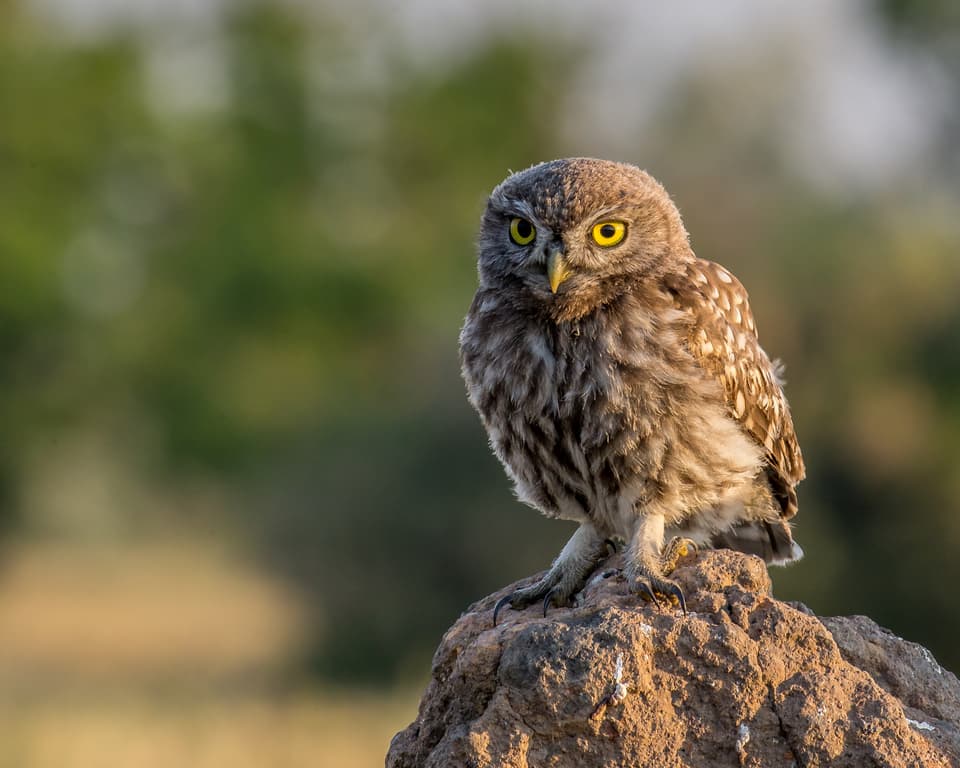
Diurnal owl can come off as a surprise; we all know that they are active at night. Night owl, right? There are always exceptions to things, and there are some diurnal owls out there that you don’t know about. Some of them are super adorable, and it is always nice to come across one. Let’s take a look at the 5 diurnal owls below and see which one you like the most.
1Burrowing Owl
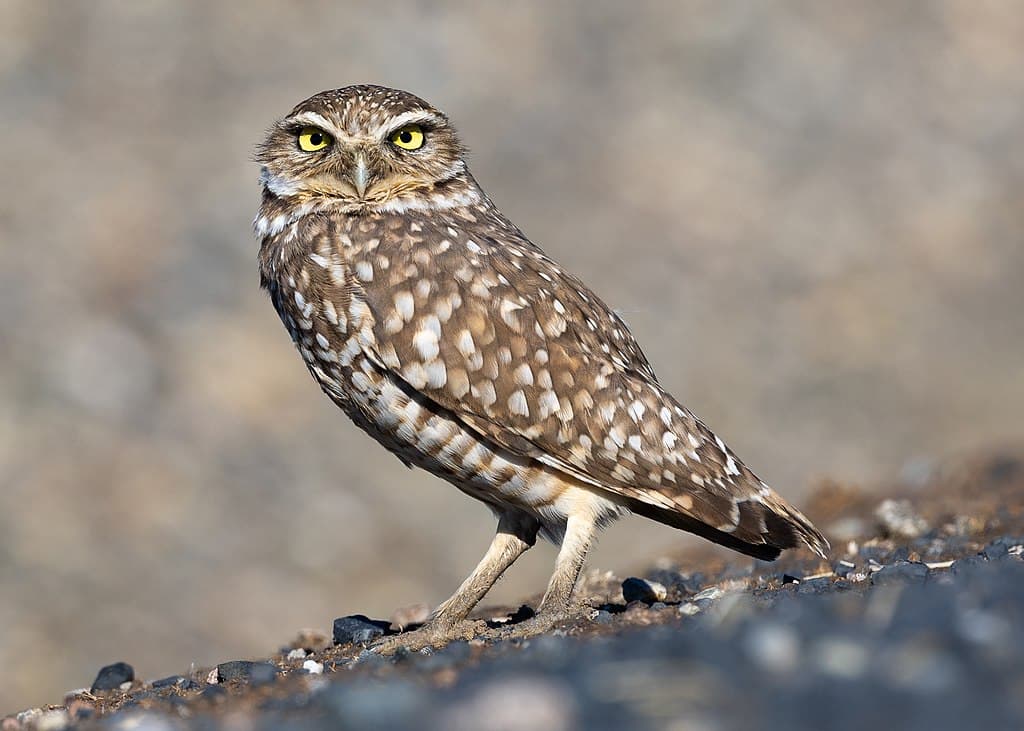
Scientific Name: Athene Cunicularia
One of my personal favorites, burrowing owls are one of the diurnal owl species, and the cutest thing ever. Adult burrowing owls have brown heads and wings with spotting, and they have very long legs. Males are lighter in color because they spend more time outside the burrow during the daytime. These owls can fly, but they typically do not fly very high off the ground. You can tell a diurnal owl by the color of its eyes, mostly bright yellow, indicating its diurnal behavior. Burrowing owls can fly, but they use their long legs that sprint when pursuing prey or fleeing threats. When threatened, they retreat to the burrow and make hissing and rattling noises similar to those of a rattlesnake.
The interesting thing about burrowing owls is that they are active during the day, but they are crepuscular hunters. Simply because their night vision is better, and their hearing skill reaches maximum potential during sunrise and sunset. When hunting, they wait on a perch until they spot prey, then they swoop down to catch it. Sometimes they also chase prey on foot across the ground, depending on what they hunt. The most common prey includes large insects and small rodents, but they also hunt bats, invertebrates, and vertebrates. More than that, they also eat fruits and seeds, even cholla cacti and prickly pear.
Burrowing owls are native to North and South America, inhabiting open landscapes where they can live in burrows. Their usual habitats are agricultural areas, deserts, grasslands, rangelands, and any dry and open areas with low vegetation. They both nest and roost in burrows that are inhabited by other species like foxes, ground squirrels, etc. These owls rarely dig their own burrows.
Population & Threats
It is quite concerning when it comes to their population in some areas, as they are endangered in Canada and threatened in Mexico. The main threat is habitat loss due to agriculture, climate change, construction, deforestation, development activities, and fragmentation. However, they are listed as Least Concern on the IUCN Red List, and there are many programs to protect them as well.
2Northern Hawk Owl

Scientific Name: Surnia Ulula
Here you are looking at one of the very few diurnal owl species that are more active during the day. A northern hawk owl has dark brown plumage with an off-white spotting pattern on its body’s dorsal parts. It has a round head with a white face and a yellow beak, and a long tail with brown banding. Males are usually 35 to 42.5 centimeters long, while females are 37.2 to 44.7 centimeters long. Northern hawk owls have yellow eyes, indicating their diurnal behavior. They got their name from the hawk-like appearance and habits. More than that, it has a rapid and direct manner of flight, which is similar to that of Cooper’s hawk. It is also about the same size, and it is easy to confuse the two when they perch.
Northern hawk owls have a range across the Northern Holarctic region, an area covered by the Nearctic and Palearctic regions combined. These owls can also be found in Eurasia, in parts of China, Siberia, and the United Kingdom. They mostly live in boreal forests and open coniferous forests as well as clearings, meadows, muskegs, and swamp valleys. Across their habitats, they feed on a variety of prey such as birds, mammals, and small rodents. Some of the most common meals are lemmings, mice, shrews, small squirrels, voles, and weasels. It is a solitary bird with a habit of perching atop solitary trees and hunting by daylight. Its eyesight is so good it can detect prey by sight up to half a mile away. Once locked, there is no escape for the poor prey.
3Northern Pygmy Owl
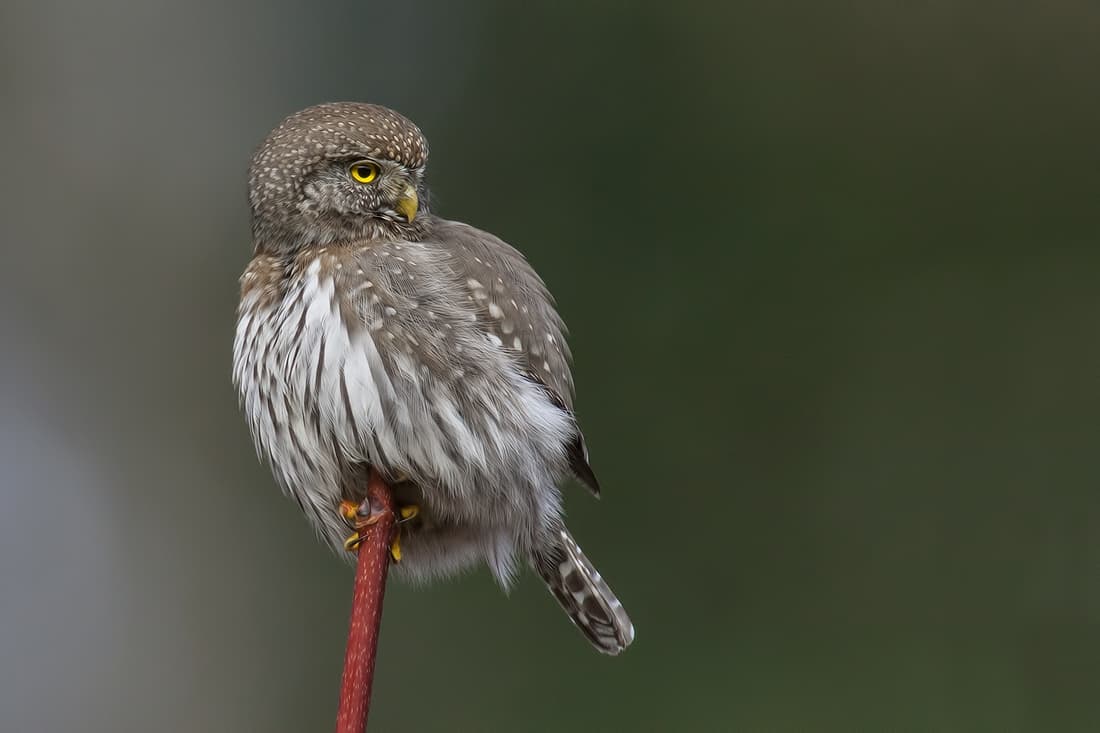
Scientific Name: Glaucidium Californicum
A northern pygmy owl is mostly dark brown and white, it has a smooth round head and a long tail. Its maximum size is 15 to 17 centimeters only, making it one of the smallest owls in North America. Most owls have asymmetrically placed ears and flattened facial discs around the eyes that give them better hearing. Northern pygmy owls don’t have that, and this is why they rely on their vision and hunt during the day.
This diurnal owl has a wide distribution in the mountains of western North America, mainly Canada, Mexico, and the United States. Their habitats include savannas, subtropical and tropical moist forests, temperate forests, and wetlands. These birds inhabit both pure coniferous forests and forests with a mixture of conifers and deciduous trees. Such habitats provide them with convenience in catching prey, nesting, and roosting. Unfortunately, these owls are vulnerable to many human threats, as well as habitat loss and high-severity wildfires.
Small yet ferocious, the northern pygmy owl is a fierce hunter with a taste for songbirds. Their favorite ones are blackbirds, hummingbirds, jays, warblers, and wrens. It is also common for these songbirds to gather together and mob northern pygmy owls to protect themselves. However, they also take on birds, large insects, and small mammals as well as invertebrates and vertebrates. When hunting, it sits quietly to detect the prey and snatch it later. But this is not the ferocious part; their behavior is similar to a shrike’s when it comes to food. When a northern pygmy owl finds extra food, it hangs its prey on thorns, or caches the prey in tree cavities.
4Short-Eared Owl
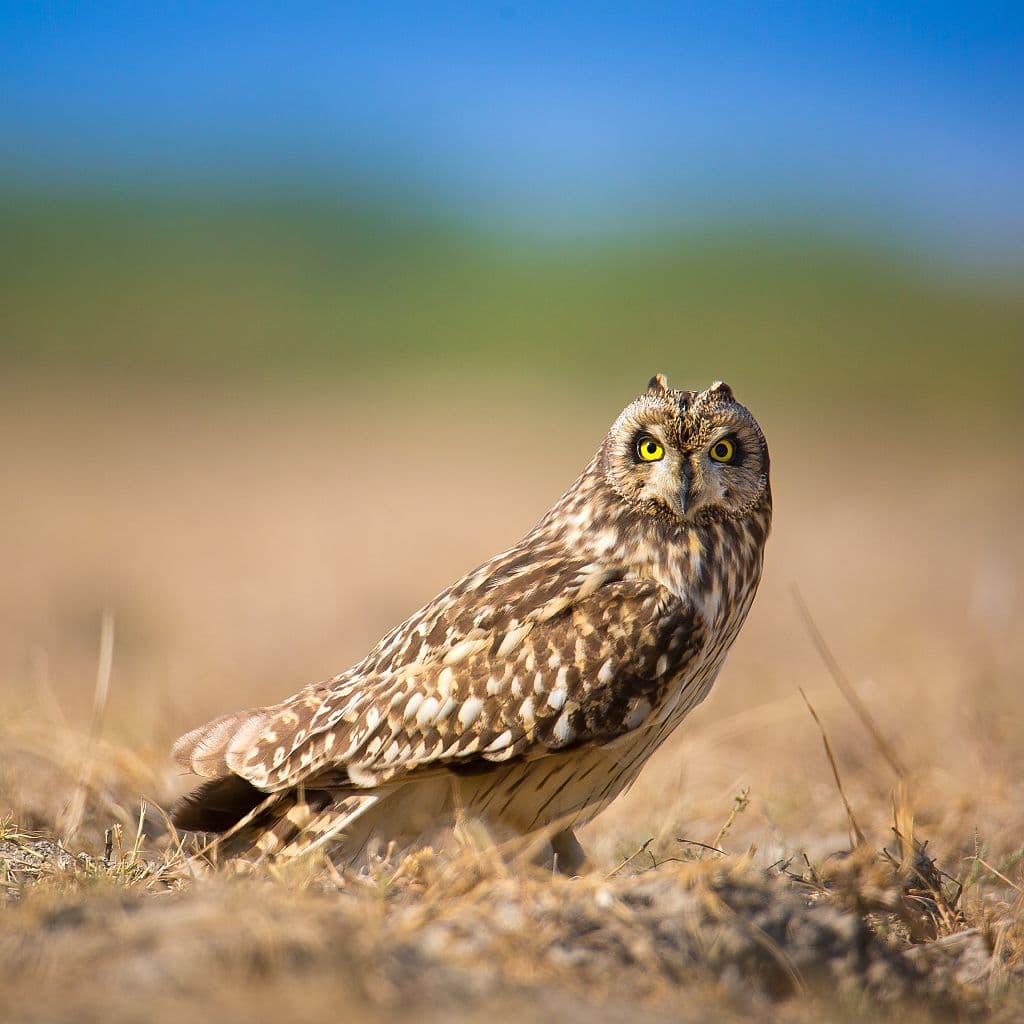
Scientific Name: Asio Flammeus
Got its name from the little tufts of feathers that look like short ears, short-eared owls are one of a kind. Being medium-sized, a short-eared owl measures only from 34 to 43 centimeters long. The plumage of the owl is mottled tawny to brown, while its tail and broad wings are barred. It has a big head and large orange eyes, and its bill is short, strong, hooked, and black. The thing is that short-eared owls only display these tufts when they are in a defensive pose. With their strong wings, they are able to fly long distances, even over the wide open ocean to hunt.
This diurnal owl species lives in grasslands, marshes, open country, savannas, and tundras on all continents except Antarctica and Australia. This makes it one of the world’s most widely distributed owls. Being both diurnal and crepuscular, short-eared owls hunt during the daytime and twilight periods. Some of their common prey included rodents, especially voles, but they also feed on birds, insects, and small mammals. While their population is very large, they are still facing threats from human activities such as habitat degradation and habitat loss. Along with that, climate change, increasing predation risk, and reducing prey availability also play a part in decreasing their number.
5Snowy Owl
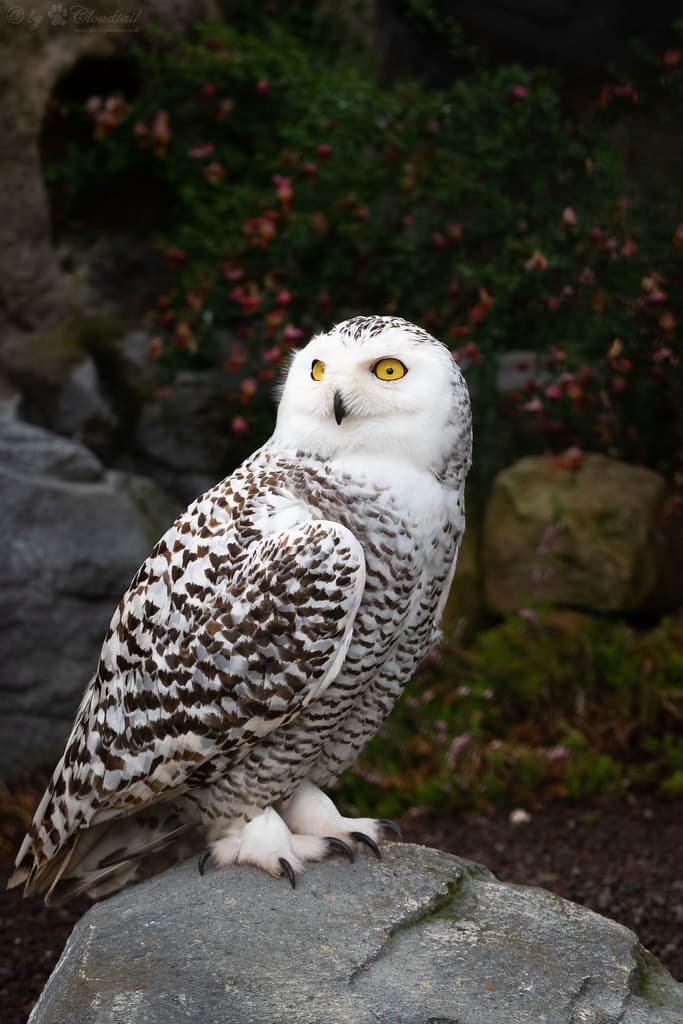
Scientific Name: Bubo Scandiacus
Probably the largest of them all, snowy owl is one of the diurnal owl species that are active during the day. Male snowy owls are around 52.5 to 64 centimeters in total length, while females are from 54 to 71 centimeters. Also, it is the only owl with mainly white plumage, and the beauty of this raptor is absolutely astounding. Males are more white, while females usually have heavy flecks of dark brown; it is very easy to tell them apart. Snowy owls have small heads with small shallow facial discs and bright yellow eyes. The cutest part is their thickly white feathered toes; in fact, their toe feathers are the longest of any owl.
Snowy owls aka Arctic owls, are native to the Arctic regions of both North America and the Palearctic. Their wintering sites include coastal dunes, fields, islands, lakeshores, marshes, meadows, moorlands, prairies, steppes, and more. When there are harsh winds or storms, both adults and young will shelter behind rocks to shield themselves. These owls are active during the day, especially in summer, where they hunt anything their large talons can grab. They rely on their keen sense of hearing to hunt prey that hides underneath the snow or a thick layer of plants. Usually, snowy owls hunt northerly water birds, rodents, and small mammals, and they often swallow their prey whole. For larger prey like lemmings and voles, they will tear it apart; sometimes they remove the head first.
Population & Threats
The population of this owl species is declining globally due to global warming, which affects their breeding range. Back in 2017, they were considered Vulnerable on the IUCN Red List.
Related Post: Crepuscular Owls