What comes to your mind when it comes to animals native to Madagascar? Madagascar is home to so many animal species found nowhere else on Earth, and this is what makes this island special. Did you know that the prehistoric breakup of the supercontinent separated the Madagascar-Antarctica-India landmass from the Africa-South America landmass? Then, Madagascar split from India, and the fauna and flora began to evolve 88 million years ago. Below are 10 animals endemic to Madagascar that you probably haven’t seen; let’s have a look.
1Aye-Aye
Scientific Name: Daubentonia Madagascariensis
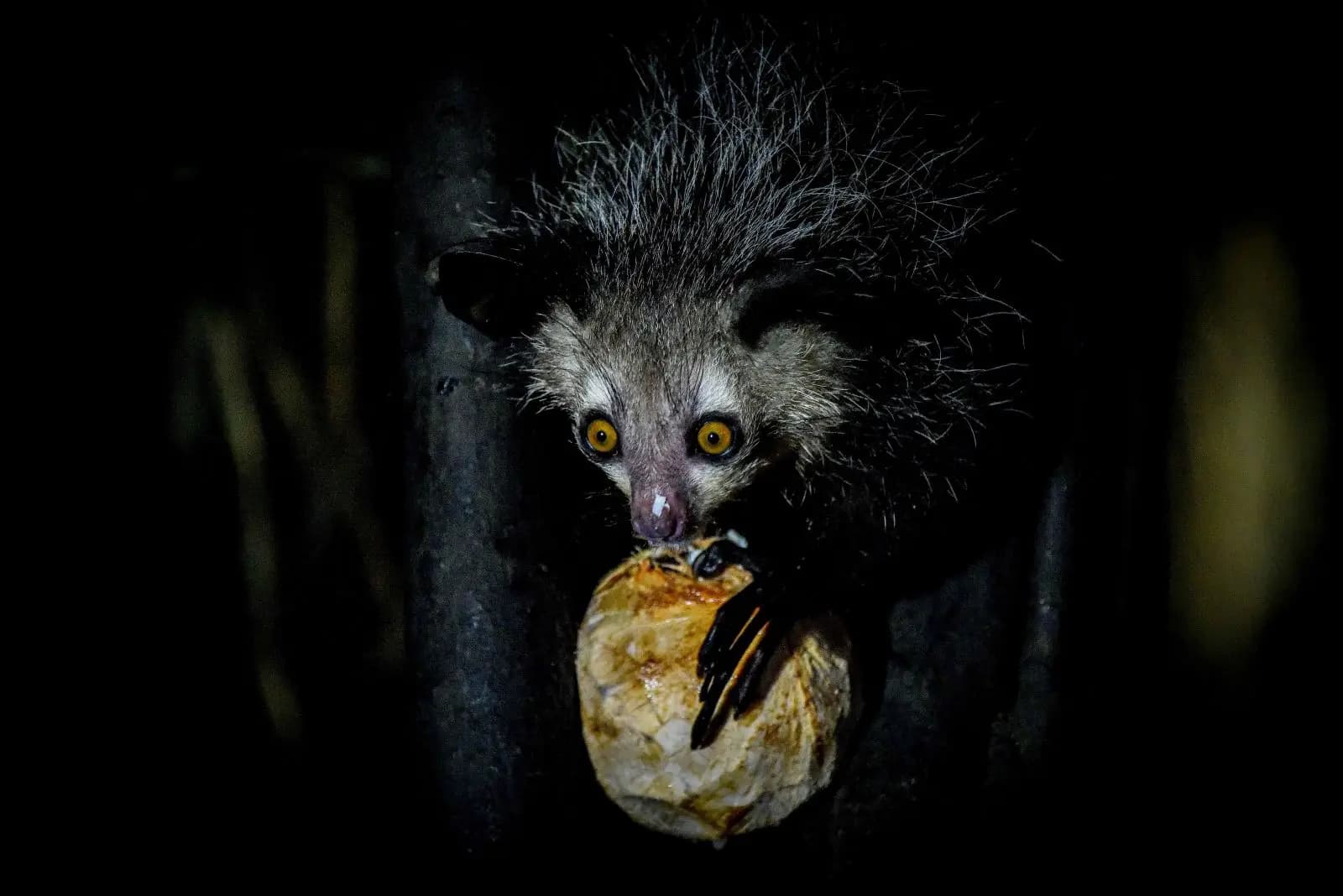
We have seen lemurs, but who knows a lemur species could look this freaky? Introducing the aye-aye, a long-fingered lemur native to the island of Madagascar. It is the largest nocturnal primate in the world, measuring 60 centimeters, with a tail of the same or longer length. As a juvenile, it is silver in the front, with a stripe down its back. Adults’ bodies are covered in thick brown and/or yellow fur, with long and coarse white hairs called guard hairs. When the aye-aye gets agitated or excited, this guard hair will stand on end, making the animal appear twice as big. One of the most distinctive features of the aye-aye is its third finger. It is so much thinner and longer than the other fingers, and it has a hooked nail.
The aye-aye lives on the east coast of Madagascar, inhabiting dry deciduous forests or rainforests. This primate is arboreal and nocturnal, and it spends most of its life in trees and comes to eat at night. Looking for food seems so strategic with an aye-aye; it taps on trees and listens for echoes. The tap is 8 times per second, and if the echoes signal hollows, it’ll know there will be grubs inside. Then, this primate will use its teeth to create a hole big enough for its middle finger to reach the meal. Apart from insect larvae, it also feeds on some fruits, nuts, and seeds.
Endemic to Madagascar, the aye-aye is listed as Endangered on the IUCN Red List. Deforestation causes the loss of their habitat, forcing many of them to live in cultivated areas instead. People also perceive them as a bad omen or pests, and kill them in some areas. Aye-aye almost went extinct once, and it will be again if deforestation and killing continue.
2Comet Moth
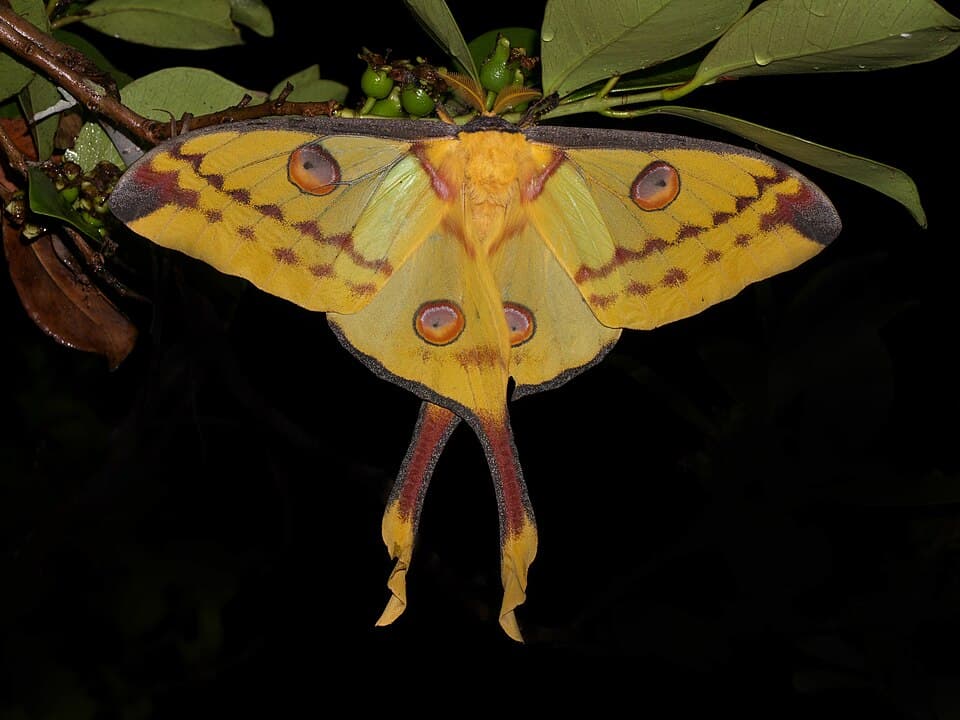
Scientific Name: Argema Mittrei
The comet moth aka the Madagascan moon moth, is a large and striking moth species native to Madagascar. It is one of the largest silk moths in the world, with a wingspan of 20 centimeters and a tail span of 15 centimeters. The wings of this moth have large eyespots, which intimidate and keep predators away from attacking them. Males have long and feathery antennae, while females have shorter and thinner antennae, and that’s how you differentiate them. Where does it get its name from, though? The tails of the moth elongate from its lower wings, which resemble the streaks that trail behind a comet. Hence, the name.
You can only find the comet moths in the rainforests of Madagascar. Just like other moths out there, this one also cannot feed, and it lives only for 4 to 5 days. During those living days, they look for mates to reproduce, and the cycle begins again. But as caterpillars, they voraciously feed on host plants such as cider gum, marula, and sweetgum for two moths before emerging as moths. Comet moths are also facing threats from deforestation and habitat loss.
3Fossa
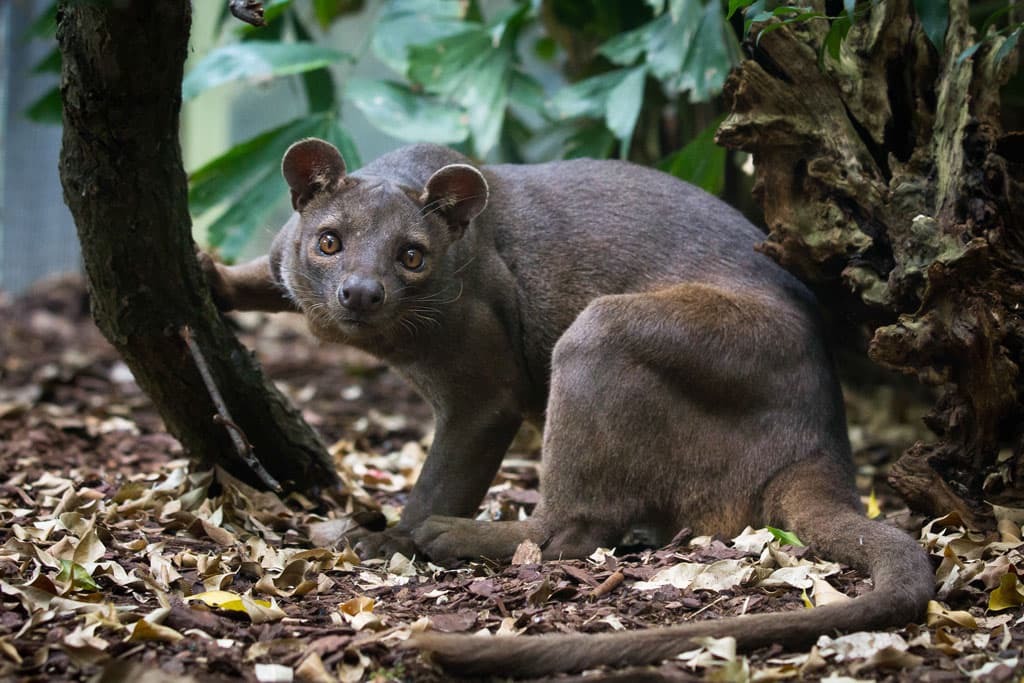
Scientific Name: Cryptoprocta Ferox
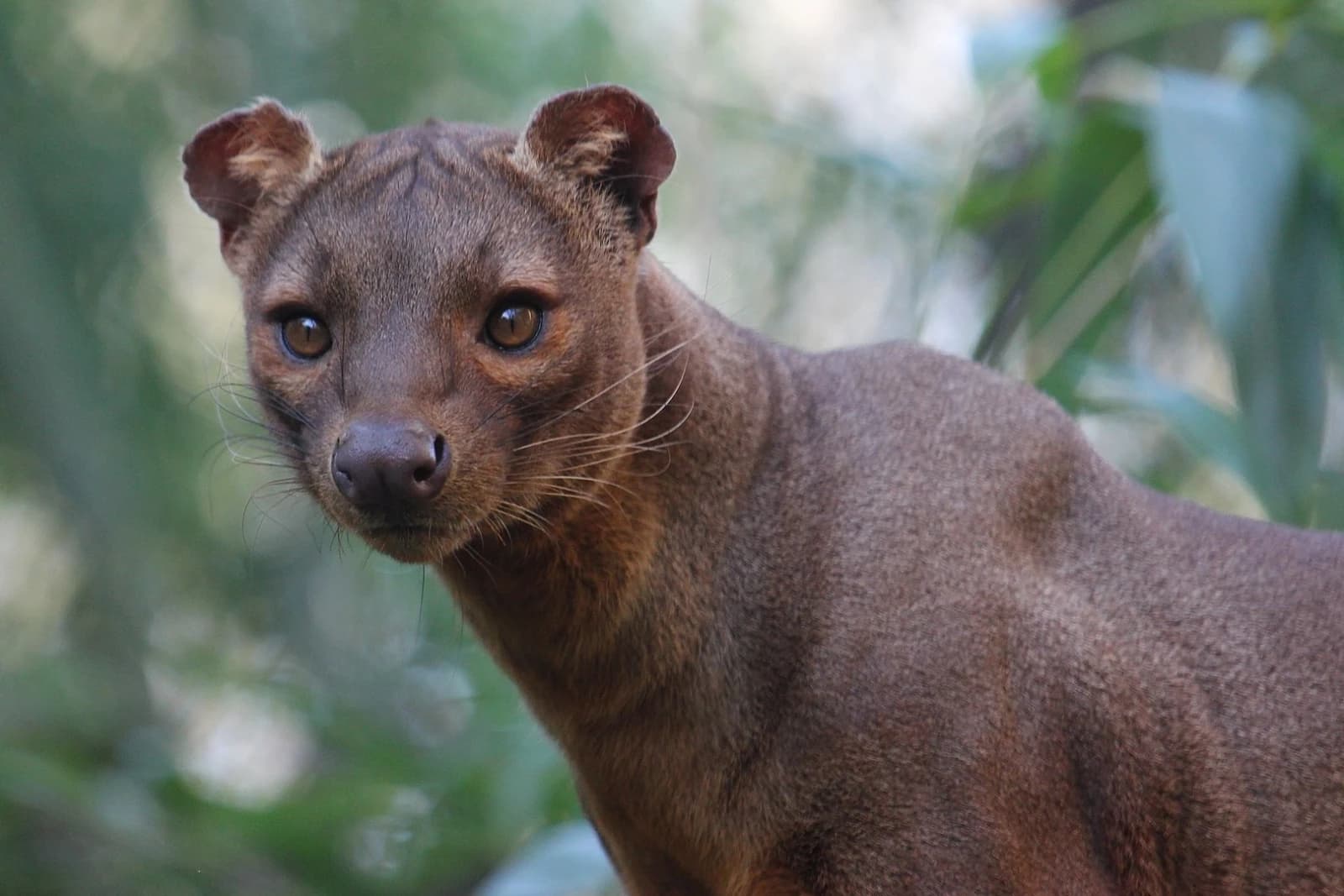
Looks like both a cat and a dog, a fossa is actually one of the apex predators of Madagascar. Reaching a length of 70 to 80 centimeters, this mammal does not appear that harmful at all. Until you know about its semi-retractable claws and its ability to climb up and down trees headfirst. Also, it has very flexible ankles and strong pads on its paws that allow it to readily grasp tree trunks. A fossa has a slender body and muscular limbs, and a tail that is almost as long as the rest of its body. It has a mongoose-like head with large rounded ears and a broad muzzle. Males are larger than females, but both sexes have short and straight fur that is relatively dense. Adults are reddish-brown in color, while juveniles are either gray or nearly white.
Endemic to Madagascar, the fossa lives in forests across the island, mainly dry deciduous forests, rainforests, and spiny forests. They are solitary, and they spend most of their time both in the trees and on the ground. Half of its diet consists of lemurs, and it also feeds on amphibians, birds, lizards, rodents, tenrecs, and even wild pigs. These carnivores hunt at night, and their excellent senses of hearing, sight, and smell play a very important role in catching prey. Not to mention that long tail, maneuvering and swinging amongst tree branches is a piece of cake. The fossa is considered Vulnerable on the IUCN Red List, and its main threats are habitat destruction and habitat fragmentation. Even if they don’t have natural enemies in the wild, not having enough food sources and losing their habitats are affecting them greatly.
4Giant Coua
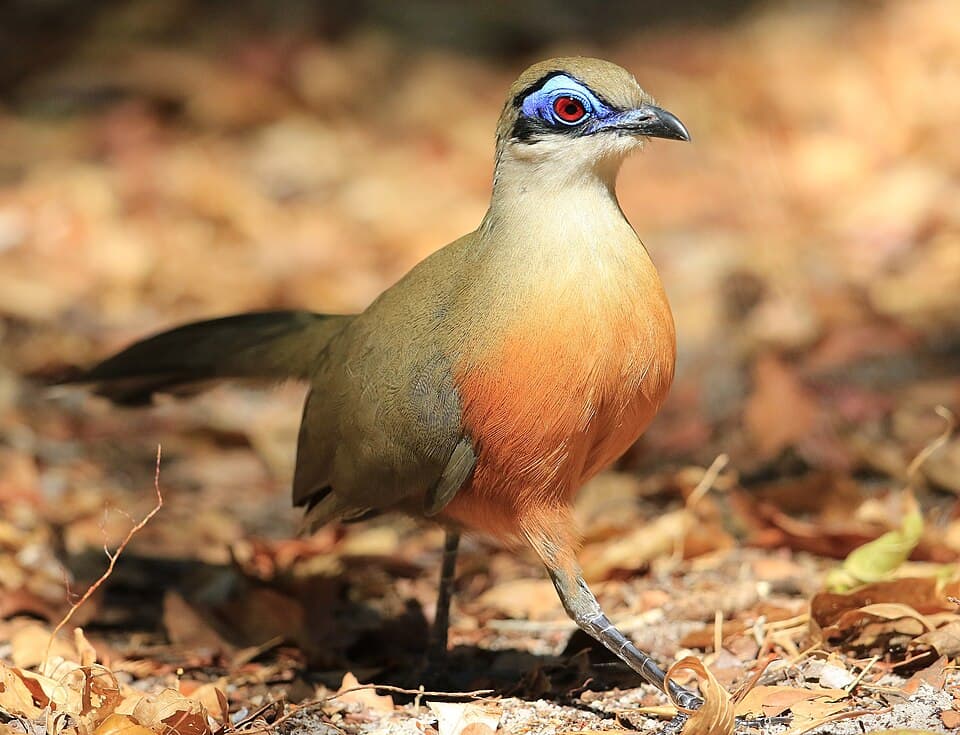
Scientific Name: Coua Gigas
Have you ever seen a bird with such gorgeous coloration around the eyes like this? A giant coua is a large cuckoo that grows up to 62 centimeters, and it is so easy to recognize one. It has a blue patch of bare skin around its eyes and lores, with pink behind the eye. As for its body, it is olive-gray with dull bronze sheen upperparts, while the underparts are creamy white. The tail is glossy dark bronze with white tips, while its upper tail-coverts are darker.
The giant coua is one of the animals native to Madagascar, inhabiting dry forests of southern and western Madagascar. One special ability is that it has a reversible third toe that allows it to scramble through entangled vines for food. Normally, these birds feed on insects, reptiles, seeds, and some small vertebrates like chameleons. They forage by quietly walking on the ground, searching for prey on the forest floor among the leaf litter. It runs quickly when pursuing prey or leaps up in the air to catch a flying insect. Things are the same when it escapes danger, it prefers to run quickly or climb onto a tree branch. It does not like to fly; even if it does, it is only over a short distance. Their population is rapidly decreasing population from deforestation and hunting, resulting in being Vulnerable on the IUCN Red List.
5Helmet Vanga
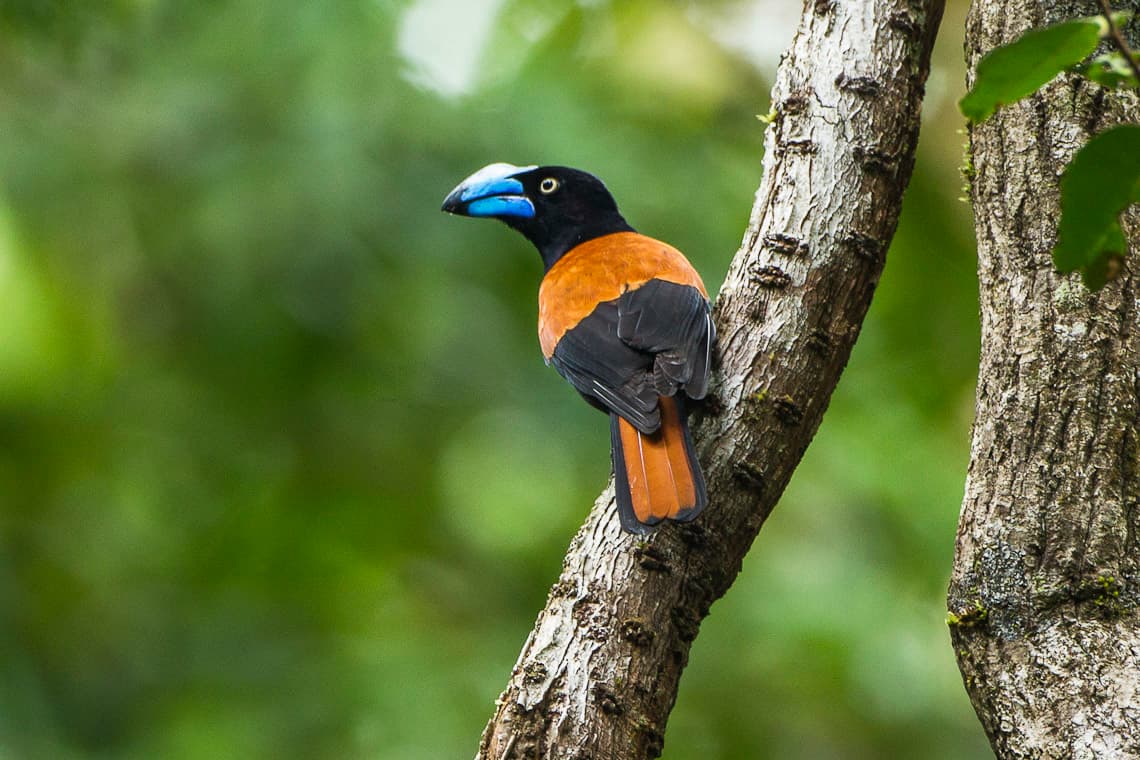
Scientific Name: Euryceros Prevostii
Looks very similar to a hornbill, but different; a helmet vanga is one of its own kind. A helmet vanga has a blue-black background color on its head, neck, throat, breast, and belly, with rufous back, mantle, and wings. The long and broad tail of the bird is black below and rufous above. Its distinct feature is the huge arched blue bill with a black tip that is 5 centimeters long and 3 centimeters deep. The bird measures 28 to 31 centimeters long, and both sexes look the same.
Not different from other animals endemic to Madagascar, its range is not too large. It only inhabits lowland and lower montane rainforests in the northeastern part of Madagascar. Where it lives, it feeds on insects, invertebrates, and vertebrates like beetles, chameleons, cockroaches, crabs, frogs, lizards, snails, and spiders. They forage between 3 and 10 meters above the ground, and they dismember larger prey on the forest floor before eating it. These birds are monogamous, and the pair works together to construct the nest and take care of the eggs. Unfortunately, the helmet vanga is threatened with extinction due to habitat loss, and they are listed as Vulnerable by the IUCN.
6Madagascar Ground Boa
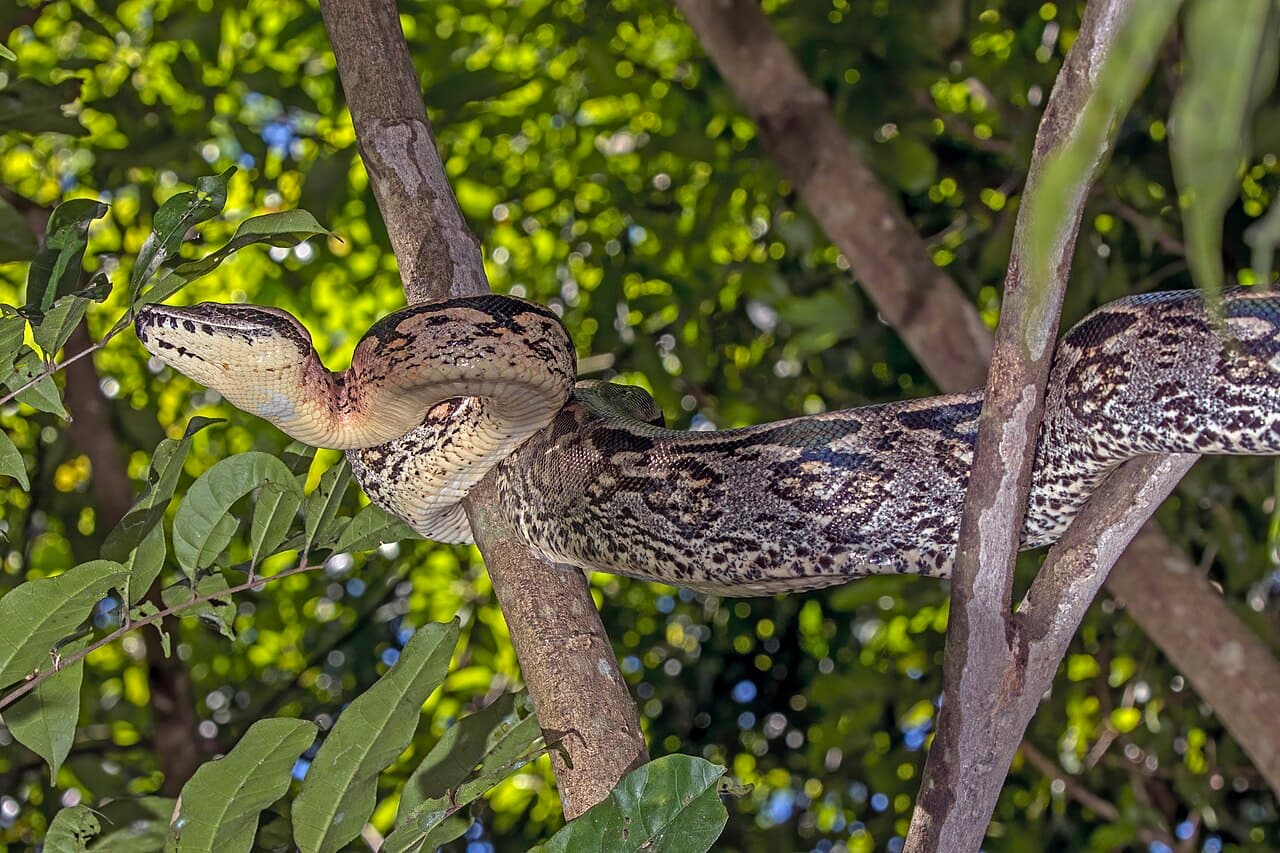
Scientific Name: Acrantophis Madagascariensis
King of the serpent, the Madagascar ground boa is the largest snake species on the island of Madagascar. A female measures up to 3 meters, and a male is smaller, reaching only 2.4 meters in length. Both sexes have a pale reddish-brown and gray ground color, with a pattern of dorsal rhombs with black or brown outlines. The pattern sometimes has a diamond shape, and sometimes it looks like a zigzag. On the sides of the boa are black oval spots with reddish patches inside.
Endemic to Madagascar, this ground boa occurs in central, northern, and western parts of the island. It inhabits sparse and open woodland, especially in dry deciduous forests, where it takes shelter in burrows and fallen trees. Boa has one main killing method: constriction, and that’s also how the Madagascar ground boas kill their prey. Its diet consists of small birds and mammals, including bats, ducks, lemurs, rodents, and tenrecs. Their population is doing well, but there are still threats such as agricultural and industrial development, deforestation, and human population growth. People also collect them for the illegal pet trade and hunt them for bushmeat and skin products.
7Oustalet’s Chameleon

Scientific Name: Furcifer Oustaleti
This is one of the animals native to Madagascar that not a lot of people know about. An oustalet’s chameleon reaches a maximum length of 68.5 centimeters including its tail, making it the world’s largest chameleon. It has a slender body, and its head bears a high casque with several crests. Males are brownish or gray with reddish-orange feet or underparts. Females are more colorful, with a red base color or markings, sometimes green and yellow. This chameleon also has a dorsal crest that contains 45 or more small triangular spines that run along its back.
The oustalet’s chameleons are found throughout the island of Madagascar, inhabiting a wide range of habitats. Some of the habitats are agricultural areas, deciduous forests, degraded forests, humid evergreen forests, montane savanna, and urban settings. Large ranges also mean a large diet, and they feed on large insects and vertebrates they come across. As opportunistic hunters, they watch and wait for prey to pass by within the range of their long tongue. Occasionally, these lizards also feed on fruits. Both males and females are solitary and territorial, and they only get together during the breeding season. The oustalet’s chameleons are quite popular in the international pet trade, but their population is still doing well.
8Tomato Frog
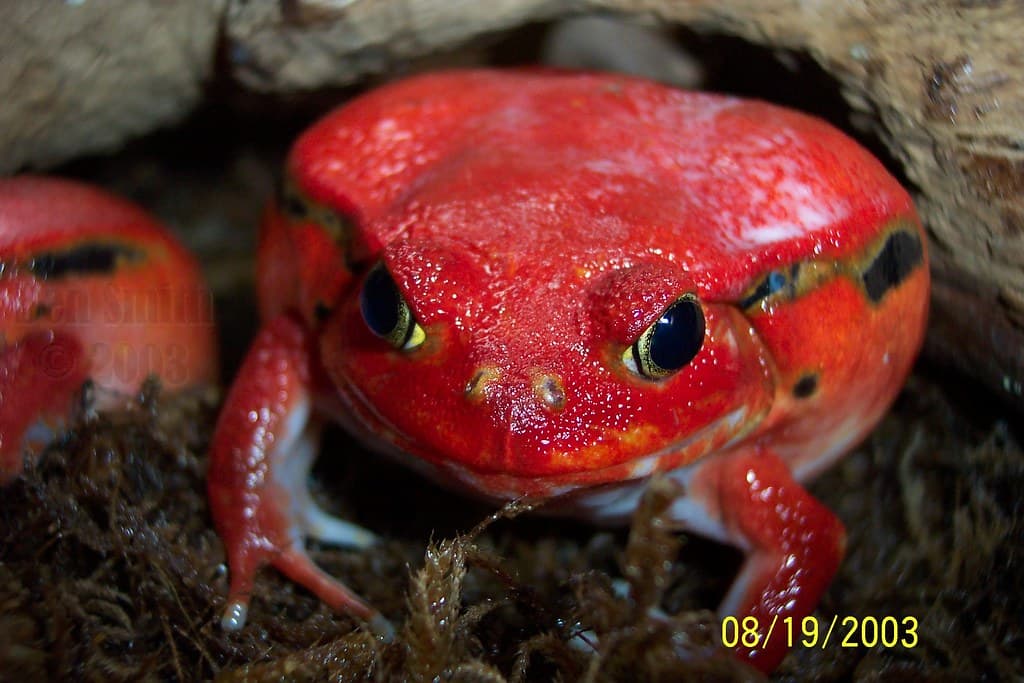
Scientific Name: Dyscophus Antongilii
You can probably already tell how it got its name: the bright red color, indeed. A female tomato frog is larger and grows up to 10 centimeters, while a male reaches 5 to 7.5 centimeters. Most females are bright dark red or reddish-orange, with yellowish bellies, and black spots on the throat sometimes. Males and juveniles are less bright, and they are more dull orange or brownish-orange. The body of this frog is round and robust, and it has smooth skin and short limbs. If you look closely, you can see that this frog does not have webbed feet, so swimming is not its forte.
The tomato frogs are endemic only to Madagascar, living along the eastern rainforest belt of the island. They inhabit rainforests and swamp forests, where they reside in slow-moving and almost stagnant waterways and ponds. At night, they move around the forest floor to look for small insects and invertebrates to feed on. When threatened, a tomato frog puffs up its body to intimidate the predator. And when a predator like a snake grabs it, it secretes a white, gooey, and thick substance from its skin. This substance numbs the predator’s eyes and mouth, which causes the predator to release the frog to stop feeling numb.
Though not deadly, this substance can also cause an allergic reaction on human skin.
You probably think a frog’s population should be good and stable, but no. The appearance of a tomato frog makes it very popular in the pet trade. Poachers collect and sell them to hobbyists, causing their population decline. Another threat is habitat loss due to agricultural expansion, pollution, and wetland conversion.
9Von der Decken’s Sifaka
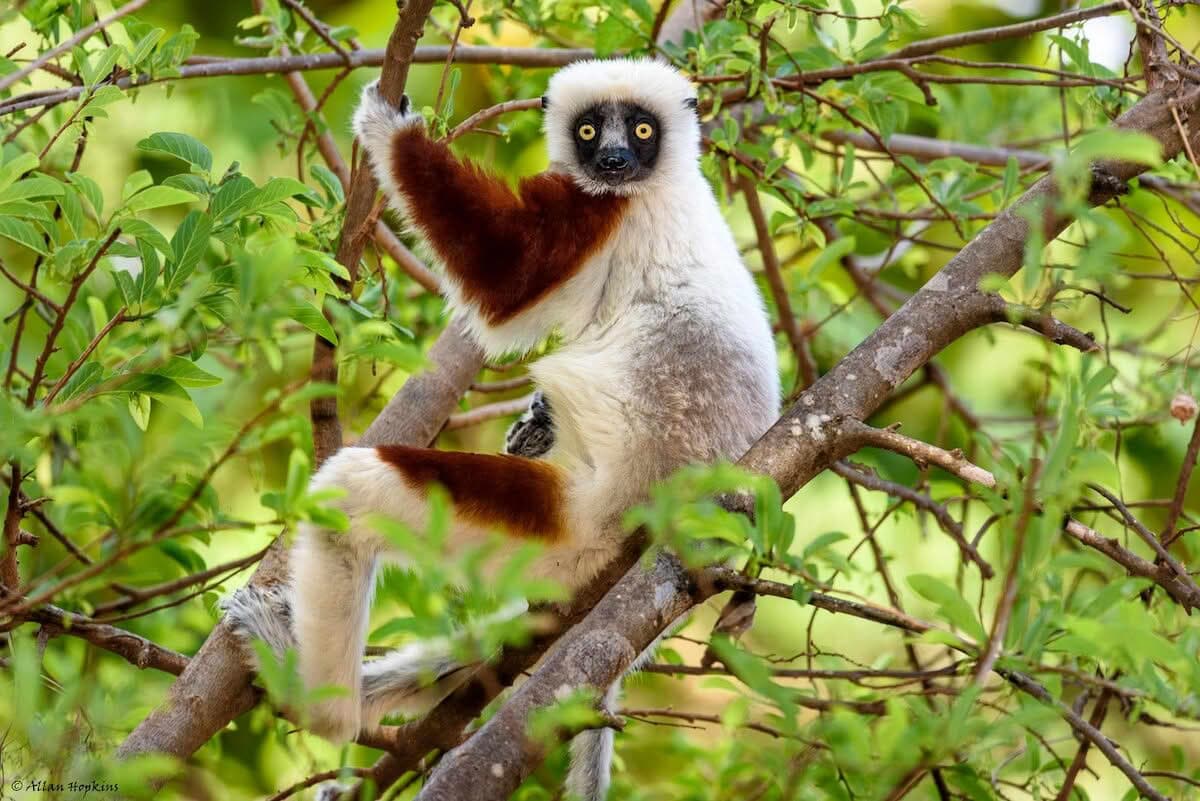
Scientific Name: Propithecus Deckenii
Here you are looking at a sifaka (pronounced “shi-fa-ka) lemur, a species with a very unique appearance. Some might not even believe that something looking like this is real. This one reaches a length of 92 to 107 centimeters, but up to 48 centimeters of its total length is its tail. A Von der Decken’s sifaka is creamy white in color, with tinges of pale brown, silver-gray, or yellow-gold, on its back, limbs, neck, and shoulders. The face is bold black and hairless, making their bright yellow-orange eyes stand out. It has strong legs that allow it to spring from branches, up to 3 meters or more in a single bound. On top of that, they have hook-shaped hands and opposable big toes that help with branch grasping.
This lemur is endemic to the western parts of Madagascar, living in arid, deciduous, and spiny succulent forests. The most fascinating part is that it inhabits one of the most unusual habitats known as “tsingy”. This is where its amazing skill comes in because tsingy is rather is a difficult place to live in. Its athleticism and resilience in traversing inhospitable landscapes of tsingy like limestone formations with needle-like spears and razor-sharp edges. Despite the rugged and difficult terrains, these blade runners can climb, move, and leap, through the obstacles with ease. Through its range, this primate lives in a group of two to ten individuals, feeding on plant material. The group is matriarchal, meaning adult females are leaders so they make decisions on feeding and movement.
The Von der Decken’s sifaka is considered Critically Endangered on the IUCN Red List. The main threat to their population is habitat loss due to human encroachment and mass deforestation. People also hunt them for meat, and capture them for the illegal pet trade.
10West Indian Ocean Coelacanth
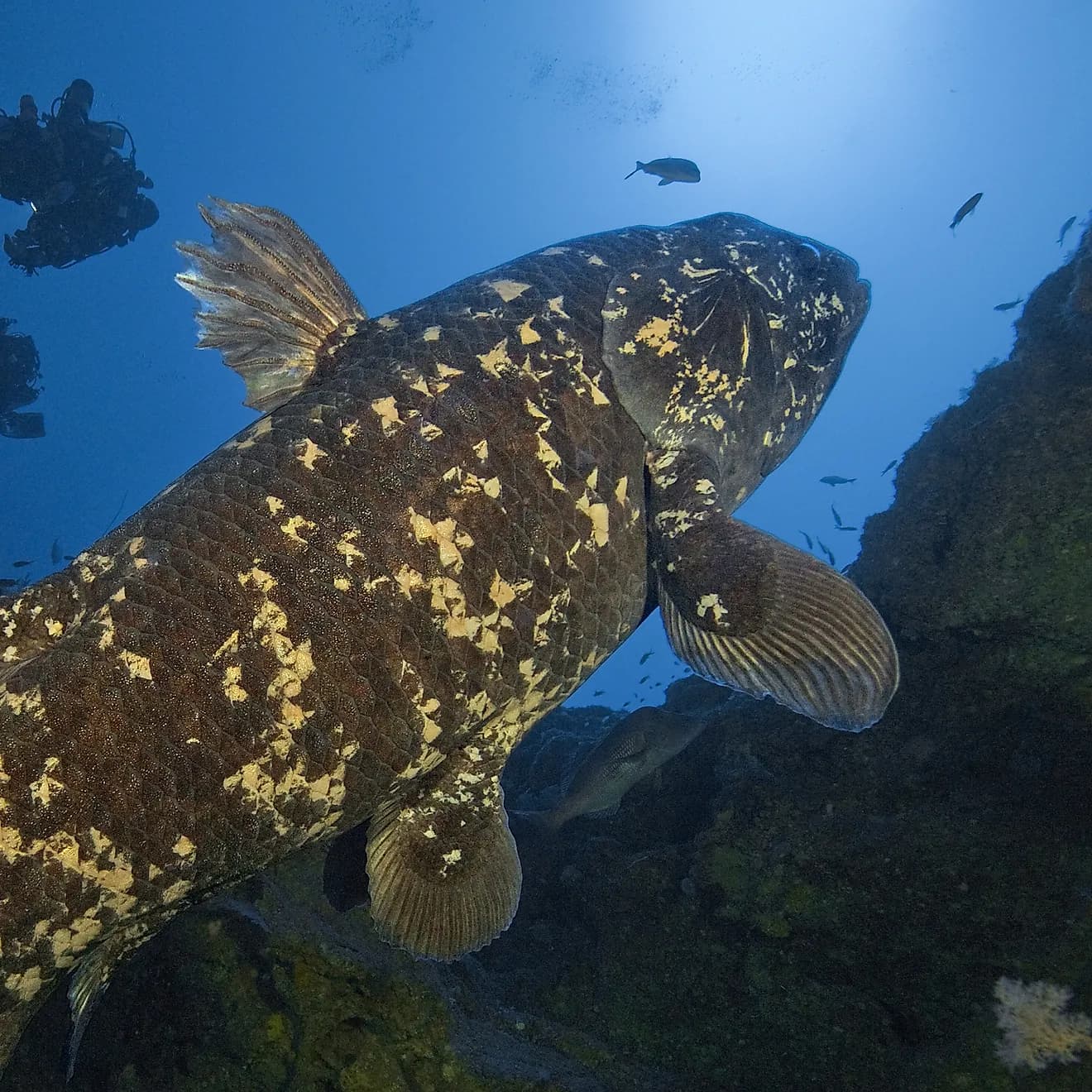
Scientific Name: Latimeria Chalumnae
I am always fascinated by prehistoric-looking animals, and the West Indian Ocean coelacanth is one of those. A male reaches a maximum length of 1.68 meters, while a female’s maximum length is 2 meters. The coelacanth has a deep royal blue background with spots that are useful for camouflage when hunting. One of the unique features of this living fossil is that it is a lobe-finned fish, giving it an appearance like no others. On top of that, it has a special electrosensory organ in the snout called the rostral organ. This organ is filled with a gel that allows this fish to sense low-frequency electrical signals. It acts like the eyes that enable the coelacanth to see in the dark.
This prehistoric fish lives deep in the water, the twilight zone, spending its day in underwater caves hiding from predators. The coelacanth rests in steep rocky slopes of volcanic islands, and comes out at night to hunt. Despite the large size, it is capable of moving very quickly when avoiding danger or capturing prey. It feeds on cuttlefish, octopi, squids, and other fish, and it has a unique way of feeding called “headstands”. This behavior allows the coelacanth to slurp prey from crevices within the lava caves. Plus the intracranial joint, it can open its mouth very wide, a feature that no other living vertebrate has. Not different from many animals native to Madagascar, this one is also facing risks to its population. The coelacanth is listed as Critically Endangered on the IUCN Red List, with under 500 individuals in the wild today.
Related Post: Cute Animals In Japan