
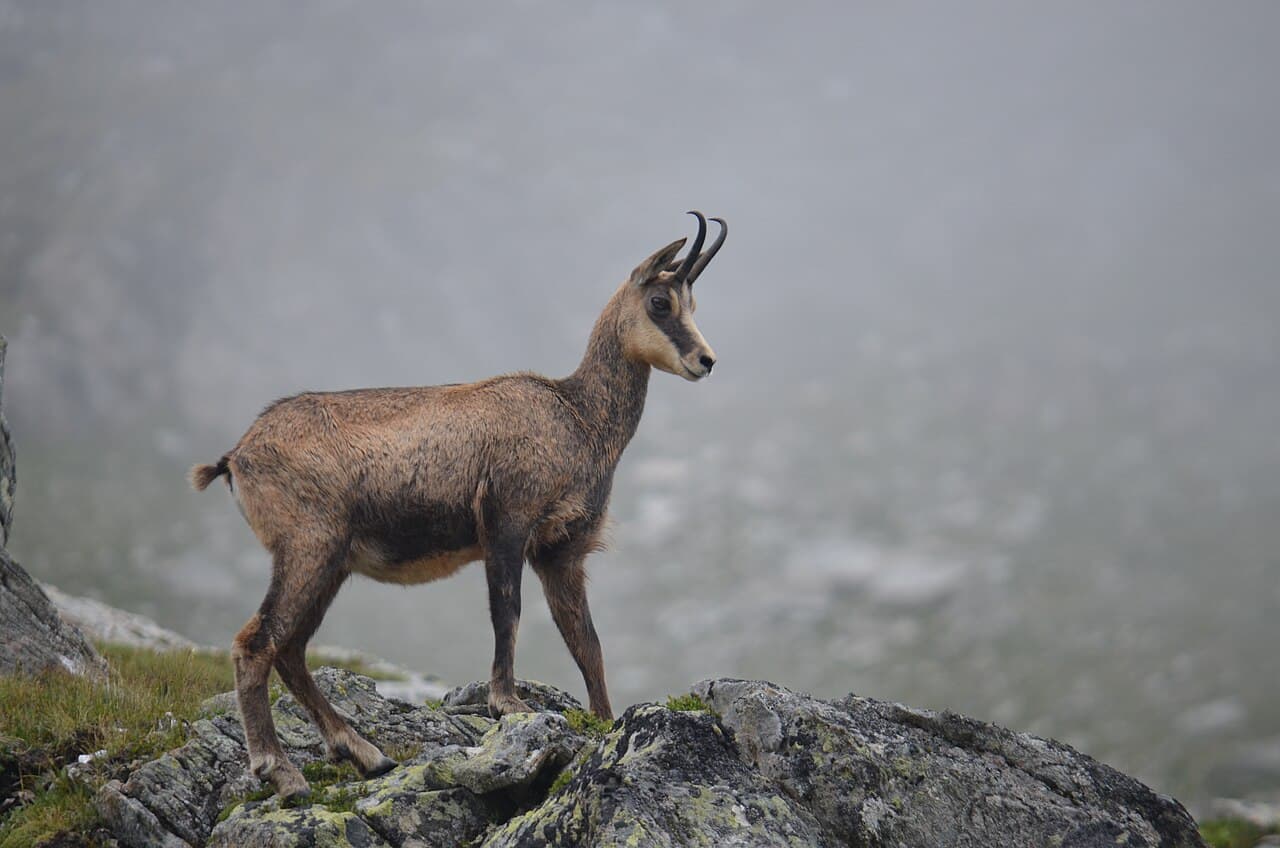
Chamois is definitely one of the mountain antelopes that you rarely hear of, and they are not so common. It is a goat-like mountain antelope with a very interesting appearance, especially its face and horns. But there is always more to an animal than just its looks, and we will look into that today. Let me know if you find chamois interesting, this bovid is one of a kind.
1Appearance
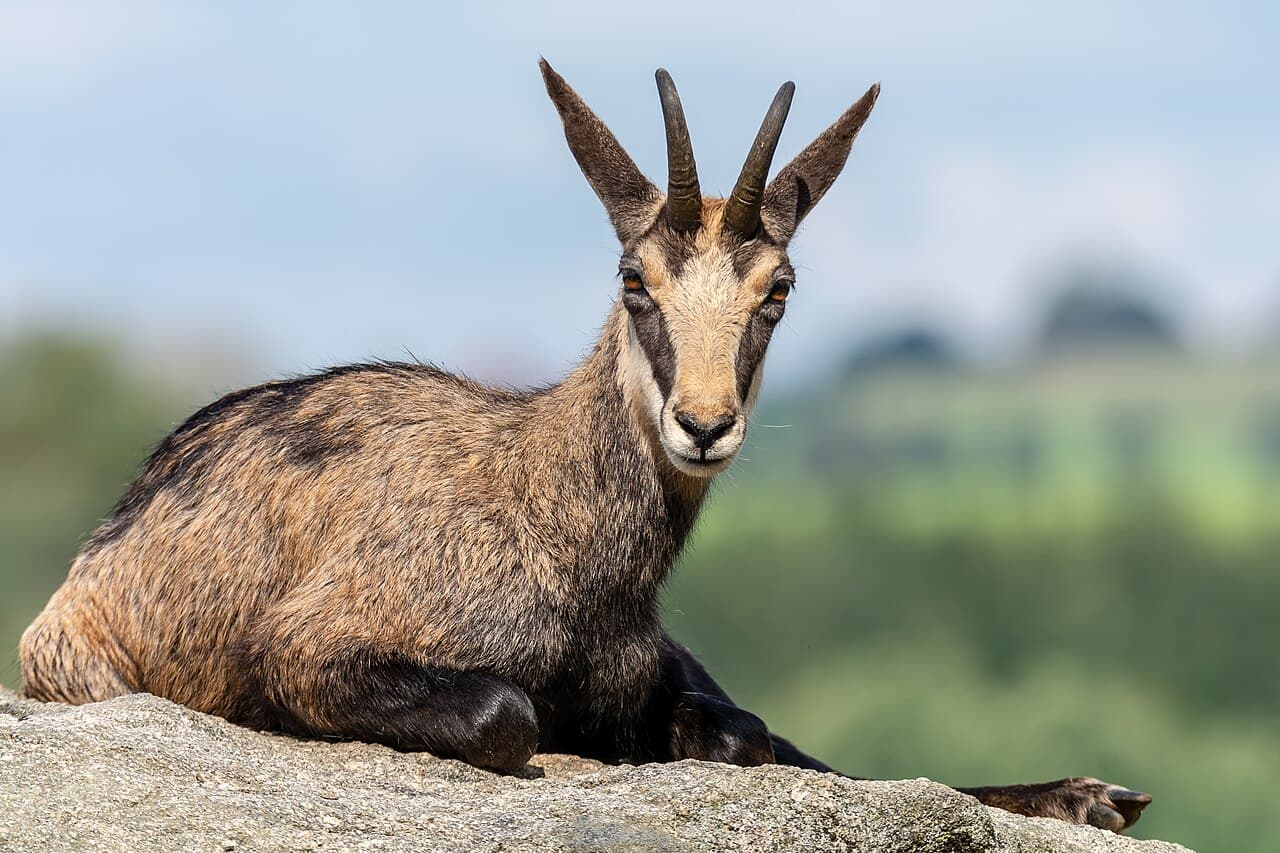
Chamois is a small mountain antelope, reaching a height of only 70 to 80 centimeters maximum. Males are larger than females, but both of them have short and straight horns that hook backwards near the tip. However, males have thicker horns than females. If you look closely, you can see white contrasting marks on the sides of a chamois’ head. And there are also pronounced black stripes below their eyes.
This mountain antelope is composed of two types of fur to protect it from the harsh climatic conditions. The outermost layer is the surface fur, and it is coarse enough to provide insulation for the animal’s body. As for the underlying fur, the woolly fur, is very fine, and it becomes sparser in the summer. Its fur has a rich brown color in summer, and it turns gray and thicker in winter. People use the hide of chamois to make leather, and it is very absorbent and smooth. People use it for buffing, cleaning, and polishing because it produces no scratches.
2Behavior
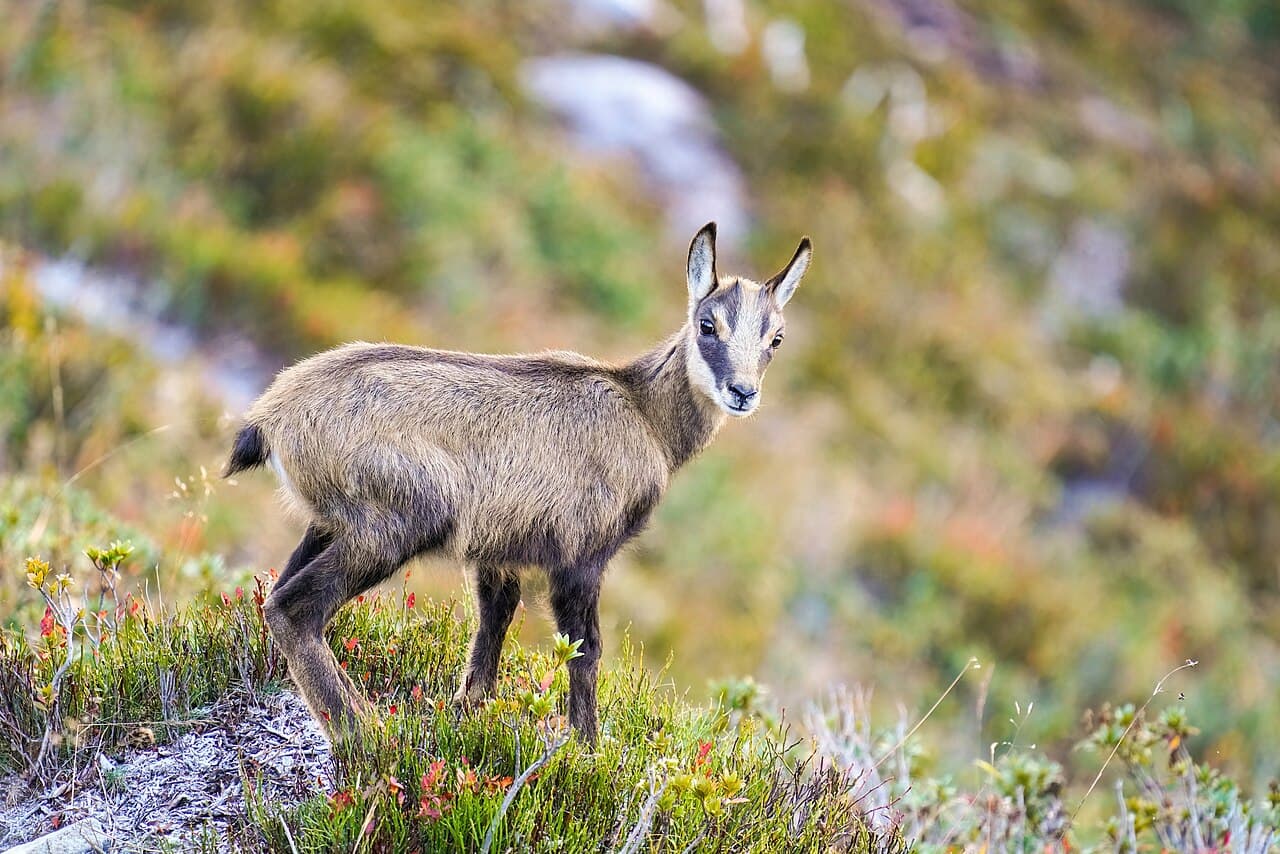
Being social animals, female chamois and their young live in herds of up to 15 to 30 individuals. As for adult males, they live solitarily for most of the year, and only come together during the rut season. The rut season is in late November to early December, and males engage in very fierce battles. They fight to assert superiority, and it leads to the death of one or both of the combatants. A few hours after birth, baby chamois follow their mother everywhere. What’s interesting in that if a mother died, other females in the herd may try to raise the young.
3Feeding & Habitats
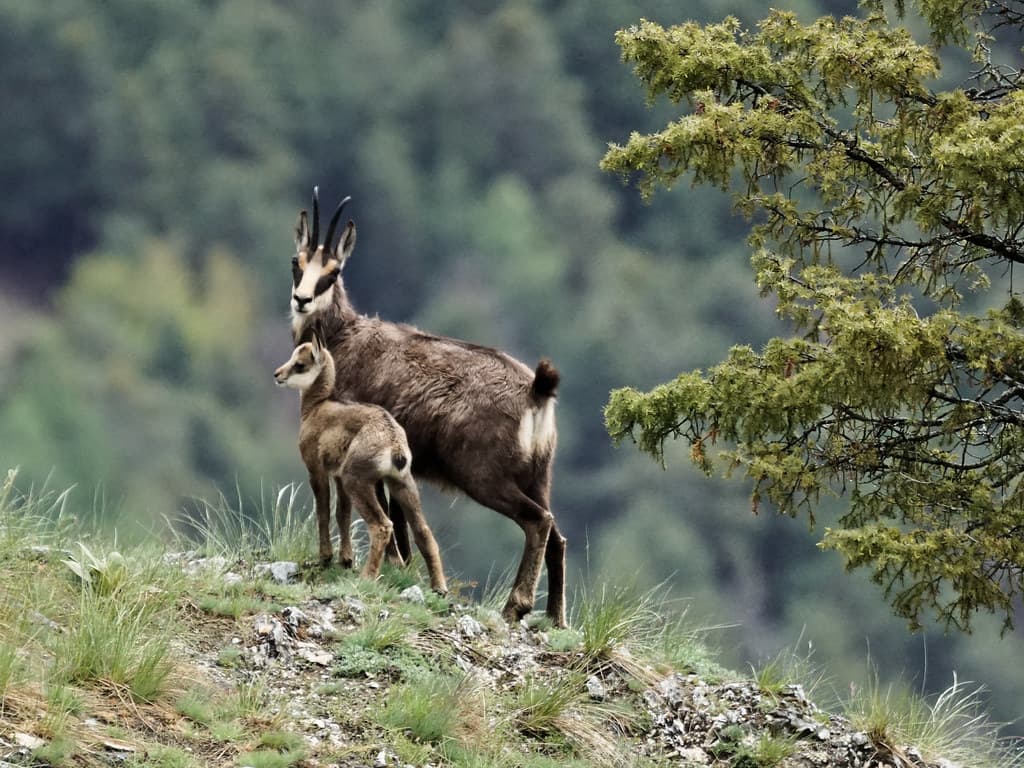
Not different from other bovids out there, chamois eat a wide variety of vegetation available in their habitats. In the summer, they feed on herbs and highland grasses. As winter comes, they survive on barks, conifers, and needles from trees. This goat-antelope is native to mountainous parts of Europe and Western Asia, and it has also been introduced to New Zealand. It inhabits the Alps, where it lives in precipitous, rugged, and rocky terrain. Their hooves are smooth in the center, but hard on the edges, which provide agility and good grip on the cliffs. Chamois also has a population in mountain forests, where there is plentiful food and shelter. Forest chamois often have a layer of resin on their horns.
Related Post: Oribi Facts