Beautiful vipers sounds like a strange word combination, but that is true. Certain vipers have not only dashing colors but also striking appearances. It is true that they are venomous, but they are just so pretty as well. Yes, I am that weird friend who finds snakes, especially vipers, gorgeous. This list of beautiful vipers includes my personal favorites, and let me know which one you like the most.
1Arabian Horned Viper
Scientific Name: Cerastes Gasperettii
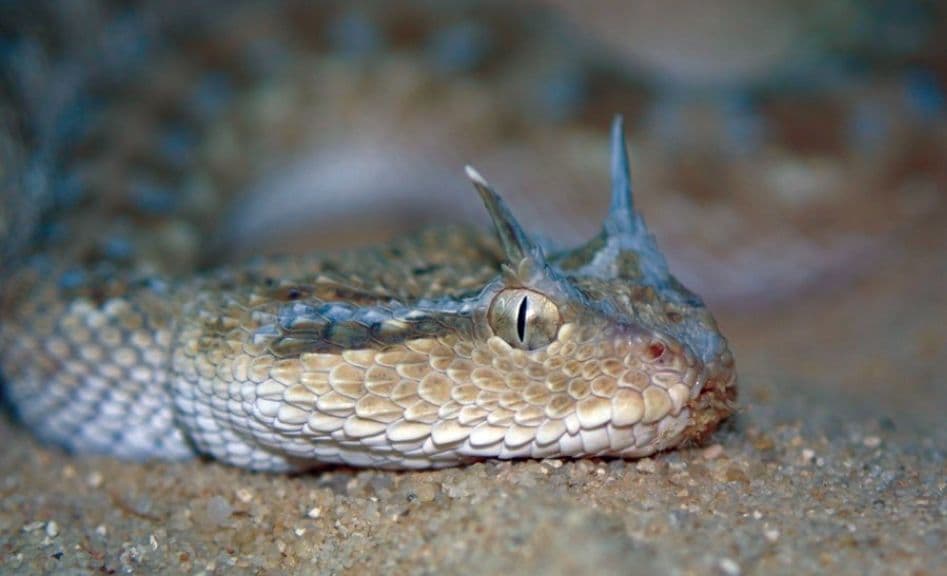
An Arabian horned viper reaches an average length of 30 to 60 centimeters, and 80 centimeters maximum. Females are longer than males, but both sexes have horns on their heads. The beauty is in the horns that this viper possesses, making it one of a kind. These horns are spine-like scales that can fold back when the snake burrows. An Arabian horned viper has a cylindrical body that is heavily keeled, with up to 35 rows of rough scales. The coloration ranges from cream to pale brown with dark blotches or bands that help with camouflage.
Arabian horned vipers are native to the Arabian Peninsula, ranging across Kuwait, Oman, Qatar, Saudi Arabia, the United Arab Emirates, and Yemen. Across their range, these beautiful vipers live in natural habitats such as deserts and shrublands. They like dry wadi beds, dune fields, edges of sparse vegetation, gravel plains, and rocky outcrops. Not different from other serpents out there, this one also primarily feeds on rodents. At the same time, they also prey on insects such as beetles, as well as lizards that they can find. As ambush predators, they bury beneath loose sand or conceal under leaf litter and rocks, exposing only their eyes and snout.
Though fatalities are rare, their venom does cause some discomfort. Their hemotoxic venom can cause local swelling, and severe envenomations can lead to acute kidney injury, blistering, coagulopathy, hemorrhage, and necrosis. Bites are uncommon due to their nocturnal activity patterns and habitats that limit human encounters. However, they will strike to defend themselves when handled or stepped on.
2Eyelash Pit Viper
Scientific Name: Bothriechis Schlegelii
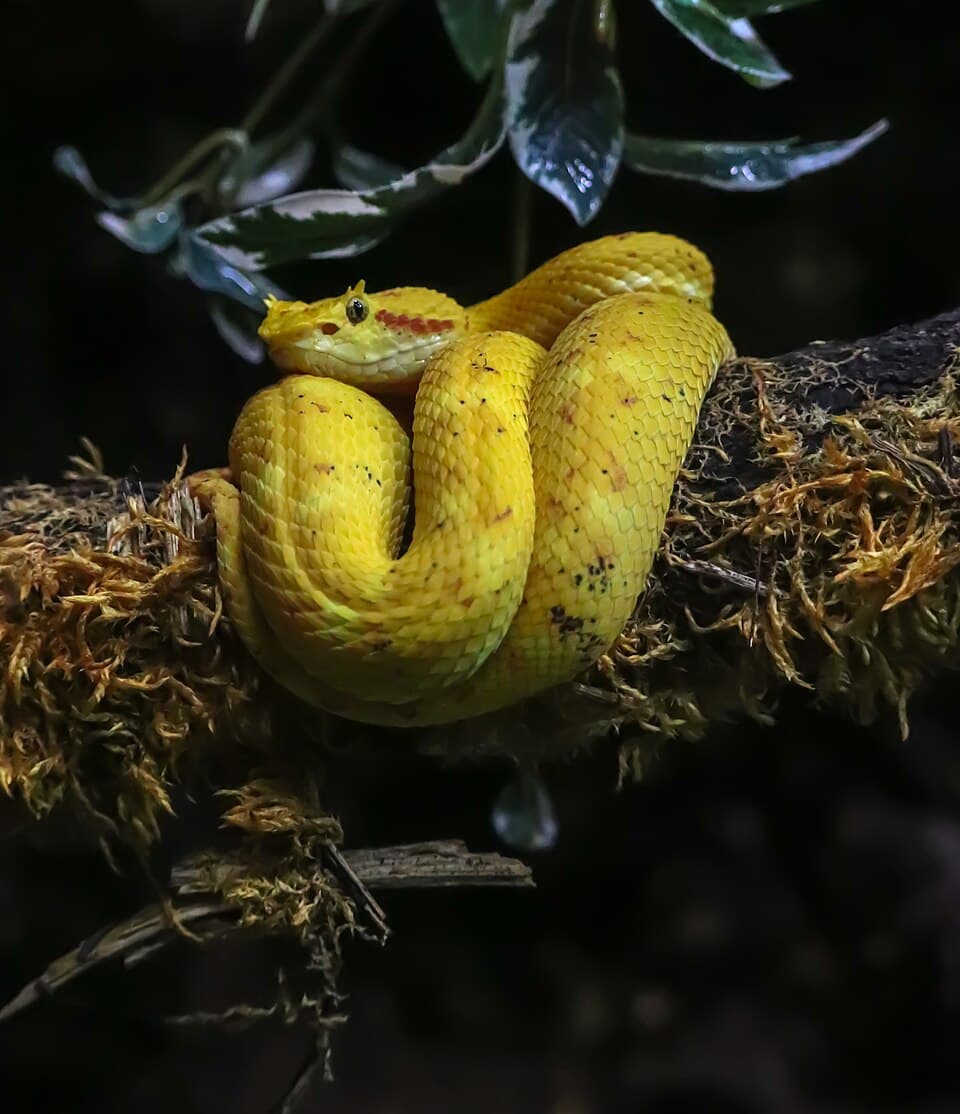
When it comes to beautiful vipers, the eyelash pit viper has to be on the list. It is a small pit viper species that can reach up to 82 centimeters, with females longer than males. Both sexes have a set of modified scales above their eyes that look like eyelashes. These scales help protect their eyes from roots and vines where they often dwell. Their coloration can be bright yellow, green, orange, or pink, depending on where they come from. There are also markings of different colors in various patterns on their bodies. The scales of these snakes are keeled, which are rough and sharp to touch, and give them a unique appearance.
This pit viper has a range from Southern Mexico to Northwestern South America. They live in densely wooded areas, sea-level forests, to streamside vegetation in moist lowlands and foothills, to wooded cloud and montane forests. It is common to find them in low branches of palms and trees, shrubbery, and vine tangles. As an arboreal species, they spend most of their time up in trees. Thanks to their strong prehensile tails, climbing and moving in trees are very easy and simple. Active at night, eyelash pit vipers feed on bats, birds, frogs, geckos, lizards, rodents, and even fish sometimes.
Eyelash pit vipers are docile, and they don’t bite humans unless teased or trampled. Bites from these vipers can cause ecchymosis, edema, and pain at the site, and there are no fatalities reported.
3Spiny Bush Viper
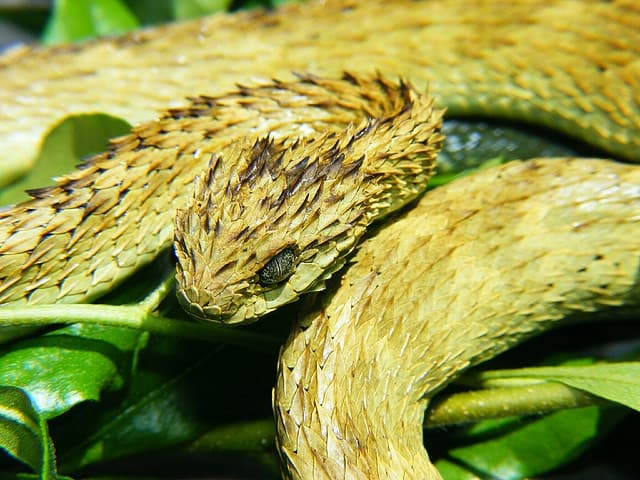
Scientific Name: Atheris Hispida
The elegance is beyond description, and the spiny bush viper has it all. A spiny bush viper has a maximum length of 73 centimeters, and surprisingly, males are longer than females for this species. The body of the serpent is covered with elongated and heavily keeled scales that give it a beautiful look. The scales around the head and neck are the longest, almost look like it has spiky hair. Their coloration is highly variable, such as brown, green, yellow, and even with bluish tones. The colors allow them to blend with leaves, lichen-covered branches, and moss.
This species is endemic to Central Africa, inhabiting forests, plantations, rainforests, rivers, swamps, and woodlands. Spiny bush vipers have excellent eyesight, sense of smell, and vibration that they use to avoid predators and find food. As ambush predators, they lie motionless waiting to strike any unfortunate prey that passes by. Spiny bush vipers always have a body of water nearby where they can feed on birds, frogs, lizards, and mammals.
Just like other vipers, this one is not aggressive, and they prefer to escape, but they will strike if harassed. There is no antivenom available for this species yet, so make sure to be careful. Their venom is neurotoxic, and their bites can be fatal to humans if the treatment is not provided on time. Bites from a spiny bush viper can cause blistering, intense pain, necrosis, and severe local tissue injury. In serious cases, the venom from these vipers can also lead to severe hemorrhaging of internal organs.
4Southern Adder
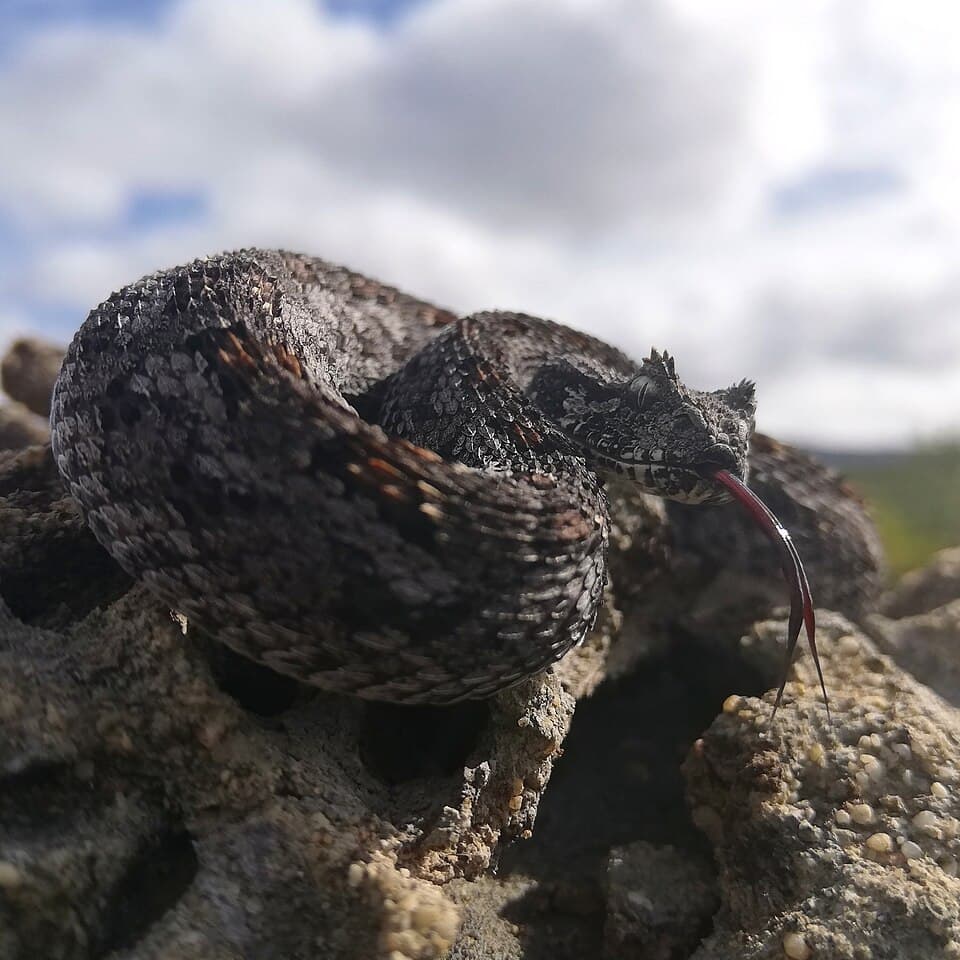
Scientific Name: Bitis Armata
Some beautiful vipers don’t need bright colors to be pretty, and the southern adder is a perfect example of that. This viper is grayish-brown in color, with dark brown and white blotches patterning down the center. It grows up to a maximum length of 40 centimeters, and its beauty lies in the horned tufts above its eyes. It is an endangered venomous snake species endemic to the Western Cape in South Africa. With a very small population, the southern adder is usually found near limestone rock in Fynbos vegetation. There haven’t been any records of bites from this viper, and their venom probably only causes local swelling and pain. Their numbers are not good due to habitat loss, and people also poach them for the illegal pet trade.
5Sunda White-Lipped Pit Viper
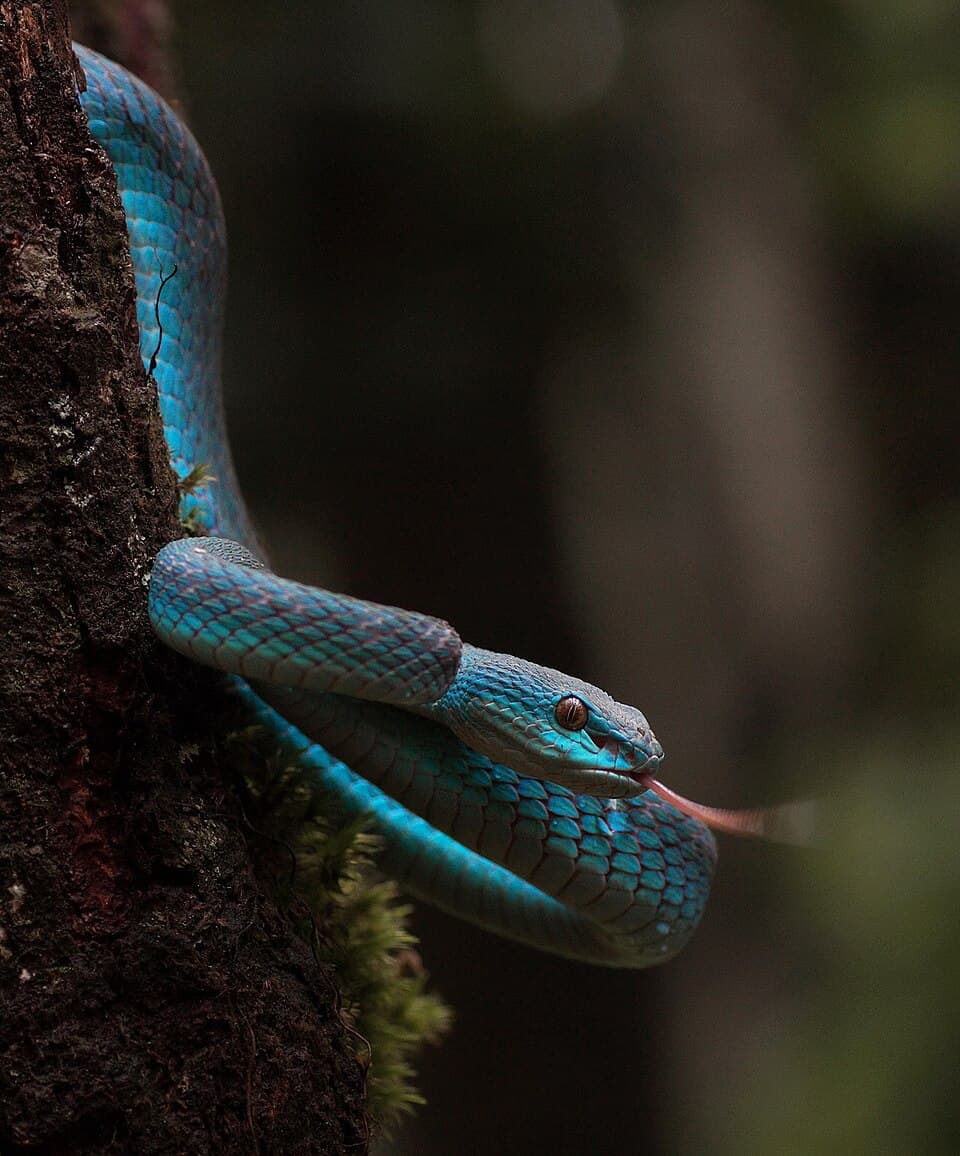
Scientific Name: Trimeresurus Insularis
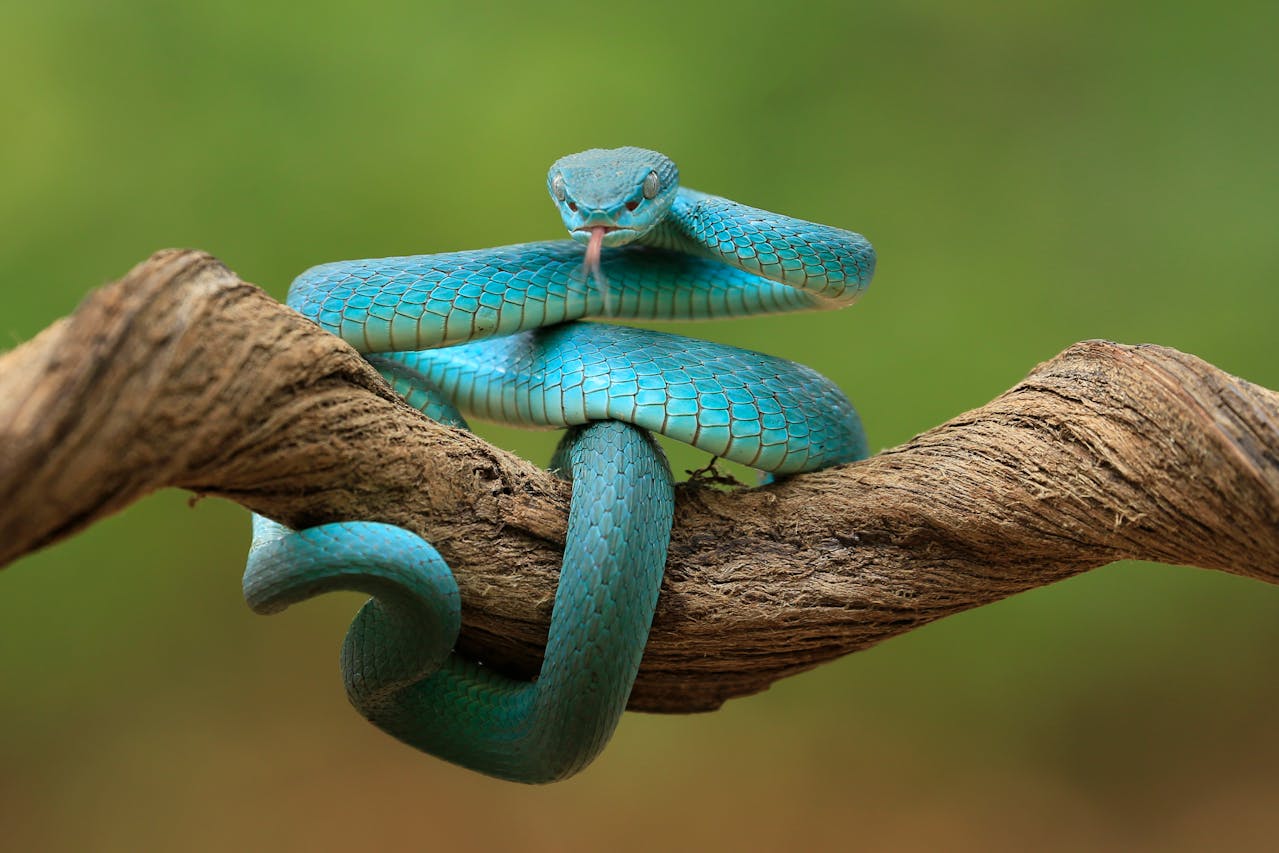
And sometimes, being colorful brings extra beauty, if the color is blue like this one right here. A Sunda white-lipped pit viper is a unique pit viper species with blue-green or green color, which is pretty rare. More than that, its eye colors can be striking red to gray and yellow, which is absolutely out of this world. It has a wide head, a thin neck, and keeled scales, and its tail is reddish-orange. This species usually grows up to 60 centimeters maximum, and they spend most of their time hiding in bushes.
The Sunda white-lipped pit viper is a venomous pit viper species found in Eastern Java and the Lesser Sunda Islands. Native to the Komodo Island, that is where you will find the blue morph of this viper species. They live in forested areas along open spaces like abandoned roads, structures, or trails where they can find prey. These reptiles ambush and feed on birds, frogs, and small mammals. This viper species is not aggressive, but they will hesitate to bite if they feel cornered. A bite from this pit viper can be very dangerous, and victims will need immediate medical attention. Their hemorrhagic venom can cause necrosis, pain, swelling, and severe bleeding both internally and externally.
Related Post: Deadliest Vipers In The World